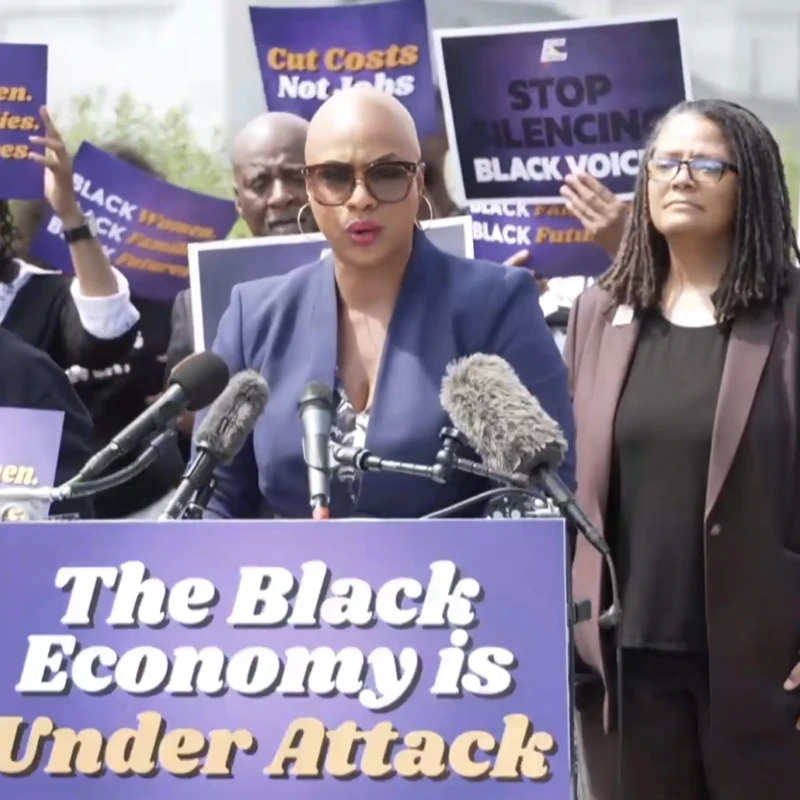
Racial justice advocates and U.S. Rep. Ayanna Pressley are sounding the alarm, calling the Trump administration’s policies a direct “attack on the Black economy.” Descending on Capitol Hill, they highlighted rising Black unemployment rates and the disproportionate impact of the affordability crisis on Black communities, arguing that specific policies are deliberately causing harm.
Policies Under Fire
During a press conference hosted by Rep. Pressley (D-Mass.), coalition groups including the NAACP, Color of Change, the National Urban League, and The Joint Center for Political and Economic Studies voiced their concerns. They pointed to the administration’s significant cuts to the federal workforce, its anti-Diversity, Equity, and Inclusion (DEI) agenda, and the rollback of civil rights enforcement as key drivers of economic hardship for Black Americans.
“The state of the Black economy is under attack,” Pressley declared, emphasizing that these policies are exacerbating existing systemic economic harm and the current affordability crisis affecting everything from groceries to housing and gas prices. Participants held signs reading “Stop Silenceing Black Voices” and “Cut Costs. Not Jobs,” underscoring their message.
Economic Realities vs. Administration Claims
Nadine Smith, president and CEO of Color of Change, stated, “Black families across this country are being told to believe in an economy they cannot feel.” She stressed that people cannot be lied to about their financial realities, citing rising grocery bills, rent, and layoffs as evidence that the economy is not strong for many Black households. The numbers, she added, confirm the lived experiences of the community.
Dedrick Asante-Muhammad, president of the Joint Center for Political and Economic Studies, presented findings from his organization’s report warning of a potential “Black recession.” He noted the attacks on programs designed to ensure equal opportunity and highlighted that by the end of 2025, Black unemployment had climbed to 7.5%, significantly higher than the national rate of 4.4% and white unemployment at 3.8%.
Policy Choices and Proposed Solutions
Asante-Muhammad also criticized Trump’s “One Big Beautiful Bill Act,” arguing it disproportionately benefits the wealthy while cutting investments in essential programs like Medicaid and nutrition assistance. He emphasized that policy choices create these outcomes and that different choices can lead to positive change, calling for policies that bridge past inequalities and foster future prosperity for all.
When asked about priorities should Democrats regain control, Rep. Pressley advocated for massive investments in affordable housing, restoration of student debt cancellation, and rebuilding agencies that support Black-owned businesses. She also called for addressing algorithmic biases and restoring federal jobs denied to Black workers. Pressley refuted Trump’s claim that immigrants were taking “Black jobs,” asserting that the real culprits are policies enacted by figures like Trump and Elon Musk that have dismantled the federal workforce.
Pressley further condemned the Trump DOJ’s actions against the Southern Poverty Law Center and current voting rights battles targeting majority-Black districts as attacks on Black infrastructure and the Black community as a whole. She urged people of all political affiliations, especially within the Democratic party, to “give a damn” and speak out unapologetically on issues affecting Black Americans.
What are your thoughts on the current state of the Black economy and the policies being discussed? Share your views in the comments below.
Leave a Reply