Tag: Black Voters

  • SC Republicans Reject Trump’s Redistricting Map

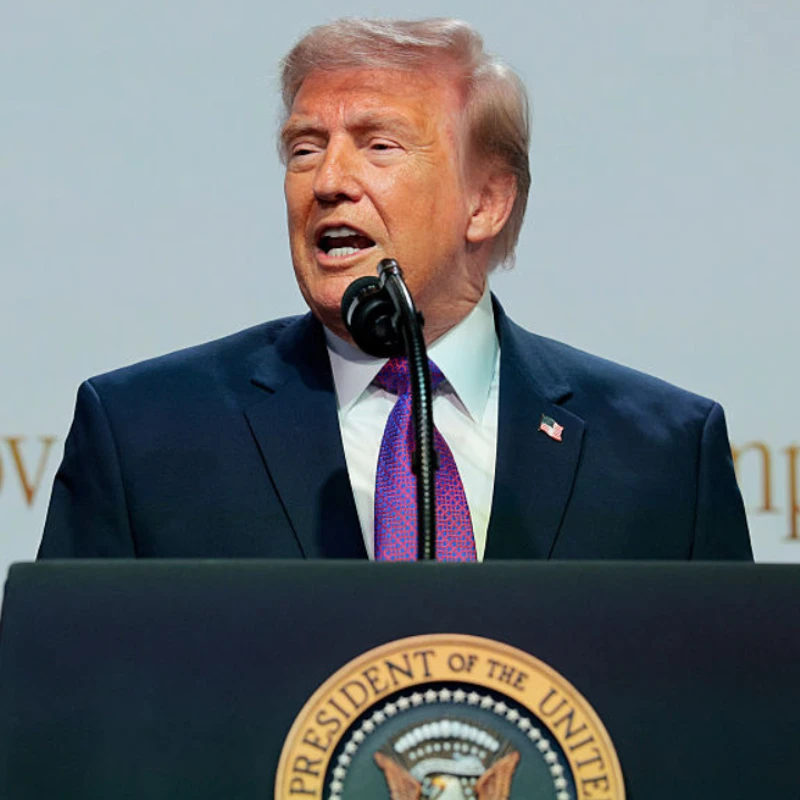
    In a surprising turn of events, South Carolina Republicans have pushed back against former President Donald Trump’s directive to redraw the state’s congressional map. The proposed map aimed to eliminate the majority-Black district represented by longtime Democratic U.S. Rep. Jim Clyburn, but a coalition of Republicans and Democrats in the state Senate rejected the plan.

    Defying Trump’s Redistricting Push

    On Tuesday, 12 Republican state senators joined their Democratic colleagues to vote against a plan that would have canceled early voting and rescheduled the primary election under a new map. This map was widely seen as an attempt to racially gerrymander Clyburn’s 6th Congressional District, weakening the voting power of Black constituents. The move reportedly caught the Trump White House off guard.

    Clyburn, 85, has represented the district for over three decades. Many Republicans who opposed the Trump-backed plan cited concerns about the fairness of canceling an election that had already begun. Democratic strategist Antjuan Seawright, a close advisor to Clyburn, told theGrio, “The people’s will was respected by way of the process in the South Carolina Senate. It’s just a friendly reminder that there are still some people of goodwill that exist.”

    A Unique Stand for South Carolina

    Seawright emphasized that the outcome in South Carolina is unique to the state, partly due to Clyburn’s significant service and positive impact on the entire state, not just his district. “I think that is certainly a sign that we don’t always have to agree, but we can agree to respect the work that has been done,” he added.

    He also suggested that some Republican members of the congressional delegation might be privately relieved that the redistricting effort was halted, as they would have faced difficult choices regarding maps they weren’t comfortable with, all while trying to appeal to Donald Trump. Seawright noted that what they say privately and what they publicly yield can differ.

    Broader Implications for Voting Rights

    This development occurred on the same day a federal court rejected Alabama Republicans’ similar efforts to redraw their congressional map and eliminate a majority-Black district. While these represent victories for Black voters, the potential for appeals to the U.S. Supreme Court remains, especially following the court’s ruling against a two-Black-majority district map in Louisiana.

    The Supreme Court’s decision in Louisiana v. Callais has made it harder to prove racial discrimination in redistricting, prompting several Southern states, including Tennessee, Mississippi, and Florida, to pursue redrawing maps and targeting majority-Black districts. The wins in South Carolina and Alabama offer Democrats a glimmer of hope in the fight for a congressional majority.

    Despite these setbacks for gerrymandering efforts, Republicans still hold an advantage in redistricting battles nationwide. In response, the NAACP has called for economic boycotts of university sports teams in states that have weakened Black voting power. The Congressional Black Caucus is also urging universities and Corporate America to publicly denounce racial gerrymandering and reaffirm their commitment to voting rights and equal representation.

    What are your thoughts on the South Carolina Senate’s decision? How important is protecting Black voting power in redistricting? Share your views in the comments below!
  • Court Blocks Alabama Map Diluting Black Voting Power

    In a significant victory for Black voters in Alabama, a federal court has issued a preliminary injunction blocking the state’s newly drawn congressional map. This ruling temporarily preserves a second majority-Black district, a crucial element for ensuring equal representation in a state with a substantial Black population.

    A Temporary Reprieve for Black Voters

    The decision by a three-judge panel means that Alabama’s 2024 congressional map, which includes two districts where Black voters form a majority, will remain in place for now. This comes as a moment of relief following the U.S. Supreme Court’s recent decision that weakened protections under the Voting Rights Act of 1965, which had previously made it harder to challenge discriminatory redistricting.

    Black Alabamians, who constitute about a third of the state’s population, have been engaged in a protracted legal battle to maintain fair representation. Lawyers representing Black voters argued that the map passed by Alabama Republicans intentionally discriminated against them and would eliminate the Democratic-leaning district represented by U.S. Rep. Shomari Figures.

    The Legal Battle and Potential Appeals

    While this ruling is a step in the right direction, the fight is far from over. Alabama could still appeal the decision to the U.S. Supreme Court. The Supreme Court’s recent ruling in Louisiana v. Callais, which argued that a map with two majority-Black districts was discriminatory against white voters, sets a precedent that could be used by the state.

    Rep. Figures expressed cautious optimism, stating, “I am pleased with the Court’s decision, but this case is still not over.” He anticipates an appeal to the Supreme Court and acknowledges that “there is still a long way to go before this fight is settled.”

    A Trend of Diluting Black Voting Power

    This legal battle in Alabama is part of a broader trend across several Southern states, including Tennessee, South Carolina, Mississippi, and Florida. Following the Supreme Court’s decision, these Republican-controlled states have redrawn congressional maps, often targeting majority-Black districts represented by Black members of Congress. Voting rights advocates and the Congressional Black Caucus (CBC) have strongly condemned these actions.

    The NAACP and the CBC have called for boycotts against public universities in states where Black voters’ power is being diluted. NAACP President and CEO Derrick Johnson stated, “Our goal is to ensure that Black communities can elect candidates of their choice. These are states with long-standing histories of racial discrimination… Race is the predominant factor.”

    A Call for Corporate Action

    The CBC has also urged U.S. companies to speak out against these redistricting efforts, which they argue are designed to boost Republican power. U.S. Rep. Yvette D. Clarke, chairwoman of the CBC, emphasized that corporate silence in the face of dismantling Black political representation is not neutrality but complicity. She called on corporations to reaffirm their commitments to voting rights and equal representation, principles many pledged to uphold just a few years ago.

    What are your thoughts on the ongoing fight for voting rights and fair representation? Share your views in the comments below.

  • Young Black Men Uncommitted to 2026 Vote

    A concerning new poll is highlighting a potential challenge for the upcoming 2026 midterm elections: a significant portion of young Black men in crucial states are not yet committed to casting their ballots. This comes at a time when Black communities are disproportionately affected by the affordability crisis and facing challenges to voting rights.

    The ‘Black Men Vote’ Survey Findings

    The Black Men Vote survey, conducted by HIT Strategies, polled over 1,600 Black men aged 18-45. The results are eye-opening: in key battleground states like Georgia, Michigan, Mississippi, North Carolina, Pennsylvania, and South Carolina, a quarter of young Black men (26%) are either uncertain or unlikely to participate in the midterms. This includes those who previously voted for Kamala Harris in 2024.

    This finding presents both a risk and an opportunity for political parties in these closely contested states, which will significantly influence the balance of power in Congress and shape policy during the next two years of Donald Trump’s presidency. The current economic and political climate is particularly challenging for Black Americans.

    Beyond Apathy: Civic Belief vs. Participation

    The survey points out that the challenge isn’t necessarily apathy. A staggering 92% of Black men surveyed believe voting is important, revealing a significant gap between their civic beliefs and their likely participation in the midterms. While a majority lean Democratic and identify as “left of center,” a notable number also identify as Independent or Republican, often citing “family values” rather than MAGA affiliation.

    Understanding Motivations is Key

    Michael Bland, Executive Director of Black Men Vote, emphasized that Black men are not politically absent but rather politically misread. “This research shows that young Black men remain broadly left-of-center, but they do not fit neatly into the political boxes and campaign assumptions that too often define them,” he stated. “They value voting, but one in four are not yet committed to participating in 2026. That should be a wake-up call.”

    Engaging Young Black Voters Where They Are

    Reaching young Black voters requires meeting them in non-traditional spaces. The survey highlights that 90% of younger Black men use YouTube multiple times a week, with a majority identifying it as a source for breaking political news. This suggests that digital platforms and content tailored to their media consumption habits are crucial.

    Democratic strategist Michael Hardaway noted a “severe neglect” of Black men by both parties, arguing that there’s an assumption they will always vote. “There’s no other group that faces that level of disrespect and indifference,” he told theGrio. “If you want Black men to vote, that means investing time over years and engaging with them in a meaningful way.”

    Hardaway pointed to Barack Obama’s successful engagement strategies, which included creating supportive organizations like My Brother’s Keeper. He expressed frustration that Democrats often focus heavily on suburban white mothers without securing that demographic, while neglecting Black men who are consistently present but underserved.

    What do you think needs to be done to ensure young Black men are engaged and committed to voting? Share your thoughts and strategies in the comments below!

  • DNC Autopsy Report: Harris Vindicated, Black Infrastructure Lacking

    The Democratic National Committee (DNC) recently released an “autopsy” report aiming to explain Kamala Harris’s loss in the 2024 presidential election to Donald Trump. However, many Black Democratic strategists argue the report does more to expose the party’s systemic failures, particularly its lack of investment in Black infrastructure, than to offer genuine solutions. They feel the report vindicates Harris while highlighting a troubling indifference towards the party’s most loyal voting bloc.

    Vindication for Kamala Harris?

    The report, authored by strategist Paul Rivera, suggests that the White House and the Harris campaign were ill-prepared. It specifically notes that the administration failed to adequately position and support Vice President Harris, leaving her vulnerable to Republican attacks, such as the inaccurate “border czar” label. The report states the White House neglected crucial research into how Harris could best communicate her message and resonate with key audiences.

    Democratic strategist Ashley Etienne, who previously served as Harris’s communications director, believes the report confirms what many have suspected. “It’s another insult to Black people, the way that she was treated, but…the way that she was treated is emblematic of how the party treats Black people in general,” Etienne told TheGrio. She described the party’s attitude as one of “all-out indifference, and to some degree, a level of resentment toward Black people.”

    The ‘Black Infrastructure’ Problem

    A major criticism leveled by Black strategists is the report’s failure to detail the party’s investment—or lack thereof—in building a robust political infrastructure within Black communities. While acknowledging “dramatic drops in support among young Black men” and insufficient organizing efforts, the report offers no concrete plans for mobilizing these crucial voters.

    Etienne argues that Black strategists and operatives are often excluded from decision-making and resource allocation. “Decisions were made to line people’s pockets and not win an election,” she stated, noting the absence of Black firms in the report’s financial breakdowns. “Why give money to white firms to talk to Black people? Why keep putting money on television and not investing in Black media, where we know we actually are?” she questioned.

    Systemic Failures and Missed Opportunities

    Strategists like Joel Payne, who worked on the 2016 Clinton campaign, suggest that Black voters, particularly men, are being used as a “convenient scapegoat” rather than addressing the party’s systemic failures. He argues that Trump’s marginal gains among Black voters were not the deciding factor in the election. Antjuan Seawright, another Democratic strategist, echoed this sentiment, stating the party “wants our output but certainly does not want our input,” treating Black voters as an “expense” rather than an “investment.”

    Michael Hardaway, who advised on Obama’s 2008 campaign, believes that leadership, including Harris, should be held accountable for the team they assemble. He pointed out that despite significant job creation and economic successes under the Biden-Harris administration, these achievements were not effectively communicated to voters. “The Biden White House created 15 million plus jobs… but no one actually knew about those things,” Hardaway noted.

    A Call for Investment and Power

    The strategists emphasize the urgent need for the Democratic Party to invest seriously in Black media, influencers, and community organizing—not just in the “11th hour” but throughout the entire election cycle. They argue that Black communities, facing significant political and economic challenges, deserve an explanation and, more importantly, a genuine commitment to building Black political power. As Etienne put it, “The party owes us an explanation because we’re bearing the brunt of the failures… and then at the end of the day, we get blamed for it…enough is enough.”

    What are your thoughts on the DNC’s autopsy report and the issues raised about Black infrastructure? Share your views in the comments below!
  • Pressley, Advocates Slam Trump’s “Attack” on Black Economy

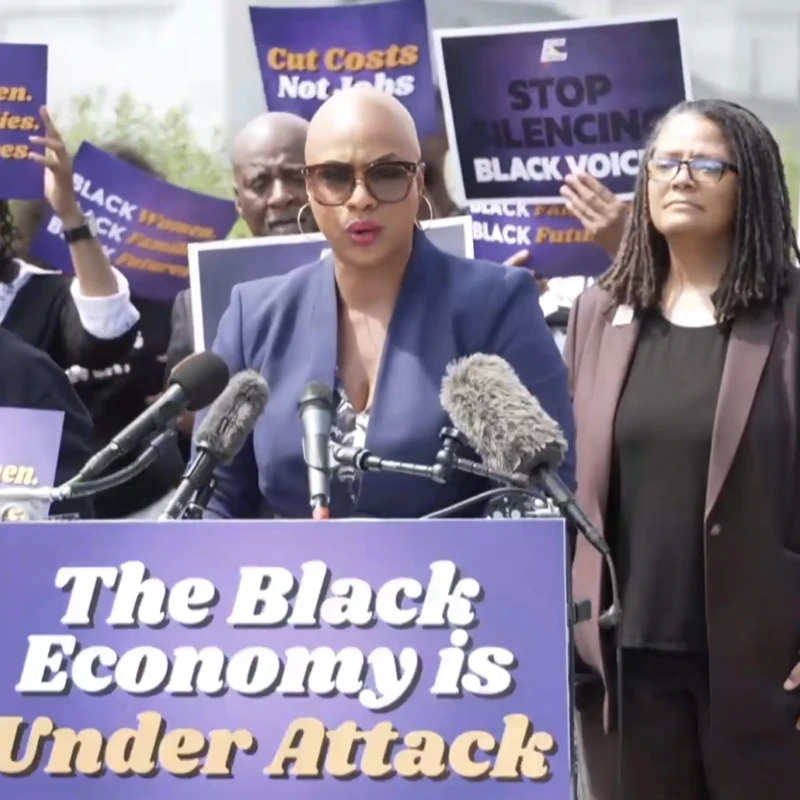
    Racial justice advocates and U.S. Rep. Ayanna Pressley are sounding the alarm, calling the Trump administration’s policies a direct “attack on the Black economy.” Descending on Capitol Hill, they highlighted rising Black unemployment rates and the disproportionate impact of the affordability crisis on Black communities, arguing that specific policies are deliberately causing harm.

    Policies Under Fire

    During a press conference hosted by Rep. Pressley (D-Mass.), coalition groups including the NAACP, Color of Change, the National Urban League, and The Joint Center for Political and Economic Studies voiced their concerns. They pointed to the administration’s significant cuts to the federal workforce, its anti-Diversity, Equity, and Inclusion (DEI) agenda, and the rollback of civil rights enforcement as key drivers of economic hardship for Black Americans.

    “The state of the Black economy is under attack,” Pressley declared, emphasizing that these policies are exacerbating existing systemic economic harm and the current affordability crisis affecting everything from groceries to housing and gas prices. Participants held signs reading “Stop Silenceing Black Voices” and “Cut Costs. Not Jobs,” underscoring their message.

    Economic Realities vs. Administration Claims

    Nadine Smith, president and CEO of Color of Change, stated, “Black families across this country are being told to believe in an economy they cannot feel.” She stressed that people cannot be lied to about their financial realities, citing rising grocery bills, rent, and layoffs as evidence that the economy is not strong for many Black households. The numbers, she added, confirm the lived experiences of the community.

    Dedrick Asante-Muhammad, president of the Joint Center for Political and Economic Studies, presented findings from his organization’s report warning of a potential “Black recession.” He noted the attacks on programs designed to ensure equal opportunity and highlighted that by the end of 2025, Black unemployment had climbed to 7.5%, significantly higher than the national rate of 4.4% and white unemployment at 3.8%.

    Policy Choices and Proposed Solutions

    Asante-Muhammad also criticized Trump’s “One Big Beautiful Bill Act,” arguing it disproportionately benefits the wealthy while cutting investments in essential programs like Medicaid and nutrition assistance. He emphasized that policy choices create these outcomes and that different choices can lead to positive change, calling for policies that bridge past inequalities and foster future prosperity for all.

    When asked about priorities should Democrats regain control, Rep. Pressley advocated for massive investments in affordable housing, restoration of student debt cancellation, and rebuilding agencies that support Black-owned businesses. She also called for addressing algorithmic biases and restoring federal jobs denied to Black workers. Pressley refuted Trump’s claim that immigrants were taking “Black jobs,” asserting that the real culprits are policies enacted by figures like Trump and Elon Musk that have dismantled the federal workforce.

    Pressley further condemned the Trump DOJ’s actions against the Southern Poverty Law Center and current voting rights battles targeting majority-Black districts as attacks on Black infrastructure and the Black community as a whole. She urged people of all political affiliations, especially within the Democratic party, to “give a damn” and speak out unapologetically on issues affecting Black Americans.

    What are your thoughts on the current state of the Black economy and the policies being discussed? Share your views in the comments below.

  • Poll: Black Americans Most Disapproving of Trump

    As the nation grapples with an ongoing affordability crisis, a new poll indicates that Black Americans are expressing the highest level of disapproval regarding President Trump’s job performance and the country’s direction. The findings from a New York Times/Sienna poll shed light on the specific challenges faced by the Black community under the current administration.

    Disapproval Ratings by Race

    Overall, 59% of Americans disapprove of Trump’s job performance. However, this figure rises dramatically among Black Americans, with a staggering 83% expressing disapproval. This contrasts with 71% of Hispanic Americans, 51% of white Americans, and 65% of other racial or ethnic groups who also disapprove.

    Furthermore, Black Americans are significantly more likely to feel the country is heading in the wrong direction (80%) and view economic conditions as fair or poor (89%). These sentiments are notably higher than those reported by white and Hispanic Americans in the same poll, underscoring a disproportionate impact of current policies on the Black community.

    Economic and Policy Impacts

    These poll results are unlikely to surprise many, given that 83% of Black Americans voted against Trump in the 2024 election. The data aligns with reports indicating that Black Americans are experiencing the highest unemployment rates since the pandemic, with the Black unemployment rate at 7.3% in April, significantly higher than the national average of 4.3%.

    Research also suggests that Black Americans are disproportionately affected by economic pressures stemming from global tariffs and conflicts, leading to increased costs for gas, energy, and goods. Trump’s policies, including an anti-DEI agenda and the rollback of civil rights protections, are also cited as contributing factors to what some reports term a “Black recession.”

    Voting Rights and Political Power

    The recent Supreme Court ruling gutting Section 2 of the Voting Rights Act, which made it harder to prove racial discrimination and easier to gerrymander districts, is another significant blow. This decision, influenced by Trump-appointed justices, threatens the political power of Black voters, particularly in the South.

    The poll indicates a strong preference for Democratic candidates among Black Americans (81% if the 2026 midterms were held today). Civil rights leaders and Democrats are working to mobilize Black voters, emphasizing the connection between voting rights and tangible issues like gas prices, healthcare, and social benefits. As Cliff Albright of Black Voters Matter notes, protecting voting rights is directly linked to addressing the daily struggles faced by communities.

    What are your thoughts on these poll results and the issues impacting Black Americans? Share your perspective in the comments below!

  • CBC Joins NAACP Boycott of College Sports

    In a powerful display of solidarity, the Congressional Black Caucus (CBC) has officially joined the NAACP’s call for a boycott of athletic programs at public universities. This bold move, dubbed the “Out of Bounds” campaign, targets institutions that remain silent in the face of attacks on Black political power, particularly in Southern states.

    An Unprecedented Response to Voting Rights Rollbacks

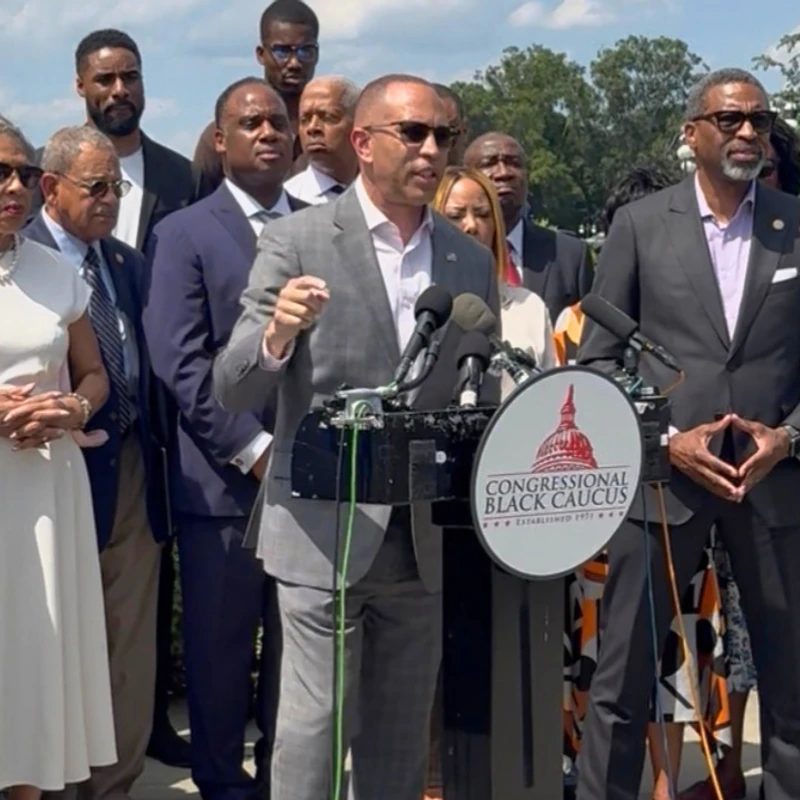
    The boycott stems from the Supreme Court’s decision to gut the Voting Rights Act, which has led to subsequent efforts by Southern states to eliminate Black representation through racially gerrymandered congressional maps. U.S. Rep. Hakeem Jeffries, D-N.Y., slammed states like Louisiana, Alabama, Tennessee, Georgia, and Florida for employing what he called “Jim Crow-like, racially oppressive tactics.” He emphasized that this unprecedented attack on Black political representation demands an equally unprecedented response.

    During a press conference on Capitol Hill, dozens of CBC members co-signed the NAACP’s boycott. The campaign urges Black athletes and fans to withdraw their financial support from public state universities within the NCAA Southeastern Conference. It also calls on aspiring college athletes to avoid attending any university in a Southern state that has not publicly condemned the wave of voter suppression tactics.

    Silence is Complicity

    CBC Chairwoman U.S. Rep. Yvette D. Clarke, D-N.Y., stated that the success and influence of major athletic conferences are inseparable from the contributions of Black communities. She stressed that Black political representation is not a secondary issue but a defining moral moment for the nation. “The Congressional Black Caucus cannot support legislation benefiting major athletic institutions that continue to remain silent while Black voting rights and Black political power are being systematically dismantled across the South,” Clarke declared.

    NAACP President Derrick Johnson explained that the boycott follows the success of previous campaigns, like the one against Target, and draws on historical precedents. He referenced the impact athletes have had in past civil rights movements, citing figures like Jim Brown, Kareem Abdul-Jabbar, and Muhammad Ali. Johnson urged parents of young athletes to understand the power they hold and the potential impact of choosing not to play for state schools that deny representation.

    Leveraging Athlete Power

    U.S. Rep. Maxine Waters, D-Calif., echoed the sentiment, calling for significant economic consequences for institutions that fail to speak out against racial injustice. She drew parallels to Colin Kaepernick’s protest, emphasizing a willingness to fight for justice by any means necessary. The CBC’s solidarity with the NAACP marks a significant escalation in the ongoing fight to protect Black voting rights.

    • The CBC has joined the NAACP’s “Out of Bounds” campaign.
    • The boycott targets public university sports programs in Southern states.
    • It calls for athletes and fans to divest financially from these institutions.
    • The campaign aims to pressure universities to speak out against voting rights rollbacks.
    • It highlights the historical power of athletes in social justice movements.

    Leader Jeffries concluded, “The silence from our institutions in moments of injustice carries consequences.” He urged American institutions to meet this moment with courage and conviction, stating, “History will remember who chose to stand for democracy and equal representation and who chose silence.”

    What are your thoughts on the “Out of Bounds” campaign? Do you think boycotting college sports is an effective way to fight for voting rights? Share your opinions in the comments below!

  • Black Census Project Aims to Capture Black Dreams

    In a time marked by the rollback of voting rights, economic instability, and a growing anti-DEI movement, the Black Census Project is launching its most ambitious survey yet. Conducted by the Black Futures Lab, this initiative isn’t just about identifying problems; it’s about capturing the forward-looking vision and dreams of Black Americans, even when current circumstances make those dreams seem distant.

    Shifting Focus from Problems to Dreams

    Alexsis Rodgers, managing partner of Black Futures Lab, explained the project’s evolution. Unlike previous surveys that focused on the challenges Black voters face, this year’s survey is intentionally ‘forward looking’ and ‘rooted in Black dreams.’ The goal is to understand what Black communities envision for their future and what they expect from their government and power structures.

    ‘We just knew, with all the attacks on our communities this year and in this moment, we had to do something different,’ Rodgers told theGrio. This shift is crucial, she believes, because the current reality ‘isn’t working’ for many Black communities.

    A History of Impactful Data Collection

    The Black Census Project, first launched in 2018 under Alicia Garza (a co-founder of Black Lives Matter), has a proven track record. The initial survey gathered 30,000 responses, informing policy recommendations for President Biden’s administration. The subsequent survey, conducted in 2022-2023, saw a massive growth to 200,000 responses, leading to the creation of the Black Economic Agenda and influencing housing policies highlighted by advocates.

    The data collected has directly led to tangible actions, such as a housing campaign in Georgia and the establishment of participatory budgeting in Milwaukee. This history demonstrates the power of large-scale data collection in shaping policy and pushing elected officials to act in the interests of Black communities.

    Setting Ambitious Goals for 2026

    This year, the Black Census Project aims to reach an unprecedented 300,000 Black Americans. The survey delves into critical questions about the future, including potential reforms to the two-party system, the role of the Supreme Court, and the possibility of replacing the Electoral College with a national popular vote.

    Rodgers acknowledges the difficulty of focusing on the future when communities are facing present-day crises. She describes the current attacks as a tactic to keep Black people ‘underwater’ and unable to ‘dream.’ However, she emphasizes that ‘Now is absolutely the time to build new and to build better than we’ve ever been before, and Black people have to be at the center.’

    By collecting this data, Black Futures Lab hopes to equip political candidates at all levels of government with the insights needed to seriously address the demands of Black voters, particularly in the lead-up to the 2028 presidential election. The project aims to inspire bold visions that resonate with and mobilize communities, much like the successful approach of New York City Mayor Zohran Mamdani.

    Have you taken the Black Census Survey? What are your hopes for the future of Black communities? Share your thoughts in the comments below!

  • Mass Gathering in South Amid Voting Rights Rollback

    In response to what organizers are calling the greatest setback for Black political power since the post-Reconstruction era, thousands are set to gather in the South this weekend. This mass mobilization, dubbed the “All Roads Lead to the South” National Day of Action, is taking place in Montgomery and Selma, Alabama, historic ground for the Civil Rights Movement. It’s not framed as a protest, but rather a profound “calling in” to address the erosion of voting rights in former Confederate states.

    A ‘Calling In’ for Democracy

    LaTosha Brown, a prominent voting rights activist and co-founder of Black Lives Matter, emphasized the event’s unique nature. “This is not a protest. This is a calling in. In many ways, it’s like an altar call,” she explained during a virtual press conference. The goal is to unite people of goodwill who believe in a strong democracy, respect Black voting power, and advocate for free and fair elections. Organizers are calling on individuals from across the country to stand in solidarity.

    Brown was joined by Janai Nelson, president and director-counsel of the Legal Defense Fund (LDF). Nelson recently argued the Supreme Court case, Louisiana v. Callais, on behalf of Black voters, a case that ultimately led to the gutting of the Voting Rights Act by the Court’s conservative majority on April 29. This decision has since prompted a wave of Republican-led states, including Louisiana, Alabama, Tennessee, South Carolina, and Georgia, to redraw congressional maps, effectively eliminating majority-Black districts.

    Betrayal by Institutions

    Nelson expressed deep disappointment, stating that while amplifying Black voters in powerful spaces was a privilege, “Unfortunately, those institutions have betrayed us.” She further elaborated that these institutions “cannot be relied on to provide the checks and balances that are needed in this moment to secure and safeguard our democracy” and have become “complicit in the destruction of it.”

    The organizers have deliberately chosen not to frame the event as a protest and are downplaying the roles of specific elected officials, though notable figures like Dr. Bernice King, U.S. Senators Raphael Warnock and Cory Booker, and Representatives Alexandria Ocasio-Cortez and Ayanna Pressley are expected to participate. The focus remains squarely on the people and the urgency of the moment.

    A Call for a ‘Third Reconstruction’

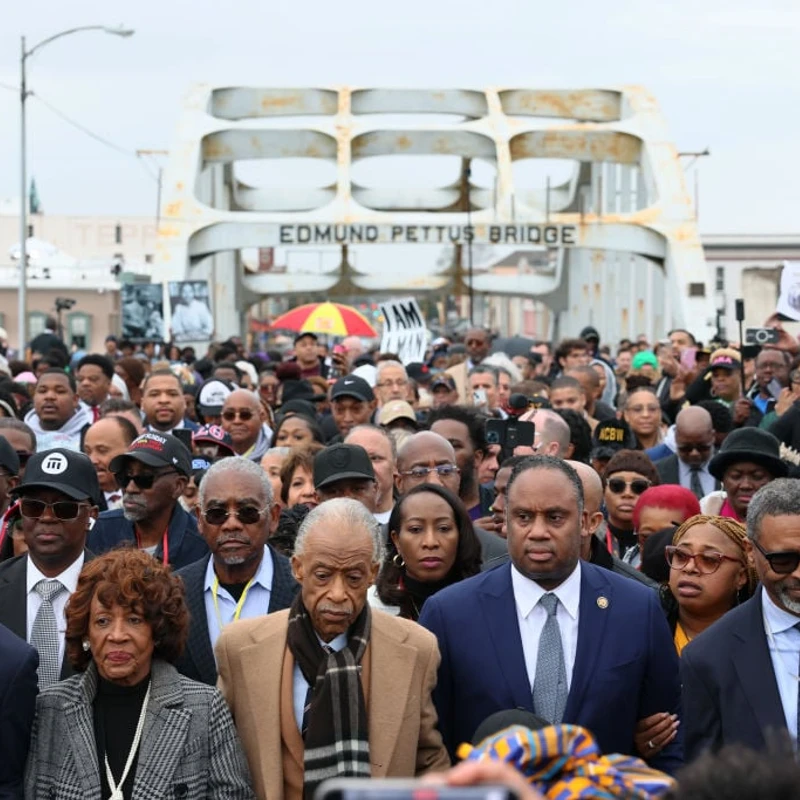
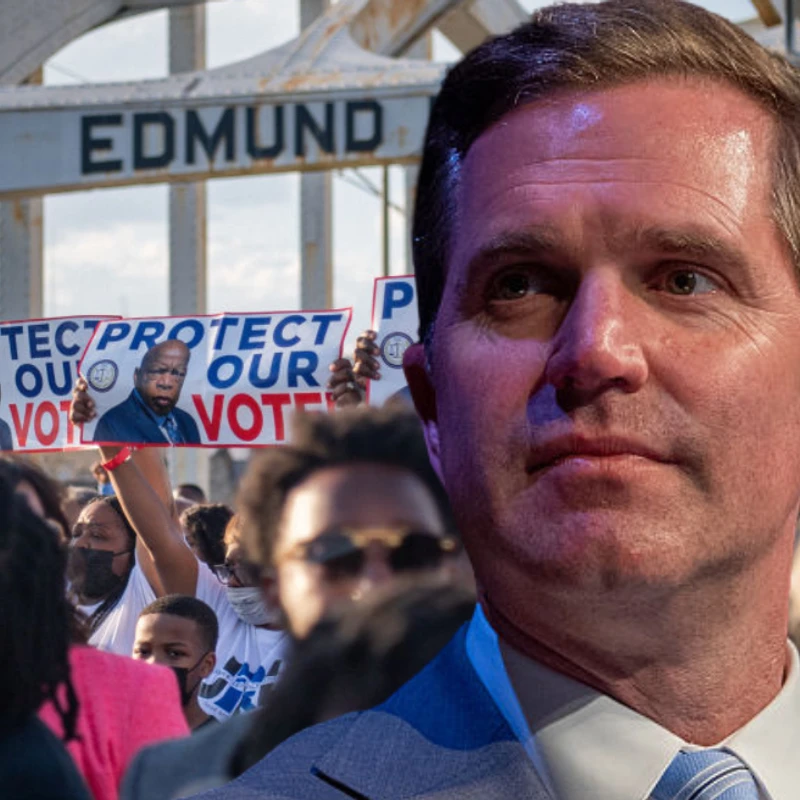
    The gathering is anchored in the faith tradition of the civil rights era, with participants led in a church service before embarking on a silent march across the Edmund Pettus Bridge. This symbolic walk honors the bravery of those who marched in 1965, facing brutal violence on what became known as “Bloody Sunday.” The coalition aims to foster gratitude for that moral courage and faith that the same spirit can move present generations.

    Organizers envision this moment as the dawn of a “Third Reconstruction,” a fundamental refounding of American democracy. They are not seeking temporary legislative fixes but a lasting system that ensures justice and works for everyone. Nelson stressed the need for comprehensive court reform, from the Supreme Court down to state courts, to ensure objective and independent judges free from political co-option and corruption. They also call for the dismantling of institutions that perpetuate the vestiges of slavery, including aspects of the Senate and the filibuster.

    Brown highlighted the significance of the gathering occurring during the 250th anniversary of the United States, noting that the nation’s founding vision did not reflect the full humanity of many communities. She asserted that “the people” – not political parties – are the true architects of the nation’s future, possessing the right to shape the country they desire and deserve.

    What are your thoughts on the “All Roads Lead to the South” National Day of Action? How can we best protect and expand voting rights for all Americans? Share your views in the comments below!
  • Gov. Beshear: Racism Persists, Voting Rights Crucial

    In a candid conversation with theGrio, Kentucky Governor Andy Beshear has issued a stark warning: racism is still a potent force in America, particularly as Republican-led states in the South move to disenfranchise Black voters. Following a controversial Supreme Court decision that weakened the Voting Rights Act of 1965, Beshear, who also chairs the Democratic Governors Association, declared that Democratic governors are now the “last line of defense” against efforts to redraw congressional maps and diminish minority representation.

    A “Shameful” Supreme Court Ruling

    Beshear didn’t mince words when describing the Supreme Court’s ruling in Louisiana v. Callais, calling it “shameful.” He drew a parallel to his experience marching in Selma for the 60th anniversary of Bloody Sunday, highlighting the painful irony of seeing hard-won progress being dismantled. “Of course racism still exists in the United States of America,” Beshear stated, contrasting his view with that of President Trump. He emphasized that while he may not personally experience racism, he listens and learns from those who do, taking intentional steps to promote equality.

    The ruling, Beshear argues, pushes the country backward and undermines crucial progress, particularly impacting minority representation in Congress. He believes that diversity of thought and experience leads to better governance and a more inclusive democracy.

    The Role of Democratic Governors

    As chair of the Democratic Governors Association, Beshear stressed the critical role Democratic governors play in countering these redistricting efforts. He pointed to Kentucky, where a Republican legislature is unable to redraw maps because he, as a Democratic governor, is refusing to call them into session. “Having a Democratic governor right now is not just the last line of defense against this Trump administration,” he explained, “it means that there is an opportunity to do the right thing, to not lose the progress we fought so hard for.”

    Beshear acknowledged the pain and anger felt in Black communities across the South, particularly in states like Louisiana, Tennessee, Alabama, South Carolina, and Georgia, where Republican legislatures are actively working to eliminate majority-Black districts. He stressed that while he dislikes redistricting, “we cannot unilaterally disarm” in the face of what he sees as destructive actions impacting families nationwide.

    A Call for Unity and Action

    Beshear underscored the importance of a united front, emphasizing that this fight is not just for Black and Brown communities but for all Americans who value democracy. He highlighted his own administration’s efforts in Kentucky, including appointing a diverse cabinet, removing Confederate statues, signing the Crown Act for state employees, establishing Juneteenth as an executive branch holiday, and restoring voting rights to over 200,000 citizens. “When we have the diversity of thought and leadership, when we are listening to each other, when everyone can participate and has a seat at the table, we make much better progress,” he stated.

    Reforming the Supreme Court and Prioritizing Voting Rights

    Questioning the current Supreme Court’s adherence to the rule of law, Beshear expressed support for significant reforms. He believes it’s time for a “fix-the-country-type of constitutional amendment” that would undo the damage to the Voting Rights Act, ensure nonpartisan district drawing, overturn Citizens United, and implement term limits, including for Supreme Court justices. “I do not think the majority of this court is following the rule of law,” he asserted.

    Looking ahead to 2028, Beshear declared that voting rights reform must be a top priority for any Democratic presidential candidate. He proposed that the next Democratic president should sign an executive order on voting rights within their first week in office. “If we love the United States of America, if we’re patriots, if we love democracy, then we’ve got to put voting rights front and center, because everybody deserves to be a part.”

    Addressing the current administration’s rhetoric, Beshear called for a reframing of messages around diversity and inclusion, urging a return to the belief that “everyone are God’s children” and that providing opportunity for all does not mean taking away from others. He vetoed anti-DEI bills, stating, “I believe diversity is a good thing and never a bad thing.”

    What are your thoughts on Governor Beshear’s statements regarding racism and voting rights? Share your perspective in the comments below!