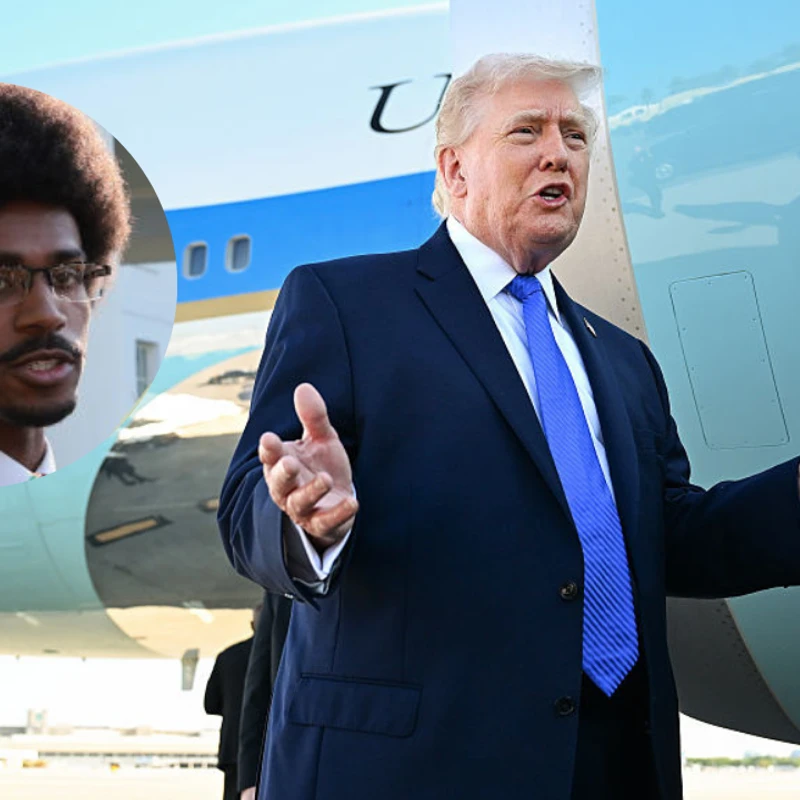
As Donald Trump arrived in Memphis to highlight his administration’s public safety initiatives, including the deployment of the National Guard, local leaders vehemently rejected his presence. They argue that the president and his Memphis Safe Task Force are causing more harm than good to the city’s Black and Brown residents, despite the stated goal of enhancing safety.
A Vehement Rejection of Trump’s Visit
Tennessee State Representative Justin J. Pearson did not hold back, telling theGrio, “He isn’t welcome here because he is a racist, xenophobe who has spewed hatred and hurt our communities more than he has helped them.” Pearson views Trump’s actions in Memphis, including the deployment of military personnel, as part of an “authoritarian playbook” targeting Democratic-led and Black-led cities.
Pearson, who is running for U.S. Congress, joined hundreds of protesters at a “Dump Trump” rally. He criticized the six-month task force for allegedly leading to racial profiling of Black and Latino residents and exacerbating the strain on the jail system, with hundreds of children reportedly missing school due to fear.
Questioning the Effectiveness of Federal Intervention
While the Trump administration claims success, citing reductions in crime rates, Memphis native and State House candidate Kyler Gilkey argues that crime was already declining before federal intervention. “In reality, when our mayor, Paul Young, took office, in roughly a year, we had already seen crime drop down… this administration is going to come in and kind of take credit for the work that was already being done,” Gilkey stated.
Gilkey also expressed concern about the message sent by deploying the National Guard to a majority-minority city, suggesting it implies a lack of faith in local leadership. He pointed to the historical context of the National Guard’s deployment in Memphis, noting it hadn’t occurred since the assassination of Dr. Martin Luther King Jr. in 1968.
Focus on Root Causes vs. Military Presence
Memphis leaders advocate for investing in proven local programs that address the root causes of crime, such as poverty eradication, community housing, healthcare access, and education. Rep. Pearson criticized the administration’s budget proposals, highlighting cuts to gun violence prevention grants while deploying military troops. “We want poverty eradication, not military occupation,” Pearson declared.
Concerns about racial profiling persist, especially following a Supreme Court ruling that seemingly permits nationwide racial profiling by ICE. Pearson noted that pretextual traffic stops disproportionately affect Black, African-American, and Latino individuals, with statistics showing 94% of those stopped are people of color. Gilkey shared a personal account of his brother being pulled over “essentially for no reason at all.”
As the duration of the increased military and federal agent presence remains unclear, Memphis leaders are focused on the aftermath. Rep. Pearson emphasized the trauma and repercussions left behind when such forces eventually depart, stating, “Our communities are left with trauma, with pain, with the repercussions of actions that we did not ask for.”
What are your thoughts on the federal intervention in Memphis? Do you believe it’s helping or harming the community? Share your perspective in the comments below!
Leave a Reply