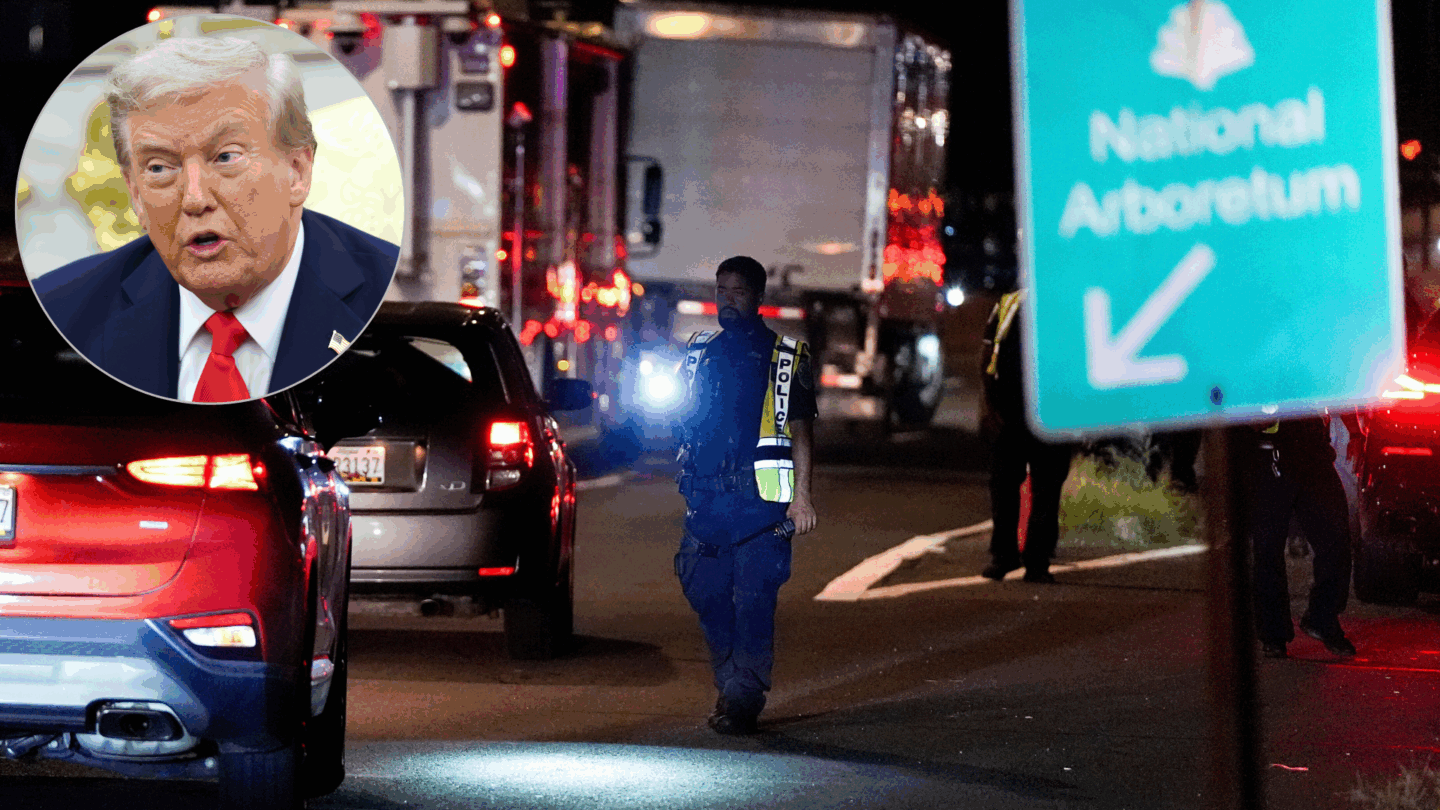
President Donald Trump announced plans to join federal patrols in Washington D.C. this Thursday evening, marking a significant escalation in his administration’s controversial two-week crackdown. The deployment of federal agents and National Guard soldiers has led to the establishment of checkpoints throughout the city, raising concerns among residents and legal experts about immigration enforcement and civil liberties.
Heightened Federal Presence and Resident Concerns
Hundreds of federal agents and National Guard troops have been deployed to the capital, creating tense confrontations and leaving some residents on edge. Vice President JD Vance and Defense Secretary Pete Hegseth visited troops at Union Station to show support, while protestors chanted “free D.C.” Despite statistics indicating a decline in crime prior to Trump’s intervention, the immigration enforcement aspect of the crackdown has particularly unsettled neighborhoods. A local daycare experienced a partial closure due to staff fears about federal agents nearby, prompting administrators to advise parents to keep children home if possible. Other daycares have suspended outdoor activities due to concerns about encountering law enforcement.
Since the surge of federal agents began on August 7th, the White House reports 630 arrests, including 251 individuals who are in the country illegally. Trump has intensified the pressure by reportedly seizing control of the D.C. police department and deploying additional National Guard troops, primarily from Republican-led states. While soldiers are largely concentrated in downtown areas like the National Mall and transit stations, federal agents are operating more broadly across the city.
Legality and Constitutionality of Checkpoints
D.C. Mayor Muriel Bowser acknowledged the increased frequency of traffic checkpoints, noting that the surge in federal officers allows for “different types of deployments, more frequent types of deployments, like checkpoints.” However, the legality and nature of these stops are being questioned. Martin Romero, a construction worker, described being stopped at what he initially thought was a normal traffic stop, only to find U.S. Park Police checking commercial vehicles, followed by U.S. Immigration and Customs Enforcement (ICE) agents inquiring about their origins and immigration status. Romero expressed nervousness, stating, “We just came here to work. We aren’t doing anything bad.” Two individuals in his truck were detained without explanation, and he witnessed others being taken from different vehicles.
Legal experts weigh in on the constitutionality of such checkpoints. Jeffrey Bellin, a law professor specializing in criminal law, noted that while checkpoints for specific purposes like border control or DUI checks are upheld by the Supreme Court, they cannot be used as a “subterfuge” for general crime control. He expressed doubt that the authority to question drivers about immigration status at the border extends to Washington D.C. Anthony Michael Kreis, another law professor, suggested that the “arbitrary” and intrusive nature of these checkpoints in the capital could lead residents to feel aggrieved, fostering suspicion for valid reasons.
This crackdown in D.C. mirrors similar enforcement actions seen in areas like Los Angeles, where immigration officers have maintained a visible presence at locations like Home Depots and car washes. The heightened enforcement has impacted daily routines, even leading a bishop in San Bernardino, California, to excuse parishioners from their weekly Mass obligation due to immigration agents detaining individuals on parish properties. While a federal judge previously blocked indiscriminate immigration stops in Southern California, authorities have indicated a continued commitment to enforcement.
What are your thoughts on the use of checkpoints and increased federal presence in cities? Share your opinions in the comments below!
Leave a Reply