Tag: Technology

  • AI in HBCU Learning: Howard’s Debate

    Artificial intelligence is no longer just a futuristic concept; it’s a present-day reality impacting nearly every sector, including education. At Howard University, a lively debate is unfolding between students and professors about the role AI should play in learning. This discussion reflects a broader conversation happening across Historically Black Colleges and Universities (HBCUs) nationwide.

    Differing Perspectives on AI Tools

    Views on AI at Howard are split. Some students, like Robert Hill, see AI as a valuable tool that can assist with academic tasks. Hill believes that much of the negativity surrounding AI stems from a fear of losing control. He argues that if people recognize they are the ones in control of AI, its perception can shift towards the positive.

    This sentiment is echoed by data showing widespread AI adoption. A joint report from Huston-Tillotson University, Ellucian, and the United Negro College Fund revealed that a significant majority of HBCU students (98%), faculty (96%), and administrators (81%) have already used AI tools. Institutions like North Carolina Central University are even establishing dedicated institutes to educate their communities on AI.

    Professors Weigh In on AI Ethics and Transparency

    Within Howard’s School of Business, some professors encourage AI use, with one e-business professor reportedly telling students that not using AI could lead to them being ‘left behind.’ However, other faculty members urge caution and transparency. Dr. Yanick Rice Lamb, a professor in Howard’s School of Communications, emphasizes that students must communicate with their professors and obtain permission before using AI.

    Dr. Lamb’s approach varies by major. While she permits AI for research, she draws a line at using it for articles, citing trust and ethical concerns, especially in journalism. The potential for misinformation and disinformation makes careful consideration crucial in these fields.

    Preparing for an AI-Driven Future

    The core of the criticism against student AI use often revolves around ethical application. Yet, some students argue that embracing AI in school is essential preparation for the professional world. Elvin Darko, a computer information systems major, points out that since many companies are already integrating AI, students should be allowed to use it in their academic settings to gain familiarity.

    This ongoing debate highlights the need for clear guidelines and open communication as AI continues to evolve. Finding a balance between leveraging AI’s benefits and upholding academic integrity is key for institutions like Howard University as they prepare students for the future.

    What’s your take on AI in education? Should students be encouraged to use AI tools? Let us know your thoughts in the comments!


  • EV Road Trips: Easier Than You Think, Say Owners

    Thinking about hitting the road in an electric vehicle (EV) but worried about the charging situation? You’re not alone. Many people assume EVs aren’t cut out for long road trips, but four EV owners are here to debunk that myth, sharing that it’s actually easier than you might think – and even more relaxing!

    Surprising Encounters and Quiet Journeys

    Ingrid Ritchey, a retired photographer in West Yellowstone, MT, found an unexpected benefit of driving her 2022 Ford Mustang Mach-E: its quiet operation. Unlike her previous gas-powered Honda CR-V, the EV’s silence allows her to get closer to wildlife without scaring them away. “It is so quiet, so silent, that it won’t scare the bears or elk,” she says. “We are very conscious of noise, so an EV fits.”

    This quiet operation also enhances the road trip experience. Ritchey’s longest trip, a 730-mile journey from Las Vegas to West Yellowstone, involved just two charging stops, each lasting only 30 minutes. These stops, often conveniently located at gas stations or Walmart parking lots, provided perfect opportunities to rest, grab a snack, and stretch her legs – a welcome change from the constant need to find a gas station.

    A More Relaxing Travel Experience

    Erin Harty, a journalist from Baltimore, MD, who averages 750 miles weekly in her 2023 Chevrolet Bolt, relies solely on public charging. She recently drove to Chicago, a trip she used to make in her less fuel-efficient Chevrolet Tahoe. “Low gas mileage has always given me a lot of environmental guilt,” Harty admits. “Especially now that I’m driving so much. And of course, it costs a fortune [to fill up].”

    While her gas-powered trips required quick stops, her EV journey to Chicago was notably more relaxing. “Although I did do it in one day, heading out—and that was a long day—it was much more relaxing, and I didn’t feel awful when I arrived in Chicago,” she shared. The enforced breaks for charging, she notes, contribute to a less grueling and more rejuvenating travel experience.

    Embracing the Breaks and Community

    Jason P., an automotive assembly worker from Detroit, MI, found his 1,200-mile round trip to Minneapolis in his 2023 Ford Mustang Mach-E “delightful.” He appreciated the mandated stops every couple of hours, which allowed him to rest and avoid the “toxic masculinity mentality” of pushing himself to the limit in gas cars. “Being forced to reconcile with the fatigue I was not previously acknowledging in past cars was really refreshing,” he said.

    He also noted the convenience of chargers often being located near amenities like gas stations or grocery stores, perfect for grabbing snacks. EV owners often find themselves becoming “mascots” for the technology, with many drivers reporting friendly conversations with curious strangers at charging stops, fostering a sense of community.

    Family Travel and Practical Advice

    For families, EV road trips require a bit more planning. Andrew Donnan, a digital marketing specialist from Greenville, SC, found that with two young children, stops needed to be more frequent, roughly every two hours. He initially used a Tesla Model Y Performance but recently switched to a larger Rivian R1S to accommodate his family and dog.

    Donnan emphasizes the importance of planning ahead, checking charger availability, and considering the amenities near charging locations, especially when traveling with kids. “Sometimes the chargers are behind a fast-food place, sometimes at a gas station, and sometimes it’s just in the middle of a parking lot. You really never know where they are going to be,” he advises. His key takeaway? “Make sure the charger is near a place your child will want to eat.”

    Ultimately, these owners suggest that with a little planning and an open mind, road-tripping in an EV is not only possible but can be a more relaxing and enjoyable experience. The key is to embrace the charging breaks as opportunities to rest and recharge, both for the car and for yourself.

    Are you considering an EV for your next road trip? What are your biggest concerns or questions? Share them in the comments below!

  • Black Twin Brothers Launch Japan’s First Majority-Black Anime Studio

    Imagine dreaming big enough to cross the globe and build something entirely new. That’s exactly what twin brothers Arthell and Darnell Isom did, establishing Japan’s first majority-Black-owned animation studio. Their journey from Paterson, New Jersey, to Tokyo is a testament to passion, creativity, and the power of pursuing your artistic vision.

    From Childhood Dreams to Global Success

    Raised by parents with creative inclinations – a writer mother and a musician/artist father – Arthell and Darnell were immersed in imagination from a young age. Despite not having many toys, they channeled their creativity into making ‘fake movies’ with their dogs and drawing superheroes, developing intricate stories and character designs together. This early collaboration laid the groundwork for their future endeavors.

    Their high school years saw a shift towards music, influenced by their father’s entrepreneurial spirit. However, a pivotal moment arrived in their senior year when they watched the groundbreaking 1995 Japanese animated film ‘Ghost in the Shell.’ The film’s futuristic cyberpunk aesthetic and realistic art style deeply resonated with them, planting the seed for their future careers in anime.

    Pursuing Animation in Japan

    At 17, the twins made a pact to pursue higher education in art and animation with the ultimate goal of launching their own company. Darnell focused on practical effects, while Arthell delved into animation at the Academy of Art University in San Francisco. Arthell soon realized that to truly master the anime style he admired, a move to Japan was necessary.

    After learning the Japanese language, Arthell was accepted into the Yoyogi Animation Academy. In a remarkable full-circle moment, he later worked under his idol, Hiromasa Ogura, the art director for ‘Ghost in the Shell,’ at Ogura Koubou Atelier. Arthell’s talent and dedication led him to work on beloved franchises like ‘Naruto,’ ‘Bleach,’ and ‘Black Butler.’

    Founding D’ART Shtajio: A Historic Studio

    With his experience and vision, Arthell shared his dream of starting a company with Ogura, which materialized in 2016. Together, the Isom brothers launched D’ART Shtajio, a 2D animation studio based in Tokyo. This venture made history, reportedly becoming Japan’s first majority-Black-owned animation studio and the first foreign-owned anime studio in Japan.

    D’ART Shtajio has since produced its own short films and contributed to major projects, including work for ‘One Piece,’ ‘Pokémon,’ and ‘Star Wars: Visions Volume 2.’ They’ve also animated music videos for artists like Flo Milli, GloRilla, and Ice Spice, and created a viral animated video for The Weeknd’s ‘Snowchild’ that garnered over 30 million YouTube views.

    Paving the Way for Future Creators

    Looking ahead, Arthell is set to co-direct ‘Mfinda,’ an epic fantasy film based on Congolese folklore, in collaboration with notable figures and companies. Christiano Terry, founder of N LITE, acknowledged Arthell’s pioneering role, stating, ‘he was the first foreign person ever… to have an anime studio in Japan. So we’re following his footsteps.’

    The story of Arthell and Darnell Isom is incredibly inspiring! What other Black entrepreneurs are making waves in unexpected industries? Let us know in the comments below!

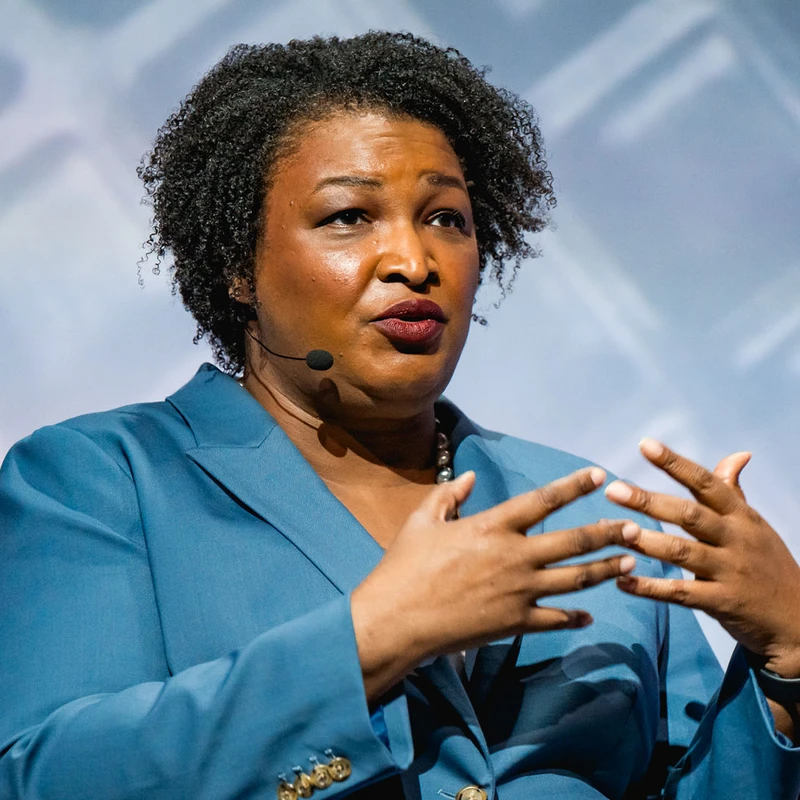
  • Stacey Abrams: Connect DEI Achievements to Protect It

    In today’s landscape, diversity, equity, and inclusion (DEI) initiatives are facing significant scrutiny and opposition. Stacey Abrams, a prominent advocate for social and political equity, believes that proponents of DEI must step up their game in communicating its tangible achievements and societal advances if it’s to survive and thrive.

    A Foundation Built on Purpose

    Abrams’ own drive for advocacy is deeply rooted in her upbringing. Her parents, despite economic challenges, instilled a powerful family motto: ‘Having nothing wasn’t an excuse for doing nothing.’ This philosophy shaped her understanding that purpose and power aren’t defined by circumstances, but by how one chooses to act within them. She recalls a pivotal moment in second grade when she defended a classmate against a bully, recognizing then the importance of standing up for others, especially visible minorities.

    Her time at Spelman College further solidified her confidence as a Black woman navigating the world. Abrams went on to break significant barriers, serving as Minority Leader in the Georgia House of Representatives for 11 years and making history as the first African American to lead the Georgia House and be a major party’s gubernatorial nominee. She also founded key organizations like Fair Fight Action and Fair Count, all dedicated to advancing equity.

    The Battle Against DEI Opposition

    These pillars of equity are currently under attack. As reported by AFROTECH™, the Trump administration took steps to eliminate DEI roles and funding, with proposals to remove universities like Stanford and Yale from federal research programs for upholding DEI hiring practices. While some institutions like UT Austin have halted DEI policies, Abrams argues that DEI is fundamental to America’s success.

    She explains that DEI is ’embedded in the DNA of America’ and guides education, the economy, and democratic processes. Abrams believes opponents aim to ‘eliminate competition and restore uniformity, unfairness, and exclusion.’ She notes that while DEI has been a buzzword since 2020, it has also been misconstrued, partly because proponents haven’t effectively communicated its meaning and impact.

    Connecting the Dots for Future Success

    Abrams emphasizes that proponents need to ‘connect the dots between DEI’s achievements (like the ADA — Americans with Disabilities Act — or Title I education) and our advances as a society.’ She acknowledges that re-educating people on these connections is a ‘tough but achievable goal.’ For Abrams, DEI isn’t just a concept; it’s essential for informing decisions, reducing harm, and driving innovation.

    She articulated these views further at the AFROTECH™ Conference 2025, where she also discussed the role of AI in democracy. Abrams stressed that without proper regulation, oversight, and digital literacy, AI can be weaponized. Her focus is on empowering people to use these tools responsibly and ensuring the tools themselves benefit communities, highlighting that intentional DEI training and privacy rights are ‘rudimentary and vital for ensuring equity.’

    AFROTECH™: A Catalyst for Connection

    Abrams sees events like the AFROTECH™ Conference, returning to Houston from Nov. 2-6, 2026, as crucial catalysts. She noted that innovation is rarely a solo act, and conferences provide the necessary space for connection, debate, and discovery, fostering the support and skills needed for progress. By clearly articulating the value and achievements of DEI, Abrams aims to ensure its continued importance in building a more equitable future.

    What are your thoughts on Stacey Abrams’ perspective on communicating DEI achievements? How can we better connect these initiatives to societal progress? Share your insights in the comments below!

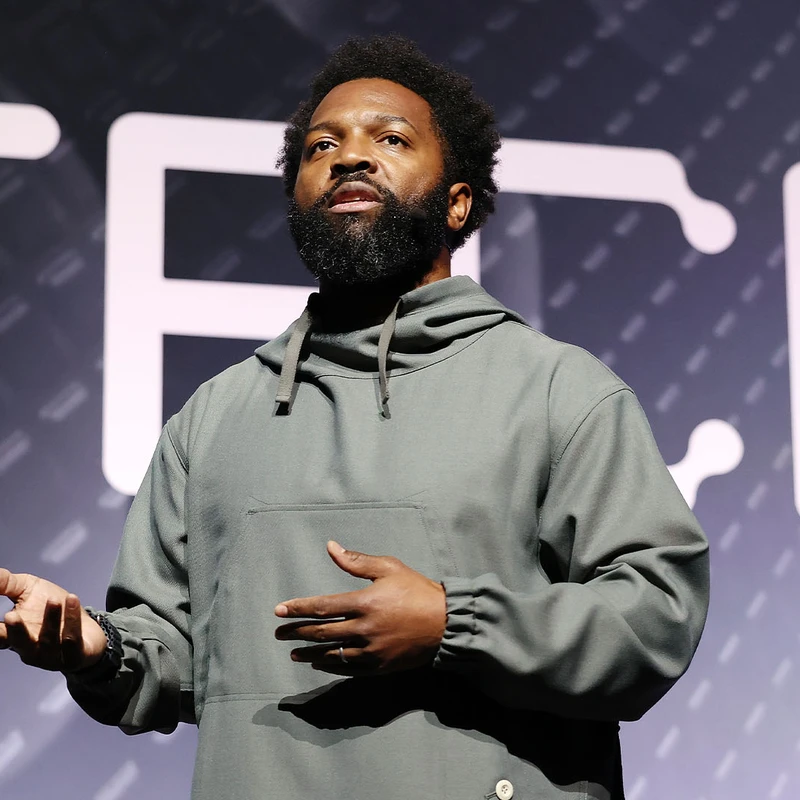
  • Baratunde Thurston: AI Isn’t Taking Jobs, People Are

    The conversation around artificial intelligence (AI) often sparks fear about job displacement. However, Emmy-nominated host and producer Baratunde Thurston offers a different perspective. He argues that AI itself isn’t the culprit; rather, it’s the people setting the directives and making the decisions behind its deployment.

    Accountability Lies With Humans, Not Robots

    During a recent appearance on the “Black Tech Green Money” podcast, Thurston emphasized that AI systems are not self-conscious and don’t make independent choices. “AI is not self-conscious. It doesn’t make its own choices. It is operating under its directives and goals set by people,” he explained. The real accountability, he believes, lies with the individuals and business leaders who choose to implement AI in ways that lead to job losses.

    Thurston highlighted the irony of tech leaders warning about the very technologies they are pushing. He likened it to someone setting fire to a house and then warning about the risk of it burning down. “Those entities did not choose to be here… We invoked them, a very small subset, but humans invoked them, and business leaders choose to deploy,” he stated, urging for a focus on the human decision-makers.

    The Black Community’s Role and Redefining the Game

    While acknowledging that entire classes of jobs may disappear due to AI, Thurston expressed skepticism about billionaires with trillion-dollar agendas leading society to a better future. Instead, he champions the power of collective thinking, particularly within the Black community. He draws parallels between the resilience and ingenuity of Black people throughout history – who were instrumental in building America – and the current need to leverage AI for survival and advancement.

    Thurston believes the next step for the community is not just to play the existing game better, but to redefine it entirely. This requires “spaciousness,” “group creativity,” and a “major bold vision” to shift to a new playing field with different rules and players.

    A Call for Collective Vision

    Ultimately, Thurston’s message is one of empowerment and critical thinking. He urges us to look beyond the technology itself and focus on the human intentions and decisions driving its integration into our lives and workplaces. The future, he suggests, depends on our collective ability to not just adapt but to innovate and reshape the landscape.

    What are your thoughts on Baratunde Thurston’s perspective on AI and job accountability? Do you agree that the focus should be on human decision-makers? Share your views in the comments below!

  • WMG & Udio Partner on AI Music Future

    The music industry is stepping into a new era, and artificial intelligence is leading the charge. Warner Music Group (WMG) has just announced a groundbreaking deal with AI music platform Udio, aiming to resolve copyright issues and actively shape the future of AI-generated music.

    A Landmark Partnership for AI Music

    On November 19th, WMG and Udio reached an agreement that resolves their copyright dispute and sets the stage for a new AI music platform scheduled to launch in 2026. This subscription service will be trained on authorized and licensed songs, creating fresh revenue streams for artists while ensuring their work is protected.

    WMG CEO Robert Kyncl emphasized their commitment to artist rights, stating, “We’re unwaveringly committed to the protection of the rights of our artists and songwriters, and Udio has taken meaningful steps to ensure that the music on its service will be authorized and licensed.” He added that this collaboration aligns with WMG’s goal to “responsibly unlock AI’s potential – fueling new creative and commercial possibilities while continuing to deliver innovative experiences for fans.”

    Resolving Disputes and Embracing Innovation

    This partnership follows lawsuits filed by the RIAA against Udio and rival platform Suno for alleged “mass infringement.” Universal Music Group also settled with Udio last month and is preparing to launch its own licensed AI music platform in 2026. These moves signal a clear industry trend towards embracing AI-generated music in a responsible, licensed manner.

    Meanwhile, Suno continues to navigate copyright battles, even as its valuation soars. The company recently raised $250 million, reaching a $2.45 billion valuation and generating $200 million in annual revenue. Udio, on the other hand, is actively resolving disputes through new deals and plans to offer tools for creating remixes, covers, and new songs, ensuring participating artists and songwriters are credited and compensated.

    AI Music Hits the Charts

    The impact of AI in music is already being felt on the charts. During the week of November 17th, three AI-created songs reached top positions on both Spotify and Billboard charts. One notable example is an anti-migrant anthem by JW “Broken Veteran,” which hit No. 1 on Spotify’s global viral chart.

    AI has ‘democratized music creation.’ — JW “Broken Veteran” (Anonymous AI Artist)

    The anonymous creator behind this AI-powered act defended the technology as “just another tool for expression, especially for people like me who have something to say but lack traditional musical training.” This perspective highlights how AI is lowering the barrier to entry for music creation, making it more accessible to a wider range of individuals.

    What are your thoughts on the rise of AI in music? Do you think it’s a positive development for artists and fans? Share your opinions in the comments below!

  • Teen Startup Founder Now Fintech CEO at 22

    The world of technology is constantly evolving, and at just 22 years old, Miracle Nwankwo is already a seasoned player. Having launched his first startup, BookClinic, at 19, this former teen prodigy has now stepped into a significant leadership role as the CEO of the African division for Veefin, an Indian-based fintech company.

    From Health-Tech to Fintech Leadership

    Nwankwo’s journey began with BookClinic, a health-tech startup designed to help users get medical diagnostics and book appointments seamlessly. The success of this venture put him on the radar within the tech community even before he completed his computer science degree. His early exposure to technology, starting in secondary school, fueled a clear ambition: to create tech solutions used by millions and eventually become a billionaire.

    Inspired by tech giants like Mark Zuckerberg, Nwankwo dedicated himself to mastering coding and developing the skills necessary to make a real impact. Now a graduate of Babcock University in Nigeria, he’s bypassed traditional entry-level positions to lead Veefin’s expansion into Nigeria and the broader West African region.

    Navigating the Fintech Landscape

    As CEO of Veefin Nigeria, Nwankwo oversees the provision of end-to-end technology infrastructure for banks, NBFCs, and corporations. This includes everything from mobile platforms and fraud monitoring to customer service operations. His transition into fintech, a field he wasn’t initially deeply versed in, showcases his adaptability and strong technological acumen.

    He explained the steep learning curve involved: “I had to understand the lending ecosystem, learn business banking structures, study how banks operate internally, understand compliance, risk, and regulatory requirements, and understand how to sell tech to enterprise-level clients.” This challenging yet fulfilling experience involves pitching Veefin’s platform to bank executives, demonstrating how their solutions can help clients scale, cut costs, and improve efficiency.

    A Vision for Technology’s Future

    Nwankwo’s path to CEO was facilitated by an investor from his initial project, BookClinic, who connected him with Veefin’s founders. They were seeking a leader to spearhead their expansion into Nigeria. His ability to apply his technological expertise across different sectors made him an ideal candidate for the role.

    Looking ahead, Nwankwo remains passionate about technology’s potential to transform the world. He believes that “technology would shape the future in a splendid way,” with significant advancements occurring every five to ten years. He anticipates that current innovations will soon be surpassed by even more groundbreaking technologies, emphasizing technology’s continuous advancement across all fields.

    What inspires you most about young innovators like Miracle Nwankwo? Share your thoughts on the future of technology and fintech in the comments below!

  • Victoria Monét on AI Music: Protect Creators!

    Imagine pouring your heart and soul into your craft, only to see something artificial rise up and potentially blur the lines of your identity and brand. That’s the reality Grammy-winning singer Victoria Monét is grappling with, and she’s calling for a serious conversation about AI in the music industry.

    The Rise of Xania Monet and Victoria’s Concerns

    The buzz around AI artist Xania Monet has been significant. This AI creation, whose music is penned by poet and entrepreneur Telisha “Nikki” Jones, has not only topped charts but also landed a multi-million-dollar record deal. While Xania’s creator emphasizes the genuine emotion in her lyrics, Victoria Monét finds it hard to believe that Xania wasn’t, in some way, inspired by her likeness.

    Monét shared a striking anecdote: a friend used ChatGPT to generate an image of “Victoria Monét making tacos,” and the resulting picture bore a resemblance to Xania. This has led Monét to question the fairness of an AI artist capitalizing on a name that could easily be confused with her established brand, especially without explicit use of her name in the prompt.

    The Unfair Competition of AI

    Beyond the likeness issue, Monét highlights a more fundamental challenge: the sheer speed and endurance of AI. “It definitely puts creators in a dangerous spot because our time is more finite,” she explained to Vanity Fair. Human artists need rest, but AI can churn out content around the clock, creating an almost impossible competitive landscape.

    This disparity raises critical questions about how human creativity can thrive when faced with tireless artificial counterparts. How do we ensure that the value of human artistry isn’t diminished?

    A Call for Clearer Guidelines and Labels

    Victoria Monét is advocating for transparency, suggesting that AI-generated music should be clearly labeled as “artificial,” much like how food products are labeled. This would help consumers and industry professionals distinguish between human-made and AI-generated content.

    She emphasizes the need for guidelines to protect creators who are most vulnerable to these technological shifts. “We’re introducing a tool with a lot of potential, but without the guidelines to protect the people who may be affected by it the most, which would be the creators,” Monét stated.

    Industry Reactions

    Monét isn’t alone in her concerns. Fellow R&B artist Kehlani has also voiced her disapproval of AI artists, stating plainly in a TikTok video, “I don’t respect it.” This sentiment reflects a growing unease within the creative community.

    Xania Monet’s creator, Telisha Jones, however, maintains a different perspective. She acknowledges the differing opinions but points to the continuous evolution of technology. “Everybody has different ways of putting in the work to get to where they’re at. I don’t feel a way about it,” Jones remarked on “CBS Mornings,” suggesting that different paths to success are valid in this new era.

    What’s Next for Music and AI?

    The conversation Victoria Monét is sparking is crucial. As AI continues to advance, the music industry, and indeed all creative fields, must grapple with ethical considerations, intellectual property rights, and the fundamental definition of artistry. Establishing clear regulations and fostering transparency will be key to navigating this new frontier and ensuring that human creators remain valued and protected.

    What are your thoughts on AI-generated music and artists like Xania Monet? Do you think clearer guidelines are needed to protect human creators? Share your opinions in the comments below!

  • Angel Mosley Launches AI Cyber Crisis Training

    In today’s digital landscape, a cybersecurity breach can cripple a business. Recognizing this, cybersecurity and risk management expert Angel Mosley has launched an innovative AI-powered simulation platform designed to train leaders on how to navigate these high-stakes cyber business crises. It’s like a fire drill for your company’s digital assets!

    From Jackson State to Cybersecurity Pioneer

    Mosley’s journey into cybersecurity began during her time at Jackson State University. Initially drawn by the promise of high starting salaries for computer science graduates, she quickly discovered a passion for the field. After graduating in 1994, she gained hands-on experience, from connecting cables to working in bank computer rooms, eventually transitioning into compliance and IT auditing.

    A pivotal moment came with the introduction of the Sarbanes-Oxley Act (SOX). Learning how to secure systems and implement controls to prevent corporate malfeasance, like that seen at Enron and MCI, solidified her path into cybersecurity. The goal was clear: ensure the company had the right safeguards in place to avoid legal repercussions.

    Founding CyBase Risk Management

    After over two decades in IT and cybersecurity, Mosley took the leap into entrepreneurship, founding CyBase Risk Management in 2024. Her inspiration struck after reading about Lincoln College, a struggling institution that permanently shut down following a ransomware attack it couldn’t recover from. This fueled her mission to help organizations, particularly small to medium-sized businesses in high-risk sectors like healthcare, finance, and education, that may lack adequate resources.

    Introducing CyFireAI: The AI Simulation Platform

    The flagship product from CyBase is CyFireAI, an AI-powered platform that uses realistic breach scenarios to train leaders and their teams. It ensures that all departments—finance, PR, HR, and legal—are aligned and ready to respond swiftly and effectively during a cyber crisis. Before team exercises, participants even complete personalized quizzes to tailor simulations to their specific roles and company culture.

    Mosley, who spent 10 years as an incident response commander, identified critical gaps in how cyber threats are typically handled. These include the misconception that IT can manage all aspects of a crisis alone, a lack of legal readiness with on-call attorneys, and insufficient cybersecurity insurance. CyFireAI aims to bridge these knowledge gaps by simulating a wide range of scenarios.

    Bridging Gaps and Building Resilience

    The platform identifies critical vulnerabilities, provides performance feedback on communication, compliance, and containment, and generates an industry-compliant incident response plan. Mosley then works with clients to translate these recommendations into actionable project plans, often partnering with managed service providers for technical implementation and insurance brokers to enhance cyber resilience.

    Currently in its pilot phase, CyFireAI is seeking partnerships with 10 companies. This innovative approach by Angel Mosley is set to revolutionize how organizations prepare for and respond to the ever-evolving threat of cyber business crises.

    Is your organization prepared for a cyber crisis? What are your biggest concerns regarding cybersecurity? Share your thoughts in the comments below!

  • Spotify App Crashing? What You Need to Know

    Woke up this morning, Nov. 18, 2025, only to have your Spotify app completely bail on you? You’re definitely not alone! Many users across both Android and iPhone devices reported significant issues with the popular music and podcast streaming service, with complaints flooding in around 3 a.m. EST and continuing throughout the morning.

    What Exactly Was Happening?

    While many were still able to jam out to their favorite tunes and browse the vast library, the primary culprit seemed to be podcast playback. Reports indicated that listening to podcasts was particularly problematic, leading to frustration for many dedicated listeners. Spotify’s official status page confirmed that the technical team was actively investigating the situation.

    For those still struggling, Spotify’s community forums offered a couple of quick fixes. The first suggestion was a simple app restart. If that didn’t do the trick, the next recommended step was a ‘clean reinstall’ – basically, deleting the app entirely and then downloading it fresh from your app store. This also ensures you’re running the very latest version.

    Beyond Crashing: Other Reported Issues

    The app crashes weren’t the only hiccup reported. Some users also experienced difficulties when trying to subscribe to Spotify’s services, though the company stated these issues have since been resolved. Additionally, there were reports of playlists failing to load on car infotainment systems, adding another layer of inconvenience for commuters.

    The Cloudflare Connection: A Wider Internet Glitch?

    Interestingly, this Spotify disruption coincided with a major outage affecting Cloudflare, a critical internet infrastructure provider. Starting around 6:30 a.m. EST, Cloudflare experienced significant technical problems that impacted numerous websites and services globally. This wasn’t a malicious attack, but rather a result of an automatically generated configuration file that grew too large, causing a system crash.

    The ripple effect of the Cloudflare outage was widespread, affecting popular platforms like Canva, ChatGPT, Uber, X (formerly Twitter), and Zoom, among others. Thankfully, Cloudflare reported that services were back to normal by the afternoon, with their engineering teams continuing to investigate the root cause.

    What This Means for You

    While the Spotify app issues seem to be resolved, and the Cloudflare outage is over, it’s a good reminder of how interconnected our digital lives are. A problem with one major service can often cascade and affect many others. For now, hopefully, your Spotify is back to playing your favorite tracks and podcasts without a hitch!

    Did you experience these Spotify issues on November 18th? Share your experience in the comments below!