Tag: Technology

  • AI’s Impact on College Major Choices

    Are you thinking about college or currently navigating your major? You might be surprised to learn that artificial intelligence is shaking things up in a big way. A recent study reveals that AI’s rapid integration is causing a significant number of students to rethink their academic choices, leading many to switch or consider switching their majors.

    The AI Effect on Major Selection

    New data from Lumina Foundation and Gallup indicates that nearly 30% of undergraduates in certain technical and creative fields have either changed their major or are seriously contemplating it. Why the shift? Students are increasingly anxious about job security in an era of automation and are looking to “future-proof” their careers.

    Traditionally, STEM (Science, Technology, Engineering, and Mathematics) fields have been seen as the safest bet for employment. However, the advancements in AI, like sophisticated coding assistants and automated content creation tools, are changing that perception. This has led many students to look beyond purely technical roles.

    Shifting Away from Digital Outputs

    The poll highlights a notable trend among majors focused primarily on digital outputs. Students in these areas are increasingly pivoting towards what are considered “AI-resilient” sectors. Fields like Computer Science and Data Entry are seeing students move towards hardware engineering, cybersecurity, and robotics. The reasoning? While AI can handle basic coding, the physical maintenance of systems and network defense are still seen as human-centric domains.

    Similarly, the Digital Arts and Graphic Design sectors are experiencing a transformation. Students are moving away from solely digital illustration and exploring majors like Industrial Design or Specialized Architecture. The concern is that AI tools are taking over entry-level “production” roles, pushing students toward fields that require physical materials or complex planning where human oversight is essential.

    The Rise of ‘Human-Centric’ Majors

    As students step back from certain tech-heavy paths, “human-centric” majors are experiencing an unexpected surge in popularity. Fields such as Nursing, Early Childhood Education, and Occupational Therapy are seeing increased enrollment. These professions are perceived as having a natural “protective moat” because they rely heavily on physical empathy and complex interpersonal skills that current AI cannot replicate.

    This trend suggests that the next generation of professionals isn’t necessarily rejecting technology altogether. Instead, they are strategically positioning themselves as the “human governors” of automated systems, focusing on roles where human connection, creativity, and critical thinking remain paramount.

    How do you think AI will continue to shape career choices and college majors? Are you considering a major that emphasizes human skills? Share your thoughts in the comments below!


  • Victor Glover Makes History: First Black Astronaut to Orbit Moon

    Get ready for a monumental moment in space exploration! NASA astronaut Victor Glover is poised to become the first Black individual to journey around the Moon. This incredible feat is part of the ambitious Artemis II mission, which aims to send humans back to lunar orbit for the first time since 1972.

    The Artemis II Crew Takes Flight

    The Artemis II crew, consisting of Reid Wiseman, Victor Glover, Christina Koch, and Jeremy Hansen, launched on April 1, 2026, from NASA’s Kennedy Space Center. This mission isn’t just about a lunar flyby; it’s a crucial step towards future Moon landings and even the ambitious goal of sending astronauts to Mars.

    Victor Glover, a decorated U.S. Navy veteran with extensive flight experience and four spacewalks under his belt, is piloting the spacecraft. This mission builds on his previous historic achievement as the first Black man to travel to the International Space Station in 2020.

    Breaking Barriers and Setting Records

    Glover isn’t the only one making history on this crew. Christina Koch is set to become the first woman to orbit the Moon, and Jeremy Hansen will be the first Canadian and non-U.S. citizen to undertake such a journey. The mission is also projected to set a distance record, traveling approximately 252,000 miles from Earth.

    Glover shared his hopes that their mission will serve as an example of unity and excellence, proving that success in space exploration comes from diverse backgrounds and experiences. He emphasized the importance of crew cohesion, stating, “It really takes us all, in all of our skills, to successfully go to the moon and come back.”

    A Mission for the Future

    The Artemis II mission is expected to last about 10 days. During this time, the crew will fly past the Moon, collecting vital data to support future exploration efforts. The mission will conclude with a splashdown landing in the Pacific Ocean, marking another successful step in humanity’s return to the Moon.

    What does this historic achievement by Victor Glover mean to you? Share your thoughts in the comments below!

  • Texas HUB Program Changes Impact 15,000+ Businesses

    Big changes are happening in Texas that could significantly impact thousands of minority-owned businesses. Acting Texas Comptroller Kelly Hancock has announced a major restructuring of the Historically Underutilized Business (HUB) program. This move has led to over 15,000 businesses losing their certification, sparking concern and legal action.

    From HUB to VetHUB: What’s Changed?

    The HUB program, originally established in 1999 under Governor George W. Bush, was designed to ensure equal opportunities for small, minority-, and women-owned businesses in securing government contracts. Now, it’s been rebranded and restructured as Veteran Heroes United in Business (VetHUB).

    Under the new structure, certifications will primarily be granted to service-disabled veterans with a documented disability rating of 20% or more. This requires specific documentation like a DD-214 and a disability rating letter from the VA or Department of Defense, alongside other necessary paperwork.

    Comptroller’s Stance and Business Owner Concerns

    Acting Comptroller Hancock stated that the goal is to ensure a level playing field where government contracts are awarded based on performance and best value. He emphasized his office’s commitment to protecting taxpayer funds and ensuring fair competition for all Texas businesses. This action, he claims, reinforces Texas’ principles of fairness and accountability.

    However, these changes have hit thousands of businesses hard. Many are owned by Black, Hispanic, Asian, Native American, and women entrepreneurs. Business owners like Ruben Mercado Jr., a Hispanic American contractor, and Cortena Williams, a Black woman in construction, report that their business stability is now threatened following the termination of their HUB certifications.

    Legal Challenge Against the State

    In response to these changes, business owners, including Mercado and Williams, along with a trade organization, have filed a lawsuit against the State of Texas. Dubbed ‘The HUB Case,’ the legal challenge questions the authority of the Acting Comptroller to rewrite laws passed by the state legislature.

    In this country, the legislature passes the laws, not the comptroller, and Texas is no different. The HUB case highlights a fundamental American principle — members of the executive branch cannot rewrite laws passed by the state legislature. They cannot deny citizens of their legal rights without a court order, legislative approval, or due process. — Alphonso David, President and CEO of the Global Black Economic Forum

    Alphonso David, lead counsel for the plaintiffs, argues that Acting Comptroller Hancock acted without legal authority. He asserts that Hancock took a program created by statute and rewrote it, making his actions unlawful and demanding they be reversed. This legal battle centers on the core principle of separation of powers and due process.

    What are your thoughts on the restructuring of the Texas HUB program? Share your perspective in the comments below!

  • Amazon Settles $20.5M Data Center Pollution Lawsuit

    Amazon is stepping up to settle a class action lawsuit concerning pollution from its data centers in Eastern Oregon. The case, which focused on the Lower Umatilla Basin, highlights concerns over groundwater contamination affecting tens of thousands of residents who rely on it for drinking water.

    The Nitrate Problem in Eastern Oregon

    For years, the groundwater in Morrow County and surrounding areas has shown a concerning increase in nitrates. This contamination poses risks, particularly to newborns, and has been linked to an increased risk of cancer. While the issue predates Amazon’s arrival, with agricultural runoff being a primary historical source, the lawsuit claims that the significant water usage by data centers has accelerated the problem.

    The lawsuit alleges that the millions of gallons of wastewater from Amazon’s data centers, along with other facilities in the Lower Umatilla Basin Groundwater Management Area (LUBGWMA), contribute to the nitrate pollution. This moves the nitrates into the groundwater at an alarming rate, according to reports.

    Amazon’s Response and Settlement

    Despite denying any wrongdoing and asserting that its operations have not contributed to the contamination, Amazon has agreed to settle the lawsuit for $20.5 million. A spokesperson for Amazon stated that the company decided to settle to avoid a lengthy legal battle and to “focus our time and resources on supporting the community rather than on litigation.”

    The settlement still requires court approval. However, the move signals a desire to resolve the issue outside of a protracted court process. Local residents, like Kathy Mendoza, who attributes her own health condition to the nitrates, view the settlement amount as potentially insufficient given the scale of the problem, calling it “a drop in the bucket.”

    Understanding the Impact

    • The Lower Umatilla Basin relies on groundwater for drinking water for up to 45,000 residents.
    • Nitrate levels have been steadily increasing since at least 1991.
    • Potential health risks include impacts on newborns and increased cancer risk.
    • Data centers’ water usage for cooling is alleged to accelerate nitrate movement into groundwater.

    This settlement marks a significant development in the ongoing conversation about the environmental impact of large tech operations in rural communities. It highlights the complex interplay between industrial needs and the preservation of essential natural resources like clean drinking water.

    What are your thoughts on Amazon’s settlement and the environmental impact of data centers? Share your perspective in the comments below!

  • CDU Launches $20K Pitch Accelerator for Entrepreneurs

    Get ready, innovators! Charles R. Drew University of Medicine and Science (CDU), the West Coast’s only Historically Black College and University (HBCU), is rolling out a brand-new initiative to supercharge early-stage entrepreneurs. This isn’t just any program; it’s a $20,000 pitch accelerator designed to boost ventures in crucial fields like biotech, public health, and community impact.

    Introducing the Bioentrepreneurship Initiative Pathway (BIP)

    Dubbed the Bioentrepreneurship Initiative Pathway (BIP) accelerator, this program is a significant step for CDU’s College of Science and Health, made possible with support from sponsor Kaiser Permanente. It aims to empower a diverse group of participants, including CDU students, alumni, faculty, community members, and even external founders.

    The accelerator isn’t just for brand-new ideas; it welcomes founders at various stages, from those just launching ventures to mid-revenue businesses and even established companies looking to scale. The focus is on creating solutions for underserved communities, particularly across Southern California.

    Comprehensive Support for Founders

    Brittney Miller, the program director, highlighted that the BIP accelerator offers more than just funding. Participants will gain access to invaluable resources such as business model development, mentorship from seasoned industry leaders, and crucial networking opportunities within the biotech, healthcare, and entrepreneurship ecosystems.

    • Storytelling and pitch development
    • Branding and founder identity
    • Investor readiness
    • Marketing and go-to-market strategy
    • Regulatory and legal frameworks
    • Commercialization

    Bridging Gaps and Fostering Inclusive Innovation

    Miller emphasized the program’s significance, noting, “We’ve largely been in the space of clinical medicine, research, and public health. And then the things that we’re realizing and that need also support and representation are innovation and entrepreneurship.” CDU is uniquely positioned to lead this initiative, intentionally creating access for entrepreneurs who are often overlooked but are closest to the problems needing solutions.

    This accelerator is set to redefine who is recognized as an innovator. It’s not just about preparing founders for existing systems, but about empowering them to build culturally relevant, community-informed, and scalable solutions. The program champions both representation and impact, bridging community, academia, and industry to ensure innovation is more inclusive and equitable.

    The Inaugural Cohort and Seed Funding

    The first cohort is already underway, featuring 17 individuals primarily focused on biotech ventures. Others are developing AI-driven health platforms, innovative medical devices, and groundbreaking drug development projects. The program culminates in a pitch competition where participants can compete for that $20,000 in seed funding.

    What are your thoughts on CDU’s new accelerator? Share your excitement for inclusive innovation in the comments below!

  • Instagram Plus: Meta’s New Paid Subscription?

    Ever wished you could peek at Instagram Stories without anyone knowing? Well, Meta might be about to make that a reality – for a price. The social media giant is reportedly testing a new premium subscription service for Instagram, dubbed ‘Instagram Plus,’ in several international markets. This move signals a significant shift in how Meta plans to generate revenue from its popular photo-sharing app, potentially moving beyond its traditional advertising model.

    What’s Inside Instagram Plus?

    So, what exactly do you get with this potential new subscription? According to reports, Instagram Plus aims to offer users more control and exclusive features. The star attraction seems to be the ability to view Stories anonymously. Imagine scrolling through your friends’ updates without leaving a trace – pretty neat, right?

    But that’s not all! Subscribers could also gain insights into their own content, like seeing how many times their Stories have been rewatched. Plus, you might get to create unlimited custom audience lists for your Stories, offering more flexibility than the current ‘Close Friends’ feature. This means you can share content with specific groups more easily.

    More Perks for Subscribers

    The perks don’t stop there. Instagram Plus could also include features like extending a Story’s lifespan by an extra 24 hours, a weekly ‘spotlight’ to boost a Story’s visibility, and the ability to send animated ‘Superlikes.’ You might even be able to search your viewer lists to find specific people quickly.

    Where is Instagram Plus Being Tested?

    Meta is keeping the initial rollout tight, with tests currently underway in countries like Mexico, Japan, and the Philippines. While official pricing hasn’t been announced, screenshots shared by users suggest monthly costs could range from about $1 to $2.20, depending on the region. It’s important to note that this is separate from ‘Meta Verified,’ which is geared more towards creators and businesses.

    This move by Meta comes at a time when many users are experiencing ‘subscription fatigue.’ However, the success of paid features on other platforms suggests there’s an appetite for premium social media experiences. Meta is playing it smart, continuing to test the waters before deciding on a wider launch.

    What are your thoughts on a paid Instagram subscription? Would you pay for features like anonymous story viewing? Let us know in the comments below!

  • DualShot Recorder: Black-Owned App Hits #1

    Ever feel like you’re juggling too many apps just to get your videos ready for different platforms? What if there was one tool that could simplify your entire workflow? Well, get ready, because a black-founded app called DualShot Recorder has just stormed the Apple App Store and claimed the #1 spot!

    The Game-Changer for Creators

    This isn’t just another app; it’s a powerful solution designed by content creator Derrick Downey Jr. himself. He built DualShot Recorder to tackle the daily frustrations he faced, and it turns out, many others were feeling the same pain. The app’s genius lies in its ability to let you record in both vertical (9:16) and horizontal (16:9) formats simultaneously.

    Imagine this: you film once, and you’ve got perfectly formatted footage ready for TikTok, Instagram Reels, YouTube Shorts, and even longer-form YouTube videos. No more re-recording or awkward cropping! This dual-format capability is a massive time-saver for anyone trying to keep up with the fast-paced world of online content.

    From Problem to #1 Hit

    The impact was immediate. In its very first 24 hours after launching, DualShot Recorder shot straight to the top of Apple’s paid apps chart. Derrick Downey Jr. himself shared the incredible news with his massive following of over 1.6 million on Instagram, expressing his gratitude and surprise at the overwhelming support.

    Downey Jr. stated, “This is going to help so many content creators, entrepreneurs, and storytellers. DualShot was built to solve a problem I was facing every single day. I didn’t know it would be received like this, but boy, y’all have shown up in a BIG way.” It’s clear that this app is resonating deeply with its target audience.

    Features That Empower Creators

    Beyond its core dual-recording feature, DualShot Recorder offers impressive quality options, including 4K and 1080p recording. This means you don’t need expensive equipment to produce high-quality videos. Plus, it even includes a handy real-time storage estimator, so you know exactly how much space your footage will take up before you even start recording.

    • Record in 9:16 and 16:9 formats simultaneously.
    • High-quality recording options (4K and 1080p).
    • Real-time storage estimator.
    • User-friendly interface for all skill levels.
    • One-time purchase, no subscriptions.
    • Protects user data.

    What makes DualShot Recorder even more appealing is its commitment to affordability and user privacy. It’s a one-time purchase, ditching the dreaded subscription model. Plus, it’s designed to protect your personal data, which is a huge plus in today’s digital landscape. An Android version is also reportedly in the works, aiming to bring this powerful tool to even more users.

    The Future of Content Creation

    DualShot Recorder is more than just an app; it’s a testament to innovation and the power of addressing real user needs. It streamlines the recording process, making it faster and smoother for creators to get their content out into the world. This black-owned business is setting a new standard, proving that with the right tools, anyone can become a successful content creator.

    Have you tried DualShot Recorder yet, or are you excited to give it a go? Share your thoughts and experiences in the comments below!

  • Venus Rose Builds AI Infrastructure for Creators

    For years, creators have been the engine of culture, driving trends and fueling digital platforms. However, they often watch as others build the systems, own the data, and profit from their creativity. Venus Rose, a Norfolk, Virginia native, is on a mission to change that narrative by building essential infrastructure for the creator economy, especially within the burgeoning AI landscape.

    Empowering Creators to Build, Not Just Consume

    Rose, who launched Haus of Creators after years working at the intersection of culture, fashion, music, and brand storytelling, is now focused on a larger goal: equipping creators with the knowledge and tools to understand, strategically use, and ultimately own AI technologies. ‘I think the message that I want [people] to get is that this is to build the new infrastructure for the creator economy with AI as a tool and partner,’ Rose told BLACK ENTERPRISE. ‘We want to help creators build AI tools and build AI companies in the end.’

    This vision is the driving force behind Haus of Creators AI Labs, a new pre-incubator program designed to help creators transition from being platform users to becoming builders of the next generation of digital products and businesses. Rose observed a significant disconnect in the tech space, noting that many AI tools and companies are built *for* creators, but not *by* them, lacking crucial insights from the very people they aim to serve.

    Addressing the Urgency for Black Creators

    The disconnect is particularly urgent for Black creators, who have historically driven cultural trends and fueled industries without commensurate ownership or control over the platforms and intellectual property associated with their work. ‘What’s most shocking to me is how obsessed these people are with the entertainment industry and us,’ Rose stated. ‘But we have no type of ownership at all. They’re running everything…and then owning the IP of all of our creativity.’

    This imbalance fuels Rose’s passion for building infrastructure and educating her community. She launched the AI Labs pre-incubator during New York Fashion Week, strategically leveraging the presence of creatives, founders, and industry professionals to maximize exposure and engagement.

    Demystifying AI and Fostering Ownership

    Rose’s workshops aim to demystify AI, combating the misconception that it’s either too technical or merely for entertainment. She teaches creators about AI basics, building minimum viable products, community development, and protecting intellectual property. Crucially, she emphasizes that creators don’t need extensive technical backgrounds or large budgets to start building with AI tools like ChatGPT or Claude, which can generate code and create early-stage software demos.

    Her curriculum also includes bringing in venture capitalists, investment bankers, legal experts, and entrepreneurs to educate participants on the business aspects of building AI-driven companies. The goal is to guide creators through identifying problems, developing solutions, building communities, protecting their work, and securing investment.

    A Vision for the Future Creator Economy

    Rose’s core message is a stark warning: creators who continue to feed platforms and tools they don’t own risk becoming more vulnerable in the AI era. Her advice is clear: ‘Stop thinking like a consumer and think like a builder. Think from the perspective of an entrepreneur. Think ownership.’ She envisions a future where the creator economy is built on a new infrastructure, with greater involvement and ownership from Black creators.

    What are your thoughts on Venus Rose’s mission to empower creators in the AI era? How can we ensure more creators, especially Black creators, achieve ownership in the digital economy? Share your insights in the comments below!

  • AI Cameras Speed Up Diabetic Eye Screenings in Ohio

    Imagine getting a crucial eye screening done in just 30 seconds! Cleveland Clinic is making this a reality for thousands of patients with diabetes across Ohio, thanks to the rollout of cutting-edge AI-powered cameras. This innovative technology is set to transform how diabetic retinopathy is detected, making the process faster and more accessible than ever before.

    Faster Screenings, Smarter Detection

    These new AI-powered fundus cameras are now available at all Cleveland Clinic Cole Eye Institute locations, conveniently situated near primary care clinics. This means patients with diabetes can get their annual screening for diabetic retinopathy (DR) right alongside their regular check-ups. The best part? Results are often available in under a minute!

    What’s truly remarkable is that these cameras can detect the presence or absence of DR without needing to dilate the patient’s pupils or requiring an ophthalmologist on-site for the initial screening. This significantly streamlines the process, saving valuable time for both patients and medical professionals.

    How the AI Cameras Work

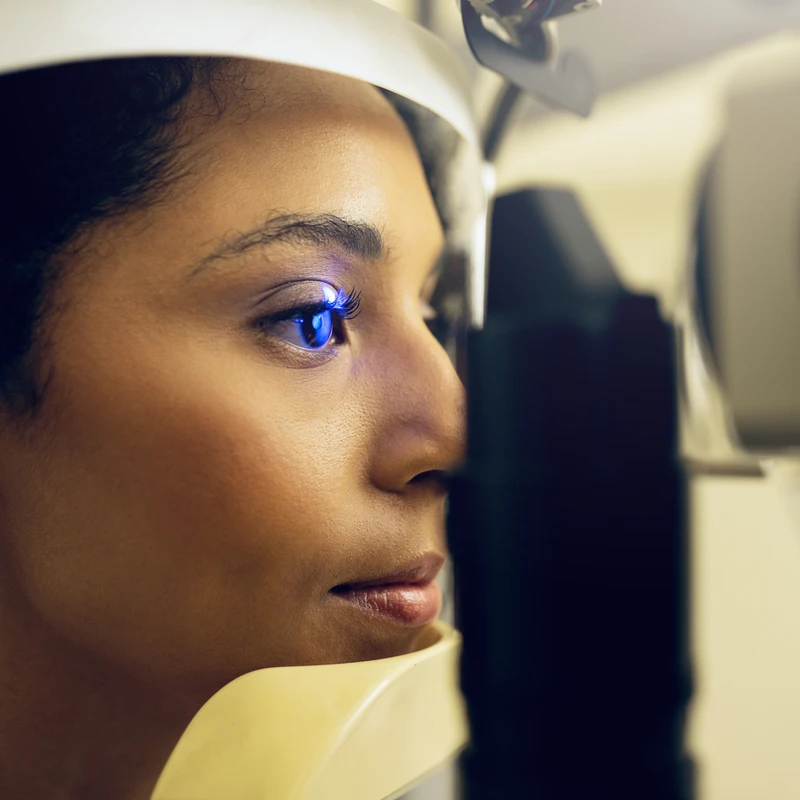
    The process is surprisingly simple. Technicians or clinic staff guide patients to sit at a tabletop device. After resting their chin, the technician initiates the scan via a touchscreen. The robotic camera then precisely focuses and captures two images of each eye: one of the optic nerve and one of the macula.

    Immediately after capture, the AI software analyzes these images for any signs of diabetic retinopathy. The results are then instantly uploaded to the patient’s electronic medical record. This rapid analysis allows for quick identification of potential issues.

    Next Steps for Patients

    Patients who receive inconclusive results or are diagnosed with DR will be referred for a more comprehensive ophthalmology evaluation at a later date. For those who show no signs of retinopathy, the recommendation is to schedule their next screening in a year, often during their routine primary care visit.

    Why Annual Screenings Are Crucial

    Diabetic retinopathy is a serious condition and a leading cause of blindness among working-age adults. Unfortunately, a significant percentage of patients with diabetes don’t get their recommended annual eye screenings. This is often due to inconvenience or lack of access to specialized care.

    Dr. Sumit Sharma, a vitreoretinal surgeon at the Cole Eye Institute, highlights the importance of this new approach. “Improving the convenience of screenings means we may catch more disease in more patients, and also catch it earlier, even while asymptomatic,” he stated. By screening patients during their existing appointments, Cleveland Clinic is removing a major barrier to essential eye care.

    Are you or someone you know managing diabetes? Have you had your annual eye screening? Share your experiences or questions about diabetic eye care in the comments below!

  • FanArcade: Building Black Power in Gaming

    Black culture has always been a driving force in global entertainment, shaping music, fashion, and digital trends. Yet, in the gaming world, ownership has rarely reflected this immense influence. Marcus Brown, founder of FanArcade, is on a mission to change that by building a Black-owned studio that not only translates culture into interactive experiences but also creates genuine pathways for underrepresented talent in tech and game development.

    From Viral Moment to Gaming Studio

    Brown’s journey began with a viral moment – a Kendrick Lamar-inspired browser game tied to the song “Not Like Us.” This success revealed a significant demand: “People don’t just want to watch culture, they want to play it,” Brown told BLACK ENTERPRISE. This realization sparked the evolution from a one-off cultural moment into a full-fledged company.

    Today, FanArcade specializes in creating fast, browser-based interactive games linked to music releases, fan communities, and cultural events. Unlike traditional console gaming, these experiences are highly accessible, requiring no downloads, expensive hardware, or complex learning curves. All that’s needed is a link and an engaged audience, a model that has already garnered over 6.5 million plays.

    Transforming Promotions into Playable Experiences

    A standout activation was “No Wac-Man,” an interactive mini-game created for Summer Walker’s “Finally Over It” album rollout. This game, inspired by Pac-Man, transformed a standard promotional cycle into an engaging fan experience. Instead of passively consuming content, fans were invited to play, becoming part of the album’s narrative. The game attracted an estimated 160,000 to 180,000 players, significantly boosting awareness for the album.

    Brown emphasizes that FanArcade’s approach doesn’t dilute culture for marketability; it protects and amplifies it. This strategy has generated millions of impressions across social media and press, demonstrating how interactive design can deepen fan loyalty and expand reach. Crucially, the studio’s success is built on the foundation of its team.

    Representation Behind the Code

    FanArcade operates with an all-Black development team, a deliberate choice reflecting a commitment to equity and ownership in an industry where Black professionals are severely underrepresented. Brown believes that true legacy in gaming involves ownership behind the scenes, not just on screen. “Representation is not only about seeing Black characters on screen. It is about ensuring Black creators are writing the code, designing the mechanics, and leading the companies.”

    He argues that authenticity in game development requires lived experience. “Having Black characters on screen requires more than a darker skin texture. It requires lived experience and people behind the scenes who understand the why, not just the aesthetic.” By centering development within the community, FanArcade is shifting the industry from cultural borrowing to cultural ownership.

    Expanding Access and Redefining Progress

    Brown’s own path as a self-taught developer, formerly of Fortnite, informs his hiring practices. He prioritizes creative instinct, vision, and cultural understanding over traditional academic credentials, creating opportunities for aspiring developers who might feel excluded from conventional tech pathways. This approach lowers barriers to entry, both for players and creators.

    For Brown, progress in gaming is measured by ownership. “Most video games using Black-owned IP are not developed by Black-owned studios,” he notes. “If that pendulum alone can eventually swing the opposite way, that would be significant progress.” FanArcade aims to be more than just a studio; it aspires to be a beacon for future Black innovators in interactive media, proving that creators from underrepresented backgrounds can lead and own within the tech industry.

    What are your thoughts on FanArcade’s mission to build Black power in gaming? Do you think more studios should prioritize diverse development teams? Share your opinions in the comments below!