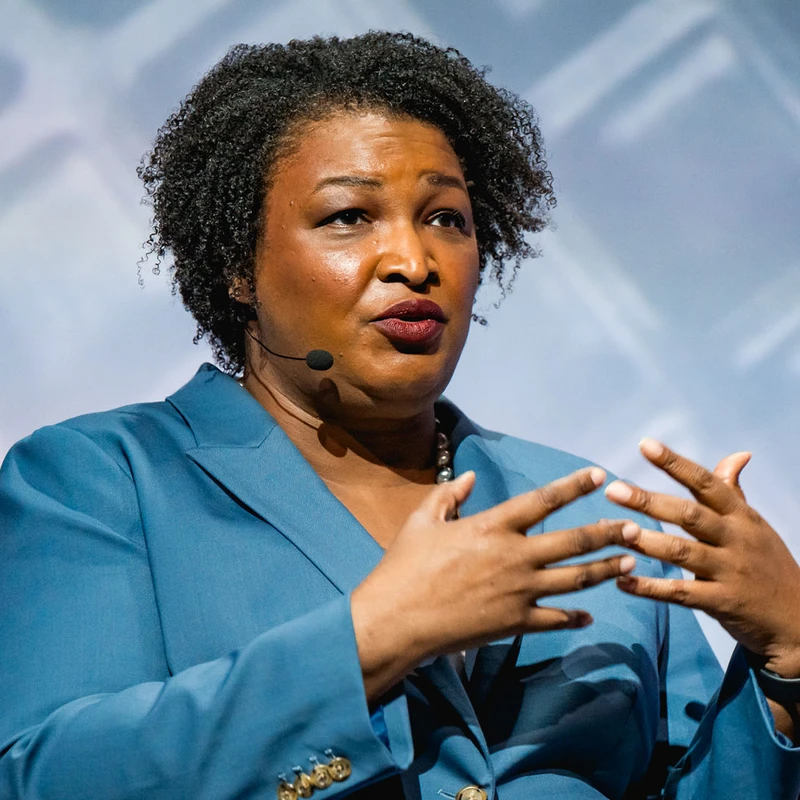
In today’s landscape, diversity, equity, and inclusion (DEI) initiatives are facing significant scrutiny and opposition. Stacey Abrams, a prominent advocate for social and political equity, believes that proponents of DEI must step up their game in communicating its tangible achievements and societal advances if it’s to survive and thrive.
A Foundation Built on Purpose
Abrams’ own drive for advocacy is deeply rooted in her upbringing. Her parents, despite economic challenges, instilled a powerful family motto: ‘Having nothing wasn’t an excuse for doing nothing.’ This philosophy shaped her understanding that purpose and power aren’t defined by circumstances, but by how one chooses to act within them. She recalls a pivotal moment in second grade when she defended a classmate against a bully, recognizing then the importance of standing up for others, especially visible minorities.
Her time at Spelman College further solidified her confidence as a Black woman navigating the world. Abrams went on to break significant barriers, serving as Minority Leader in the Georgia House of Representatives for 11 years and making history as the first African American to lead the Georgia House and be a major party’s gubernatorial nominee. She also founded key organizations like Fair Fight Action and Fair Count, all dedicated to advancing equity.
The Battle Against DEI Opposition
These pillars of equity are currently under attack. As reported by AFROTECH™, the Trump administration took steps to eliminate DEI roles and funding, with proposals to remove universities like Stanford and Yale from federal research programs for upholding DEI hiring practices. While some institutions like UT Austin have halted DEI policies, Abrams argues that DEI is fundamental to America’s success.
She explains that DEI is ’embedded in the DNA of America’ and guides education, the economy, and democratic processes. Abrams believes opponents aim to ‘eliminate competition and restore uniformity, unfairness, and exclusion.’ She notes that while DEI has been a buzzword since 2020, it has also been misconstrued, partly because proponents haven’t effectively communicated its meaning and impact.
Connecting the Dots for Future Success
Abrams emphasizes that proponents need to ‘connect the dots between DEI’s achievements (like the ADA — Americans with Disabilities Act — or Title I education) and our advances as a society.’ She acknowledges that re-educating people on these connections is a ‘tough but achievable goal.’ For Abrams, DEI isn’t just a concept; it’s essential for informing decisions, reducing harm, and driving innovation.
She articulated these views further at the AFROTECH™ Conference 2025, where she also discussed the role of AI in democracy. Abrams stressed that without proper regulation, oversight, and digital literacy, AI can be weaponized. Her focus is on empowering people to use these tools responsibly and ensuring the tools themselves benefit communities, highlighting that intentional DEI training and privacy rights are ‘rudimentary and vital for ensuring equity.’
AFROTECH™: A Catalyst for Connection
Abrams sees events like the AFROTECH™ Conference, returning to Houston from Nov. 2-6, 2026, as crucial catalysts. She noted that innovation is rarely a solo act, and conferences provide the necessary space for connection, debate, and discovery, fostering the support and skills needed for progress. By clearly articulating the value and achievements of DEI, Abrams aims to ensure its continued importance in building a more equitable future.
What are your thoughts on Stacey Abrams’ perspective on communicating DEI achievements? How can we better connect these initiatives to societal progress? Share your insights in the comments below!
Leave a Reply