Tag: Opinion

  • Angel Reese’s Exit Highlights WNBA’s Racial Divide

    Angel Reese’s departure from the Chicago Sky to join the Atlanta Dream is more than just a player transaction; it’s a moment that’s amplifying a critical conversation about the WNBA’s challenges with inclusivity and the racial dynamics at play. While Reese’s move is a win for her career and the Dream, it also shines a spotlight on the uncomfortable truths facing the league.

    A Star Player’s Unhappiness and a New Beginning

    Reese, affectionately known as the “Bayou Barbie,” is a transcendent talent, a cultural force, and one of the most magnetic players in the WNBA. Her on-court achievements, like her record-setting double-double streak, are matched by her off-court success, including sold-out shoe lines and a popular podcast. However, her unhappiness with the Chicago Sky was palpable. Reports indicate the team fired a coach Reese trusted and failed to build a competitive roster around her, even suspending her for publicly advocating for better support.

    Her move to the Atlanta Dream, a team with a strong playoff seed and a growing fanbase, is seen as a mutually beneficial step. The Dream’s expansion into a larger arena signals their ambition, and Reese’s star power is expected to elevate the team further. This fresh start offers Reese the opportunity to thrive in an environment that appears more supportive of her growth.

    The Shadow of Racial Tensions

    However, Reese’s exit also brings to the forefront the racial tensions that have surfaced in the WNBA, particularly surrounding the Indiana Fever and their star player, Caitlin Clark. The influx of new fans drawn to Clark has, for some, created an environment that alienates long-time Black fans and players. Reports of racial animus at Fever games and from some players have surfaced, painting a troubling picture.

    Incidents like the “tres leches” shirt worn by Fever players, which carries racial undertones within white supremacist subcultures, and dismissive interactions with Black staff highlight a pattern of racial insensitivity. While intent may be debated, the impact is isolating and exclusionary, creating a difficult environment for Black women in the league. WNBA Commissioner Cathy Engelbert’s initial downplaying of rivalries as “Bird/Magic moments” drew criticism, forcing an apology for not clearly condemning hateful speech.

    A Call for Allyship and Healthy Rivalries

    The narrative that Caitlin Clark alone is responsible for the WNBA’s increased popularity is challenged by the success of leagues like Unrivaled, founded by WNBA stars Breanna Stewart and Napheesa Collier. Unrivaled achieved significant funding and sold-out arenas independently, demonstrating the league’s existing strength and the players’ collective leverage. This success played a role in the WNBA’s new collective bargaining agreement, leading to higher player salaries.

    In contrast to the controversies surrounding the Fever, players like Paige Bueckers have been lauded for their allyship. Bueckers, who is only slightly older than Clark, publicly acknowledged the media coverage disparities and committed to supporting Black women in basketball, setting a precedent for how white athletes can navigate a predominantly Black sport with respect and solidarity.

    The WNBA thrives on rivalries, but these should be healthy competitions between opposing teams, not fueled by racism or exclusion. The league’s leadership must actively condemn hateful speech and ensure that all players, especially Black women who have historically faced discrimination and the risk of being labeled “difficult” for speaking out, feel safe and valued. Angel Reese’s move, while a personal triumph, serves as a potent reminder of the work still needed to ensure the WNBA is a truly inclusive and equitable space for everyone.

    What are your thoughts on the racial dynamics within the WNBA? How can the league better foster inclusivity and support all its players? Share your views in the comments below!

  • Dawn Staley, Black Women & Workplace Disrespect

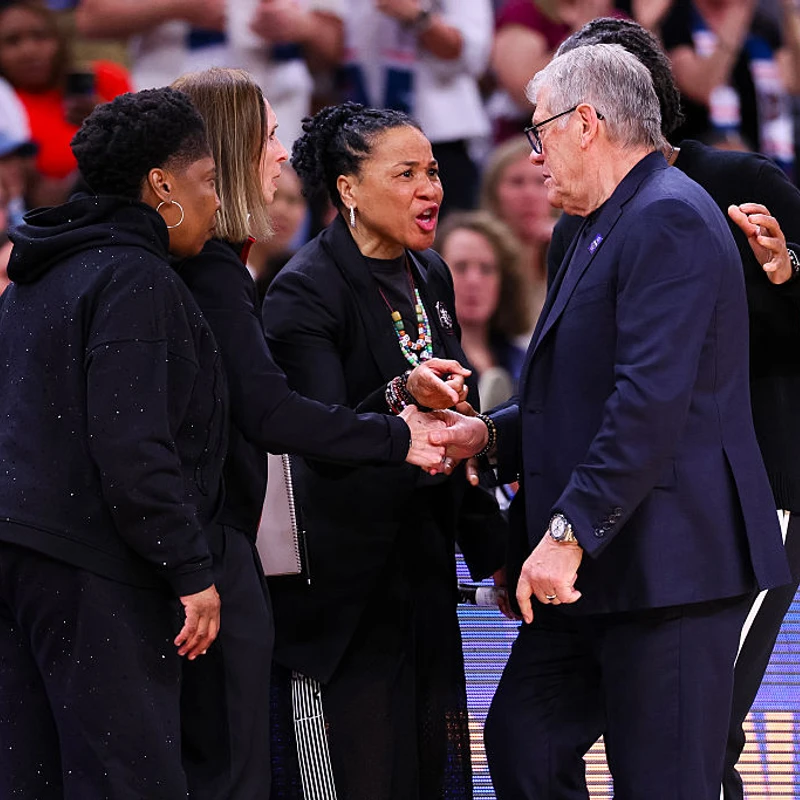
    The intense moment between UConn coach Geno Auriemma and South Carolina coach Dawn Staley at the end of their national semifinal game on Friday night has ignited a crucial conversation. While some dismissed it as typical competitive friction, for many Black women, Auriemma’s actions resonated with a deeply familiar pattern of disrespect often encountered in professional settings.

    A Familiar Dynamic: Accusations and Dismissal

    The controversy began when Auriemma allegedly accused Staley of not shaking his hand before the game. However, video evidence aired by ESPN clearly showed the two coaches exchanging handshakes. Staley’s viral retort, ‘I will beat Geno’s ass,’ captured the frustration many felt. Even Auriemma’s former player, Diana Taurasi, attempted to downplay the incident as mere high-level competition.

    But this perspective overlooks a critical element: the racial and gender dynamics at play. For countless Black women, the workplace is a landscape where hard work doesn’t always equate to equal recognition or respect. Studies, like the one from Lean In and McKinsey and Company in 2020, highlight that Black women disproportionately face microaggressions, have their expertise questioned, and are often required to constantly prove their competence—a burden rarely placed on their white counterparts.

    Dawn Staley’s Trailblazing Career

    Dawn Staley herself embodies the ‘twice as hard, twice as good’ mantra. A four-time Olympic gold medalist, a seven-season WNBA veteran, and a highly successful college coach, she has built the University of South Carolina Gamecocks into a dominant force. Her achievements include multiple national championships and the rare distinction of winning the Naismith Award as both a player and a coach.

    Beyond her on-court success, Staley is known for her kindness and generosity. She’s gifted Louis Vuitton perfume to opposing players and consistently greets media members courtside. This compassionate approach stands in stark contrast to Auriemma’s accusatory behavior.

    Auriemma’s Response and Its Implications

    When pressed for comments, Auriemma initially stood by his actions, stating he didn’t feel an apology was warranted. He also made a peculiar remark about not having ‘a lot in common’ with Staley, despite their shared high-pressure profession. This dismissiveness, coming from a white male coach towards a highly accomplished Black female coach, echoes the subtle yet damaging ways Black professionals are often othered and their achievements minimized.

    The subsequent apology issued by UConn, rather than directly from Auriemma to Staley, further fueled criticism. It felt like a deflection, a common tactic that, as author Toni Morrison noted, serves to distract from the real issue—in this case, Staley’s superior coaching and her team’s dominant victory. Auriemma’s focus on a triviality like a handshake served to detract from the Gamecocks’ well-deserved win.

    The function, the very serious function of racism is distraction. It keeps you from doing your work. It keeps you explaining, over and over again, your reason for being. — Toni Morrison

    This pattern of distraction is particularly damaging at a time when Black women are experiencing high rates of burnout and job insecurity, and when diversity initiatives are increasingly viewed as liabilities. The data shows that Black women are facing significant unemployment challenges, making these workplace dynamics even more critical.

    Focusing on the Game

    As women’s basketball continues to grow in visibility and competitiveness, it’s essential to focus on the athletes and coaches who are elevating the sport. The championship game between South Carolina and UCLA, featuring two phenomenal women coaches and top-seeded teams, deserves attention for its athletic merit, not for manufactured controversies.

    While the ‘I will beat Geno’s ass’ line has become a rallying cry, the ultimate goal is to move beyond these distractions and celebrate the excellence on display. Let’s keep the focus on the game, the players, and the incredible women leading these teams.

    What are your thoughts on the interaction between Dawn Staley and Geno Auriemma, and how it reflects broader workplace issues? Share your perspective in the comments below!

  • Black Women Rejecting Workforce Identity

    Headlines might suggest Black women are simply leaving the workforce, citing burnout or a rise in entrepreneurship. While these factors play a role, the reality runs much deeper. What we’re witnessing isn’t just a job market trend; it’s a profound shift in identity, a rejection of the demanding personas Black women have long been required to embody to succeed professionally.

    The Unseen Costs of Professional Survival

    For decades, Black women have navigated professional spaces that demanded far more than just competence. Success often meant code-switching, consistently over-performing, and constantly proving their worth. This involved managing perceptions, containing emotions, and tying personal value directly to professional output – often for survival, even when overqualified and under-recognized.

    Dr. Nicole Yeldell Butts, an organizational culture strategist, notes that these impossible standards have become normalized. Highly educated and capable Black women often find themselves in environments where recognition doesn’t match contribution, and advancement doesn’t lead to significant impact. The long-standing question of ‘How do I succeed here?’ is increasingly being replaced by a more critical one: ‘What is this success costing me?’

    From Ambition to Misalignment: The Awakening

    This growing awareness marks a significant shift. What once felt like ambition can now feel like misalignment. Achievement can start to feel like mere maintenance, and success can feel incomplete. This isn’t simply burnout; it’s an awakening. It’s a recognition that traditional definitions of success don’t always lead to fulfillment, and stability without authenticity is ultimately unsustainable.

    Consequently, many Black women are making a conscious decision to redefine work, leadership, and success on their own terms. Entrepreneurship is one avenue for this redefinition, but the movement is broader. It’s about shedding the identities the workforce has historically imposed and choosing paths that are more aligned, self-defined, and whole.

    A Signal for Broader Cultural Shifts

    This moment carries implications far beyond any single demographic. Black women have often been early indicators of larger cultural shifts. The pressures, contradictions, and expectations they navigate eventually surface more broadly. What we are observing now could be an early signal of a fundamental challenge to how work is defined, success is measured, and identity is negotiated in professional spaces.

    The movement is away from endurance as a measure of success and towards alignment as a marker of sustainability. It’s a shift from proving oneself to actively choosing one’s path. This is not just an economic story; it’s a deeply human one, signifying a recalibration where Black women are not just leaving jobs, but rejecting the performative identities required of them, opting instead for a more authentic and fulfilling way to thrive.

    What does this shift mean to you? How do you see the definition of work and success evolving? Share your thoughts in the comments below!

  • Wife’s ‘Homegirls Account’: Smart Savings or Sneaky?

    Imagine this: a husband casually mentions his wife has a savings account with her friends, one he knows nothing about. Cue the internet firestorm! Suddenly, it’s a debate about marriage, trust, and a woman’s right to her own financial independence. But what if this isn’t about secrecy, but about survival and solidarity? For many Black women, this isn’t a new concept; it’s a time-honored way of navigating life, together.

    Marriage is a Partnership, Not a Financial Takeover

    The husband in the viral video didn’t seem upset, just curious. And honestly, that’s a healthy reaction. Marriage is a partnership, but it doesn’t automatically mean every single dollar you earn or save becomes communal property. Transparency is key when household funds are involved, but personal discretionary money? That’s a different conversation.

    Think about it: if you decide to invest your personal funds in a group trip, a shared hobby, or even a small business venture with friends, that’s your choice. If that investment grows and benefits everyone involved, it doesn’t magically transform into joint marital assets. It’s still your money, used for shared goals outside the immediate household budget.

    The Line Between Privacy and Deception

    Let’s be clear: there’s a difference between having a personal savings account and hiding financial struggles from your partner. Sitting on a fortune while your household is in crisis is not okay. Likewise, secretly diverting joint funds is a breach of trust. But a ‘homegirls account’? That’s more like business capital for a collective.

    This isn’t hush money or an escape fund siphoned from the family budget. It’s pooled resources for shared goals, and treating it as a casual slush fund would be irresponsible to everyone involved. This money often has other women counting on it for group trips, emergencies, or shared experiences. It’s not meant to be casually liquidated for minor inconveniences.

    Why Black Women Value Financial Autonomy

    For Black women, financial independence isn’t just a buzzword; it’s often a necessity born from generations of experience. Many of us were raised by women who understood what it meant to be financially trapped, unable to leave difficult situations because they lacked resources. The pandemic further highlighted the importance of having a safety net and the ability to leave if needed.

    Having ‘a little something on the side’ isn’t about planning an exit strategy from a marriage, but about ensuring you’re never trapped. Our elders fought for options, and we’re now equipped to fund our freedom responsibly. As Candi Staton famously sang, ‘Young hearts run free’ – and we now have the means to support that freedom.

    Challenging Perceptions of Independence

    Black women often face judgment when they prioritize their own security. Wanting financial stability can be labeled as demanding, and enjoying nice things as materialistic. Yet, many women are already funding their own lifestyles and responsibilities. The idea that a woman’s ‘bare minimum’ expectation should be a cheap coffee date ignores the reality of bills, children, and existing commitments.

    Instead of understanding, some men resort to shaming. But the truth is, Black women are valuable, and they’re no longer pretending otherwise. This isn’t about being demanding; it’s about recognizing your own worth and ensuring your financial well-being.

    Community and Cultural Roots

    A ‘homegirls savings account’ is deeply rooted in Black culture. Practices like Susus, rotating savings clubs, and rent parties have always been about pooling resources and supporting the community. It’s a practical solution to a common problem: friendships strained or broken over money.

    Think about group trips where finances can create awkwardness. When everyone contributes consistently to a shared fund, everyone can participate fully and create lasting memories without shame. Even friends facing temporary financial setbacks can still join in because they invested earlier.

    Navigating Trust and Expectations

    If a man says, ‘If you don’t tell me everything, you don’t trust me,’ it’s worth examining. Trust doesn’t require complete financial ownership. Your friends confide in you, and that trust doesn’t automatically extend to your partner, as they didn’t choose him. Unless this financial privacy directly impacts the household negatively, there’s no obligation to share every detail.

    Marriage doesn’t erase your past relationships or your individual identity. While it might seem like a double standard, it reflects a reality where men, especially breadwinners, often have more assumed financial authority. Until societal expectations are truly equal, Black women are justified in protecting their financial autonomy and community ties.

    Redefining Partnership

    This isn’t about hiding money from husbands; it’s about expanding the definition of partnership. It acknowledges that while romantic relationships are vital, they aren’t the sole source of our support system. Prioritizing friendships and community in a meaningful way is something to be celebrated, not scrutinized.

    Marriage shouldn’t mean surrendering financial autonomy, community investment, or the parts of yourself that existed before your partner. If this practice makes someone uncomfortable, the issue might not be the account itself, but a resistance to the idea that women are increasingly securing their own futures without seeking permission.

    What are your thoughts on a ‘homegirls savings account’? Do you think it’s a smart move for financial independence or a sign of mistrust? Share your perspective in the comments below!

  • Beyond the Funeral: Supporting Grief in the Workplace

    In Black communities, we have a profound tradition of showing up for one another during times of loss. We gather for funerals, offer comfort, and provide practical support. But as trauma nurse and grief counselor Kelly Edmondson asks, ‘Who shows up after?’ This question cuts to the heart of a critical issue: our systems, workplaces, and even communities are often ill-equipped to handle the long, nonlinear process of grief. Edmondson, who experienced this reality firsthand after losing her son Darius, shares her insights on why sustained support is crucial.

    The Weight of Resilience: Grief in Black Communities

    Black Americans often carry a unique burden when it comes to grief. Cultural emphasis on resilience and ‘holding it together’ stems from generations of survival. While this strength is undeniable, it can inadvertently become a barrier to healing. Research indicates that Black individuals are less likely to seek mental health support post-loss due to stigma, historical distrust of systems, financial constraints, and a societal narrative that grief should be private and brief.

    While churches and families offer some solace, the professional and systemic infrastructure for ongoing grief support remains largely absent. This leaves grieving individuals expected to return to ‘normal’ at work, often without adequate acknowledgment or accommodation, as if a fundamental part of them hasn’t been altered.

    The Policy Gap: Bereavement Leave Falls Short

    The reality is stark: there’s no federal law in the U.S. mandating bereavement leave. Only a handful of states offer protections for private sector workers. For most, the support offered is entirely at the employer’s discretion, typically amounting to just three to five days. As Edmondson points out, this isn’t support; it’s a deadline. It’s insufficient time to grieve, manage affairs, support family, and then return to full productivity.

    This policy gap is particularly challenging for Black employees. Grief in the community can involve specific traumas, extensive administrative burdens for settling estates with limited resources, and the financial impossibility of taking unpaid leave for many families. The workplace bereavement policies, often based on a linear model of grief, fail to account for its ongoing, nonlinear nature and disproportionately affect those with less systemic advantage.

    What Does Sustained Support Look Like?

    Grief isn’t a short-term problem; the most challenging moments often arise weeks or months after the loss, as the initial support fades. What bereaved employees truly need is a workplace culture that recognizes grief as a long arc. Employers can foster this by implementing concrete changes:

    • **Flexible Bereavement Leave:** Offer leave that can be taken flexibly within a defined window, rather than only immediately after a death.
    • **Broader Definitions of Family:** Acknowledge chosen family, extended kin, and non-legal relationships, reflecting the diverse structures within Black families.
    • **Manager Training:** Equip managers to normalize grief conversations, fostering an ongoing practice of support rather than a one-time check-in.
    • **Grief-Informed Healthcare:** Train medical professionals to recognize and address the psychological and physical toll of bereavement over the long term.
    • **Community Partnerships:** Support and resource community institutions like churches and nonprofits that are already filling critical gaps in grief support.

    These measures move beyond mere policy to cultivate a culture of genuine care and understanding. By acknowledging grief’s complexities, workplaces can better support their employees through one of life’s most difficult experiences.

    The Conversation We Need to Have

    Our community excels at loving people in crisis, offering repasts, prayer circles, and practical help. However, love without adequate infrastructure is insufficient, and infrastructure without cultural honesty is incomplete. We must begin discussing grief openly, collectively, and honestly, recognizing that silence does not protect us. This means demanding more from our employers and healthcare systems and extending the same grace we offer in the immediate aftermath of loss, not just for a week, but for the long road ahead. The funeral marks the beginning of a journey, and our communities, employers, and institutions need to be present for the entire path.

    How has your workplace supported you (or failed to support you) through grief? Share your experiences and thoughts on improving bereavement support in the comments below.

  • Belgian Diplomat Faces Trial for Lumumba Assassination

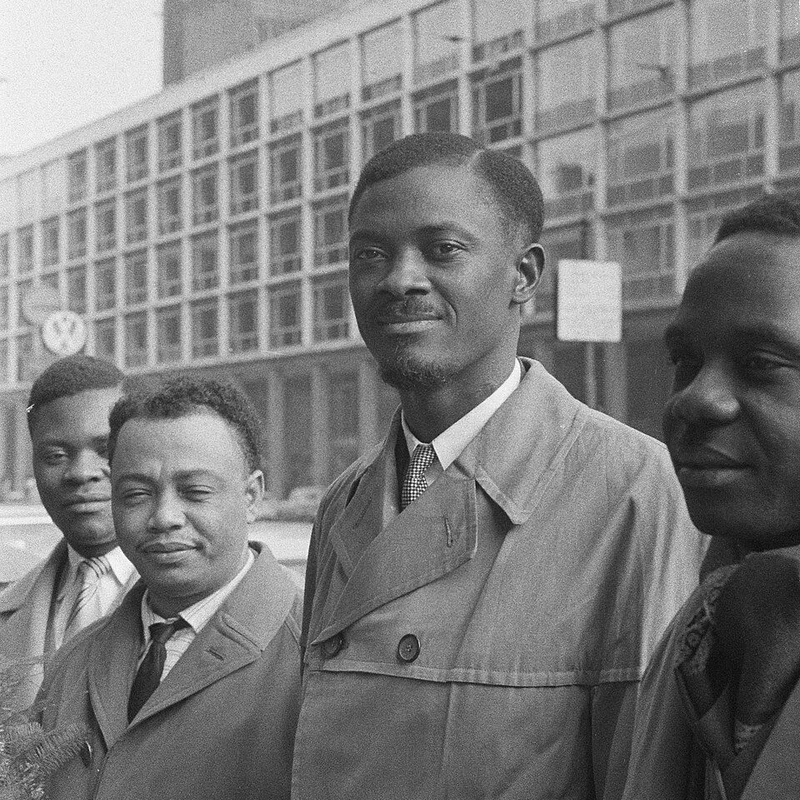
    In a landmark decision that could bring a measure of justice for a decades-old tragedy, a Brussels court has ordered a trial for a 93-year-old former Belgian diplomat. Etienne Davignon is accused of playing a role in the brutal 1961 assassination of Patrice Lumumba, the first democratically elected Prime Minister of the Congo.

    A Historic Pivot Towards Accountability

    The assassination of Lumumba, an anti-colonial icon, has long been a painful chapter in the history of the Democratic Republic of Congo. Now, over sixty years later, the Belgian judiciary is moving towards criminal accountability. Davignon, who later held significant positions as a European Commissioner, was a junior diplomat at the time of Lumumba’s death.

    Prosecutors allege that Davignon was actively involved in the unlawful detention and transfer of Lumumba to the secessionist region of Katanga. It was there, in January 1961, that Lumumba and two associates were executed by a firing squad, reportedly aided by Belgian mercenaries. This occurred just six months after Lumumba’s powerful Independence Day speech, where he envisioned a free and prosperous Congo.

    Allegations of Degrading Treatment and a Systemic Cover-Up

    The Lumumba family’s legal team claims Davignon’s involvement included “humiliating and degrading treatment” of the prime minister, stripping him of any chance for a fair trial. The meticulous nature of the crime extended even further; reports suggest that after the execution, bodies were disinterred and dissolved in acid. For years, Belgium has cited a 2002 parliamentary commission’s finding of “moral responsibility” as a substitute for criminal prosecution.

    However, this trial represents a significant shift, aiming to translate abstract morality into tangible judicial consequences. As the sole surviving suspect from the original 2011 complaint, Davignon’s trial offers a final opportunity for the Brussels court to adjudicate the actions of the colonial administration.

    Challenging Impunity and Seeking Truth

    The defense has historically argued that lower-ranking officials were simply following orders amidst the Cold War’s geopolitical pressures. Yet, Christophe Marchand, the Lumumba family’s attorney, hailed the case as a “gigantic victory” against the “culture of impunity” surrounding European colonial crimes. Evidence from Belgian archives, including “Blueprints for Intervention,” suggests a coordinated effort to neutralize Lumumba’s pan-Africanist agenda.

    The physical evidence of the crime, a single gold-capped tooth kept as a trophy by a Belgian officer, was only repatriated to the DRC in 2022. While Belgian Prime Minister Alexander De Croo reiterated the state’s apology during that ceremony, the Lumumba family seeks more than apologies; they desire “truth and to establish different responsibilities,” as stated by Lumumba’s granddaughter, Yema Lumumba.

    What does this trial signify for holding colonial powers accountable for past actions? Share your thoughts in the comments below.

  • Content Creators vs. Journalists: The Real Debate

    The lines between content creation and traditional journalism are becoming increasingly blurred, and the resulting debate is heating up. Following influencer Jake Shane’s widely criticized interviews at the Vanity Fair Oscars After Party, many are questioning the influx of content creators into traditional media spaces. This discussion gained significant traction when Tabitha Brown defended her fellow creators, sparking nuanced responses from both sides.

    Creators Defend Their Space

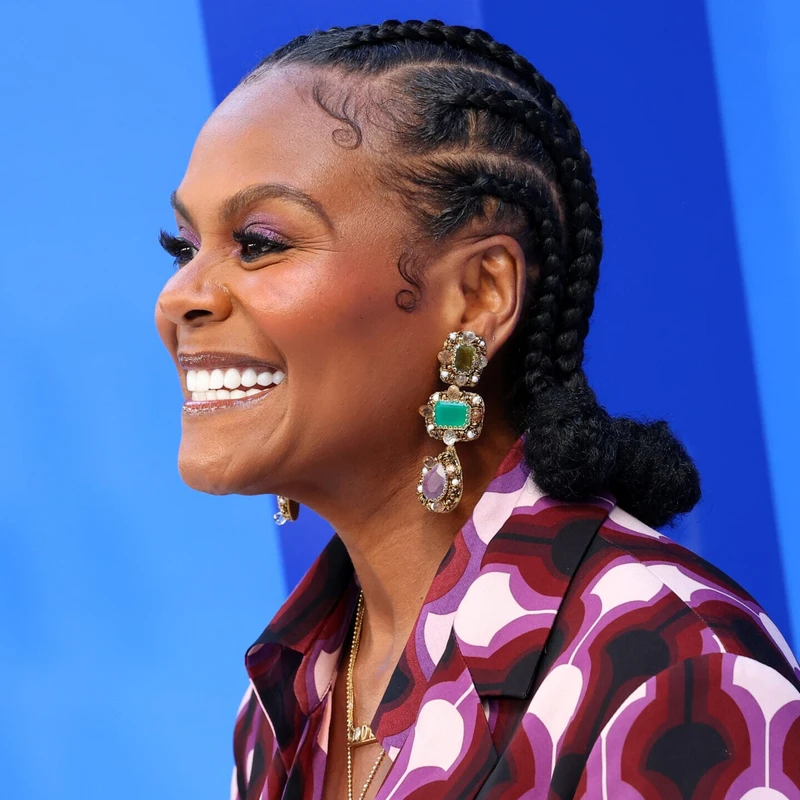
    Tabitha Brown took to Threads to express her support for content creators, stating, “Anybody can make content!” She emphasized that success in content creation doesn’t diminish one’s belonging in elevated spaces, celebrating creators who are “shaking up the world.” Her defense, however, also drew criticism, with some feeling she downplayed the value of traditional journalistic training.

    Comedian Franchesca Ramsey echoed the sentiment of opening doors, acknowledging her own career path benefited from traditional media taking a chance on creators. However, she also noted a concern: “I’ve seen too many influencers on red carpets who clearly aren’t prepared & unfortunately those are the clips that often go viral & perpetuate the idea that creators are undeserving.” She believes outlets should ensure creators are ready for these opportunities.

    Journalists’ Concerns: Job Loss and Eroding Standards

    For career journalists, the frustration runs deep. Jemele Hill, an Emmy-winning sports journalist, acknowledged the creativity of many content creators but highlighted the impact on seasoned Black entertainment journalists who are losing red carpet opportunities due to outlets prioritizing follower counts over journalistic ability. This shift comes at a time when the media industry is facing significant job cuts, with thousands laid off in 2025 alone, including a substantial portion of The Washington Post’s newsroom.

    The core issue for many reporters is not just job security but the erosion of clarity around what journalism truly entails. Journalism’s role is to serve the public, verify information, provide context, and challenge power—tasks that require specific training, ethics, and accountability. Content creation, while valuable for reflecting culture and entertainment, often prioritizes personal branding and speed over depth and accuracy.

    The Value of Different Roles

    The debate isn’t about whether creators have value; many, especially Black creators, possess significant entertainment and reporting skills honed through formal education and self-teaching. They’ve had to forge their own paths in an industry with shrinking entry points. As food influencer Tim Chin noted, “Some of our stories getting to our dreams may be unconventional… but this is our way, it’s a new social tech world….And this is a NEW WAY.”

    Platforms like TikTok and Tubi are increasingly validating this creator-driven path. However, the fundamental issue, as highlighted by La’Janeé a.k.a. The Docket Diva, is the “confusion of standards.” She argues that conflating journalism with content creation diminishes a craft vital for public protection and information, stating, “You can celebrate creators without pretending the standards don’t matter. They do.”

    The Path Forward: Standards and Truth

    Legacy media outlets play a role in this blurring by handing significant cultural moments to personalities who may lack the necessary journalistic discipline. This prioritizes personality and speed over quality and expertise, potentially weakening journalism in the long run. While there’s room for both journalists and creators, coexistence requires clear standards for informing the public. In an era of rapid misinformation, maintaining the integrity and truthfulness of journalism is paramount.

    What are your thoughts on the creator vs. journalist debate? Do you think the lines are becoming too blurred? Share your perspective in the comments below!

  • Ethylene Oxide Exposure Linked to Pediatric Cancer in Black Communities

    Dr. Valencia P. Walker, a pediatrician, shares a harrowing account of her early medical experiences that exposed her to the devastating realities of pediatric cancer and environmental injustices. Her observations led her to understand the disproportionate impact of toxic fumes, particularly ethylene oxide, on Black children, especially those living in communities referred to as “Cancer Alley.”

    A Doctor’s Journey into Environmental Injustice

    Dr. Walker’s realization began during her pediatric cancer rotation at St. Jude’s Children Hospital. An overnight shift exposed her to the harsh realities of the field when she was tasked with pronouncing an 8-year-old patient dead. This profound experience motivated her to learn more about caring for children with cancer. She noticed a pattern: Black children admitted with cancer were often from Louisiana, specifically “Cancer Alley”—an area between Baton Rouge and New Orleans suspected of having elevated pediatric cancer rates due to pollution from petrochemical plants and refineries.

    Her observations were later validated by research studies. In 2016, the EPA officially classified ethylene oxide as a carcinogen. By 2022, the EPA had sent Louisiana officials a letter citing evidence of racial discrimination for failing to address air pollution and dismissing cancer risks for predominantly Black residents near industrial plants. Louisiana’s subsequent lawsuit against the EPA, arguing the agency “weaponized Title VI,” led to the EPA dropping its investigation. In 2024, a federal judge further limited the use of the Civil Rights Act for environmental regulations, reinforcing the challenges in addressing these environmental injustices.

    Ethylene Oxide: A Persistent Threat

    Beyond cancer risks, ethylene oxide exposure is linked to increased pregnancy complications, such as miscarriages, and a higher likelihood of premature births or babies born with smaller brains. Dr. Walker currently cares for critically ill infants who require medical devices and specialized equipment, much of which is sterilized using ethylene oxide. However, she points out that sterilization is a necessity, not a reason for building more polluting plants in “Cancer Alley.”

    The legacy of slave plantations in areas like Baton Rouge and New Orleans has, tragically, transformed into present-day “sacrifice zones” of sickness, driven by profit over people. Dr. Walker emphasizes that witnessing the well-being of Black babies and children being ignored by federal agencies, state leaders, corporate boards, and society at large is soul-crushing. She urges action against the EPA’s ethylene oxide proposal, advocating for safer alternatives and effective regulatory policies.

    What are your thoughts on the EPA’s proposed changes regarding ethylene oxide? How can we better protect vulnerable communities from environmental injustices? Share your opinions in the comments below!

  • Community-Built Schools: A Path to Opportunity

    When we talk about education, it’s easy to get lost in policy debates and system structures. But what if we started with something more fundamental: place? Dorsey Hopson, a partner at City Fund and former superintendent of Shelby County Schools, believes that the most effective schools are deeply rooted in the communities they serve. He argues that when schools adapt to the people they serve, embracing change and fostering stability, high expectations, and adult attention, they truly open doors for students.

    Lessons from Memphis: Stability and Progress

    Hopson’s own experience growing up in Memphis and attending Whitehaven High School shaped his perspective. He remembers a time when school hallways, teachers who knew his name, and a shared understanding of education’s importance were paramount. This personal connection fueled his drive when he became superintendent of Shelby County Schools in 2013, a district facing significant challenges like a recent merger, financial strain, and aging facilities.

    One of his clearest priorities was improving graduation rates, especially for Black young men, who were disproportionately not finishing. This wasn’t about quick fixes; it was steady, practical work. The focus was on stabilizing leadership, upgrading buildings, reducing debt, and providing much-needed support to schools. By distributing resources effectively and raising expectations system-wide, the district saw real progress. By early 2019, graduation rates had climbed, reflecting the dedication of educators, families, and students.

    HBCUs: Trusted Partners in Education

    Today, Hopson’s work at City Fund continues this mission: helping communities build better school systems, particularly for those with fewer options. A significant initiative involves partnering with Historically Black Colleges and Universities (HBCUs). This $20 million collaboration with Bloomberg Philanthropies and UNCF recognizes the deep roots, educational expertise, and proven track record of HBCUs in turning opportunity into achievement.

    The idea is to bring these strengths into closer partnership with K–12 education, creating clearer pathways for students. In Alabama, this partnership is already taking shape. The I Dream Big Academy is set to open on the campus of Stillman College, a symbolic move during Black History Month that emphasizes the structural nature of expanding opportunity. Students will learn on a college campus, making higher education feel more accessible and familiar.

    Adapting to Community Needs

    Another community in Alabama is working with Tuskegee University to reopen an existing public school, enhancing academic support and strengthening ties to higher education. These schools are approved by local boards, designed by local educators, and chosen by families. This approach underscores Hopson’s belief that public education thrives when it adapts to the diverse needs and learning styles of its students and families.

    Research consistently shows that well-designed, well-led, and accountable schools benefit all students, with Black students, in particular, showing significant gains in high-quality public charter schools. This evidence supports the expansion of successful models while reinforcing existing systems. The core question remains: do students believe the system expects something of them? Do they feel seen and supported by the adults around them?

    • Schools must reflect the communities they serve.
    • Stability, high expectations, and adult attention are crucial.
    • Partnerships with trusted institutions like HBCUs can create new pathways.
    • Adapting to diverse family needs and learning styles strengthens public education.
    • Accountability and a focus on student experience drive meaningful progress.

    As a new public school opens on an HBCU campus this month, it serves as a powerful reminder that Black History Month calls for follow-through, not just grand statements. It’s about building schools that truly open doors, supporting leaders who take responsibility, and maintaining a steadfast focus on the daily experiences of students. This work is practical, local, and ongoing.

    What are your thoughts on building schools with community involvement? Share your experiences and ideas in the comments below!

  • Spotify Wrapped: A Year in Music, My Way

    The holiday season brings a flurry of year-end reflections, but for me, nothing beats diving into Spotify Wrapped. It’s a delightful algorithmic deep-dive into my listening habits, a chance to see which songs and artists defined my year. While sometimes comically inaccurate, it’s become a cherished annual tradition, offering a unique lens through which to view my own life and musical journey.

    More Podcasts, Fewer Music Minutes?

    This year’s Wrapped revealed a surprising statistic: I logged 25,419 minutes of music listening, roughly 17 days. Frankly, I was shocked! In past years, my numbers were much higher, but I realized my listening habits have shifted. I’ve been diving deep into podcasts, especially those about music, which might explain the dip in dedicated music listening time. It’s a bit ego-bruising, especially when my 16-year-old daughter clocked over 34,000 minutes!

    Spotify also pegged my “listening age” at 21 and identified “pop rap” as my most popular genre – a label I’m still trying to process. Despite the lower minute count, I did listen to 4,067 songs, which feels substantial, though Spotify seemed to imply otherwise. It’s a playful reminder that these algorithms offer a specific, sometimes quirky, perspective on our consumption.

    Discoveries, Favorites, and Enduring Standom

    The most telling part of Wrapped is often the breakdown of top songs and albums. My most-listened-to song was “Perfect Combi” by King Promise and Gabzy, an Afrobeats gem. I also rediscovered gems like SZA’s “30 for 30” and anaiis’ “vanishing.” Interestingly, “Slipping Away” by Leisure appeared on my list, a song I barely recognized – likely a result of extensive “song radio” playlist usage.

    What truly makes me proud, though, is seeing my long-standing appreciation for certain artists reflected. SZA’s “SOS Deluxe: LANA” was my top album, and while I can’t name every track, my continued love for Beyoncé’s “Cowboy Carter” is undeniable. Even more satisfying is seeing Jagged Edge’s “A Jagged Love Story” (an album I consider one of the best of the century) still in my top albums. My Jagged Edge fandom is verified!

    The Power of Music in Personal History

    Discovering new artists like the French-Senegalese singer anaiis, who I stumbled upon via a playlist, is another highlight. Her music, along with Eryn Allen Kane’s, sent me down rabbit holes of deep listening. Wrapped confirmed my intense connection to these artists, showcasing how music discovery can profoundly impact our lives.

    Spotify also compiled fun, specific highlights, like playing “Perfect Combi” and Jagged Edge for 316 minutes straight on one day! And my Juneteenth cookout playlist, featuring hours of Afrobeats and cookout jams, was a testament to celebrating culture. Looking back at past years – Muni Long’s “Made For Me” in 2024, Michael Jackson’s “Bad” in 2023 (thanks to my son’s Spotify takeover!), and the “Encanto” soundtrack in 2022 – shows how music mirrors life events.

    For anyone who loves personal history, Spotify Wrapped is a goldmine. It’s not just about growth; it’s about understanding. Music is life, and seeing how it weaves through our existence is a gift. Now, if you’ll excuse me, I’m off to increase my 2025 listening minutes – gotta hit that respectable 30,000 mark!

    What were your biggest Spotify Wrapped surprises this year? Did any of your listening habits shock you? Share your results in the comments below!