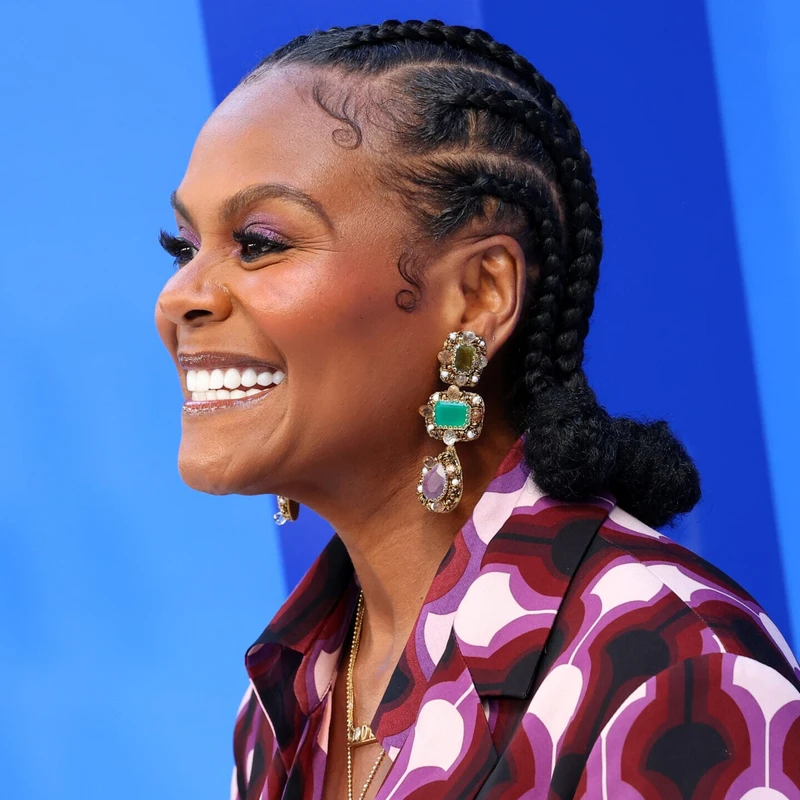
The lines between content creation and traditional journalism are becoming increasingly blurred, and the resulting debate is heating up. Following influencer Jake Shane’s widely criticized interviews at the Vanity Fair Oscars After Party, many are questioning the influx of content creators into traditional media spaces. This discussion gained significant traction when Tabitha Brown defended her fellow creators, sparking nuanced responses from both sides.
Creators Defend Their Space
Tabitha Brown took to Threads to express her support for content creators, stating, “Anybody can make content!” She emphasized that success in content creation doesn’t diminish one’s belonging in elevated spaces, celebrating creators who are “shaking up the world.” Her defense, however, also drew criticism, with some feeling she downplayed the value of traditional journalistic training.
Comedian Franchesca Ramsey echoed the sentiment of opening doors, acknowledging her own career path benefited from traditional media taking a chance on creators. However, she also noted a concern: “I’ve seen too many influencers on red carpets who clearly aren’t prepared & unfortunately those are the clips that often go viral & perpetuate the idea that creators are undeserving.” She believes outlets should ensure creators are ready for these opportunities.
Journalists’ Concerns: Job Loss and Eroding Standards
For career journalists, the frustration runs deep. Jemele Hill, an Emmy-winning sports journalist, acknowledged the creativity of many content creators but highlighted the impact on seasoned Black entertainment journalists who are losing red carpet opportunities due to outlets prioritizing follower counts over journalistic ability. This shift comes at a time when the media industry is facing significant job cuts, with thousands laid off in 2025 alone, including a substantial portion of The Washington Post’s newsroom.
The core issue for many reporters is not just job security but the erosion of clarity around what journalism truly entails. Journalism’s role is to serve the public, verify information, provide context, and challenge power—tasks that require specific training, ethics, and accountability. Content creation, while valuable for reflecting culture and entertainment, often prioritizes personal branding and speed over depth and accuracy.
The Value of Different Roles
The debate isn’t about whether creators have value; many, especially Black creators, possess significant entertainment and reporting skills honed through formal education and self-teaching. They’ve had to forge their own paths in an industry with shrinking entry points. As food influencer Tim Chin noted, “Some of our stories getting to our dreams may be unconventional… but this is our way, it’s a new social tech world….And this is a NEW WAY.”
Platforms like TikTok and Tubi are increasingly validating this creator-driven path. However, the fundamental issue, as highlighted by La’Janeé a.k.a. The Docket Diva, is the “confusion of standards.” She argues that conflating journalism with content creation diminishes a craft vital for public protection and information, stating, “You can celebrate creators without pretending the standards don’t matter. They do.”
The Path Forward: Standards and Truth
Legacy media outlets play a role in this blurring by handing significant cultural moments to personalities who may lack the necessary journalistic discipline. This prioritizes personality and speed over quality and expertise, potentially weakening journalism in the long run. While there’s room for both journalists and creators, coexistence requires clear standards for informing the public. In an era of rapid misinformation, maintaining the integrity and truthfulness of journalism is paramount.
What are your thoughts on the creator vs. journalist debate? Do you think the lines are becoming too blurred? Share your perspective in the comments below!
Leave a Reply