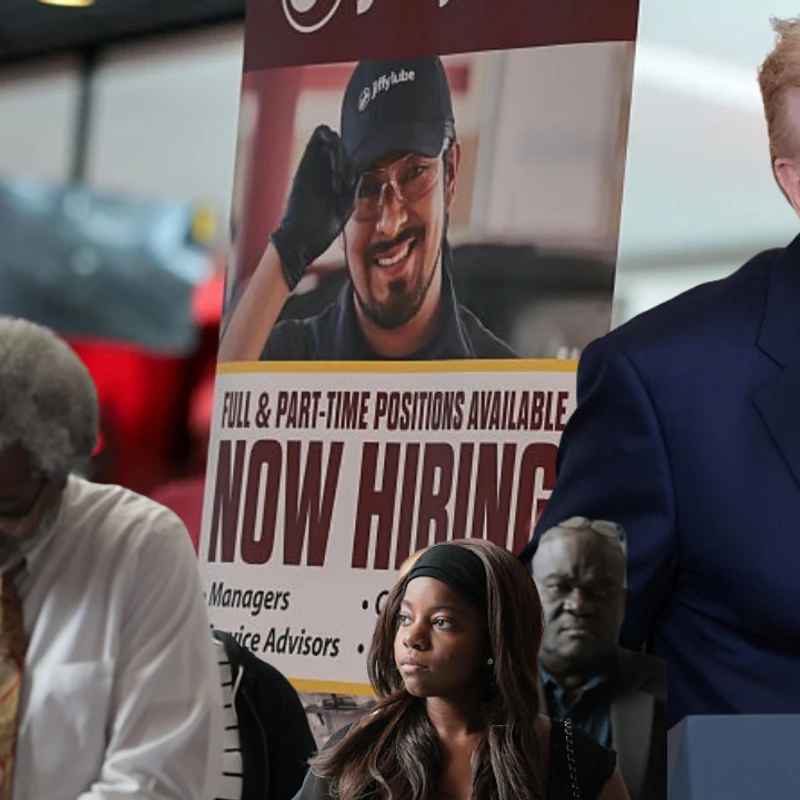
The latest jobs report has revealed a troubling increase in the Black unemployment rate, which jumped to 7.3% in April. This figure stands in stark contrast to the nationwide rate, which remained steady at 4.3%, underscoring persistent racial disparities in the U.S. job market.
A Steep Climb Since 2025
Since President Donald Trump’s return to the White House in January 2025, the unemployment rate for Black Americans has seen a steady rise. Starting at 6.2%, it climbed to 8.2% by November and now sits at 7.3% in April, a rate not seen since the height of the COVID-19 pandemic in 2021.
Gbenga Ajilore, chief economist at the Center on Budget and Policy Priorities, points to a significant factor: the Trump administration’s efforts to shrink the federal government. “Since January 2025, federal government employment decreased by 342,000 [jobs]. It’s just massive,” Ajilore told TheGrio, identifying this as the primary driver behind elevated Black unemployment.
Federal Jobs: A Historical Lifeline
Historically, the federal government has played a crucial role in providing stable employment and pathways to the middle class for Black Americans. They have traditionally represented nearly 20% of the federal workforce, a representation that significantly exceeds their overall population percentage.
Ajilore notes that federal job cuts have been consistent over the past year and a half. Other contributing factors include the impact of Trump’s tariffs on manufacturing, an industry that often employs many Black men, particularly in sectors like transportation and warehousing. However, the targeting of federal employment remains the most significant issue.
The ‘Last Hired, First Fired’ Reality
The age-old economic observation that Black workers are often the “last hired, first fired” continues to hold true, according to Ajilore. He also points out that the Trump administration’s Equal Employment Opportunity Commission (EEOC) has shifted its focus, seemingly prioritizing issues of discrimination against white men, despite their lower unemployment rates.
Ajilore suggests that in the “absence of intentional policy,” a robust labor market is key to reducing the Black unemployment rate more effectively than the white unemployment rate. He highlighted periods like the COVID-19 pandemic in 2020 and the Great Recession (2007-2009) when a tight labor market helped shrink the racial unemployment gap.
A Stagnant Market and Persistent Inflation
While the overall U.S. job market appears stable, Ajilore describes it as “kind of frozen,” with significant layoffs but limited hiring. This presents a challenging landscape for young people entering the workforce. Compounding these issues is persistent inflation, which disproportionately affects Black households. Rising prices, especially for essentials like gas, make it particularly difficult for those without stable employment.
What policies do you think could effectively address the rising Black unemployment rate? Share your thoughts in the comments below!
Leave a Reply