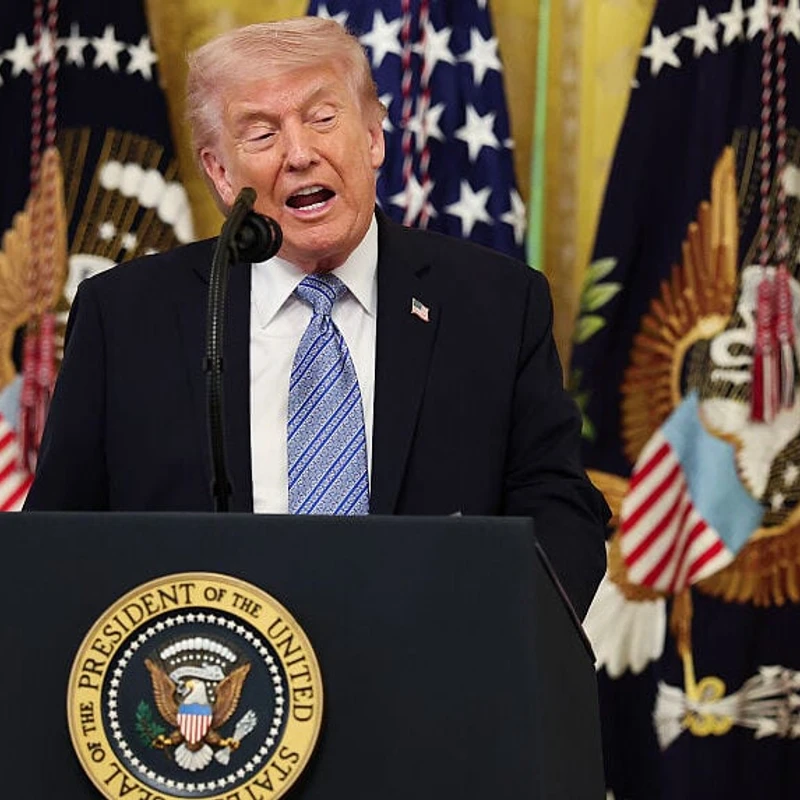
President Donald Trump recently gathered small business owners at the White House to celebrate Small Business Week, touting his administration’s efforts to boost economic success. However, critics argue that many of the very actions highlighted by the president have had a detrimental effect on Black businesses and households since he returned to office.
A Complex Economic Picture
While Trump celebrated a low national unemployment rate, reaching its lowest point since 1969, a closer look reveals a more complex and concerning picture, especially for Black Americans. The national unemployment rate stands at 4.3%, and while more people are employed due to population growth, the jobless rate doesn’t account for the current affordability crisis. Many employed Americans, particularly Black Americans, are struggling to afford basic necessities like healthcare and housing.
Furthermore, the Black unemployment rate remains higher at 7.1% than it was during the height of the COVID-19 pandemic in late 2021. This disparity is a significant concern for economic equality.
Federal Job Cuts and Their Impact
President Trump has openly bragged about significant cuts to the federal government workforce. Ironically, these cuts disproportionately affect Black unemployment, as many of the eliminated positions were related to diversity, equity, and inclusion (DEI) initiatives or roles perceived as such. For decades, the federal government has been a crucial pathway for expanding the Black middle class.
Despite Trump’s assertion that laid-off federal workers find “much better jobs” a year later, reports suggest many struggle to find comparable employment. This raises serious questions about the long-term consequences of these workforce reductions on individuals and the broader economy.
Challenges for Black-Owned Businesses
Regarding Black businesses, while the administration claimed record lending, it’s likely that Black-owned operators were largely excluded. Federal lending for these businesses had nearly doubled under the previous Biden-Harris administration. In line with its anti-DEI stance, the Trump administration terminated programs and grants designed to diversify the Small Business Administration’s reach to Black entrepreneurs.
The termination of the Minority Business Development Agency (MBDA), established to close racial gaps in capital access, is another significant blow. A report by the Joint Center for Political and Economic Studies notes that the administration’s actions have shifted the entire regulatory structure, making it harder for Black businesses to compete. This has been demonstrably harmful to Black business owners and a drag on Black entrepreneurship.
Tariffs, AI, and Environmental Concerns
Global tariffs on imported goods have also negatively impacted Black businesses, particularly sole proprietors who struggle with capital access. Although businesses saw potential relief after tariffs were ruled unconstitutional, the administration has moved to reestablish them, likely perpetuating high operating costs for Black owners.
Furthermore, concerns are rising about the rapid growth of Artificial Intelligence (AI) without adequate regulation. Data suggests Black people are overrepresented in jobs most vulnerable to AI displacement, such as healthcare support, retail, and administrative work. Tech companies are also building data centers in predominantly Black and low-income communities, raising environmental justice issues related to health and economic harms.
Ongoing Economic Pressures
The ongoing conflict with Iran continues to add economic pressure, driving up the cost of oil, gas, and other goods. Despite the extended military engagement, President Trump has defended the costly conflict as necessary to deter Iran’s nuclear ambitions. These global events further compound the economic challenges faced by American small businesses, including those owned by Black entrepreneurs.
What are your thoughts on the impact of these policies on the Black economy? Share your perspective in the comments below!
Leave a Reply