President Donald Trump announced a temporary two-week ceasefire with Iran, halting his threat to bomb the nation’s civilian infrastructure. This move came just before a deadline he set for Iran to reopen the Strait of Hormuz, a critical oil passageway. While the pause in potential military action was welcomed by some for the sake of civilian lives, critics are calling the deal insufficient and labeling the president a ‘dangerous warmonger.’
The Deal: What’s on the Table?
The agreement involves a two-week suspension of U.S. bombing and attacks on Iran. In return, Iran is expected to reopen the Strait of Hormuz, which has been blocked for weeks, causing a surge in U.S. gas and energy prices. This blockade has created a political challenge for Trump, especially with midterm elections looming. The president also agreed to negotiate a 10-point proposal put forth by Iran.
Critics Question the Ceasefire’s Impact
Despite the temporary halt in hostilities, many are not convinced this ceasefire will lead to lasting peace. Victor LaGroon, a former U.S. Army intelligence analyst and national security expert, expressed concern over the unclear details of Iran’s 10-point plan and what the U.S. has truly gained. He fears the conflict could continue to drain billions of dollars and potentially cost American lives.
Cam White from the Party for Socialism and Liberation (PSL) criticized the administration’s lack of transparency, stating that the public wasn’t adequately prepared for the conflict. “Trump didn’t even feel it was necessary to explain to the public why he was initiating this conflict,” White told theGrio. He added that the U.S. initiated the war, not Iran, and that the conflict serves Trump’s perceived global ambitions.
Protesters Demand More Than a Pause
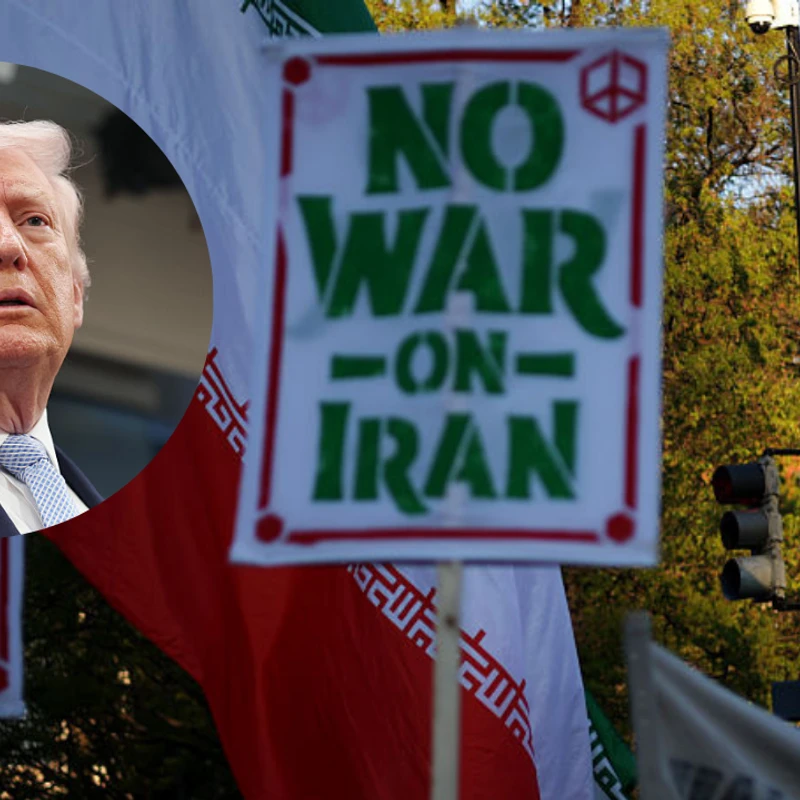
Hundreds of anti-Trump protesters gathered outside the White House, holding signs with messages like “Hands Off Iran,” “No Wars of Choice,” and “25th Amendment Now.” They condemned Trump’s initial threat to bomb civilian infrastructure and expressed outrage over the war, which they argue was unnecessary and initiated without clear goals or public consensus.
Zaid Khatib of the Palestinian Youth Movement viewed the ceasefire as a sign of “U.S. imperialist failure” and a testament to the Iranian people’s resilience. He emphasized that Trump is merely a figurehead for a larger system of U.S. foreign policy that has been in conflict with Iran for decades.
Congressional Calls for Action
The situation has prompted significant backlash, with over 70 Democrats reportedly calling for Trump’s removal from office via the 25th Amendment and urging a War Powers vote in Congress to curb the president’s unilateral military actions. U.S. Rep. Alexandria Ocasio-Cortez stated on X that the ceasefire “changes nothing,” citing the president’s threats and the war’s initiation without Congressional authorization as constitutional violations. U.S. Rep. Maxwell Frost echoed these sentiments, calling Trump a “dangerous warmonger” who pushed the U.S. into an illegal war and threatened war crimes.
I fear this war will continue to cost us billions of dollars and possibly American lives. — Victor LaGroon, former U.S. Army intelligence analyst
While the temporary ceasefire offers a brief respite, the underlying criticisms highlight deep-seated concerns about the administration’s foreign policy, transparency, and the justification for military engagement in the Middle East. The debate continues over whether this is a step towards peace or merely a pause in a conflict driven by questionable motives.
What are your thoughts on President Trump’s temporary ceasefire with Iran? Do you believe it’s a step towards peace or a dangerous tactic? Share your views in the comments below!
Leave a Reply