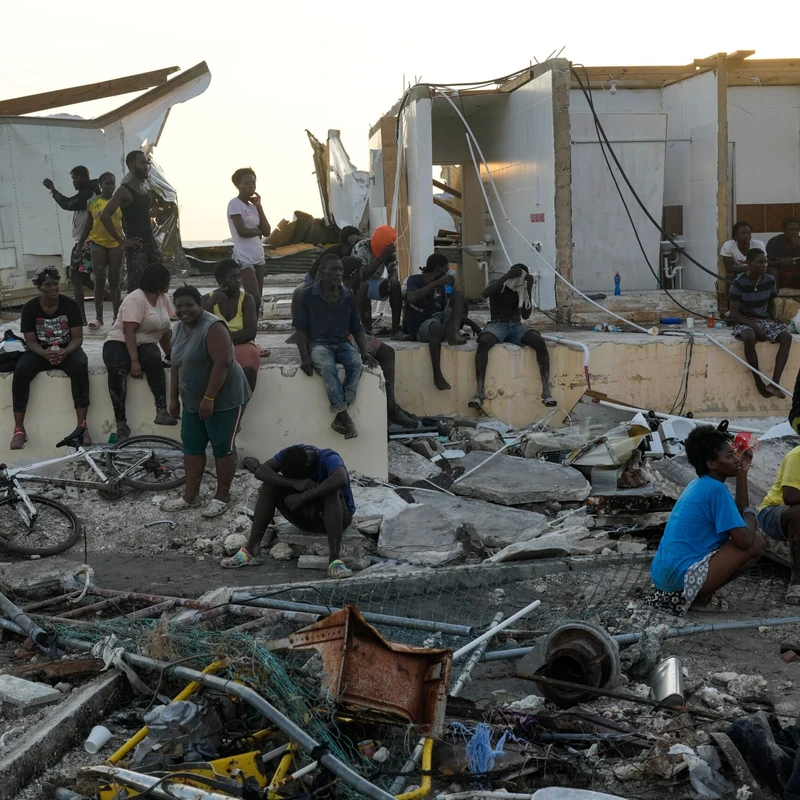
The devastating impact of Hurricane Melissa continues to unfold in Jamaica, with the confirmed death toll tragically rising to 45. As rescue efforts press on, 15 individuals remain unaccounted for, and authorities fear the number of fatalities may increase. The catastrophic Category 5 storm made landfall on October 28th, leaving a trail of destruction across the western part of the island.
Ongoing Rescue and Recovery Efforts
Two towns are still completely cut off following the hurricane, making it incredibly challenging for officials to assess the full extent of the damage and reach those in need. Helicopters are currently air-dropping essential supplies like food and water to these isolated communities, according to Alvin Gayle, director general of Jamaica’s emergency management office.
The storm’s fury has displaced an estimated 30,000 households. While many are seeking refuge with family or friends, 1,100 people are still residing in 88 emergency shelters that remain operational. Shelter remains a critical concern, with a significant number of tarpaulins yet to be delivered due to impassable roads.
Infrastructure Challenges and Restorations
The road to recovery is hampered by infrastructure damage. Nearly three dozen roadways are still blocked by debris, requiring continuous efforts from crews to clear them. On the positive side, essential services are slowly being restored. Mobile service is back for 50% of customers, and over 70% now have access to water.
Power restoration is also progressing, with more than 60% of customers having their electricity back. Hugh Grant, president and CEO of Jamaica’s power company, called this a significant milestone given the widespread destruction. Notably, power was restored to Montego Bay’s international airport on Tuesday, a crucial step for aid and travel.
Regional Impact: Cuba and Haiti
Hurricane Melissa’s impact wasn’t confined to Jamaica. The powerful storm also made landfall in eastern Cuba, causing extensive damage to homes and crops. Over 54,000 people in Cuba are unable to return to their homes, with 7,500 currently in official shelters. The number of affected health facilities has surged to over 600, and damaged homes now number around 90,000.
Southwestern Haiti also experienced severe flooding, with the hurricane blamed for at least 43 deaths in the region. Communities like Petit Goâve were hit particularly hard, with the U.N.’s World Food Program distributing aid to over 40,000 people.
International Aid and Support
International aid is flowing into the affected nations as they grapple with the aftermath. The U.S. government recently announced an additional $10 million for Jamaica and $2.5 million for Haiti, bringing the total U.S. aid to nearly $37 million for Jamaica, Haiti, Cuba, and the Bahamas. This support is vital for the long road to recovery.
The recovery from Hurricane Melissa will be a long and challenging process. What are your thoughts on the international response to natural disasters like this? Share your views in the comments below.
Leave a Reply