Tag: Lifestyle

  • 9 Black Stars Defying Autism Stereotypes

    As conversations about autism become more prominent, it’s crucial to amplify diverse voices within the neurodivergent community. For too long, the experiences of Black individuals on the autism spectrum have been underrepresented or misunderstood. On World Autism Awareness Day, we’re celebrating nine incredible Black celebrities who are bravely sharing their journeys, proving that autism is not a barrier to success but a part of their unique brilliance.

    Challenging Stereotypes and Expanding Representation

    Recent public discourse has sometimes been clouded by misinformation about autism, but these public figures are stepping forward to share their authentic stories. Their visibility helps to dismantle stereotypes, broaden our understanding of autism, and showcase the incredible achievements possible for individuals on the spectrum. From the music charts to the sports arena, these stars are redefining what it means to thrive.

    1. Chrisette Michele, 42

    The Grammy-winning R&B singer shared her autism diagnosis in 2023, describing it as both “jarring” and “liberating.” Growing up, her mother noticed learning disabilities, and a recent neurologist diagnosis provided words to explain lifelong challenges. Michele’s openness validates her hard work and offers hope to others.

    2. Morgan Harper Nichols, 35

    Artist, poet, and author Morgan Harper Nichols received her diagnosis at 31. She advocates for unlearning the need to mask autistic traits, especially as a parent. Nichols emphasizes the importance of self-acceptance, stating she won’t pressure herself to be someone she’s not just to fit in.

    3. Tylan Grant, 23

    This trans actor made history as one of the first Black actors to portray an autistic character on television, while also being autistic himself since age 7. Grant relates to his character Brooke Hathaway, particularly regarding sensory sensitivities and the daily experience of navigating a loud, busy world.

    4. Armani Williams, 25

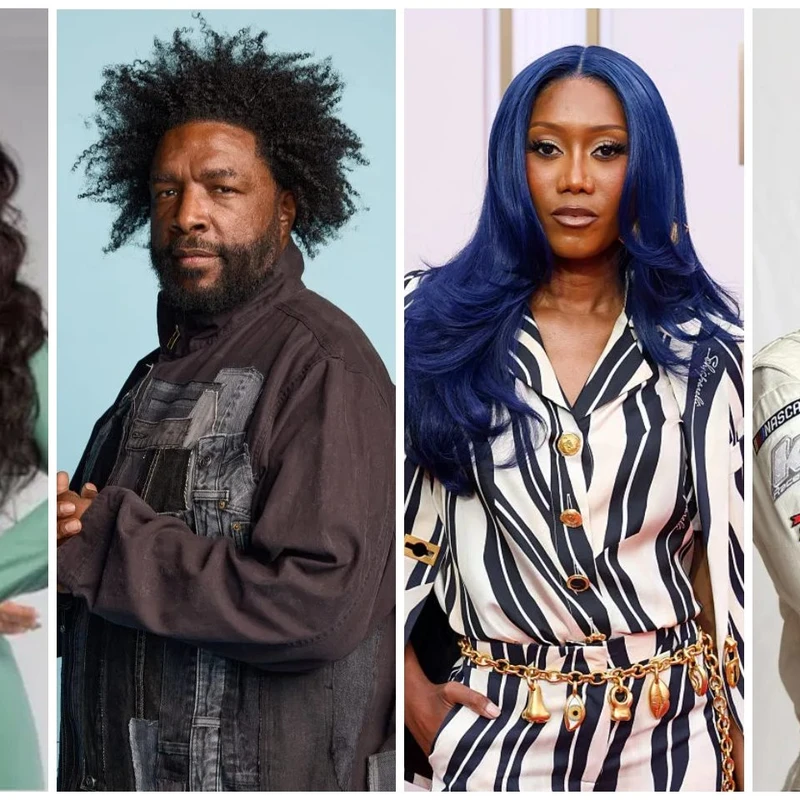
    As the first openly autistic NASCAR driver, Armani Williams is breaking barriers in a predominantly white sport. Diagnosed at age 2 but informed in middle school, he chose to go public to offer hope and inspiration. Williams uses his platform to raise awareness, inclusion, and acceptance for the autism community.

    5. Questlove, 54

    The iconic co-founder and bandleader of The Roots shared his autism status in his 2013 memoir. His parents noted his unusually calm and quiet nature as a baby, observing his fascination with simply watching records spin for hours. Questlove’s journey highlights how autism can manifest in diverse ways.

    6. Breanna Clark, 30

    Paralympic athlete Breanna Clark, diagnosed with autism and an intellectual impairment at age 4, is a testament to overcoming perceived limitations. She has won two gold medals at the Paralympic Games (Rio 2016 and Tokyo 2020), defying negative prognoses and inspiring her mother, who calls her achievements “fulfilling.”

    7. John Howard, 42

    MMA fighter John Howard discovered his autism diagnosis after a neurological exam in 2016. Initially confused, he learned to view his diagnosis as a strength. Howard believes his unique way of processing information makes him a better fighter, turning a perceived disadvantage into a powerful weapon.

    8. Muni Long, 36

    The R&B singer, also known for her battle with lupus, revealed her autism diagnosis in 2023. Long believes that repressing her authentic self, which she identifies as autistic, contributed to her autoimmune disease. She’s now embracing her true self to heal and find freedom.

    9. Amanda Seales, 44

    Comedian and actress Amanda Seales announced her autism diagnosis, noting the challenges in identifying it in Black women due to racism and societal perceptions. She explains that neurodivergence means functioning differently, and her unique presentation has sometimes been misinterpreted.

    These nine individuals are powerful examples of how autism does not define limitations but rather contributes to unique strengths and perspectives. Their courage in sharing their stories is invaluable in fostering a more inclusive and understanding world for everyone on the autism spectrum.

    Who else inspires you in the neurodivergent community? Share your thoughts and who you admire in the comments below!
  • Black Astronauts: From Pioneers to the Moon Mission

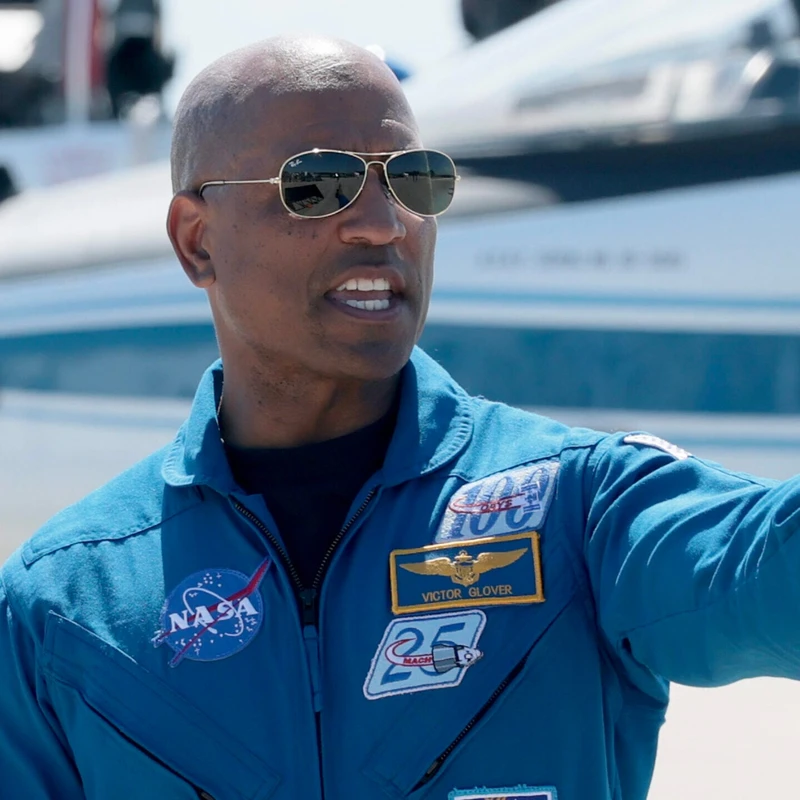
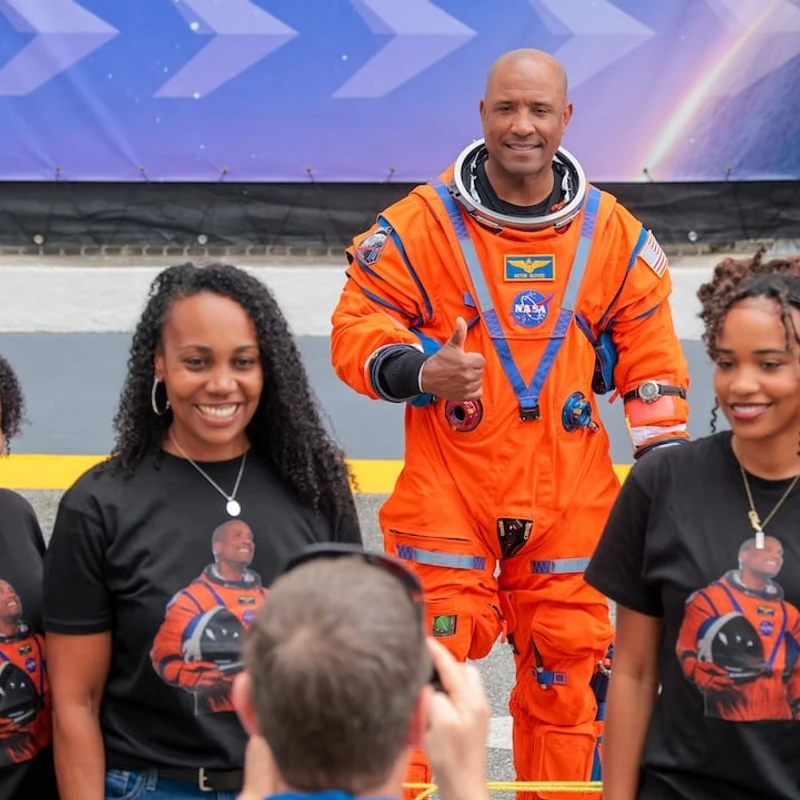
    History is being made in space! As Victor Glover embarks on the Artemis II mission, he’s not just flying around the moon – he’s breaking barriers. With this incredible journey, Glover becomes the first Black astronaut to travel this close to the lunar surface. It’s a monumental achievement, and it’s inspiring to see him follow in the footsteps of so many Black pioneers who dreamed of the stars.

    Victor Glover: A New Era of Space Exploration

    Selected as a NASA astronaut in 2013, Victor Glover has already experienced life aboard the International Space Station. But the Artemis II mission marks a significant personal and historical milestone. While Glover himself emphasizes that this is a moment for “human history,” he also acknowledges the profound impact it has on young Black individuals.

    He shared his thoughts on seeing himself reflected in the eyes of aspiring astronauts, stating, “And that young black boys and girls can look at me and go: ‘Hey, he looks like me, and he’s doing what?’ And that’s great, I love that.” Yet, his ultimate hope is for a future where such achievements are simply seen as human accomplishments, not defined by race or gender.

    The Trailblazers Who Came Before

    Glover’s journey didn’t happen in a vacuum. He stands on the shoulders of giants, Black astronauts who paved the way through sheer determination and talent. Think of Guion Bluford, the first Black astronaut in space, or Frederick D. Gregory, who blazed trails as the first Black man to pilot and command a Space Shuttle mission.

    The Astronaut Class of 1978

    Nearly fifty years ago, NASA’s Astronaut Class of 1978 was a groundbreaking group. Among the thirty-five selected were Guion Bluford, Ronald McNair, and Frederick Gregory. This trio participated in nine space missions between 1983 and 1992. Tragically, Ronald McNair was aboard the Space Shuttle Challenger when it met disaster in 1986, a stark reminder of the risks involved in space exploration.

    Ed Dwight: The Ultimate Pioneer

    But the story of Black astronauts begins even earlier with Ed Dwight. Chosen in 1961 by President John F. Kennedy as the first Black astronaut candidate, Dwight completed rigorous training. However, due to racial politics, he wasn’t selected for the Astronaut Corps and left the Air Force. His dream of space was deferred for decades.

    “I have a personal attachment and affiliation with Victor, because I met him when he was 15 years old… And never in a thousand years did I ever think that Victor would take it to heart and take it to the Moon, which is what he’s done.” — Ed Dwight

    Remarkably, Ed Dwight finally reached space in 2024, becoming the oldest person to fly aboard Blue Origin’s New Shepard. And guess who was on that flight? Victor Glover! Dwight, now 92, feels a deep connection to Glover’s success, seeing it as a fulfillment of his own lifelong aspirations. He proudly stated, “I’m really living my old 92 years through Victor — I’m really proud.”

    Inspiring Future Generations

    The Artemis II mission, with Victor Glover at the helm, is more than just a scientific endeavor. It’s a powerful symbol of progress and possibility. It shows young Black men and women that the sky is not the limit – it’s just the beginning. The legacy of astronauts like Bluford, Gregory, McNair, Dwight, and now Glover, continues to inspire dreams of reaching for the stars.

    Who are your favorite Black astronauts, past or present? Share their stories and why they inspire you in the comments below!

  • TSA Agent’s Struggle During Government Shutdown

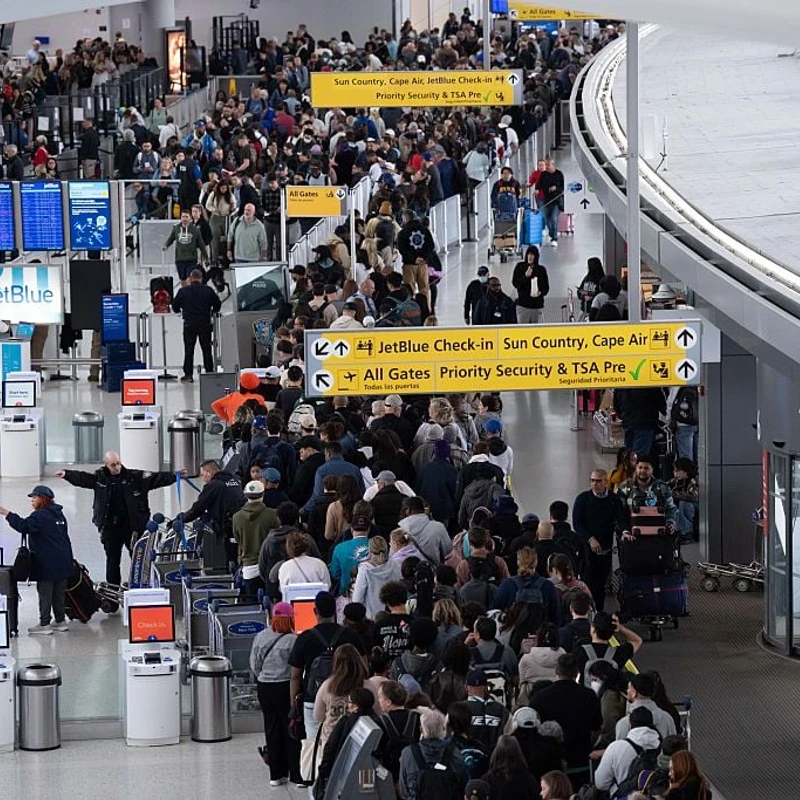
    Imagine showing up to work every day, doing a critical job, but not knowing when your next paycheck will arrive. That’s the harsh reality faced by many essential government workers during a shutdown. A TSA agent, whom we’ll call Cherry, recently opened up about the profound emotional and financial toll the partial government shutdown took on her life, revealing a side of the crisis many travelers never see.

    The Emotional Weight of Uncertainty

    While Cherry had managed to save some money after the previous shutdown, the emotional impact of the latest one was far more devastating. “What really happened was kind of like a big deterioration in my mental health,” she shared. The longer the shutdown dragged on, the harder it became to even get out of bed.

    The stress wasn’t just personal. Bills were mounting, morale among colleagues was low, and they still had to face the public. “We’re still dealing with a traveling public. They’re not nice, of course,” Cherry explained, highlighting the difficulty of justifying going to work without pay while dealing with frustrated travelers.

    A Difficult Situation Persists

    The situation became so dire that Cherry’s psychiatrist recommended she take time off work. Even after returning to work and receiving back pay, she warns that the crisis isn’t over. “I want people to realize that we are still not out of the woods yet,” she cautioned. The legality of the back pay is still being debated, and compensation is only guaranteed until May, leaving the door open for a repeat of the same hardship.

    The Shutdown’s Wider Impact

    The partial shutdown, primarily stemming from a deadlock over Homeland Security funding, meant TSA agents went without pay for weeks. This isn’t just about delayed paychecks; it’s about destabilizing a workforce already under immense pressure. The shutdown saw a record number of agents calling out sick, and nearly 500 quit, leading to significant travel disruptions and even the deployment of ICE agents to airports.

    For Cherry and many of her colleagues, who are people of color (nearly half of TSA staff are), the situation feels like a lack of care from those in power. “That’s another reason why a lot of us think that they don’t really care,” she admitted. “It’s not affecting the group of people that they’re supposed to care about.” The feeling of being dispensable is palpable.

    Seeking Stability in an Unstable Environment

    Cherry joined the TSA eight years ago, seeking financial security after experiencing homelessness as a teenager. Government jobs were seen as a stable path, a way to build a secure future. Now, with repeated shutdowns and layoffs under the current administration, that sense of security has vanished. “We have never faced more insecurity than with this administration,” she stated.

    To cope and raise awareness, Cherry has turned to social media. A TikTok video she posted, showing her at work with the caption “Oh, okay because we still aren’t getting paid,” went viral, garnering over 780,000 views. While she clarified she wasn’t asking for handouts, she did offer her Venmo and Cash App, acknowledging that thousands are in similar situations.

    Despite the hardships, Cherry and her colleagues continue to show up, performing their duties with professionalism. She urged travelers to show understanding: “Come to the airport and give the officers a lot of grace. [We are] going through very unprecedented times, but we still do want to keep everyone safe.”

    What are your thoughts on the impact of government shutdowns on essential workers? Share your experiences or opinions in the comments below!

  • College Bullying: A Silent Crisis

    We often think of bullying as a problem confined to middle and high school hallways. But what happens when students transition to college? Sadly, the hurtful behaviors don’t just disappear. This week, the North Carolina Central University (NCCU) community is mourning the loss of sophomore Zyarre Prince, and it’s bringing a critical conversation about bullying, cyberbullying, and mental health in higher education back into the spotlight.

    Mourning a Vibrant Spirit

    NCCU Chancellor Karrie G. Dixon shared the heartbreaking news of Prince’s passing on March 28, 2026. Zyarre, a criminal justice major from Maryland, was remembered as a bright and stylish presence on campus. He was known for his passion for fashion and self-expression, having served as Mister Freshman and recently running a commendable campaign for Mister Junior, where his unique formal wear was highly admired.

    While the official statement didn’t specify the cause of death, reports indicate that Prince died by suicide. Students at a candlelight vigil shared with ABC 11 that they had heard bullying may have been a factor, underscoring the often-hidden struggles students face. This tragedy has amplified calls for more robust mental health resources on college campuses.

    The Evolving Landscape of College Bullying

    The rise of anonymous apps like Fizz and Sidechat means that the harms of cyberbullying don’t vanish after high school; they often evolve. Research from 2025 highlighted that bullying and cyberbullying incidents are significantly underreported in universities compared to K-12 settings. This lack of visibility can be dangerous.

    Unlike high schools, colleges often expect students to navigate interpersonal conflicts independently. While this fosters independence, it can also create gaps in support systems. As student suicides and mental health challenges continue to be reported nationwide, advocates emphasize the urgent need for more accessible and proactive campus support.

    NCCU’s Response and Support

    In response to Prince’s passing, NCCU stated that it “does not condone bullying or any other forms of harassment.” The university highlighted its accessible reporting process for abusive behavior and its commitment to investigating and taking appropriate actions to ensure a safe campus environment. They also encouraged students to utilize the Counseling Center, which offered extended open office hours and regular appointment scheduling.

    However, as the NCCU Student Government Association pointed out, these moments transcend policy and protocol. They serve as a stark reminder of the profound impact our words and actions—whether online or in person—can have on others. The conversation about bullying needs to extend far beyond the high school years and into every aspect of our lives.

    How can we better support students struggling with bullying and mental health in college? Share your thoughts and ideas in the comments below!

  • Meagan Good Addresses Skin Bleaching Rumors

    Actress Meagan Good has faced her share of public scrutiny throughout her career, from her relationships to her career choices. However, one particular rumor that surfaced a few years ago deeply affected her: the accusation that she bleached her skin. Good recently opened up about the experience, revealing how it impacted her and led to a profound personal awakening.

    An Unplanned Skin Lightening

    During an appearance on “The Breakfast Club,” Good recounted a specific incident in 2019 when she consulted an unlicensed esthetician for an anti-aging regimen. Unfortunately, the products recommended had an unintended and drastic effect. “I start using the product and I instantly see that I’m getting lighter,” she explained.

    After a few weeks, Good noticed her skin had become alarmingly pale. While filming a show in New York, she looked in the mirror and was shocked by her appearance, stating, “I just look white. I just look crazy.” This experience was particularly distressing for her as a Black woman.

    Heartbreak Over Misconceptions

    What truly broke Good’s heart was the thought that young Black girls might believe she intentionally bleached her skin or, worse, that she didn’t love herself. “As a Black woman, I would never do that to myself and it broke my heart to think that young Black girls would think that I did that or that I don’t like myself,” she shared. She questioned why she would suddenly engage in such a practice at 39 years old.

    The backlash was intense and humiliating. Unlike previous instances where she could address criticism directly, this time, Good felt trapped. “I look crazy. I literally have to sit in this and accept that people think I did this to myself,” she admitted.

    Finding Strength Through Faith and Self-Love

    In her darkest moments, Good turned to prayer, asking for help to stop caring about public opinion. She described her eventual breakthrough as an “answered prayer.” “You kept saying, ‘Lord, help me not care what people think… Now you don’t have a choice,’” she recalled. This realization empowered her to choose joy and move forward, which ultimately led to her natural skin tone returning.

    This personal journey has clearly resonated with Good, who recently celebrated her first wedding anniversary with actor Jonathan Majors. Her heartfelt Instagram post spoke volumes about their love and the positive impact he’s had on her life, showcasing her renewed sense of self and happiness.

    What are your thoughts on Meagan Good’s experience and her message of self-acceptance? Share your views in the comments below!

  • Reality TV Reflects the ‘Black Friend’ Experience

    We often say reality TV amplifies real life, heightening drama and manufacturing tension. But sometimes, these shows hit a little too close to home, reflecting uncomfortable truths we might prefer to ignore. This past week, Bravo’s ‘Summer House’ did just that, bringing the often-unspoken reality of being the ‘Black friend’ into sharp focus.

    A Familiar Fallout

    The latest drama on ‘Summer House’ centered around cast members Amanda Batula and West Wilson, involving overlapping relationships and fractured friendships. While it reads like typical reality TV fare, the underlying dynamic is deeply familiar to many. Ciara Miller, the show’s first Black cast member, found herself publicly navigating the emotional aftermath of others’ actions.

    For context, Miller had dated Wilson for months before their breakup, with lingering tensions. Batula, recently divorced, then confirmed she was dating Wilson, Miller’s ex, just weeks after Miller had publicly supported her through the divorce. This complex love triangle touches on a deeper issue: the expectation for Black individuals in predominantly white spaces to absorb hurt quietly.

    The Burden of Emotional Labor

    When Black people enter predominantly white environments, there’s often an unspoken pressure to assimilate, to be ‘easy to work with.’ For Black women, this expectation is compounded by the demands of female friendships, which often require significant vulnerability, intimacy, and emotional labor. We’re expected to be the confidant, the comic relief, the support system – essential, until reciprocity is needed.

    As ‘Southern Charm’ star Venita Aspen noted on her Instagram Story, referencing the situation, “Imagine making a statement hard launching a ‘connection’ and not even considering apologizing to the person you hurt.” This pattern resonates far beyond the Bravo universe, appearing across reality TV and everyday life.

    Rallying Around Ciara Miller

    The solidarity shown towards Ciara Miller on social media exemplifies Issa Rae’s famous mantra, “rooting for everybody Black.” It reflects the protective instinct Black women often develop for each other in a world that doesn’t always offer them the same protection. This support extends to the ‘token Black friends’ whose cultural identity might be used for social currency one moment and then dismissed the next.

    • Reality TV often mirrors the complex dynamics of real life.
    • The ‘Summer House’ storyline highlights the ‘Black friend’ experience.
    • Black women often perform significant emotional labor in friendships.
    • Lack of reciprocity and accountability can be deeply hurtful.
    • Social media solidarity reflects a need for mutual protection.

    For five seasons, viewers have watched Miller navigate her role with grace. However, moments like these serve as a crucial reminder that composure shouldn’t be expected in the face of genuine hurt. While reality TV might package this as mere entertainment, for many Black women watching, it’s a poignant reflection of their lived experiences.

    Have you ever felt like the ‘Black friend’ in a social situation? Share your experiences and thoughts in the comments below!

  • Zendaya & Law Roach Surprise Bride With Wedding Dress

    Fans have long been captivated by the incredible fashion moments created by Zendaya and her longtime stylist, Law Roach. While many hoped for a glimpse of Zendaya as a bride, perhaps styled by Roach for her rumored engagement to Tom Holland, the duo delivered something even more special. They surprised a Black queer bride in New York City by crashing her wedding dress appointment and, in a truly heartwarming gesture, purchased her gown.

    A Dream Come True at Mark Ingram Atelier

    The magical moment unfolded on February 9th at Mark Ingram Atelier in New York City. Engaged couple Alexandra Warren and KB White were attending a special bridal appointment, connected to Zendaya’s film “The Drama,” which centers around a wedding week. Little did they know, this appointment would become an unforgettable highlight of their lives.

    Suddenly, Zendaya and Law Roach made a surprise appearance, crashing the appointment. Alexandra Warren, who works as a public interest attorney along with her fiancée, was in the midst of trying on gowns. The actress and stylist offered their expert opinions and, most importantly, their heartfelt support for this major milestone.

    Generosity Beyond Measure

    Warren shared her incredible experience on Instagram, expressing her disbelief and gratitude. “KB and I exchanged rings (!) and then Zendaya bought my wedding dress (????) (!!) I am so lucky to have had an experience like this … out of this world,” she wrote. The post included photos capturing the surprise, the joy, and the moment Warren said “yes” to the dress after receiving approval from both Zendaya and Roach.

    The couple, who met through work and developed a sweet coworkers-to-friends-to-lovers relationship, were initially concerned about the dress’s budget. However, after Zendaya and Roach confirmed they loved the gown Warren was wearing, Zendaya delivered the ultimate surprise: “By the way, it’s covered.” The actress revealed she was paying for the dress, leaving the couple in stunned, joyous disbelief.

    A Fashion Icon’s Blessing

    For Warren, a self-proclaimed lover of fashion, having Law Roach’s stamp of approval on her wedding gown was a dream come true. “It felt so good that they were both so excited to help me with this milestone decision,” she told People magazine. The experience was truly “out of this world,” making her big day even more special.

    What do you think of Zendaya and Law Roach’s incredible gesture? Share your thoughts in the comments below!

  • 50 Black Queer Queens Shining Bright

    Get ready to be dazzled! This week’s Women Crush Wednesday list is shining brighter than ever with 50 incredible Black queer queens who are absolutely dominating our timelines. From captivating beauty to inspiring authenticity, these ladies are more precious than rubies and deserve all the recognition.

    Celebrating Radiance and Truth

    Kehlani kicked things off by channeling her inner Bridgerton ‘Diamond of the Season,’ and we couldn’t agree more! But she’s not alone. This list is filled with rare jewels who blind us with their radiance, captivate us with their beauty, and inspire us daily to live in our truth. It’s our chance to show appreciation for these precious women.

    Diamonds truly are a girl’s best friend, and perhaps these ladies know that best, whether they’re dating other women or simply embracing their bisexuality. This collection celebrates the multifaceted beauty and strength found within the queer Black community.

    Meet This Week’s Shining Stars

    • Niecy Nash-Betts
    • Tinashe
    • Kehlani
    • Doechii
    • KWN
    • Victoria Monet
    • Alexandra Shipp
    • Jozzy
    • Robin Roberts
    • Keke Palmer
    • Janelle Monae
    • Cynthia Erivo
    • Lena Waithe
    • Jari Jones
    • Sydney Colson
    • Chelsea Gray
    • Jewell Loyd

    This is just a glimpse of the incredible talent and beauty featured on this week’s list. Each woman brings her unique shine, whether through her artistry, activism, or simply by living authentically. Don’t just scroll past – take a moment to appreciate these remarkable individuals.

    More Than Just a List

    This isn’t just about appreciating beauty; it’s about recognizing the impact these women have. They are role models, innovators, and trendsetters who inspire countless others. Their presence on our timelines is a source of joy, pride, and empowerment.

    So, take your time, savor each profile, and maybe even shoot your shot if you see a single queen who catches your eye! This is a celebration of love, truth, and the radiant power of Black queer women.

    Who are your favorite Black queer queens dominating your timelines? Let us know in the comments below!

  • Solidcore CEO Aims to Make Studio Welcoming for Black Women

    In a time when many companies are scaling back their diversity, equity, and inclusion (DEI) initiatives, Solidcore CEO Bryan Myers is doubling down. He’s not just maintaining these practices; he’s making inclusivity a cornerstone of his business strategy, aiming to establish Solidcore as the “de facto landing spot for Black women” and other underrepresented groups in boutique fitness.

    From Client to CEO: A Deep Understanding

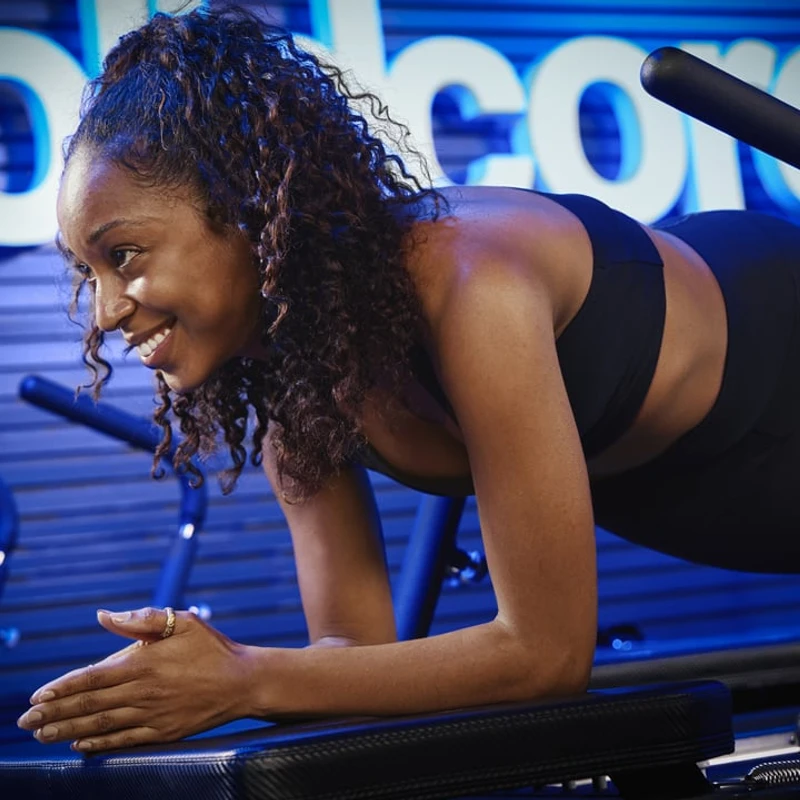
    Myers, who took the helm as CEO in 2021, brings a unique perspective to the fitness industry. Before leading the company, he was a dedicated client who found solace and strength in Solidcore’s reformer-based workouts. He appreciated the focus on athleticism without the intimidating “gym bro” culture often found in traditional gyms, creating an environment centered on strength that felt genuinely welcoming.

    His journey from client to Chief Operating Officer and eventually CEO, coupled with his decision to become a coach himself, provides him with a deep, frontline understanding of the business. Myers still coaches classes today, using it as an authentic way to connect with his team and clients, gather feedback, and witness the product in action.

    Challenging Preconceptions in Fitness

    Solidcore has experienced exponential growth under Myers’s leadership, with over 160 studios nationwide and plans to double that by 2028. This success is partly attributed to his commitment to inclusivity. Myers actively challenges the notion that fitness spaces must conform to a specific aesthetic or body type to be successful. “The way to be ‘in’ at [solidcore] is actually not to show up in a Lululemon matching set,” he explained. “The way to be ‘in’ is not to be the thinnest person in the room. The way to be ‘in’ and the thing that we celebrate publicly is the work that you put in.”

    This philosophy allows Solidcore to actively seek out individuals who may have felt excluded from boutique fitness, particularly reformer Pilates. Myers emphasizes that dedication to the workout is the key qualification for joining the community under the studio’s signature blue lights.

    Inclusivity as a Business Strategy, Not Just PR

    Myers firmly believes that DEI initiatives should be rooted in building a strong business, not just for public relations. “At the core for me, this is actually not marketing. This is a business strategy,” he stated. He envisions Solidcore as the premier choice for Black women, queer individuals, and people of all body sizes seeking reformer-based workouts.

    He acknowledges the challenge of balancing inclusivity with business demands, particularly regarding price point. While price reduction can be a factor in inclusivity, Myers points out that many people of color can afford the current price but feel excluded for other reasons. His priority is to build a robust business first, exploring other avenues for creating a more inclusive environment, with the long-term goal of potentially lowering prices.

    Empowerment Through Authenticity

    • Solidcore CEO Bryan Myers prioritizes inclusivity as a business strategy.
    • Aims to make Solidcore the go-to reformer studio for Black women and other underrepresented groups.
    • Emphasizes strength and hard work over appearance or body type.
    • Believes DEI should be rooted in business building, not just PR.
    • Challenges the notion that profitability must be sacrificed for inclusivity.
    • Empowerment in fitness means showing up authentically to achieve personal goals.

    Myers feels a profound responsibility as a Black, queer CEO to uphold DEI principles, demonstrating that a profitable business can be anchored in these values. He defines empowerment in fitness as the ability to show up authentically and pursue one’s own objectives and dreams, free from external pressures about appearance or body shape. Solidcore’s community, he believes, helps individuals achieve both physical goals and personal well-being, fostering a sense of self-care and empowerment.

    What does empowerment in fitness mean to you? How important is inclusivity in the brands you support? Share your thoughts in the comments below!

  • Victor Glover: First Black Astronaut to the Moon?

    Get ready for a giant leap for humanity – and a monumental moment for representation! NASA is gearing up for its first crewed mission to the Moon in over half a century, and Victor Glover is slated to make history as the pilot of the Artemis II mission. This isn’t just another space voyage; it’s poised to be the first time a Black astronaut journeys to lunar orbit.

    A Trailblazer in Space

    Victor Glover, a native of Southern California, already has a place in the history books. In 2020, he shattered barriers by becoming the first Black astronaut to complete a long-duration mission aboard the International Space Station (ISS). His upcoming role on Artemis II continues this incredible trajectory, pushing the boundaries of what’s possible in space exploration.

    While Glover has often emphasized the importance of teamwork and the collective effort behind space missions, he also acknowledges the significance of these personal milestones. He’s quick to credit the Black pioneers who paved the way for him, like Livingston Holder, an Air Force engineer and former payload specialist, recognizing the legacy that makes such journeys possible.

    Artemis II: A New Era of Lunar Exploration

    The Artemis II mission is a crucial step in NASA’s ambitious Artemis program, which aims to return humans to the Moon for the first time since the Apollo 17 mission in 1972. Although this mission won’t land on the lunar surface, it will orbit the Moon, paving the way for future landings and a sustained human presence.

    This mission is packed with historic firsts. Alongside Victor Glover, Christina Koch is set to become the first woman to travel to the Moon, and Jeremy Hansen will be the first non-American astronaut to embark on such a journey. It’s a testament to the evolving face of space exploration.

    Glover’s Journey to the Stars

    Glover’s path to NASA is as impressive as his missions. After a distinguished career in the U.S. Navy, where he logged over 3,500 flight hours and flew numerous combat missions in more than 40 aircraft, he was selected as a NASA astronaut in 2013. His selection came from a pool of thousands of applicants, highlighting his exceptional skills and dedication.

    Beyond the technical achievements, Glover’s presence in space carries profound cultural significance. In an era where representation matters more than ever, his journey offers powerful inspiration to aspiring astronauts, particularly young Black individuals who can now see themselves reflected in the future of space exploration.

    What does Victor Glover’s potential journey to the Moon mean to you? Share your thoughts on this historic moment in the comments below!