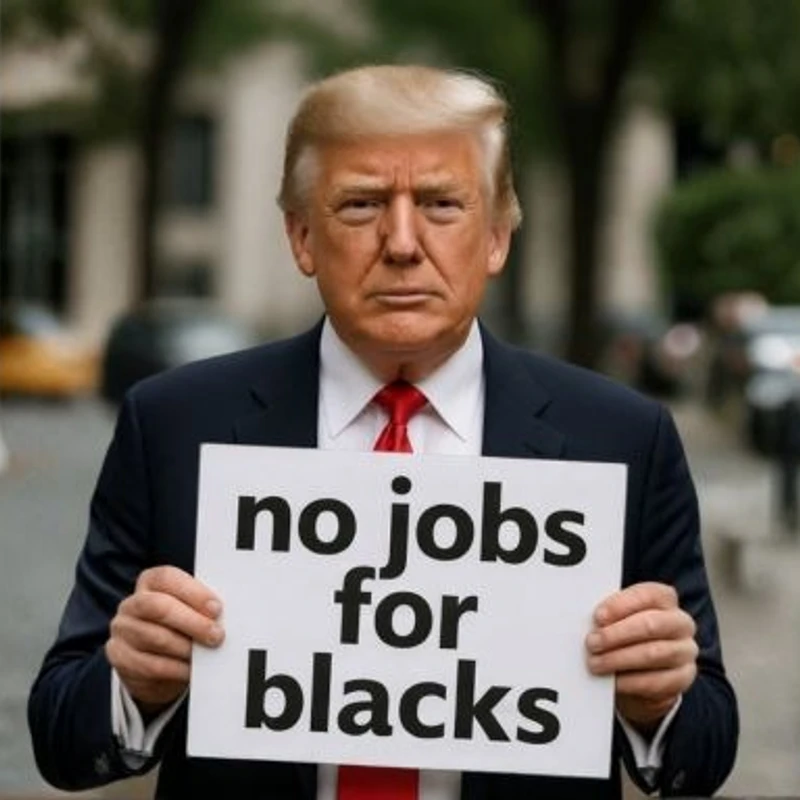
When a new presidential term begins, the ripple effects of policy decisions are felt across the nation. For Black Americans, the first sixteen months of Donald Trump’s second term have presented a series of significant challenges, impacting everything from economic stability to fundamental rights. Let’s break down the data and understand the tangible consequences.
Economic Setbacks: Unemployment and Labor Force Decline
The numbers paint a concerning picture for Black employment. Black unemployment has risen to 7.6 percent in early 2026, a notable increase from the start of Trump’s second term. The employment-to-population ratio for Black men has also seen a decline, particularly impacting those without college degrees.
Furthermore, nearly 300,000 Black women left the labor force in just one quarter of 2025. This trend disproportionately affected college-educated women and public sector workers, areas targeted by federal workforce purges. Reports indicate that policies enacted are actively pushing Black workers backward and widening the economic gap for Black households.
The Dismantling of DEI Initiatives
From the very first day of his second term, executive orders were signed targeting Diversity, Equity, and Inclusion (DEI) programs. These measures eliminated DEI offices and staff across the federal government and extended the ban to federal contractors. The scope was later broadened to include artificial intelligence development and the military.
A subsequent order specifically targeted DEI for federal contractors, prohibiting targeted outreach to vendors of color and support for underrepresented entrepreneurs. Critics argue this measure doesn’t protect against discrimination but rather reinstitutionalizes it, with non-compliance risking contract cancellation. Despite formal demands from members of Congress, the administration has largely ignored these concerns.
An Assault on Voting Rights
A significant executive order signed in March 2026 has been described by Black voting rights organizations as the largest disenfranchisement effort of the term. This order mandates documentary proof of citizenship for voter registration in federal elections and empowers the USPS to reject mail-in and absentee ballots from individuals not on a specific federal list.
It also forces states to reject ballots received after Election Day, removing grace periods used in many states. Analysis suggests this order could disenfranchise millions of eligible Black voters, who are more likely to vote by mail, live in areas with slower postal service, and may not have immediate access to proof of citizenship. The Congressional Black Caucus has formally denounced the order as unlawful voter suppression.
HBCUs: Promises vs. Funding Cuts
An executive order aimed at promoting excellence at Historically Black Colleges and Universities (HBCUs) initially sounded promising, pledging support for financial planning and affordability. However, the administration later announced it would not renew a substantial payment to Howard University, citing the completion of its hospital construction.
Across 2025 and 2026, other federal funding streams for HBCUs have been quietly reduced. Despite the continued use of supportive language in executive orders, analyses show that HBCUs have experienced significant funding losses under this new framework, creating a disconnect between public statements and practical financial support.
Attacks on Cultural Institutions and Criminal Justice Reform
The Smithsonian Institution has also faced scrutiny, accused of promoting a ‘divisive, race-centered ideology.’ An executive order suggested the institution was portraying American values as inherently harmful. Historians and leaders fear this is an attempt to sanitize history, potentially targeting the National Museum of African American History and Culture, with reports of internal pressure to reframe exhibits on sensitive topics.
Furthermore, an executive order from the previous administration that aimed to reform federal policing practices and promote fairer treatment for minority communities was revoked on the first day of the second term. This included restrictions on chokeholds, mandated body cameras, and limitations on no-knock warrants. Federal civil rights investigations into police departments have since been scaled back or closed.
Impact on Black Immigrants and Healthcare Access
For Black immigrants, who represent a significant portion of the Black American population, executive actions on birthright citizenship and expanded deportation enforcement have had a profound impact, particularly on communities from Haiti, Jamaica, Nigeria, and Ghana. These actions are seen as effectively closing pathways to legal citizenship for the global Black community.
The healthcare landscape has also shifted. A major act passed in 2025 included Medicaid work requirements that disproportionately affect low-income Black workers. Enforcement of insurance market protections has weakened, widening the uninsured gap for Black Americans. Additionally, negotiations on prescription drug costs that benefited Black seniors have been suspended.
The Data Doesn’t Lie
In summary, the first sixteen months of this second term have seen DEI dismantled, Black unemployment rise, labor force participation drop, voting rights curtailed, HBCU funding cut, the Smithsonian attacked, policing reforms revoked, pathways for Black immigrants closed, and healthcare access narrowed. Independent analyses from various research institutions confirm these findings, concluding that the impact on Black Americans is measurable, intentional, and ongoing.
What are your thoughts on the policies discussed and their impact on Black communities? Share your perspective in the comments below.
Leave a Reply