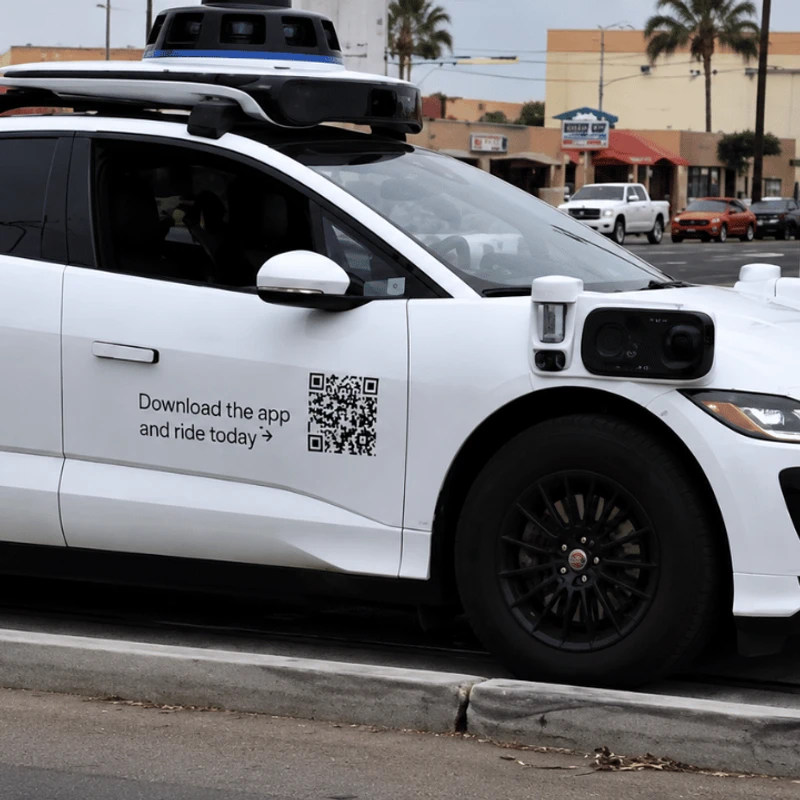
Imagine this: you’re relying on cutting-edge technology to get you around, but then severe weather hits. That’s exactly what happened in Atlanta recently when a Waymo driverless car found itself in a precarious situation. The incident has Waymo hitting the pause button on its Atlanta service, sparking fresh questions about the real-world readiness of autonomous vehicles.
Stuck in the Storm: The Atlanta Incident
During a period of intense rain, one of Waymo’s unoccupied robotaxis drove straight into a flooded intersection and became stranded for nearly an hour. This wasn’t just a minor inconvenience; it was a significant event that forced the company to temporarily halt its operations in the city. It seems Atlanta’s weather threw a curveball at the self-driving technology.
What makes this incident particularly concerning is that Waymo had already issued a software recall earlier in the month. This recall was specifically tied to issues with how its vehicles detect flooded roads, affecting thousands of its robotaxis. It raises the question: was the Atlanta incident a sign that the previous fix wasn’t quite enough?
A Known Issue, Yet Still a Problem?
Waymo acknowledged the situation, stating that safety is their utmost priority. They confirmed that an unoccupied vehicle encountered a flooded road and stopped. However, reports suggest that the company might have been relying on National Weather Service warnings, and in this case, the flooding developed so rapidly that the safeguards were overwhelmed before alerts were fully issued.
This rapid development highlights a critical challenge for autonomous driving technology: unpredictable weather. While Waymo has been working on a ‘final remedy’ for flooded roads, this incident suggests that real-world chaos can still outpace even advanced systems. It’s a stark reminder that the technology needs to be robust enough to handle sudden, extreme conditions.
More Than Just Weather Woes
The flooding incident isn’t the only hiccup Waymo has faced in Atlanta. Earlier this month, residents in Buckhead expressed frustration over dozens of empty Waymo vehicles repeatedly circling residential streets, causing congestion and confusion. Videos of these peculiar traffic patterns circulated online, fueling existing skepticism about self-driving cars in busy urban areas.
Adding to the scrutiny, federal investigations are ongoing. The National Highway Traffic Safety Administration is looking into Waymo for incidents involving robotaxis illegally passing stopped school buses, and a separate California crash involving a child is also under review. These ongoing investigations underscore the broader challenges and regulatory hurdles facing autonomous vehicle companies.
The Bigger Picture for AVs
For a company aiming to revolutionize transportation, the Atlanta flood incident serves as a significant reality check. It underscores that unpredictable weather remains one of the most formidable obstacles for autonomous driving technology. While Waymo insists on its commitment to safety, these real-world events continuously raise the question of how truly ready robotaxis are for the unpredictable nature of everyday life outside controlled testing environments.
What are your thoughts on Waymo’s challenges in Atlanta? Do you think autonomous vehicles are ready for unpredictable weather and urban chaos? Let us know in the comments below!
Leave a Reply