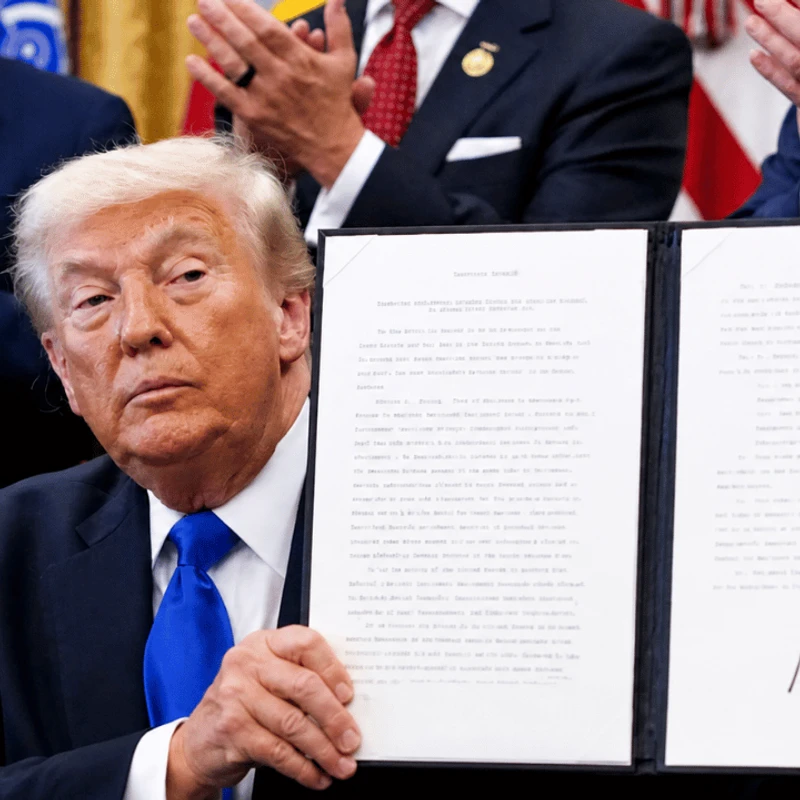
During a recent lengthy address, Donald Trump announced a new initiative aimed at helping Americans without employer-sponsored retirement plans. He proposed that his administration would match contributions up to $1,000 annually for these workers, framing it as a solution for the “often-forgotten American workers.”
However, a closer look reveals that the policy Trump presented as a new proposal is actually already part of existing law. The $1,000 federal match he described is a key provision within the SECURE 2.0 Act, a bipartisan retirement reform package that was signed into law by President Joe Biden back on December 29, 2022.
The Saver’s Match Explained
This significant legislation, included in a broader government funding bill, introduced several measures designed to expand access to retirement savings, particularly for lower- and middle-income individuals. The specific provision Trump highlighted, often called the Saver’s Match, replaces an older tax credit with a direct federal contribution.
Starting in 2027, eligible individuals will be able to have up to $1,000 deposited directly into their retirement accounts. This policy aims to address the long-standing issue that millions of American workers lack access to employer-sponsored retirement plans, impacting their long-term financial security.
Policy vs. Presentation
What makes this situation notable is the contrast between the policy’s substance and how it was presented. While the retirement match aligns with the SECURE 2.0 Act, Trump introduced it without acknowledging its legislative origins or its already established rollout timeline. This gap between messaging and policy reality is now a focal point in discussions about economic policy and credit for bipartisan achievements.
Lawmakers from both parties have worked for years to close the retirement savings gap through various incentives and access expansions. The SECURE 2.0 Act represents a significant bipartisan effort to tackle this issue, and its provisions, like the Saver’s Match, are already set to make a difference.
The Broader Conversation
As political narratives continue to shape discussions around economic policy, the way initiatives are presented versus their actual legislative history becomes increasingly important. Understanding the facts behind policy proposals ensures a clearer picture of governmental actions and their bipartisan roots.
What are your thoughts on politicians taking credit for existing policies? How important is it to you that bipartisan efforts are acknowledged? Share your views in the comments below!
Leave a Reply