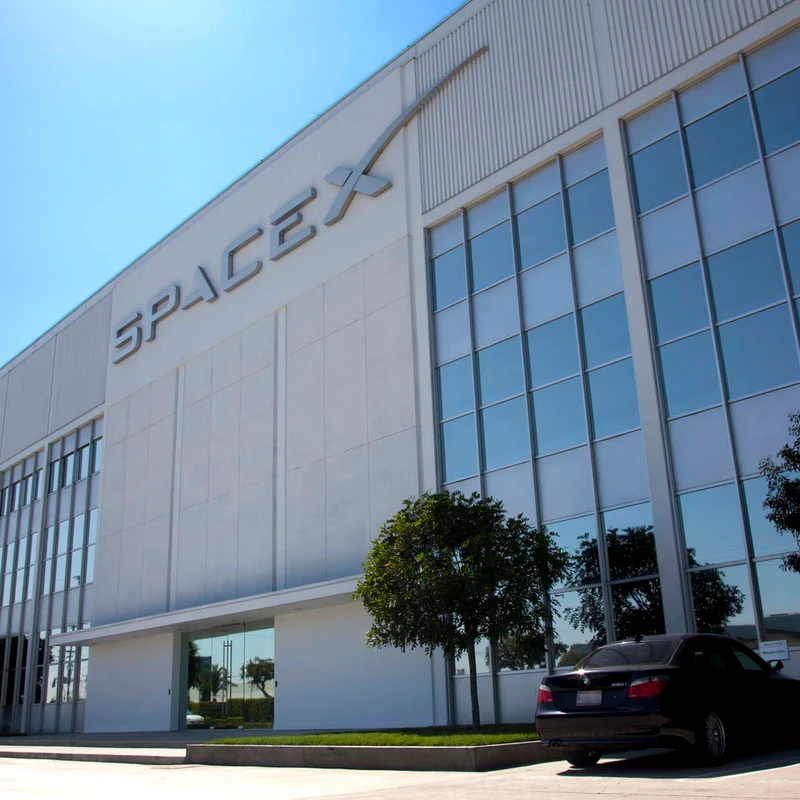
Remember when space exploration was solely the domain of government agencies? Those days are long gone! Since the Soviet Union launched Sputnik 1 in 1957, the landscape has dramatically shifted. Today, private companies are not just launching satellites and operating orbital constellations, but also ferrying astronauts to the International Space Station and even pioneering space tourism. For investors, this burgeoning space industry presents exciting opportunities, and one company, in particular, is leading the charge: SpaceX.
The Rapid Growth of Space Launches
The pace of space exploration is accelerating at an unprecedented rate. Tracking space launches involves metrics like orbital launches (reaching speeds for at least one orbit) and spacecraft launches (crossing the 50-mile altitude mark). The amount of payload sent into orbit, measured in kilograms, has also surged. As recently as 2015, U.S. orbital launches were rare, often numbering in the single digits annually. Fast forward to today, and launches are happening roughly every 30 hours worldwide, with the U.S. leading the way. The total upmass sent to orbit has more than quintupled between 2020 and 2025, reaching over 3,000 tons, with SpaceX’s Starlink satellites forming the bulk of U.S. payloads.
SpaceX’s Unrivaled Market Share
When you look at who’s launching these rockets and carrying all this valuable payload, the answer increasingly points to SpaceX. While competitors like United Launch Alliance (ULA), Rocket Lab, and Europe’s Arianespace are active, SpaceX’s numbers are staggering. In 2025, for instance, SpaceX conducted an astounding 171 launches, dwarfing Rocket Lab’s 20, ULA’s 6, and Arianespace’s 7. This dominance is the result of a remarkable journey for SpaceX, which went from being on the brink of bankruptcy in 2008 to becoming the first private company to orbit a spacecraft in 2010.
SpaceX’s market share in commercial space contracts reached an impressive 45% by 2017 and has only grown since. The company has consistently broken launch records throughout the 2020s, now accounting for roughly 80% of all U.S. space launches. Their commercial launch pace and market capture are truly remarkable:
- 2020: 25 commercial launches, 64% market share
- 2021: 32 commercial launches, 59% market share
- 2022: 57 commercial launches, 72% market share
- 2023: 92 commercial launches, 80% market share
- 2024: 130 commercial launches, 84% market share
- 2025: 161 commercial launches, 82% market share
Global Launch Landscape and Investor Opportunities
While the U.S. leads in space exploration, China’s launch activity is accelerating, and Russia’s has slowed considerably. However, the U.S. remains the undisputed leader, with over 7,600 launches between 2010 and 2023. This robust growth in commercial space launches signifies a booming industry, albeit one that is high-risk and high-reward, with companies often operating at a loss during development phases.
For investors, the space sector offers various avenues. Established players like Boeing and Lockheed Martin (part of ULA) are well-known defense contractors with significant space operations. Rocket Lab is another prominent player. If SpaceX goes public, it will undoubtedly be a major focus. Beyond these, ‘newspace’ companies like AST SpaceMobile, BlackSky, and Planet Labs offer high-growth potential but also carry significant risk. For those seeking diversified exposure, space-focused ETFs, such as the ARK Space Exploration & Innovation ETF (ARKX), provide a way to invest in a broad range of space stocks, from established giants to promising startups.
What are your thoughts on the future of commercial space launches and SpaceX’s role in it? Share your insights in the comments below!
Leave a Reply