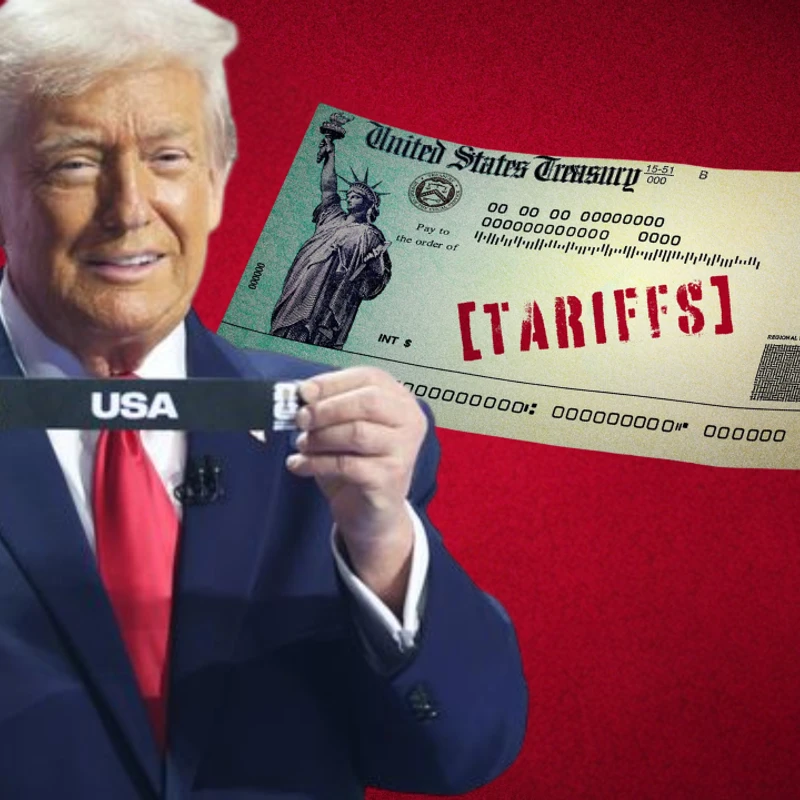
Are you expecting a $2,000 check in the mail next year? President Donald Trump has been floating the idea of a “tariff dividend,” suggesting that revenue generated from U.S. tariffs could be returned to Americans. While the promise sounds appealing, experts are raising serious questions about its feasibility and the numbers behind it.
Trump’s Promise of Tariff Rebates
During a recent Cabinet meeting, President Trump reiterated his pledge, calling next year the “largest tax refund season ever.” He stated that the government would be “giving back refunds out of the tariffs” and providing a “nice dividend to the people in addition to reducing debt.” This isn’t a new concept; Trump has been discussing a “little rebate” funded by tariffs since March and April, even suggesting checks could arrive mid-next year, worth thousands for middle-income households.
He’s also framed affordability concerns as a “Democrat scam,” seemingly dismissing worries about the economic impact of his policies. However, as the promise of these checks grows, the financial projections behind them appear to be shrinking, leading many to doubt their actual delivery.
The Math Doesn’t Add Up, Say Experts
The Congressional Budget Office (CBO) recently revised its tariff revenue projections downward. Instead of an estimated $3.3 trillion over the next decade, the new forecast is $2.5 trillion. This shortfall alone could add roughly $500 billion in debt interest, pushing the total government cost closer to $3 trillion. And these are considered optimistic figures.
Nonpartisan organizations like the Committee for a Responsible Federal Budget estimate that tariffs might only bring in about $300 billion per year. They argue that a single round of dividend checks could cost twice that amount, around $600 billion. Their stance is clear: tariff revenue should be used to shrink the deficit, not distributed as cash payments to taxpayers.
The Tax Foundation, another respected nonprofit, echoes these concerns. While they project tariffs could raise $2.1 trillion over ten years, this figure drops to $1.6 trillion when accounting for foreign retaliation and broader economic consequences. They suggest that repealing the tariffs altogether would be a more effective way to provide relief than issuing checks.
Legal Hurdles and Economic Realities
Beyond the financial calculations, the legal basis for the tariffs themselves is being questioned. Supreme Court justices have openly debated whether President Trump has the authority to impose them. Furthermore, Treasury Secretary Scott Bessent indicated that if the tariffs remain, issuing any refunds would require new legislation. This adds another significant hurdle to the president’s plan.
Despite these challenges, Trump maintains that Americans deserve something in return, acknowledging that tariffs might raise prices for consumers, contrary to earlier claims. The Tax Foundation estimates that U.S. households could face an additional cost of about $1,100 in 2025 and $1,400 in 2026 due to these tariffs. So, will that $2,000 check materialize? With uncertain revenue, potential legal challenges, and the need for legislative action, the biggest refund season in history might remain just a talking point rather than a payout.
Do you believe the $2,000 tariff checks will happen? What are your thoughts on the economic impact of tariffs? Share your opinions in the comments below!
Leave a Reply