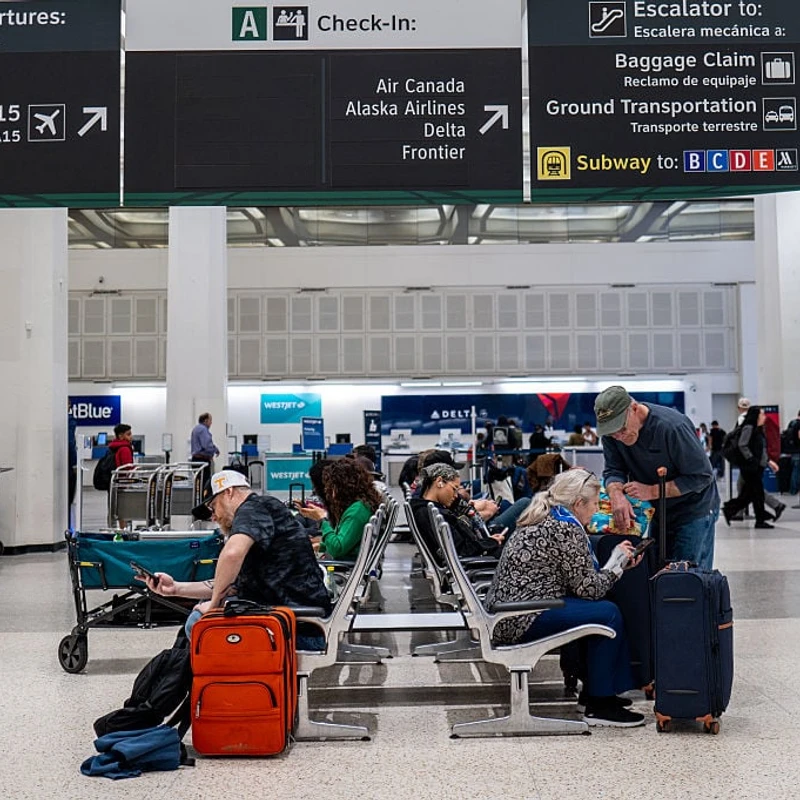
Get ready for some travel headaches! The Federal Aviation Administration (FAA) has issued an unprecedented order to scale back flights across the nation, directly impacting air travel starting Friday morning, November 7, 2025. This drastic measure is a consequence of the ongoing, record-long government shutdown, leaving many passengers scrambling to adjust their plans.
Nationwide Impact on Air Travel
The FAA’s order targets 40 major airports spread across more than two dozen states. Major hubs like Atlanta, Dallas, Denver, Los Angeles, and Charlotte are among those affected. Major metropolitan areas such as New York, Houston, Chicago, and Washington D.C. will see multiple airports impacted, and the ripple effects could even reach smaller regional airports.
Airlines have been scrambling to adjust their schedules since Thursday, with many already canceling flights in anticipation of the FAA’s official directive. Travelers planning trips for the weekend and beyond are anxiously awaiting updates on their flight statuses. Airlines are advising passengers to continuously check their apps for the latest information.
Why the Cuts Are Necessary
The reductions, which started at 4% and are expected to ramp up to 10% by November 14, are primarily aimed at alleviating pressure on air traffic controllers. These essential workers have been operating without pay for over a month, often working six-day weeks with mandatory overtime. The financial strain and exhaustion are taking a toll, leading to an increasing number of controllers calling out.
As Kelly Matthews, a frequent business traveler from Flat Rock, Michigan, pointed out, “You can’t expect people to go in to work when they’re not getting a paycheck.” The inability to cover basic expenses like gas and childcare is making it unsustainable for many to continue their demanding jobs. This situation highlights the human cost of the government shutdown on critical infrastructure workers.
Airline Adjustments and Passenger Rights
Airlines are attempting to minimize the impact on customers, with some focusing cancellations on routes to and from smaller cities. While carriers are required to refund passengers for canceled flights, they are generally not obligated to cover secondary costs like food or hotel accommodations, unless the cancellation is due to a factor within the airline’s control.
Industry analyst Henry Harteveldt warns that these reductions will have a significant impact on the entire U.S. air transportation system. The cuts could also affect package delivery services, as major distribution hubs for FedEx and UPS are on the list of affected airports. This situation underscores the far-reaching consequences of the government shutdown on daily life and commerce.
Have you been affected by these flight cancellations? Share your experience and travel tips in the comments below!
Leave a Reply