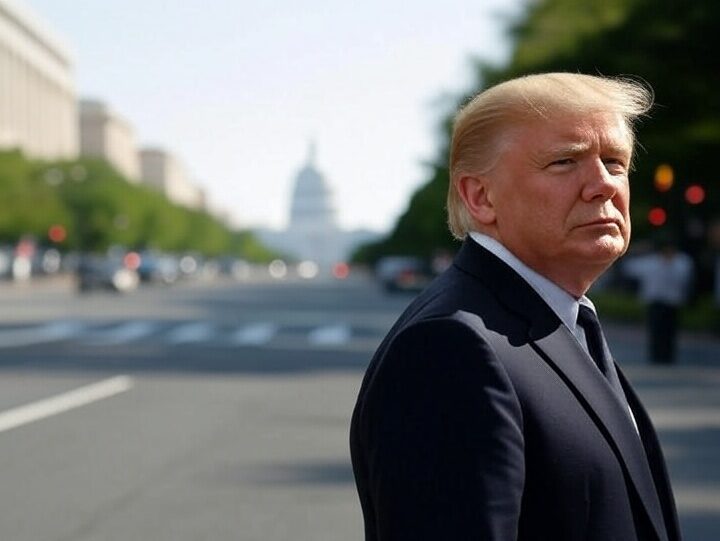
In a recent display of political maneuvering, Donald Trump issued a stark warning to Washington D.C. Mayor Muriel Bowser via Truth Social. His threat of a federal ‘takeover’ if she didn’t comply with his demands for National Guard deployment signals a pattern of behavior that critics argue is deeply authoritarian.
Authoritarian Tactics and Historical Parallels
Trump’s ultimatum to Mayor Bowser, suggesting that ‘bad things will happen’ if she refused his directives, is more than just strong rhetoric; it’s a tactic often employed by authoritarians. This approach involves using threats, leveraging military or police power against opposition, and consolidating control. History offers chilling examples, such as Adolf Hitler’s rise in Germany by exploiting crises to expand state force against political opponents, and Augusto Pinochet’s use of the military in Chile to suppress dissent and erode democratic institutions.
The deployment of nearly 2,000 National Guard troops, now authorized to carry firearms in D.C. under a federally declared crime emergency, is presented as a measure against rising crime. However, the op-ed points out that crime had already declined without federal intervention, suggesting the deployment might serve a different, more political purpose.
Weaponizing Federal Power Against Local Autonomy
Trump’s actions in D.C. echo his previous decision to deploy the National Guard in Los Angeles in June 2025, an action also widely viewed as unnecessary and politically motivated. This pattern suggests a broader strategy of using federal force to overrule local governments, pressure political opponents, and frame any dissent as a threat to national order. Trump has also indicated a willingness to apply this approach to other cities, such as Chicago.
These moves, the op-ed contends, are not about protecting democracy but about dismantling it. By normalizing the use of federal power to suppress local autonomy, Trump risks eroding the foundations of democratic governance in the United States, potentially paving the way for a more centralized and less representative system.
What are your thoughts on the use of federal power in local matters? Do you see these actions as authoritarian? Share your perspective in the comments below!
Leave a Reply