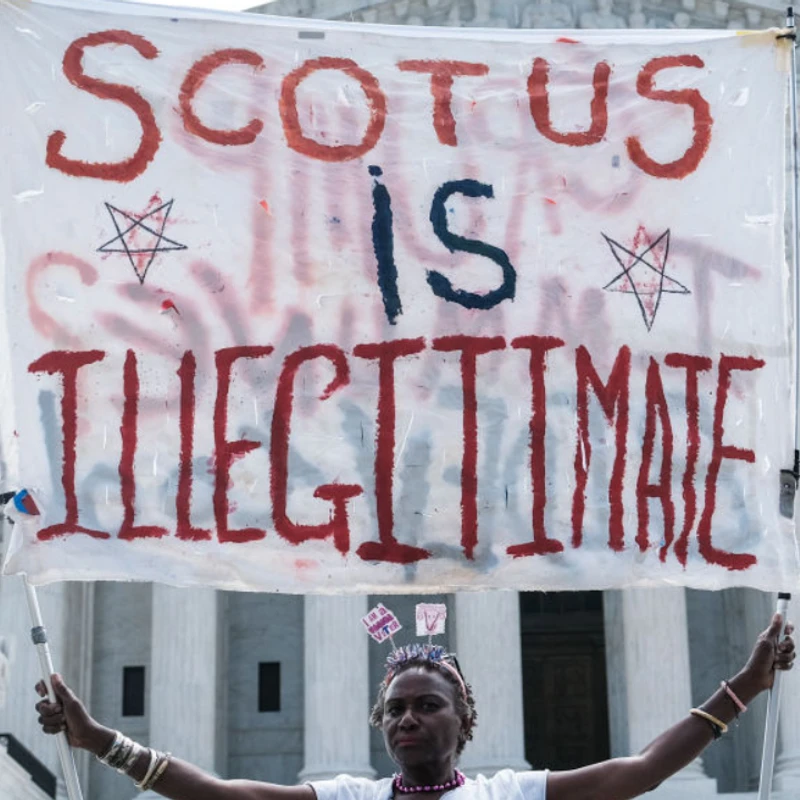
Tag: Supreme Court

  • Supreme Court Ruling Undermines Voting Rights Act

    In a decision that has sent shockwaves through the civil rights community, the Supreme Court has ruled against Louisiana’s congressional map, which included a second majority-Black district. This ruling is being widely criticized as a significant setback for voting rights and Black representation in America.

    A Blow to Black Representation

    The Supreme Court’s conservative majority, in a 6-3 decision, sided with a group of white voters who argued that the map constituted racial discrimination against them. The court concluded that the Voting Rights Act of 1965, designed to prevent racial discrimination in voting, did not mandate the creation of a second majority-Black district in Louisiana, despite the state’s Black population demographics.

    NAACP President Derrick Johnson condemned the ruling, stating, “Today’s decision is a devastating blow to what remains of the Voting Rights Act, and a license for corrupt politicians who want to rig the system by silencing entire communities. The Supreme Court betrayed Black voters, they betrayed America, and they betrayed our democracy.” The implications are far-reaching, potentially threatening the existence of other majority-Black districts and diminishing the voice of Black communities in Congress.

    The Court’s Reasoning and Dissenting Voices

    The majority opinion stated that “No compelling interest justified the State’s use of race…That map is an unconstitutional gerrymander, and its use would violate the plaintiffs’ constitutional rights.” However, Justice Elena Kagan, writing for the liberal justices, delivered a strong dissent. She argued that the majority’s decision ignores the historical context and the very purpose of the Voting Rights Act, which was “born of the literal blood of Union soldiers and civil rights marchers.”

    Kagan warned that the ruling could lead to minority voters being “cracked out of the electoral process” in states with significant residential segregation and racially polarized voting, potentially reversing decades of progress. She noted that the inability to form majority-minority districts might be framed as progress, but it risks silencing crucial voices.

    Echoes of the Past and Calls to Action

    Nadine Smith, president and CEO of Color of Change, echoed the concerns, stating the decision has “gutted” the Voting Rights Act. She drew parallels to the post-Reconstruction era, noting that it took 100 years to regain lost representation. “This is a decision that can eliminate Black representation and take our country back centuries,” she warned.

    Leaders like Martin Luther King III and the Congressional Black Caucus (CBC) have also voiced strong opposition. The CBC called for the immediate passage of the John R. Lewis Voting Rights Advancement Act to restore protections and urged reform of the Supreme Court itself, suggesting term limits for justices to restore neutrality and legitimacy. They emphasized that voting rights are fundamental to a functioning democracy and vowed to protect voters from discrimination.

    What are your thoughts on the Supreme Court’s ruling and its impact on voting rights? How can we ensure fair representation for all communities? Share your views in the comments below!
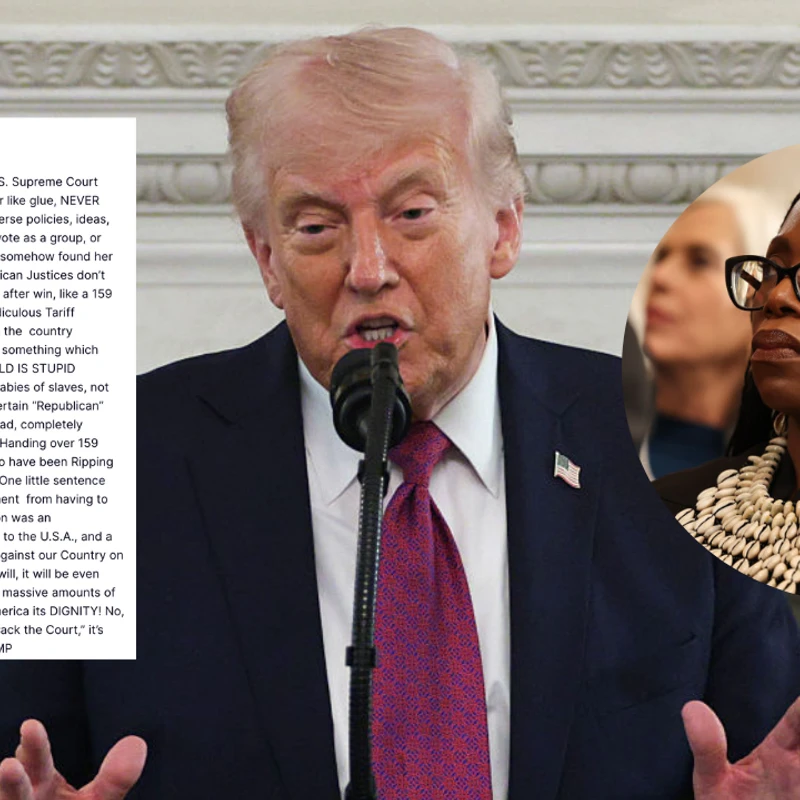
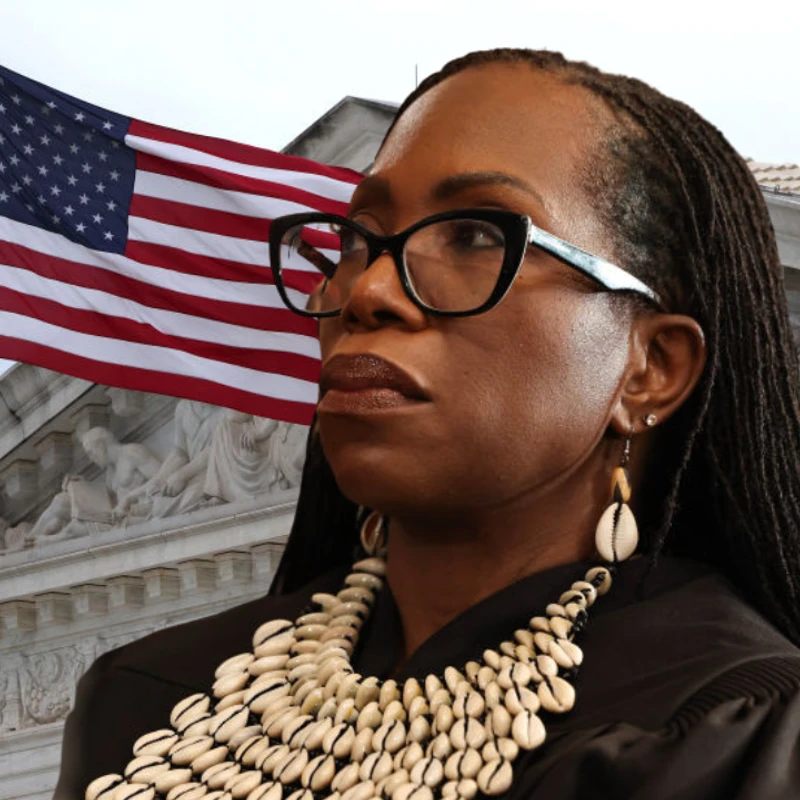
  • Trump Calls Justice Jackson ‘Low IQ’ in Tirade

    In a recent Truth Social post, former President Donald Trump unleashed a personal attack on U.S. Supreme Court Justice Ketanji Brown Jackson, labeling the highly accomplished jurist as “low IQ.” This insult comes amidst Trump’s complaints about the Supreme Court’s ruling against his global tariffs, a decision that impacted billions of dollars and consumer prices.

    Targeting Black Minds: A Pattern of Racism

    Trump’s tirade specifically targeted Jackson, the first Black woman to serve on the nation’s highest court, questioning how she “somehow found her way to the bench.” He lamented that the conservative justices, including three he appointed, don’t “stick together” like the liberal justices, singling out Jackson, Sonia Sotomayor, and Elena Kagan. This isn’t the first time Trump has used the “low IQ” insult against perceived political opponents, many of whom have been Black women, including Reps. Jasmine Crockett and Maxine Waters, and N.Y. Attorney General Letitia James.

    Democratic strategist Ameshia Cross highlighted the deeply problematic nature of these attacks, particularly when directed at Black individuals. “There is a specific type of racism and white supremacy that attacks Black minds,” Cross told TheGrio. She explained that historically, such insults tap into racist ideologies used to justify the enslavement of Black people, citing faulty science that claimed Black individuals had smaller brains and limited intellectual capacity.

    Jackson’s Courageous Stance Against Trump

    Trump’s insult comes just a week after Justice Jackson publicly rebuked the Supreme Court’s conservative majority for frequently siding with the former president’s emergency order requests. Jackson argued that these rulings enabled potentially illegal executive actions. Her critique of the Trump administration, often delivered through forceful dissents, has become a notable aspect of her tenure.

    During a recent lecture at Yale Law School, Jackson stated, “The president of the United States, although he may be… harmed in an abstract way by not doing what he wants to do, he certainly isn’t harmed if what he wants to do is illegal, right? He doesn’t have the ability to do something unlawful.” Cross noted that Jackson’s willingness to stand up to Trump, especially in the legal arena, is precisely what provokes such attacks. “He cannot take a rebuke, but he definitely can’t take a rebuke from Black women. There isn’t a singular identity in America that Donald Trump hates more than Black women.”

    Attacks on Education and Progress

    Cross also pointed out the timing of Trump’s attacks, linking them to broader political strategies. She suggested that by targeting the intelligence of Black women and figures like former President Barack Obama, Trump aims to undermine educational achievements and progress within Black communities. “This is also the guy who is pushing an anti-DEI narrative to strip education from Black people, to limit their access to higher education,” Cross explained. She added that Trump dismisses the accomplishments of Black individuals, attributing them to DEI initiatives rather than intellectual capacity, skill, or hard work, implying they didn’t deserve their positions.

    What are your thoughts on Donald Trump’s comments about Justice Ketanji Brown Jackson? Do you believe these attacks have racist undertones? Share your perspective in the comments below!

  • Ketanji Brown Jackson Reclaims Agency on Supreme Court

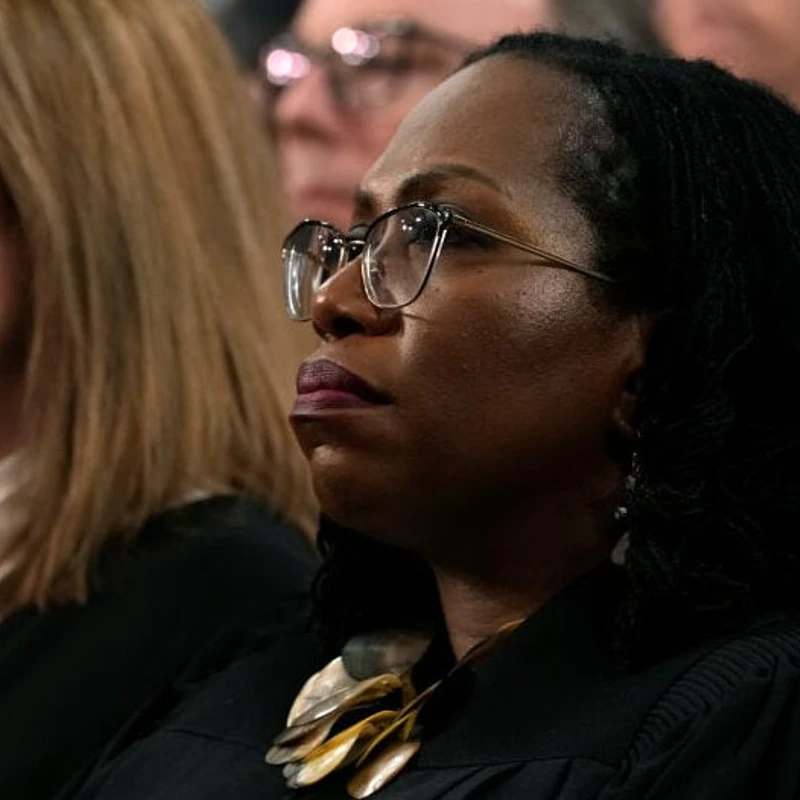
    Justice Ketanji Brown Jackson, the first and only Black woman on the U.S. Supreme Court, is making her voice heard in powerful new ways. While she knew joining the bench would mean often being in the minority against a 6-3 conservative majority, it appears Justice Jackson is actively reclaiming her agency and challenging the status quo, even outside the courtroom.

    A Rare Rebuke and a Call for Accountability

    During a recent lecture at Yale Law School, Justice Jackson delivered a rare critique of her conservative colleagues. She specifically called out the Supreme Court’s “problematic” reliance on emergency “shadow dockets.” These dockets, she explained, have been used to fast-track controversial policies from the Trump administration, impacting federal workers, grants, and immigration enforcement.

    Jackson highlighted that emergency relief is meant to preserve the status quo and prevent harm. However, she argued that the court has instead prioritized the perceived harm to the President over the tangible consequences faced by real people affected by these policies. “He doesn’t have the ability to do something unlawful,” she stated, questioning the court’s role in allowing potentially illegal actions to proceed.

    The Impact of Shadow Dockets

    Attorney Robert Weiner noted that justices rarely criticize their colleagues publicly, indicating the “strong depth of feeling” Justice Jackson holds on this issue. Data shows that the Supreme Court has granted most of the emergency requests made during the Trump administration, leading to significant real-world consequences. These include federal employees being unable to work, vital services like medical research losing funding, and the deportation of immigrants.

    These rulings, often made without full briefing or oral arguments, bypass the deliberate judicial processes. Justice Jackson’s willingness to speak out follows a pattern of impactful dissents and sharp questioning during oral arguments, earning her praise from legal experts.

    A Voice for the Marginalized

    Justice Jackson’s influence has already been felt. Her questioning during the affirmative action case reportedly helped narrow the ruling, allowing for consideration of disadvantaged backgrounds. She has also been the sole dissenter in consequential cases, warning against “executive lawlessness” and “unsafe medical care” for LGBTQ+ youth.

    Tiffany Royster, Esq., from the National Council of Negro Women, emphasized the significance of Jackson’s position as the court’s newest justice and its lone Black woman. Royster noted that Black women in positions of power often find their voices silenced, making Jackson’s public stance even more remarkable. Jackson’s approach, Royster suggests, is “future forward,” aiming to inform future scholars, lawyers, and the public about the importance of judicial appointments.

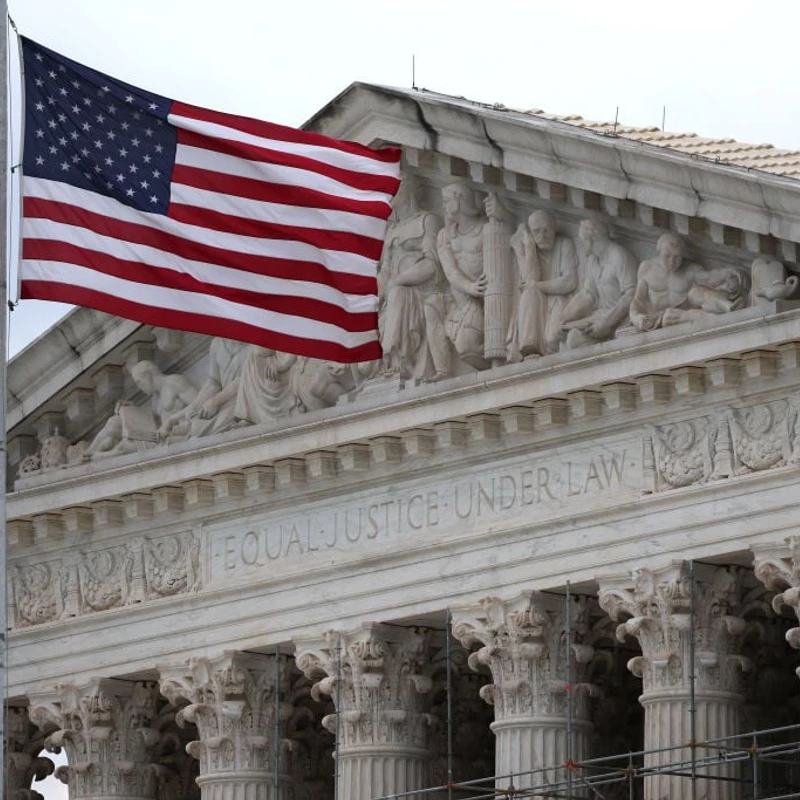
    She’s not letting her role in the minority stop her from speaking out and advocating for equal justice under the law, which is really what the shadow docket kind of takes away from people. — Tiffany Royster, Esq.

    By applying pressure and building consensus outside the traditional institutional framework, Justice Jackson is demonstrating a powerful way to “take her power back.” Her unique perspective, shaped by her background as the only Black woman on the court and her experience as a former federal public defender, brings invaluable insight to critical legal issues affecting millions, particularly vulnerable communities.

    What are your thoughts on Justice Ketanji Brown Jackson’s powerful stance? How important is it for diverse voices to be heard in the highest courts? Share your opinions in the comments below!

  • Justice Jackson Criticizes Supreme Court’s ‘Shadow Docket’

    In a rare and powerful moment, Supreme Court Justice Ketanji Brown Jackson has voiced strong criticism of her conservative colleagues, arguing that their rulings have paved the way for potentially illegal actions by former President Donald Trump. Speaking at Yale Law School on April 16, 2026, Jackson, the newest justice and the first Black woman on the high court, highlighted concerns about the court’s increasing reliance on emergency orders, often referred to as the ‘shadow docket.’

    The Problematic ‘Shadow Docket’

    Justice Jackson described the court’s current use of these emergency judicial powers as ‘problematic.’ Since Trump’s return to the White House, the Supreme Court has granted numerous emergency relief requests for his administration. These orders have allowed controversial policies, particularly concerning immigration and federal funding cuts, to be enacted, even when lower courts had deemed them likely illegal.

    She explained that these emergency orders are often issued with minimal explanation, amounting to little more than ‘back-of-the-envelope, first-blush impressions.’ Jackson warned that this approach, especially when decisions are made while cases are still pending review, can make the court appear ‘oblivious’ to the real-world impact on individuals, causing their rulings to ‘ring hollow.’

    Challenging the Court’s Approach

    During a Q&A session at Yale, Justice Jackson directly challenged the court’s reasoning when it comes to preventing the implementation of policies. She argued that if a president’s desired action is illegal, then preventing it does not constitute a genuine harm to them, even if it’s an ‘abstract’ one. This contrasts with the court’s tendency to weigh the perceived harm to the executive branch against the potential harm to challengers.

    Jackson recalled a time when the Supreme Court was more hesitant to intervene early in legal processes, noting the value in avoiding constant entanglement with ‘every divisive policy issue in American life.’ She observed that the court, now including three justices appointed by Trump during his first term, has adopted a ‘decidedly different approach’ to emergency stay applications.

    A Call for Change

    While acknowledging that such public criticism of the Supreme Court is unusual for a sitting justice, Jackson stated her intention was to be ‘a catalyst for change.’ Her remarks signal a growing concern among some about the court’s direction and its use of expedited processes to decide significant legal and policy matters.

    Justice Jackson’s critique raises important questions about judicial power. What are your thoughts on the Supreme Court’s use of the ‘shadow docket’? Let us know in the comments!

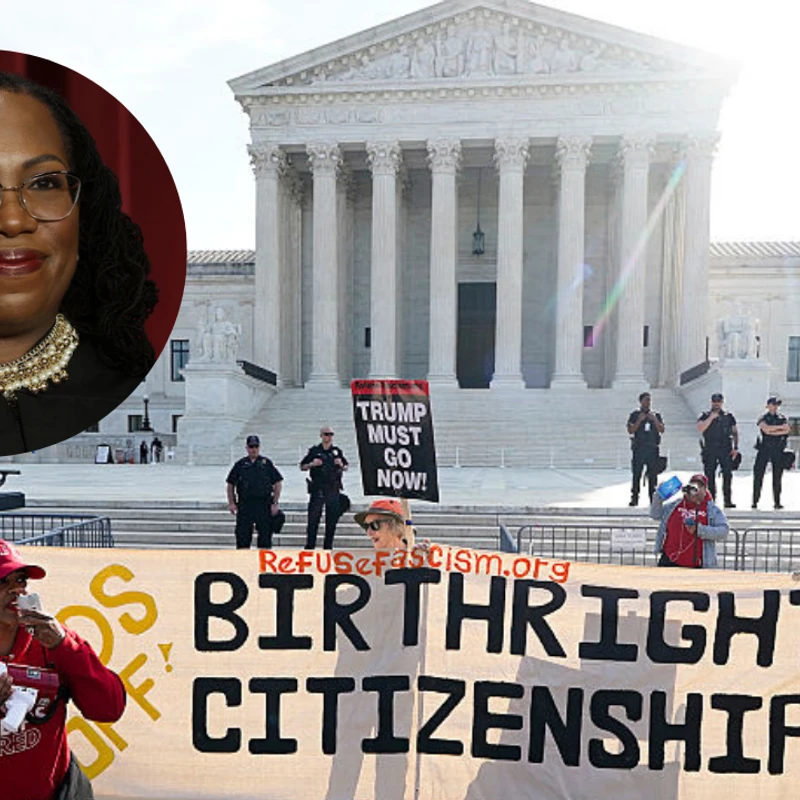
  • Ketanji Brown Jackson’s Viral Birthright Citizenship Arguments

    Supreme Court Justice Ketanji Brown Jackson is making headlines and going viral for her incisive questioning during arguments concerning birthright citizenship. As the nation grapples with the potential end of this long-standing policy, Jackson’s sharp legal mind is on full display, challenging the core arguments presented.

    Challenging the ‘Subject to Jurisdiction’ Clause

    The case centers on arguments presented by Solicitor General D. John Sauer, who contended that the 14th Amendment’s phrase “subject to the jurisdiction” should only apply to children whose parents have a clear “allegiance” to the U.S., often determined by being “domiciled” here. This interpretation could significantly alter the landscape of birthright citizenship.

    Justice Jackson pushed back forcefully, questioning the practical implications of such a rule. “How does this work? Are you suggesting when a baby is born people have to present documents? Is this happening in the delivery room?” she asked, highlighting the logistical and ethical challenges of verifying parental status at the moment of birth.

    The Practicalities of Enforcement

    When Sauer referenced Social Security Administration documents as a potential basis for determining status, Jackson re-engaged, pointing out that the core of the argument seemed to hinge on a person’s “intention to stay in the United States.” She pressed further, asking, “Are we bringing pregnant women into depositions? What are we doing to figure this out?” This line of questioning underscored the potential for invasive and impractical enforcement measures.

    Her follow-up questions probed whether there would be any opportunity for individuals to prove their intent to remain in the U.S. after birth, suggesting that the proposed rule might be applied “after the fact,” creating further complications.

    Reactions and Criticisms

    Justice Jackson’s arguments have been widely praised on social media, with many commending her sharp intellect and defense of established legal principles. However, as often happens with high-profile legal discussions, her comments also drew criticism from some conservative circles. Florida Governor Ron DeSantis, for instance, took to X (formerly Twitter) to criticize her analogy comparing the issue to stealing a wallet in Japan, calling it a defense of “the suicide pact of birthright citizenship for illegals.”

    Despite the criticism, Justice Jackson’s engagement in this pivotal case is a significant moment, highlighting the ongoing debate over citizenship and its interpretation in the United States.

    What are your thoughts on Justice Ketanji Brown Jackson’s arguments regarding birthright citizenship? Share your views in the comments below!
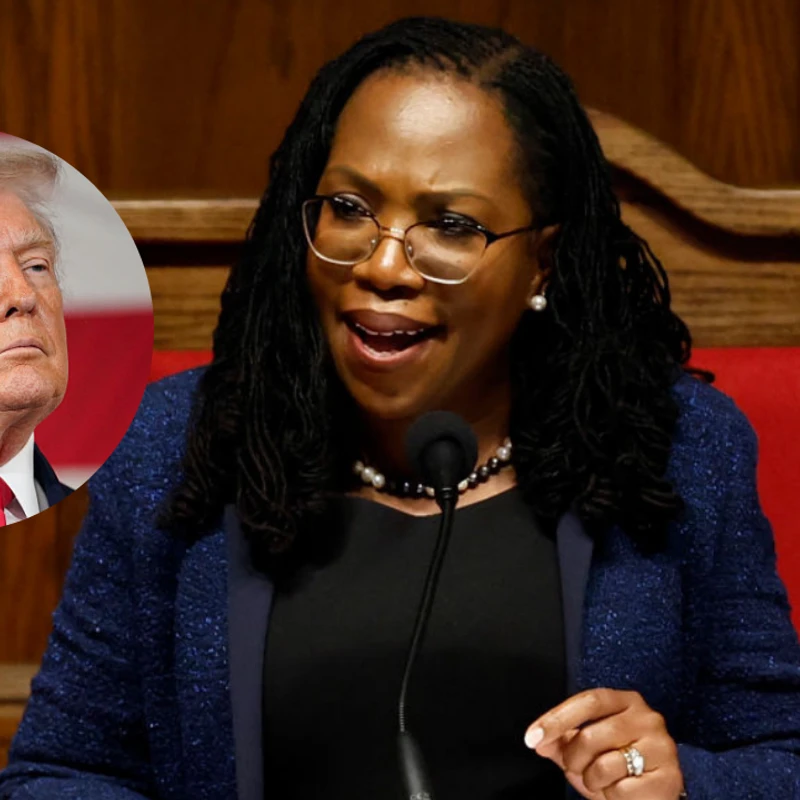
  • Trump Calls U.S. ‘Stupid’ Over Birthright Citizenship

    Former President Donald Trump has publicly criticized the United States’ policy on birthright citizenship, calling the nation “stupid” for its approach. His remarks came after he attended oral arguments at the Supreme Court concerning his executive order aimed at ending the practice.

    Trump’s ‘Stupid’ Accusation

    On his Truth Social platform, Trump wrote, “We are the only Country in the World STUPID enough to allow ‘Birthright’ Citizenship!” However, data from the Pew Research Center indicates that his claim is inaccurate, with at least 32 other countries, primarily in the Western Hemisphere, having similar laws that grant citizenship to those born within their borders.

    Trump’s presence at the Supreme Court marked a historic moment, as he is the first sitting president to attend such hearings. He sat in the front row of the public gallery alongside White House Counsel David Warrington, Attorney General Pam Bondi, and Commerce Secretary Howard Lutnick, observing Solicitor General John Sauer present the government’s case.

    Debate Over the 14th Amendment

    The Trump administration’s argument centers on a reinterpretation of the 14th Amendment, asserting that parents must prove their legal status for their children to be granted citizenship. This challenges the long-standing understanding that virtually anyone born on U.S. soil is automatically a citizen. However, Chief Justice John Roberts appeared skeptical of the government’s arguments, describing the examples provided as “very quirky.”

    Outside the courtroom, Trump expressed frustration, particularly with Republican justices he appointed. In a video posted on X, he criticized them for seeking to demonstrate independence by ruling against him, labeling them “stupid people.”

    Awaiting the Final Decision

    The Supreme Court is expected to deliver its final decision on the birthright citizenship case by the summer. The outcome could have significant implications for immigration policy and the definition of citizenship in the United States.

    What are your thoughts on birthright citizenship and Donald Trump’s comments? Do you agree with his stance or the current interpretation of the 14th Amendment? Share your views in the comments below!
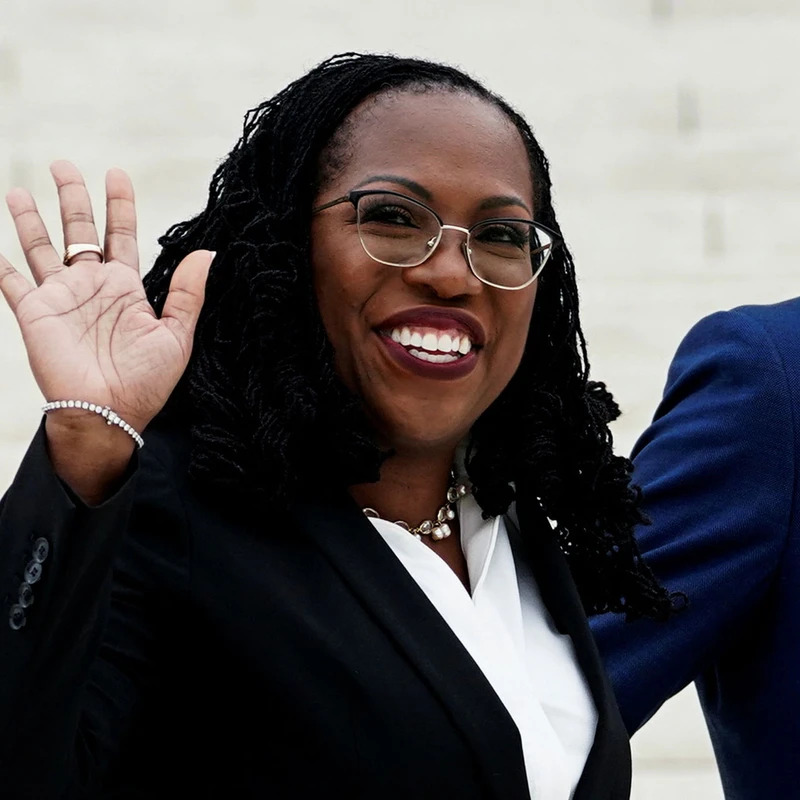
  • Justice Jackson Questions Birthright Citizenship Case

    The Supreme Court heard arguments challenging President Donald Trump’s executive order aimed at ending birthright citizenship for children of non-U.S. citizens. During the session, where Trump himself made a historic appearance in the public gallery, Justice Ketanji Brown Jackson posed a series of critical questions that highlighted the practical and legal complexities of the administration’s stance.

    Challenging the Executive Order

    The case, Trump v. Barbara, revolves around the first clause of the 14th Amendment, which guarantees citizenship to “All persons born or naturalized in the United States, and subject to the jurisdiction thereof.” This amendment was historically crucial for ensuring citizenship for Black Americans post-Civil War. The Trump administration argued that the clause was not intended to include children of parents who are in the U.S. illegally or only temporarily.

    However, a majority of the justices, including Trump appointees Neil Gorsuch and Amy Coney Barrett, seemed skeptical of the government’s arguments. They raised concerns about the legality and feasibility of implementing such an order.

    Justice Jackson’s Critical Questions

    Justice Jackson directly questioned the practical implications of the administration’s theory. “How does this work? Are you suggesting that when a baby is born, people have to have documents, present documents? Is this happening in the delivery room?” she asked. She further probed, “So are we bringing pregnant women in for depositions? What? What are we doing to figure this out?”

    Examining ‘Allegiance’ and Domicile

    Jackson also challenged the government’s definition of ‘domiciled’ non-U.S. citizens, who the administration suggested have an “allegiance” to the U.S. She pointed to the historical example of Japanese babies born in U.S. internment camps during World War II being granted birthright citizenship, suggesting that parental allegiance wasn’t the primary factor.

    Conservative Justice Neil Gorsuch also raised concerns, questioning the government’s stance on whether children of Native Americans would be considered citizens under the “domicile” theory, referencing historical exceptions that denied Native Americans citizenship until 1924.

    • Supreme Court heard arguments on Trump’s executive order ending birthright citizenship.
    • Justices, including Trump appointees, expressed skepticism.
    • Justice Jackson questioned the practical implementation and documentation required.
    • The case hinges on the interpretation of the 14th Amendment’s citizenship clause.
    • Historical examples and legal precedent were discussed.

    Following the hearing, Trump posted on Truth Social, criticizing the U.S. for allowing birthright citizenship. If the Supreme Court rules against his order, it would mark another significant policy defeat for his administration. Civil rights organizations, like the NAACP, have vowed to continue fighting to protect citizenship as a fundamental right.

    What are your thoughts on the birthright citizenship debate? Share your views in the comments below!
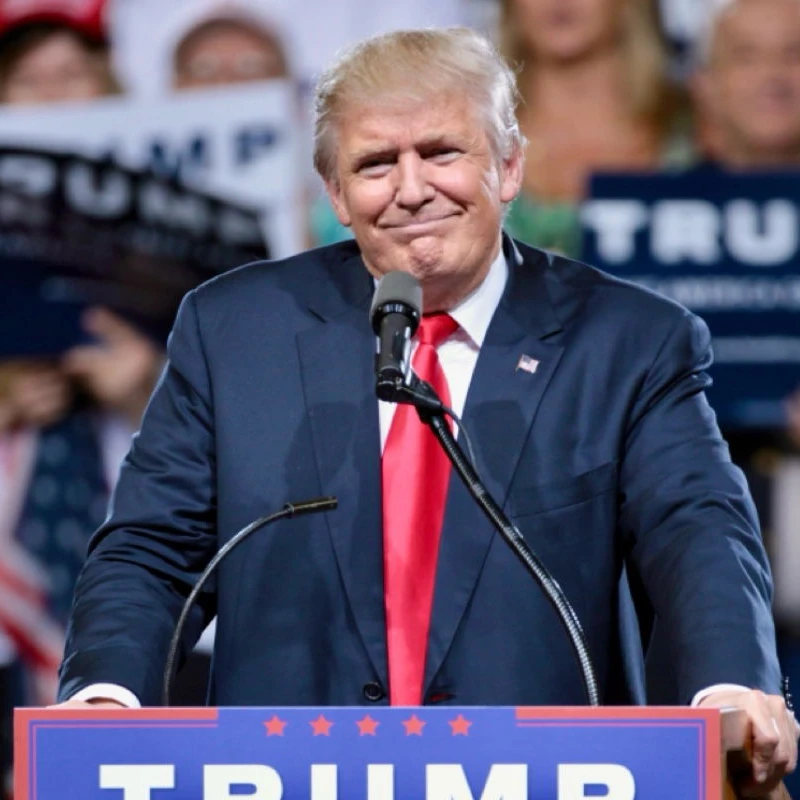
  • Ketanji Brown Jackson’s Lone Dissent on Conversion Therapy

    In a powerful display of conviction, Justice Ketanji Brown Jackson recently stood alone in her dissent on a U.S. Supreme Court ruling concerning Colorado’s ban on conversion therapy for LGBTQ+ minors. As the only Black woman on the nation’s highest court, her solitary stance in the *Chiles v. Salazar* case is drawing significant attention and highlighting critical issues of free speech, medical regulation, and the protection of vulnerable youth.

    A Dissent That Speaks Volumes

    The majority opinion, which included liberal justices like Sonia Sotomayor and Elena Kagan, sided with Kaley Chiles, a Christian counselor who argued that Colorado’s ban on conversion therapy infringed upon her First Amendment free speech rights. The court reasoned that since Chiles’s practice is talk therapy and not physical, the state was attempting to regulate the content of her speech.

    However, Justice Jackson saw it differently. In her extensive 34-page dissent, she argued that the majority failed to grasp the crucial context: Chiles wasn’t just speaking freely; she was providing therapy to minors as a licensed healthcare professional. Jackson emphasized that this practice involves more than just speech; it’s a medical service with profound implications for vulnerable children.

    The Harmful Reality of Conversion Therapy

    Jackson didn’t shy away from the scientific evidence. She cited research demonstrating that conversion therapy is not only ineffective in changing sexual orientation or gender identity but is also deeply harmful. She pointed out that children, due to their heightened emotional vulnerability, often experience the shame and stigma associated with such practices more intensely than adults.

    She clarified that Colorado’s law doesn’t prohibit Chiles from holding or expressing her views on conversion therapy. Instead, it prevents her from practicing it without facing professional discipline, a necessary measure to protect minors. Jackson argued that the Court’s opinion misinterprets legal precedents and creates an unworkable standard that could jeopardize states’ ability to regulate the medical profession for public health.

    A Symbol of Resilience and Advocacy

    Justice Jackson’s decision to deliver her dissent from the bench—a rare act typically reserved for moments of intense disagreement—underscores the gravity of the case. Political science professor Dr. Christina M. Greer of Fordham University noted that Jackson’s dissent is symbolic, reflecting how Black women have historically been at the forefront of defending democracy. “People say Black women will save the democracy, but it’s like we can only do but so much,” Greer commented.

    Kelley Robinson, president of the Human Rights Campaign, echoed this sentiment, stating, “Justice Jackson understands what’s at stake here: when licensed medical professionals are not held to a set of standards, patients suffer.” Robinson expressed gratitude that Jackson recognized the danger this ruling poses, particularly to young people, and warned that it could have broader, weaponized applications beyond conversion therapy.

    This is the Black woman who’s making this argument for a group of people she is not even a part of, but understands the danger that this rule could present, not just to this group of people, but how it will be weaponized and expanded for other groups of people. — Dr. Christina M. Greer

    Justice Jackson’s powerful dissent serves as a crucial reminder of the ongoing fight for LGBTQ+ rights and the importance of safeguarding vulnerable populations. Her lone voice on this issue highlights the vital role of diverse perspectives in upholding justice and protecting public health.

    What are your thoughts on Justice Jackson’s dissent and the Supreme Court’s ruling? Share your perspective in the comments below!

  • Supreme Court Weighs Race in Mississippi Death Penalty Case

    The U.S. Supreme Court is once again delving into the complex issues of race and fairness in the criminal justice system. This time, the focus is on Mississippi, where the court will hear arguments in the case of Terry Pitchford, a Black man sentenced to death. The central question: was racial bias at play when Black jurors were removed from his trial?

    A Familiar Pattern of Alleged Bias

    Pitchford was just 18 years old in 2004 when he and another teenager were involved in a robbery that resulted in a killing. While the other teen, who was younger and ineligible for the death penalty, fired the fatal shots, Pitchford was convicted of capital murder and sentenced to death. The controversy lies in the jury selection process.

    During the selection, prosecutor Doug Evans, who has faced similar accusations before, struck four out of the five Black prospective jurors. This left only one Black person on the final jury. Defense attorneys immediately objected, arguing the dismissals were racially motivated, but the trial judge allowed the strikes without a thorough examination of the prosecutor’s reasons.

    Lower Courts and the Path to the Supreme Court

    This history of alleged bias is now back under scrutiny. In 2023, a federal judge overturned Pitchford’s conviction, citing concerns that the trial court hadn’t adequately addressed the discrimination claims. However, a panel from the 5th U.S. Circuit Court of Appeals reversed that decision, leading to the current appeal before the Supreme Court.

    Pitchford’s legal team argues that the trial judge violated the constitutional standard set in Batson v. Kentucky. This standard requires judges to determine if prosecutors’ explanations for striking potential jurors are credible or merely a pretext for discrimination. They contend this duty was neglected, stating, “The judge simply failed even to try.”

    The Stakes for Justice

    Mississippi officials maintain that the jury selection was lawful. However, concerns about racial bias in jury selection have historically troubled even conservative justices, as they strike at the heart of the legal system’s legitimacy. For Black defendants, the implications are profound, raising questions about whether they are truly being judged by a representative cross-section of society.

    A previous ruling in a similar case, known as the Flowers case, highlighted that while not definitive proof on its own, a pattern of behavior should be considered within a broader “totality of the circumstances” analysis. This case now puts a spotlight on the enforcement of legal safeguards designed to prevent racial bias in jury selection.

    The Supreme Court’s decision could significantly impact how claims of discrimination are handled nationwide and whether past patterns of bias are given the weight they deserve. It’s a critical moment for ensuring fairness and equal justice under the law.

    What are your thoughts on the Supreme Court’s involvement in this case? Do you believe racial bias still plays a significant role in jury selection? Share your opinions in the comments below!

  • Supreme Court Tackles Mississippi Jury Bias Case

    The U.S. Supreme Court is stepping into a complex legal battle originating from Mississippi, focusing on allegations of racial discrimination in jury selection. This case could significantly shape how future claims of juror bias are handled, especially after a conviction. Arguments are scheduled for March 31st, and the nation’s highest court will grapple with whether procedural rules should prevent relief for an inmate who claims his jury was unconstitutionally discriminatory.

    The Case of Terry Pitchford

    At the heart of this case is Terry Pitchford, a Mississippi man convicted in 2006 for his role in a robbery that led to a shopkeeper’s death. Despite another individual firing the fatal shot, Pitchford received a death sentence. His jury, however, consisted of only one Black juror in a county where approximately 40% of the population identifies as Black. This stark demographic imbalance has raised serious constitutional questions.

    Pitchford’s legal team argues that his trial violated his constitutional rights, specifically citing the prohibition against racial bias in jury selection established in the landmark “Batson v. Kentucky” ruling. They point to the prosecutor’s removal of four Black potential jurors during the selection process as evidence of discrimination.

    A History of Scrutiny and Procedural Hurdles

    The prosecutor in Pitchford’s trial, Doug Evans, has a history of facing similar accusations. In fact, the Supreme Court overturned another conviction linked to Evans in 2019 due to concerns about racially motivated jury selection. However, in Pitchford’s case, the trial judge allowed the proceedings to continue, rejecting the defense’s objections.

    Mississippi courts later upheld the conviction, stating that Pitchford had forfeited his “Batson” claim. The reasoning was that he didn’t sufficiently challenge the prosecutor’s race-neutral explanations for removing jurors, which included reasons like a juror arriving late or having relatives with criminal records. This procedural argument became a significant hurdle.

    The Role of AEDPA and the Supreme Court’s Question

    The path to federal court was complicated by the Antiterrorism and Effective Death Penalty Act (AEDPA). A federal district judge initially sided with Pitchford, ordering a new trial, but this was reversed by the U.S. Court of Appeals for the Fifth Circuit. The appellate court cited AEDPA’s strict limits, which allow federal intervention only if a state court’s decision is not merely wrong but objectively unreasonable.

    Now, the Supreme Court faces a more focused question: Was Mississippi’s conclusion that Pitchford waived his right to challenge the jury selection process itself objectively unreasonable under AEDPA? Pitchford’s attorneys argue that the state court ignored crucial facts and that objections were indeed raised. The state, however, maintains that the prosecution offered facially race-neutral reasons that were unchallenged, framing the issue as purely procedural.

    The justices’ eventual ruling could have wide-reaching implications for how courts address claims of racial bias in jury selection, particularly in capital cases where the stakes are highest. — Black Enterprise

    The federal government has also weighed in, urging the Court to uphold established rules that require defendants to raise arguments during trial before appealing. The outcome of this case could set a significant precedent, impacting the pursuit of justice for those alleging racial discrimination within the courtroom.

    What are your thoughts on the Supreme Court’s involvement in this Mississippi jury bias case? Share your views in the comments below!