Tag: Supreme Court

  • Supreme Court Rules for Black Inmate on Jury Bias

    In a crucial 5-4 decision, the U.S. Supreme Court has delivered a victory for Terry Pitchford, a Black death row inmate from Mississippi. The ruling addresses concerns that racial bias may have improperly influenced the jury selection process during his capital murder trial back in 2004.

    A Narrow Victory for Justice

    The case centered on Pitchford’s argument that prosecutors unfairly removed Black potential jurors, leading to a final jury composed of 11 white jurors and only one Black juror. This practice is particularly concerning given the landmark 1986 Supreme Court decision in *Batson v. Kentucky*, which prohibits striking jurors based solely on their race.

    Justice Brett Kavanaugh, writing for the majority, stated that the jury selection process in Pitchford’s trial ‘broke down.’ He pointed to potential confusion, oversight, or a rushed process, agreeing with Pitchford’s legal team that the Mississippi Supreme Court had acted unreasonably in rejecting their claims of improper juror removal.

    Implications and Next Steps

    This ruling doesn’t automatically overturn Pitchford’s conviction, which stems from the fatal shooting of a grocery store owner during a 2004 robbery. Instead, it sends the case back to lower courts for further review. Pitchford’s attorney, Joseph Perkovich, expressed that this decision means Pitchford is now entitled to a fair trial in the state court.

    The case has drawn parallels to a similar 2019 Supreme Court ruling that overturned the conviction of Curtis Flowers, another Black Mississippi defendant. Notably, the same prosecutor, Doug Evans, was involved in both cases, having faced prior scrutiny for discriminatory jury selection practices.

    • The Supreme Court ruled 5-4 in favor of Terry Pitchford.
    • The decision addresses claims of racial bias in jury selection.
    • Pitchford’s trial jury had 11 white jurors and 1 Black juror.
    • The ruling revisits the principles of *Batson v. Kentucky*.
    • The case is remanded to lower courts for further proceedings.

    While Justices Neil Gorsuch, Clarence Thomas, Samuel Alito, and Amy Coney Barrett dissented, arguing Pitchford hadn’t met the high legal standard, the majority’s decision underscores the ongoing fight for equitable justice. It’s a significant step in ensuring that the pursuit of justice is free from racial prejudice.

    What are your thoughts on the Supreme Court’s ruling regarding racial bias in jury selection? Share your perspective in the comments below!
  • NAACP Urges Black Athletes to Boycott SEC Schools

    In a powerful move against what it calls racial gerrymandering, the NAACP is urging Black student-athletes to reconsider their commitments to universities within the Southeastern Conference (SEC). This call to action comes in response to Republican-controlled southern states redrawing voter maps, which critics argue dilutes Black voting power following a significant Supreme Court decision.

    The Supreme Court Ruling and Its Aftermath

    The controversy gained momentum after the Supreme Court’s ruling in ‘Louisiana v. Callais.’ This decision struck down a congressional map that included two majority-Black districts in Louisiana, labeling it racial gerrymandering. This ruling has seemingly opened the door for other Republican-led states, such as Alabama and Florida, to redraw their congressional lines, potentially giving GOP candidates an advantage in upcoming elections.

    Voting rights advocates argue that these redrawn maps disproportionately affect and eliminate districts where Black communities have historically held significant representation and voting power. The NAACP views this as a direct attack on the Black vote.

    NAACP’s Campaign and Target Schools

    In response, the NAACP launched a campaign on Tuesday, specifically targeting Black student-athletes. The organization is asking them to withhold commitments from universities, particularly those in the NCAA’s Southeastern Conference. This conference includes prominent institutions in states like Tennessee, Louisiana, Alabama, Florida, Mississippi, South Carolina, Texas, and Georgia.

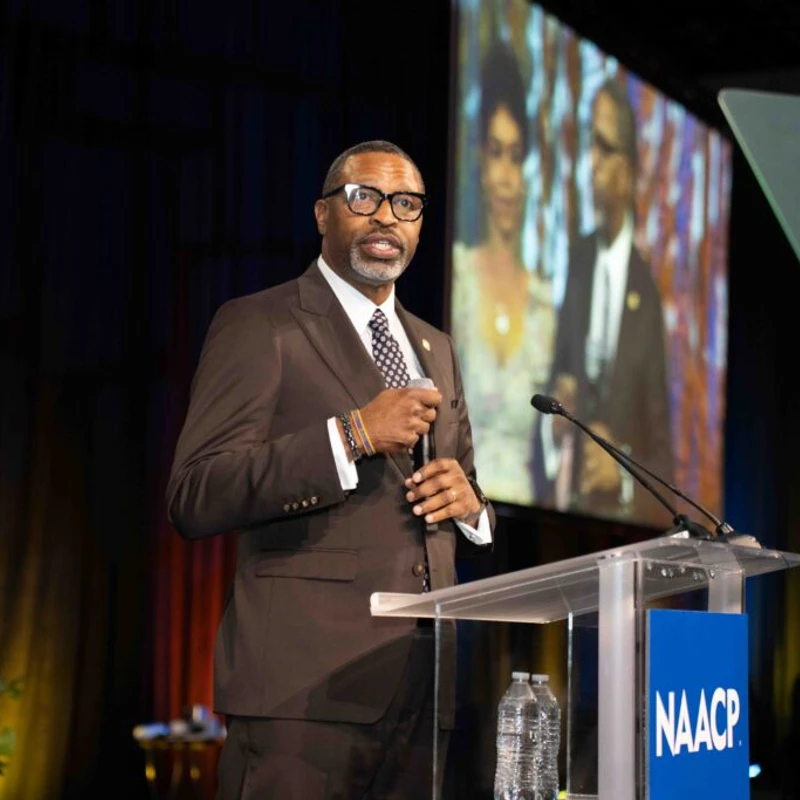
    NAACP National President and CEO Derrick Johnson stated, “The NAACP will not watch the same institutions that depend on Black athletic prowess to fill their stadiums and their bank accounts remain silent while their states strip Black communities of their voice.” The organization believes that leveraging the economic and cultural influence of Black athletes is a crucial strategy to combat these political maneuvers.

    Support from D.L. Hughley and NIL Implications

    Comedian and commentator D.L. Hughley has publicly backed the boycott, describing the current situation as a “new era of Jim Crow.” He urged Black athletes, especially highly-rated recruits, not to support states that are enabling racial gerrymandering. Hughley pointed out the significant revenue generated by Black athletes in the SEC, particularly in football and basketball, and suggested that their collective power, especially with Name, Image, and Likeness (NIL) opportunities, could force institutions and politicians to the negotiating table.

    Hughley argued, “If you’re a four- or five-star athlete, you can get NIL money anyway. You don’t need to go there.” He believes that if top-tier athletes stop committing to SEC programs, it would spark serious conversations among athletic organizations, university presidents, and even Congress, highlighting the economic leverage these athletes possess.

    • The NAACP is calling for a boycott of SEC schools by Black athletes.
    • The boycott is a response to voter map redrawing in Southern states.
    • Critics argue these maps dilute Black voting power.
    • The Supreme Court’s ‘Louisiana v. Callais’ ruling is a key factor.
    • D.L. Hughley supports the boycott, calling it a new form of Jim Crow.

    The NAACP’s stance underscores the intersection of sports, politics, and civil rights. By urging athletes to use their platform and influence, the organization aims to draw national attention to voting rights issues and push for equitable representation across the South.

    What are your thoughts on the NAACP’s call for Black athletes to boycott SEC schools? Do you think it’s an effective strategy? Share your opinions in the comments below!

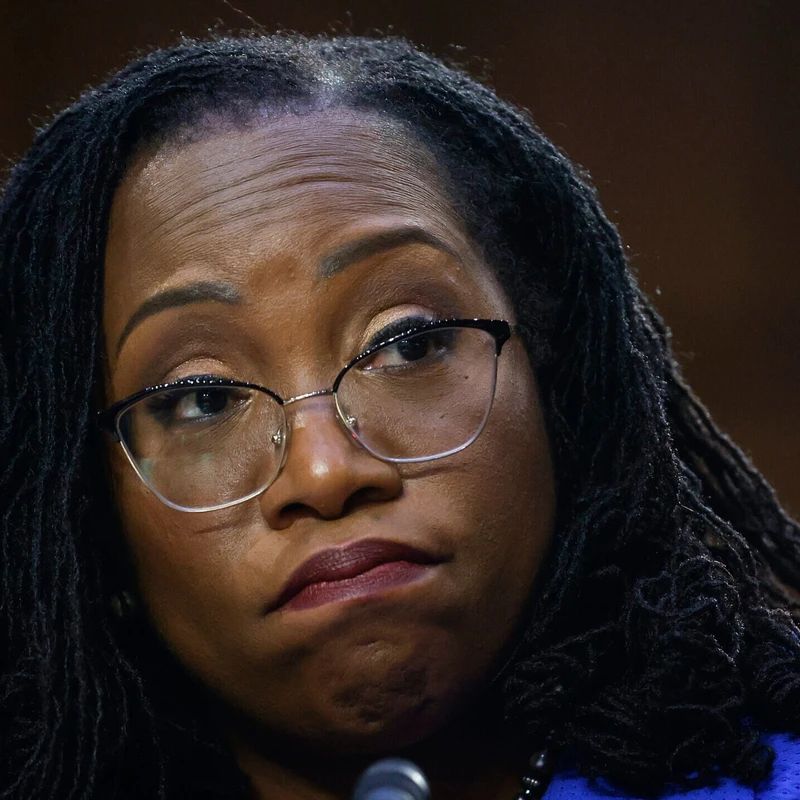
  • Ketanji Brown Jackson: Supreme Court Trust at Risk

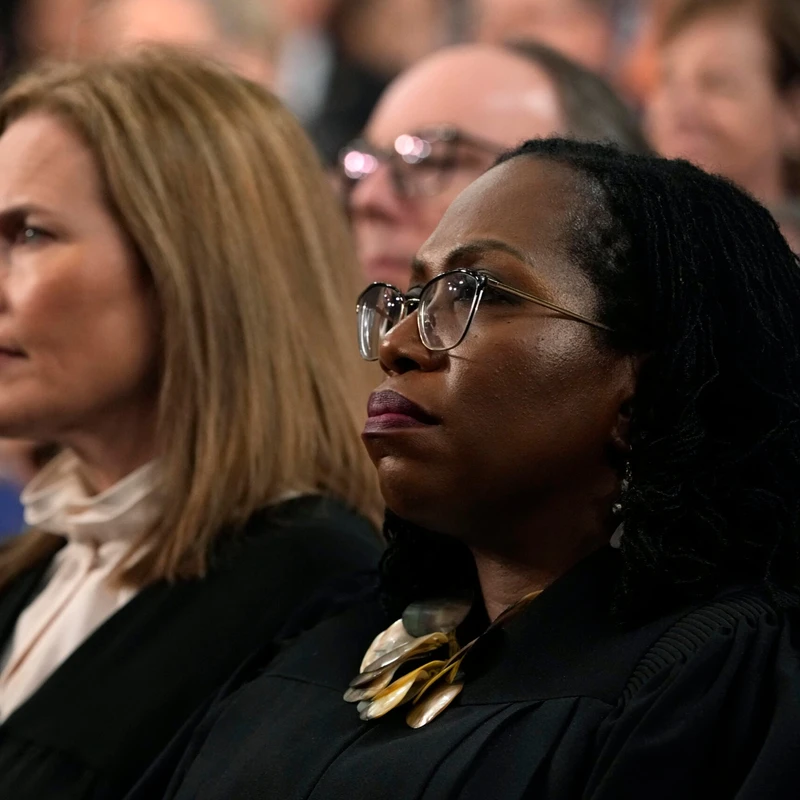
    In today’s often politically charged environment, maintaining public trust in institutions is more critical than ever. Justice Ketanji Brown Jackson recently highlighted a significant concern: the potential erosion of public confidence in the Supreme Court, particularly following a key decision impacting voting rights.

    Concerns Over a Landmark Decision

    Justice Jackson’s remarks came after the Supreme Court’s conservative majority issued a ruling that weakened parts of the Voting Rights Act. This decision allowed Louisiana to proceed with new congressional maps, a move that has drawn significant attention and criticism. Speaking at an event hosted by the American Law Institute, Jackson stressed the vital role of public confidence in the judiciary.

    “Public confidence is really all the judiciary has,” Jackson stated, emphasizing that courts must actively demonstrate their independence from political influence to maintain trust. Her comments underscore the delicate balance courts must strike to uphold the law while ensuring the public believes in their impartiality.

    A Dissenting Voice on Redistricting

    The specific case that prompted Jackson’s concerns involved Louisiana’s redistricting. The court’s decision effectively overturned a district previously established to comply with the Voting Rights Act, allowing for revised maps. Jackson, who was the sole dissenter in this instance, criticized the court’s timing, arguing that altering district maps after early voting had already commenced created unnecessary confusion and instability.

    This ruling is part of a broader trend where public trust in the Supreme Court has seen a decline. High-profile decisions on issues like abortion, affirmative action, and voting rights have contributed to a perception among some that the court is becoming increasingly politicized. Even Chief Justice John Roberts has acknowledged and pushed back against this perception.

    A Voice for Democracy and Civil Rights

    Since joining the Supreme Court in 2022 as its first Black female justice, Ketanji Brown Jackson has become a prominent liberal voice. She has increasingly spoken out on critical cases involving race, democracy, and civil rights, advocating for principles that resonate deeply with many Americans.

    What are your thoughts on Justice Ketanji Brown Jackson’s concerns about public trust in the Supreme Court? Share your views in the comments below!

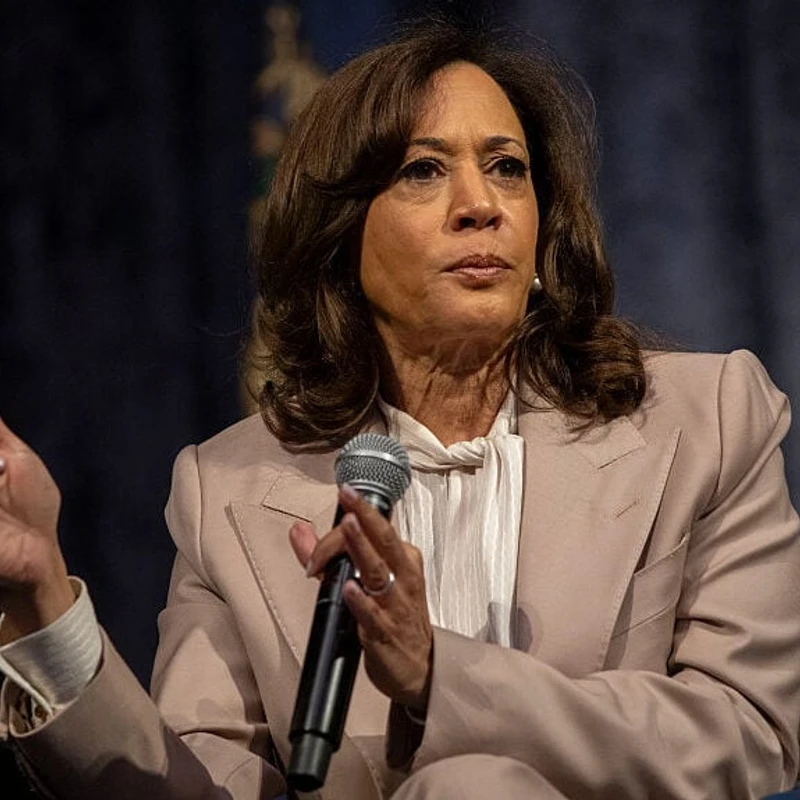
  • Kamala Harris Blasts Supreme Court Over Voting Rights

    Former Vice President Kamala Harris has joined a powerful chorus of Black women leaders in condemning the U.S. Supreme Court’s conservative majority. Following a recent ruling that significantly weakened the Voting Rights Act, Harris is calling for sweeping reforms to counteract what she describes as a ‘back-dooring of racism’ through political decisions.

    The Impact of the Supreme Court’s Ruling

    The Supreme Court’s April 29 decision in ‘Louisiana v. Callais’ has made it more difficult for Black voters to prove racial discrimination in redistricting cases. This ruling has prompted Republican-led states to swiftly redraw congressional maps, often targeting districts with significant Black populations that were previously protected under Section 2 of the 1965 Voting Rights Act. This move is seen as a direct attempt to dilute the political power of Black communities ahead of the November midterm elections.

    Speaking at an emergency virtual meeting hosted by Win with Black Women, Harris emphasized the urgency of the situation. “What they are doing is they are back-dooring racism behind politics to get to this decision and to justify what is happening in particular right now in all the southern states, and this is obviously a time for us to fight,” she stated, addressing the group of Black women leaders and organizers.

    Mobilizing Communities and Drawing on History

    Harris believes this ruling and the subsequent actions by Republican states will galvanize Black communities nationwide. She shared an anecdote about meeting students at North Carolina A&T University who protested the closure of a campus polling station, seeing it as a sign of fear from those who oppose the growing political power of young voters. “Gen Z, millennials, they’re not having it,” Harris asserted.

    Drawing inspiration from the Civil Rights era, Harris reminded the group that organizers and leaders have a ‘playbook’ to guide their resistance. She invoked the legacy of the ancestors, stating, “whose broad shoulders we stand on… show us the way and what a fight looks like.” Harris expressed confidence in the collective power of the community, declaring, “I know the power is ours, and I know we’re not about to let anybody take our power from us.”

    Calls for Sweeping Political Reforms

    Looking ahead, Harris outlined several bold political reforms that Democrats must consider to counter these challenges. These include serious reforms to the Supreme Court, such as expanding its number of justices, and even abolishing the Electoral College. She also voiced support for granting statehood to Washington D.C. and Puerto Rico.

    Furthermore, Harris proposed that if Democrats regain control of the Senate, the Senate Judiciary Committee should implement rules to penalize Supreme Court nominees who provide false testimony. She also called for establishing clear ethics rules for the Supreme Court, which currently faces historically low public approval ratings. Harris urged a ‘fight fire with fire’ approach, emphasizing the need for Democrats to play to win while remaining ethical and moral.

    A Fight Worth Having

    Concluding her remarks, Harris stressed the importance of recognizing one’s own power and the value of the fight ahead. “When you feel powerless, you are powerless. When you feel powerful, you are powerful. We are powerful,” she declared. While acknowledging the increased difficulty of the struggle, she expressed readiness for the fight, knowing what is at stake and that the cause is worth defending.

    What are your thoughts on Kamala Harris’s proposed reforms? Do you agree that the Supreme Court needs significant changes? Share your views in the comments below!

  • Trump’s TPS Decision Could Worsen Caregiving Crisis

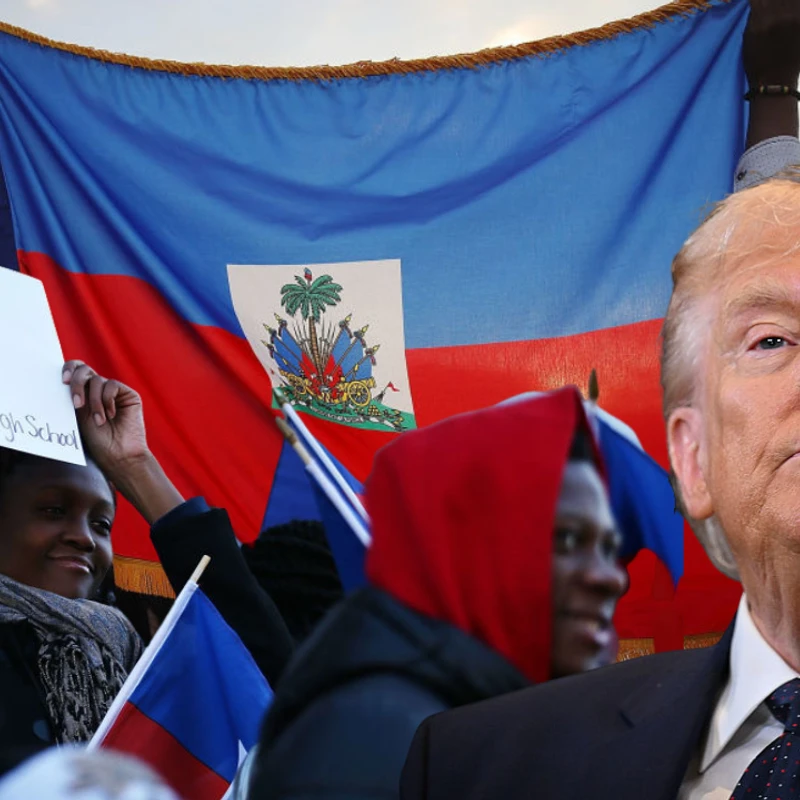
    A crucial Supreme Court case could soon determine the fate of approximately 350,000 Haitians living and working in the United States. If the court sides with the Trump administration’s decision to end Temporary Protective Status (TPS) for Haitian migrants, it could significantly worsen an already critical caregiving crisis across the nation.

    TPS: An Essential Lifeline Under Threat

    U.S. Representative Ayanna Pressley, a leading advocate for the Haitian community, emphasized the gravity of the situation. “This is a matter of life and death. This is an essential lifeline,” she told theGrio. Pressley highlighted that everyone, at some point, will need care, whether for illness, disability, or old age, underscoring the vital role TPS recipients play in providing this essential support.

    The Trump administration announced the termination of TPS for Haitians in November 2025, with the Department of Homeland Security citing that allowing them to live and work in the U.S. was “inconsistent with U.S. national interests.” Haitian migrants have held TPS status since a devastating earthquake struck Haiti in 2010, and subsequent crises, including political unrest and violence, have made returning to the country unsafe.

    Economic and Personal Impact of Deportation

    Advocates and healthcare professionals warn that deporting over a quarter-million Haitians would inflict severe harm, both economically and personally, on the United States. The healthcare industry, particularly elder care facilities, is already grappling with a shortage of workers. Forcing Haitians to leave would undoubtedly exacerbate this issue.

    Data from the Center for Economic and Policy Research indicates that a substantial portion of Haitian Americans, estimated between 21.3% and potentially as high as 40%, work in healthcare roles. These individuals serve as nurses, nursing aides, and other crucial hospital staff. Furthermore, Haitians reportedly contribute approximately $6 billion to the U.S. economy annually.

    Rising Costs and a Message to Immigrants

    Robert Liebrich, CEO of Goodwin Living, a senior living facility, explained that with an aging U.S. population and declining birth rates, the demand for long-term care is increasing. He noted that deporting a significant portion of the workforce would lead to “care inflation,” meaning higher costs for essential services. “It’s not a great idea when we’re trying to decrease costs in our country, to be taking away a workforce, a group of people that have shown themselves to be compassionate and interested to serve in this field,” Liebrich stated.

    Home care worker Athena Jones criticized the termination of TPS as an “attack on communities that are predominantly Black and brown immigrants.” She argued that the administration is sending a message that these individuals are “not wanted and that you do not belong,” impacting not just immigrants but the entire care system. Liebrich added that while President Trump may understand the need for a global workforce, ending TPS sends the wrong message, potentially deterring future immigrant workers.

    A Call for Justice and Economic Sense

    Rep. Pressley stressed that this essential labor cannot be replaced by AI and urged the Supreme Court justices and the U.S. Senate to reinstate TPS for Haitians. She pointed out that even Trump’s own Health and Human Services Secretary acknowledged the U.S. caregiving crisis, reinforcing the need for policies that are both just and economically beneficial for the country.

    What are your thoughts on the potential impact of ending TPS for Haitians? Do you believe the Supreme Court will rule in favor of reinstating the status? Share your views in the comments below.

  • Ketanji Brown Jackson Criticizes SCOTUS Voting Rights Ruling

    Justice Ketanji Brown Jackson is making her voice heard, offering a sharp rebuke to her conservative colleagues on the Supreme Court regarding a recent voting rights decision. Her dissent in the Louisiana v. Callais case highlights concerns about the Court’s involvement in politically charged issues.

    The Supreme Court’s conservative majority recently issued a ruling that could lead Louisiana to halt its ongoing primary elections to redraw its congressional map. This move aims to eliminate a second majority-Black district, a decision the court controversially deemed unconstitutional. Justice Jackson, the first Black woman on the nation’s highest court, did not hold back in her criticism.

    Concerns Over Partiality and Political Influence

    In her four-page dissent, Jackson argued that the Court’s actions could create an “appearance of partiality.” She stated, “To avoid the appearance of partiality here, we could, as per usual, opt to stay on the sidelines and take no position by applying our default procedures. But, today, the Court chooses the opposite. Not content to have decided the law, it now takes steps to influence its implementation.”

    This ruling came just days after the Court decided that Section 2 of the Voting Rights Act does not mandate Louisiana to have two majority-Black districts, despite African Americans comprising over 32% of the state’s population. Following this decision, Governor Jeff Landry indicated he would call an emergency session to redraw the congressional map, a move seen by many as an attempt to gain a political advantage for Republicans.

    Defying Precedent and Political Maneuvering

    Justice Jackson pointed out that the current situation raises “a host of legal and political questions that are entirely independent of the issue in Callais.” She referenced prior court decisions that seem to contradict Monday’s ruling, emphasizing that courts should avoid taking on political responsibilities in processes that can foster distrust. She specifically mentioned the “Purcell principle,” which the Court invoked just five months prior to caution a federal district court against interfering in an active primary campaign.

    The core issue for voting rights advocates is ensuring Black voters, who have historically faced discrimination, have equal representation. The court’s ruling essentially permits the dilution of Black voting power for political reasons, requiring plaintiffs to prove intentional racial discrimination in redistricting – a difficult standard to meet.

    A Dissenting Voice in the Minority

    While Jackson’s dissent focuses on the political maneuvering and the expedited process rather than the merits of the original case, she highlights the problematic nature of the Supreme Court’s involvement. She noted that the Court’s decision to bypass its usual 32-day timeline for returning a case to a lower court essentially endorses Louisiana’s rush to pause elections for a new map. Jackson concluded her dissent by stating, “The Court unshackles itself from both constraints today and dives into the fray. And just like that, those principles give way to power. Because this abandon is unwarranted and unwise, respectfully, I dissent.”

    This dissent follows a rare public rebuke Jackson delivered at Yale Law School weeks earlier, where she criticized the conservative majority for frequently ruling in favor of President Trump’s emergency requests, allowing policies to be implemented before full legal review. Tiffany Royster, associate counsel at the National Council of Negro Women, noted that while Jackson’s vote is often in the minority due to the court’s 6-3 makeup, she is effectively using her voice to speak out against decisions she believes are unjust.

    What are your thoughts on Justice Ketanji Brown Jackson’s dissent? Do you agree that the Supreme Court’s actions were “unwarranted and unwise”? Share your perspective in the comments below!
  • Trump’s Racist Attacks on Rep. Hakeem Jeffries

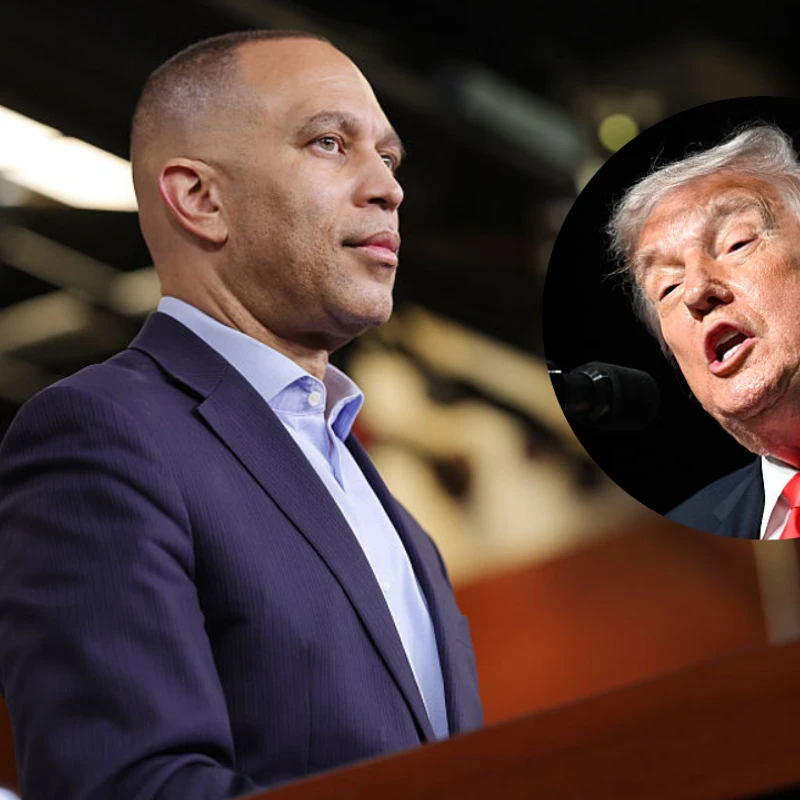
    The political arena is heating up, and unfortunately, so is the rhetoric. Former President Donald Trump has launched a barrage of personal and racially charged attacks against U.S. Rep. Hakeem Jeffries, the Democratic leader of the House of Representatives. These attacks come after Jeffries criticized the Supreme Court’s recent ruling that significantly weakened the Voting Rights Act of 1965.

    Escalating Attacks and Calls for Impeachment

    On his social media platform, Truth Social, Trump labeled Jeffries a ‘Low IQ individual’ and questioned whether he should be impeached for calling the Supreme Court’s decision ‘illegitimate.’ Trump even invoked his own impeachments, urging Republicans to initiate proceedings against Jeffries. This escalation follows a previous post where Trump shared an image of Jeffries holding a baseball bat, calling the Black Democrat a ‘THUG’ and a ‘danger to our Country!’

    The Supreme Court’s ruling on April 29th, penned by Justice Samuel Alito, stated that congressional districts drawn to ensure fair representation for Black voters are not protected under Section 2 of the Voting Rights Act if they are deemed discriminatory against white voters. The conservative majority argued that maps diluting Black voting power are permissible unless racial motivation can be proven. This decision has been widely criticized for potentially undermining efforts to ensure equitable representation for communities of color.

    Critiques of Hypocrisy and Racial Undertones

    Antjuan Seawright, a political advisor to Jeffries, condemned Trump’s attacks, noting a pattern of the former president targeting African-American leaders, especially when they are perceived as more astute or have outmaneuvered him. Seawright pointed out the hypocrisy in Trump’s outrage over Jeffries’ critique of the Supreme Court, reminding that Trump himself has previously criticized the court’s conservative justices for rulings he disagreed with.

    Seawright emphasized the racial undertones of Trump’s language, suggesting that Trump resorts to ‘toned-down right-wing red meat racial rhetoric’ because he cannot match Jeffries’ intellectual capacity. This strategy, Seawright believes, is aimed at energizing a specific segment of Trump’s base.

    Context of Political Violence and Jeffries’ Response

    These attacks occur against a backdrop of rising political violence. Seawright highlighted that Jeffries, a native of Brooklyn, has already been the target of a death threat. In October 2025, a January 6th rioter, Christopher Moynihan, was arrested for threatening Jeffries, echoing Trump’s own language. Seawright criticized Republican leaders for not calling out Trump’s ‘erratic, nasty behavior,’ especially after Trump shared a racist AI video mocking Mexican culture.

    In response to the escalating attacks, Rep. Jeffries has adopted a strategy of mockery. He reshared Trump’s Truth Social post on X (formerly Twitter), labeling it ‘Jeffries Derangement Syndrome’ – a clever inversion of the term ‘Trump Derangement Syndrome’ often used by Trump and his supporters.

    The Fight for Voting Rights Continues

    Jeffries, who is positioned to potentially become the first Black Speaker of the House if Democrats win the majority in the upcoming midterm elections, is actively working to ensure Democratic victories. He has been instrumental in efforts to redraw congressional maps, countering Republican-led redistricting initiatives.

    Jeffries and the Congressional Black Caucus remain committed to restoring voting rights. He stated that a key priority for Democrats, should they gain the majority, would be to pass the John R. Lewis Voting Rights Advancement Act, aiming to ‘end the era of voter suppression in America once and for all.’ Jeffries urged Americans to exercise their right to vote in November, emphasizing that the power to decide representation lies with the people, not with any single political figure or court majority.

    What are your thoughts on Donald Trump’s rhetoric towards Rep. Hakeem Jeffries? How important is the Voting Rights Act in today’s political climate? Share your views in the comments below.

  • Essence Fest: Calls to Leave New Orleans Grow

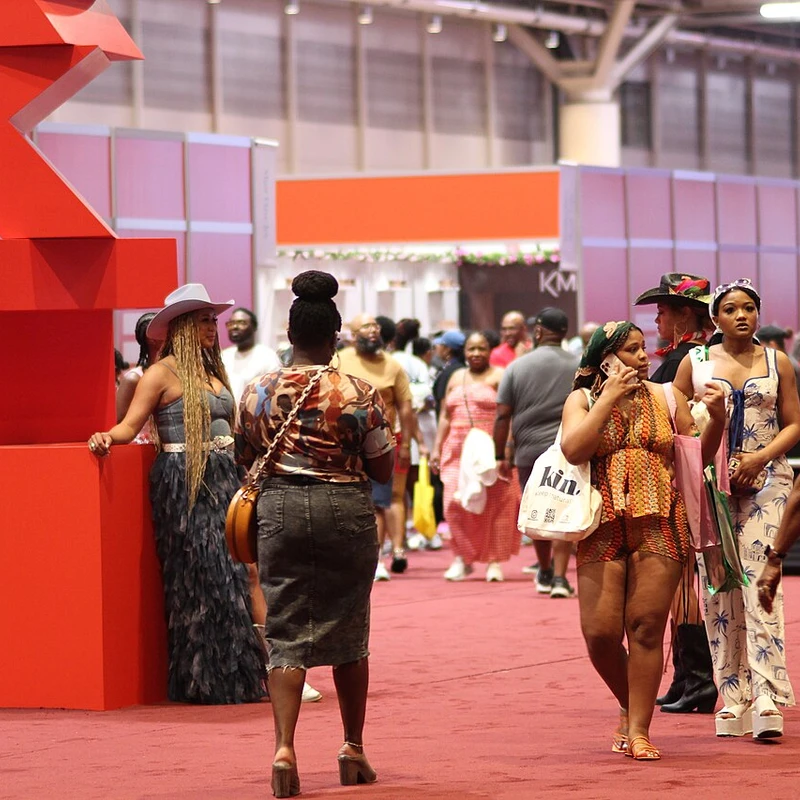
    A significant debate is brewing around the future of the Essence Festival of Culture. Following a controversial U.S. Supreme Court decision regarding Louisiana’s congressional districts, some prominent voices are calling for the iconic festival to leave its longtime home in New Orleans.

    Supreme Court Ruling Sparks Relocation Calls

    The Supreme Court recently overturned a lower court’s order that would have mandated a second Black-majority congressional district in Louisiana for the 2024 elections. This ruling allows the state to proceed with a redistricting map that critics argue dilutes the voting power of Black residents. This decision has ignited outrage and prompted calls for economic action, including boycotts.

    Online figure Damian Wheeler and Baltimore Mayor Brandon Scott are among those advocating for the festival’s relocation. They believe the festival should move to a state that better “respects Black voices.” Mayor Scott directly appealed to Essence, suggesting Baltimore as a potential new home, even referencing the possibility of hosting both the CIAA and Essence Festival.

    Economic Impact vs. Political Concerns

    The Essence Festival is more than just a cultural celebration; it’s a massive economic driver for New Orleans and the state of Louisiana. The festival attracts hundreds of thousands of visitors each July, generating an estimated $300 million in economic impact, according to Essence’s own analysis. For city officials and local businesses, the potential loss of this revenue is a significant concern.

    However, activists argue that the festival’s presence in a state government perceived as actively working against Black voters creates a conflict. They contend that the festival provides substantial tax revenue and global prestige to a state whose political decisions may be seen as disenfranchising the very community the festival celebrates. This places the festival at the center of a complex political and economic tug-of-war.

    What’s Next for Essence Fest?

    As of early May 2026, Essence Ventures has not made any official announcements regarding plans to move the festival. While New Orleans remains a Democratic stronghold, the state-level redistricting decisions have put the festival in a difficult position. The coming weeks and months will likely reveal whether the calls for relocation gain more traction or if the festival will continue its tradition in the city known for its vibrant culture.

    Should the Essence Festival of Culture relocate from New Orleans? What are your thoughts on the impact of the Supreme Court’s redistricting ruling? Share your opinions in the comments below!

  • Supreme Court’s Challenge to Black Voters

    In a move that has left many civil rights advocates stunned and frustrated, the U.S. Supreme Court has effectively raised the bar for proving racial discrimination in voting. The recent ruling in Louisiana v. Callais has placed a heavy burden on Black voters, requiring them to prove that racism is not just present, but demonstrably intentional, a challenge many feel is nearly impossible in today’s landscape.

    A Higher Threshold for Proving Discrimination

    The court’s 6-3 conservative majority, in an opinion authored by Justice Samuel Alito, significantly altered Section 2 of the 1965 Voting Rights Act. The new standard demands that voters prove racial discrimination is “intentional.” This means that subtle forms of voter suppression, like gerrymandered maps or changes to voting procedures that disproportionately affect minority communities, may no longer be sufficient grounds for legal challenge unless explicit discriminatory intent can be proven.

    Damon Hewitt, executive director of the Lawyers’ Committee for Civil Rights Under Law, expressed concern, stating, “Modern-day discrimination doesn’t work that way.” He argues that proving intent requires a level of overtness, like shouting racial slurs, that is rarely seen in contemporary discriminatory practices. This ruling, critics argue, effectively tells Black voters to ignore the visible signs of racism they experience.

    The Irony of ‘White Grievance’

    Ironically, the Supreme Court’s decision came in a case where a group of white voters successfully argued that Louisiana’s creation of a second majority-Black congressional district was racially discriminatory against them. This highlights what Damon Hewitt calls a concerning trend: “Anything that advances Black voting rights is problematic. Any claim of white grievance is invited and welcomed.”

    The majority opinion suggests that significant social progress has been made, rendering entrenched racial discrimination a thing of the past. However, advocates like Cliff Albright, co-founder of Black Voters Matter, argue that this perspective ignores the reality on the ground, comparing the court’s stance to historical justifications for Jim Crow laws.

    A Difficult Path Forward

    Civil rights attorneys and voting rights advocates are grappling with the implications of this ruling, fearing their ability to defend Black and brown voters in court has been severely hampered without legislative intervention. The ruling seems to grant states broad latitude to target voters for political reasons, masked as legitimate governance.

    • The ruling raises the threshold for proving racial discrimination in voting laws.
    • Intentional discrimination must now be proven, making subtle suppression harder to challenge.
    • The decision came in a case brought by white voters claiming reverse discrimination.
    • Advocates fear this will hinder efforts to protect Black and brown voters.

    NAACP President Derrick Johnson stated that the Supreme Court is allowing legislative bodies to “mask their deliberate discrimination against communities by calling it something else.” This ruling, compared by some to the infamous Dred Scott decision, has ignited anger and a resolute determination to continue the fight for voting rights.

    The Fight Continues: Legislative and Judicial Reform

    Despite the setback, civil rights leaders are exploring various options, including legislative remedies like the John R. Lewis Voting Rights Act and the Freedom to Vote Act. These proposals aim to ban political gerrymandering, prohibit mid-decade redistricting, and tighten campaign finance rules. Marc Morial, president of the National Urban League, indicated that discussions with allies in Congress and voting experts are underway to chart a path forward.

    Some advocates are even calling for reforms to the Supreme Court itself, suggesting measures like term limits or expanding the court’s composition, arguing that a court perceived as politically driven, rather than legally principled, puts all legislative gains at risk.

    What are your thoughts on the Supreme Court’s ruling and its impact on voting rights? How can we ensure fair representation for all communities? Share your views in the comments below.

  • Supreme Court Strikes Down Louisiana Black District

    In a landmark decision that could reshape political representation, the Supreme Court has struck down a majority Black congressional district in Louisiana. The ruling, issued on April 29, significantly weakens Section 2 of the Voting Rights Act of 1965, a law originally designed to ensure minority representation in government.

    The Louisiana v. Callais Case

    The case, Louisiana v. Callais, centered on the state’s Sixth Congressional District, currently represented by Democratic Rep. Cleo Fields. The conservative majority on the court, in a 6-3 decision, deemed the district an “unconstitutional gerrymander.” Justice Samuel Alito, writing for the majority, argued that the district’s racial basis was improper, with Chief Justice John Roberts describing its shape as a “snake” connecting disparate areas across the state.

    This decision challenges the very foundation of the Voting Rights Act, which has been instrumental in increasing minority representation since its passage 60 years ago. While President Lyndon B. Johnson hailed the act as a “triumph for freedom,” today’s conservative justices appear to hold a different view.

    Dissenting Opinions and Future Implications

    Liberal justices strongly dissented, with Justice Elena Kagan stating the court’s decision “gutting of Section 2 puts that achievement in peril.” Leaders from Black Voters Matter echoed this sentiment, calling the ruling an “allegiance to the white supremacist’s movement” and a step back towards an era where constitutional rights are not equally applied.

    While the ruling may not immediately affect this year’s congressional races due to filing deadlines, Louisiana Gov. Jeff Landry has already announced plans to suspend the May 2026 primary elections to allow for the creation of a new congressional map. This suggests a swift move to capitalize on the court’s decision, potentially impacting future elections and minority representation.

    Reactions and Political Divide

    The decision has drawn sharp reactions. Conservatives, including some Black Republicans, celebrated the ruling. Rep. Josh Williams of the Ohio State House, who represents a majority-white district, called the idea of special districts for Black Americans “complete nonsense” and “blatantly unconstitutional.” The White House also issued a statement commending the court, calling it a “complete and total victory for American voters” and an end to the “unconstitutional abuse of the Voting Rights Act.”

    Conversely, organizations like Black Voters Matter view this as a deliberate effort to increase and enshrine white political power, drawing parallels to the Dred Scott decision. The ruling highlights the deep political and ideological divide surrounding voting rights and representation in the United States.

    What are your thoughts on the Supreme Court’s decision regarding Louisiana’s congressional district? How do you think this ruling will impact future elections and minority representation? Share your views in the comments below!