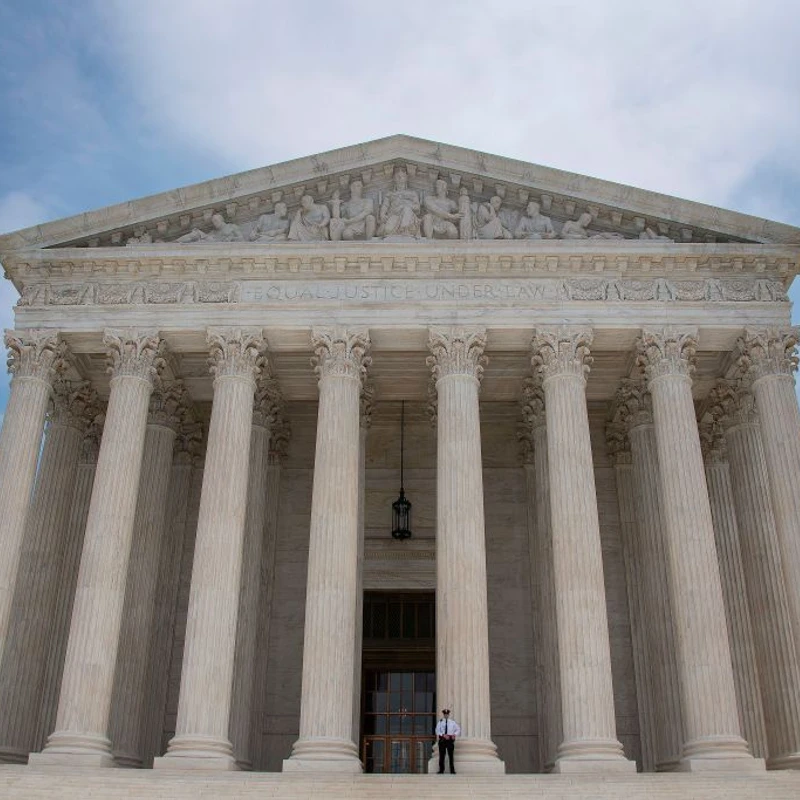
The U.S. Supreme Court is stepping into a complex legal battle originating from Mississippi, focusing on allegations of racial discrimination in jury selection. This case could significantly shape how future claims of juror bias are handled, especially after a conviction. Arguments are scheduled for March 31st, and the nation’s highest court will grapple with whether procedural rules should prevent relief for an inmate who claims his jury was unconstitutionally discriminatory.
The Case of Terry Pitchford
At the heart of this case is Terry Pitchford, a Mississippi man convicted in 2006 for his role in a robbery that led to a shopkeeper’s death. Despite another individual firing the fatal shot, Pitchford received a death sentence. His jury, however, consisted of only one Black juror in a county where approximately 40% of the population identifies as Black. This stark demographic imbalance has raised serious constitutional questions.
Pitchford’s legal team argues that his trial violated his constitutional rights, specifically citing the prohibition against racial bias in jury selection established in the landmark “Batson v. Kentucky” ruling. They point to the prosecutor’s removal of four Black potential jurors during the selection process as evidence of discrimination.
A History of Scrutiny and Procedural Hurdles
The prosecutor in Pitchford’s trial, Doug Evans, has a history of facing similar accusations. In fact, the Supreme Court overturned another conviction linked to Evans in 2019 due to concerns about racially motivated jury selection. However, in Pitchford’s case, the trial judge allowed the proceedings to continue, rejecting the defense’s objections.
Mississippi courts later upheld the conviction, stating that Pitchford had forfeited his “Batson” claim. The reasoning was that he didn’t sufficiently challenge the prosecutor’s race-neutral explanations for removing jurors, which included reasons like a juror arriving late or having relatives with criminal records. This procedural argument became a significant hurdle.
The Role of AEDPA and the Supreme Court’s Question
The path to federal court was complicated by the Antiterrorism and Effective Death Penalty Act (AEDPA). A federal district judge initially sided with Pitchford, ordering a new trial, but this was reversed by the U.S. Court of Appeals for the Fifth Circuit. The appellate court cited AEDPA’s strict limits, which allow federal intervention only if a state court’s decision is not merely wrong but objectively unreasonable.
Now, the Supreme Court faces a more focused question: Was Mississippi’s conclusion that Pitchford waived his right to challenge the jury selection process itself objectively unreasonable under AEDPA? Pitchford’s attorneys argue that the state court ignored crucial facts and that objections were indeed raised. The state, however, maintains that the prosecution offered facially race-neutral reasons that were unchallenged, framing the issue as purely procedural.
The justices’ eventual ruling could have wide-reaching implications for how courts address claims of racial bias in jury selection, particularly in capital cases where the stakes are highest. — Black Enterprise
The federal government has also weighed in, urging the Court to uphold established rules that require defendants to raise arguments during trial before appealing. The outcome of this case could set a significant precedent, impacting the pursuit of justice for those alleging racial discrimination within the courtroom.
What are your thoughts on the Supreme Court’s involvement in this Mississippi jury bias case? Share your views in the comments below!
Leave a Reply