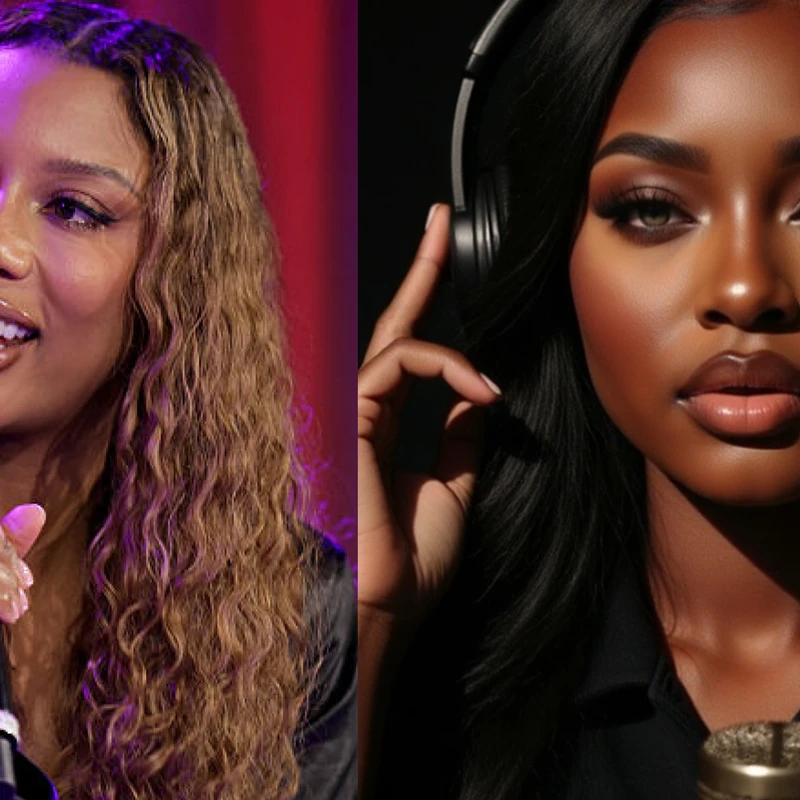
Imagine pouring your heart and soul into your craft, only to see something artificial rise up and potentially blur the lines of your identity and brand. That’s the reality Grammy-winning singer Victoria Monét is grappling with, and she’s calling for a serious conversation about AI in the music industry.
The Rise of Xania Monet and Victoria’s Concerns
The buzz around AI artist Xania Monet has been significant. This AI creation, whose music is penned by poet and entrepreneur Telisha “Nikki” Jones, has not only topped charts but also landed a multi-million-dollar record deal. While Xania’s creator emphasizes the genuine emotion in her lyrics, Victoria Monét finds it hard to believe that Xania wasn’t, in some way, inspired by her likeness.
Monét shared a striking anecdote: a friend used ChatGPT to generate an image of “Victoria Monét making tacos,” and the resulting picture bore a resemblance to Xania. This has led Monét to question the fairness of an AI artist capitalizing on a name that could easily be confused with her established brand, especially without explicit use of her name in the prompt.
The Unfair Competition of AI
Beyond the likeness issue, Monét highlights a more fundamental challenge: the sheer speed and endurance of AI. “It definitely puts creators in a dangerous spot because our time is more finite,” she explained to Vanity Fair. Human artists need rest, but AI can churn out content around the clock, creating an almost impossible competitive landscape.
This disparity raises critical questions about how human creativity can thrive when faced with tireless artificial counterparts. How do we ensure that the value of human artistry isn’t diminished?
A Call for Clearer Guidelines and Labels
Victoria Monét is advocating for transparency, suggesting that AI-generated music should be clearly labeled as “artificial,” much like how food products are labeled. This would help consumers and industry professionals distinguish between human-made and AI-generated content.
She emphasizes the need for guidelines to protect creators who are most vulnerable to these technological shifts. “We’re introducing a tool with a lot of potential, but without the guidelines to protect the people who may be affected by it the most, which would be the creators,” Monét stated.
Industry Reactions
Monét isn’t alone in her concerns. Fellow R&B artist Kehlani has also voiced her disapproval of AI artists, stating plainly in a TikTok video, “I don’t respect it.” This sentiment reflects a growing unease within the creative community.
Xania Monet’s creator, Telisha Jones, however, maintains a different perspective. She acknowledges the differing opinions but points to the continuous evolution of technology. “Everybody has different ways of putting in the work to get to where they’re at. I don’t feel a way about it,” Jones remarked on “CBS Mornings,” suggesting that different paths to success are valid in this new era.
What’s Next for Music and AI?
The conversation Victoria Monét is sparking is crucial. As AI continues to advance, the music industry, and indeed all creative fields, must grapple with ethical considerations, intellectual property rights, and the fundamental definition of artistry. Establishing clear regulations and fostering transparency will be key to navigating this new frontier and ensuring that human creators remain valued and protected.
What are your thoughts on AI-generated music and artists like Xania Monet? Do you think clearer guidelines are needed to protect human creators? Share your opinions in the comments below!
Leave a Reply