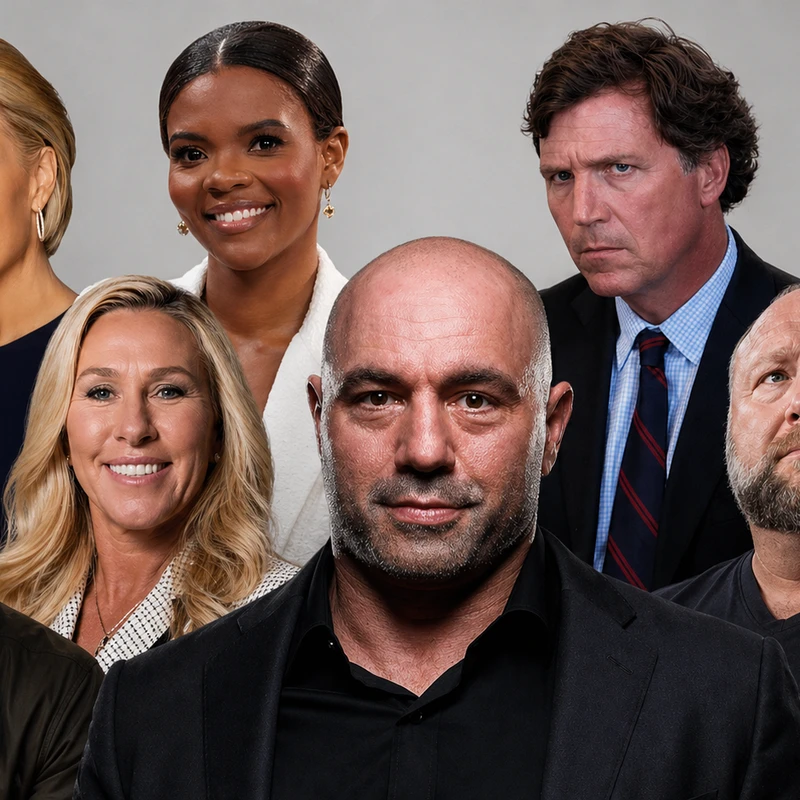
It appears a new political season has begun: the MAGA Apology Tour. Figures like Tucker Carlson, Candace Owens, and Megyn Kelly, who once championed Donald Trump and his policies, are now publicly expressing regret or distancing themselves. But is this a genuine crisis of conscience, or a calculated move for brand survival?
A Sudden Shift in Tone
Tucker Carlson recently stated he was “tormented” by his support for Trump and apologized for misleading people, citing the war in Iran as his breaking point. Candace Owens has called the administration “satanic” and expressed embarrassment for ever endorsing Trump. Megyn Kelly is reportedly “sick of it” and wants Trump to “behave like a normal human.”
Joe Rogan, who provided Trump with a significant platform, now calls the Iran war “terrifying” and feels “politically homeless.” Marjorie Taylor Greene apologized after Trump reportedly called her a traitor, and Alex Jones is now calling for the 25th Amendment, citing “demonic influences.” Even Andrew Schulz, who previously supported Project 2025, claims he didn’t vote for the current political climate.
Brand Management, Not Moral Reckoning
The author argues that these mea culpas are not about accountability but about self-preservation. The line for these figures, it seems, was never cruelty or the harm inflicted on marginalized communities, but rather the escalation to war. They are sorry not for the policies that hurt immigrants, Black people, women, or LGBTQ+ individuals, but because the project they helped build has now led to international conflict, potentially impacting their own careers and relevance.
The author points out that Black communities have been warning about Trump’s character and policies since his 1989 ad against the Central Park Five, through the birtherism conspiracy, the Muslim ban, Charlottesville, January 6th, and family separations. These warnings were ignored by MAGA media figures who were more interested in “the checks” than in truth or accountability.
Where Were the Apologies Then?
The timing of these apologies is highly suspicious. If these figures were truly sorry, their remorse would have surfaced during the “cages” of family separations, the rollback of women’s healthcare, attacks on voting rights, or the violence of Charlottesville. Instead, their apologies are conveniently timed as Trump’s actions become increasingly detrimental to their own platforms and influence.
Tucker Carlson isn’t sorry; he’s recalibrating his brand. Candace Owens isn’t sorry; she’s reclaiming her “independent contrarian” image. Joe Rogan isn’t sorry; he’s hedging his bets. Megyn Kelly isn’t sorry; she’s simply tired of the fallout. Their apologies are not about the harm done to others, but about the consequences affecting them.
The author concludes that this is not a moral reckoning but brand management disguised as one. The people they used to climb their ladders—Black women they mocked, immigrants they demonized, trans youth they targeted—are still waiting for genuine apologies, left behind as these figures reposition themselves. The “receipts” of their past actions and ignored warnings remain, and the author asserts that this apology tour will not sway those who have long seen the truth.
Do you believe the apologies from MAGA media figures are sincere? Share your thoughts in the comments below!
Leave a Reply