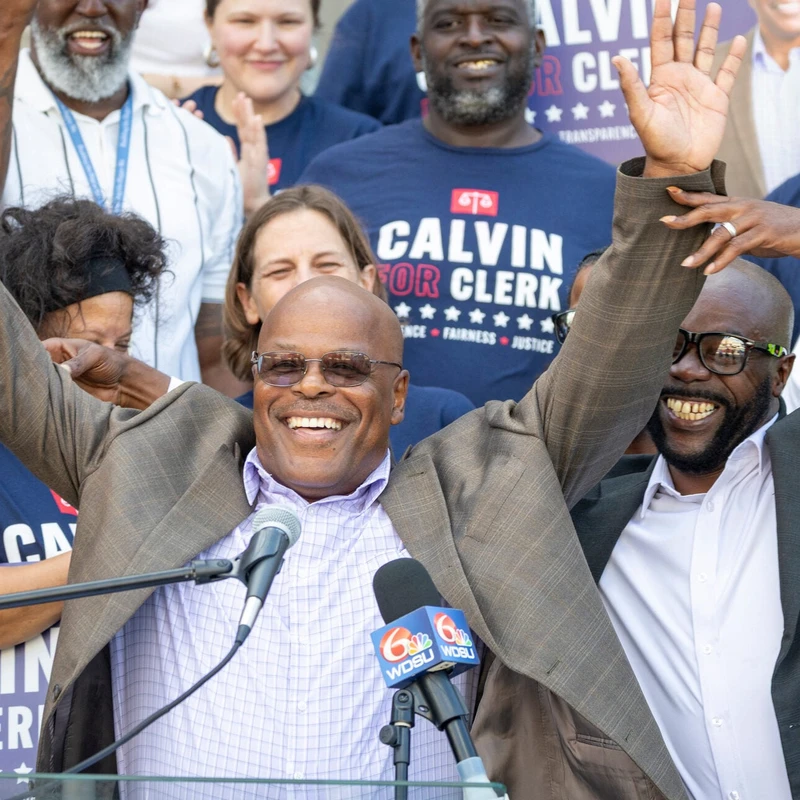
Imagine this: you’ve spent decades fighting for your freedom, wrongly convicted of a crime you didn’t commit. You finally get exonerated, dedicate yourself to justice, and then the people elect you to a public office. It sounds like a powerful story of redemption, right? Well, in Louisiana, that story took a frustrating turn when the state’s Republican party moved to block an exonerated man from serving in the office he was elected to.
A Hard-Fought Victory Denied
Calvin Duncan, a New Orleans native, decided to run for Clerk of Criminal Court. His motivation? This very office had previously denied him access to trial records that could have proven his innocence years ago. After a runoff election last November, Duncan secured a decisive victory, winning 68 percent of the vote against the incumbent, Darren Lombard. It was a moment of profound vindication.
However, his triumph was short-lived. Just days before he was set to officially take office on May 4th, the Louisiana state legislature, with apparent backing from Governor Jeff Landry, rushed through Senate Bill 256. This bill effectively eliminates the Clerk of Criminal Court position as a standalone office, merging its functions under the Clerk of Civil Court, starting in August. Duncan had already been ceremonially sworn in on April 21st.
Political Maneuvering and Disenfranchisement
Governor Landry has been a vocal opponent of Duncan’s election and is reportedly seeking to deny him compensation for the time he spent wrongfully imprisoned. The bill’s swift passage, primarily by Republicans, with a Senate vote of 25-11 and a House vote of 63-28, has drawn sharp criticism. An amendment proposed by a Democrat to postpone the office’s consolidation until 2030 was voted down.
Duncan himself spoke passionately during a committee hearing in March, stating, “The citizens of New Orleans overwhelmingly said: ‘I want to give this person a chance, he can make a difference.’ What this bill does is say: ‘Thank you, but you wasted your time.’ It disenfranchises everybody.”
A Precedent for the Future?
The story of Calvin Duncan is not just about one man’s denied opportunity; it raises serious questions about political interference and the integrity of elections. As Rep. Candace Newell, a Democrat from New Orleans, warned, “You do not change the rules of the game once the game has been played. Today they’re coming for this right, tomorrow they’re coming for yours.”
Duncan’s Journey to Exoneration
Duncan’s path to this point is remarkable. Sentenced to life in 1981 for a murder he didn’t commit, he spent 30 years in Louisiana State Penitentiary. While incarcerated, he earned the nickname “Prison Lawyer” for his efforts to clear his own name and help others. He was released in 2011 after agreeing to a lesser charge of manslaughter, and his conviction was officially vacated a decade later. His journey didn’t stop there; he went on to graduate from Tulane University and later earned a law degree from Lewis & Clark University in 2023. He was also instrumental in a 2020 U.S. Supreme Court decision that ended non-unanimous jury verdicts.
What do you think about the Louisiana legislature’s actions regarding Calvin Duncan’s elected office? Share your thoughts in the comments below!
Leave a Reply