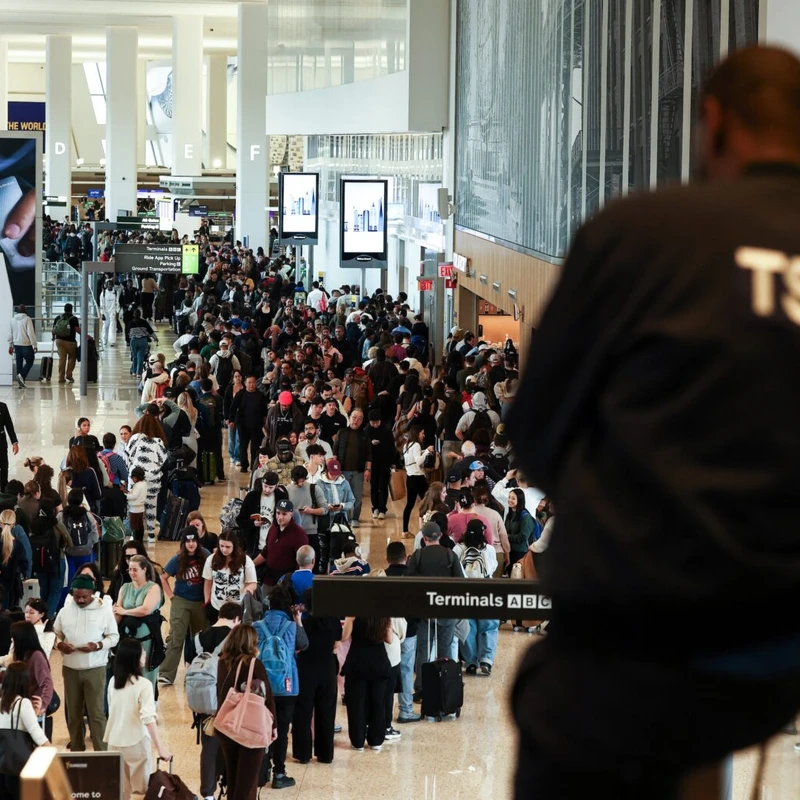
If you’re planning to fly soon, brace yourself for a potentially more unpredictable travel experience. Several major issues are converging, creating significant challenges for travelers across the U.S. We’re seeing TSA staffing shortages, the deployment of ICE agents to airports, and major disruptions in the New York region, all contributing to longer lines and increased risk of delays.
TSA Staffing Shortages Worsen Delays
The ongoing partial government shutdown is directly impacting airport security. Thousands of TSA officers are working without pay, leading to a significant rise in absences. At some major airports, including hubs in Houston and Atlanta, over a third of TSA staff have been absent. Since the shutdown began on February 14th, more than 400 TSA officers have reportedly left their positions.
This staffing crunch has resulted in lengthy security lines, especially during the busy spring travel season. Atlanta’s airport, for instance, advised passengers to arrive four hours early due to the extensive security queues. This situation is making airport operations more difficult for both travelers and staff.
ICE Agents Deployed to Airports
To alleviate some of the pressure caused by TSA shortages, the Department of Homeland Security (DHS) has begun deploying Immigration and Customs Enforcement (ICE) agents to over a dozen airports. These agents are primarily assisting with crowd management and support duties outside secure screening areas. While they don’t have the same security clearance as TSA officers for checkpoint work, their presence aims to free up TSA personnel to focus on screening.
Airports receiving ICE support include major hubs like Atlanta, JFK, LaGuardia, Newark, and others. Officials emphasize that this deployment is not intended for immigration enforcement activities but rather to streamline airport operations. However, the presence of ICE agents may still raise concerns for some travelers.
LaGuardia Disruptions Add to Travel Woes
Compounding the travel challenges, a serious incident occurred at New York’s LaGuardia Airport late Sunday. An Air Canada Express regional jet collided with a fire truck while landing. Tragically, fatalities were reported, including the pilot and first officer, with dozens injured. This collision forced LaGuardia to close for part of Monday, leading to hundreds of flight cancellations and diversions.
The ripple effects were felt across the region. Newark Liberty International Airport briefly halted arrivals and departures Monday morning due to a burning smell reported in the air traffic control tower, though this was unrelated to the LaGuardia incident. The combination of these events has created a particularly difficult travel environment in the New York metropolitan area, impacting flight schedules and passenger positioning.
What Travelers Should Do Now
- **Allow extra time:** Plan to arrive at the airport significantly earlier than usual.
- **Monitor updates:** Closely check your airline’s app for gate changes, delays, and cancellation alerts.
- **Check FAA status:** Use the FAA’s National Airspace System status page for information on delays and closures, especially in the New York region.
- **Utilize MyTSA app:** This app can provide estimated wait times and checkpoint information.
- **Stay informed:** Be aware of TSA’s security screening guidelines to know what to expect.
While airport security operations are ongoing, they are less predictable than normal. Travelers heading through major hubs, particularly those in New York, Atlanta, Houston, or airports experiencing high absenteeism, should be prepared for longer waits and potential disruptions.
Have you experienced travel disruptions recently? Share your tips for navigating airport delays in the comments below!
Leave a Reply