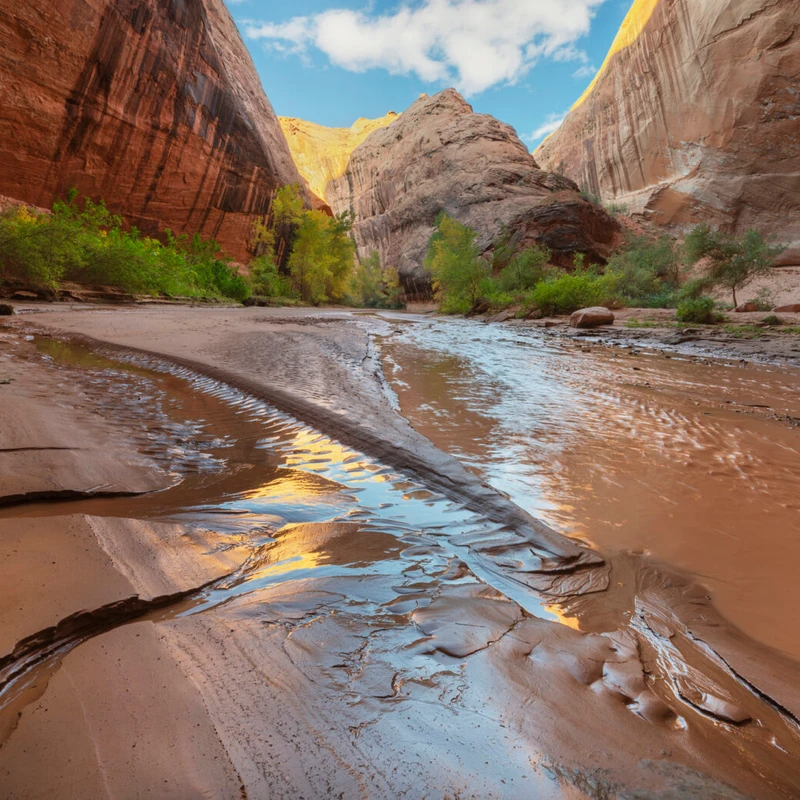
Planning a trip to the stunning Glen Canyon National Recreation Area? You’ll want to pay close attention to a recent warning from the National Park Service (NPS). While this vast area, spanning over 1.25 million acres across Utah and Arizona, is known for its breathtaking landscapes, there’s a hidden hazard you need to be aware of: quicksand.
What is Quicksand and Where to Find It?
The NPS has alerted visitors to be cautious of quicksand, particularly near the shoreline and in drainages within Glen Canyon. What makes quicksand so tricky is that it can look deceptively solid and dry, but underneath, the ground can be unstable, shifting, or incredibly soft. It’s a mixture of sand and water (or sometimes air) that loses its stability when disturbed.
Spotting these treacherous patches can be difficult, as quicksand doesn’t always look the same. Keep an eye out for these tell-tale signs:
- Ground that appears wet, loose, or unusually smooth.
- Soil that seems to be shifting, rippling, or vibrating.
- Unexpected water seepage or pooling.
- Depressions or low spots that are visibly saturated.
- Surfaces that look dry but feel soft or spongy to the touch.
- Fine sediment mixed with water.
Why Now? Understanding the Conditions
Rangers believe the increased presence of quicksand is linked to lower water levels in Glen Canyon, particularly affecting Lake Powell, North America’s second-largest man-made lake. In 2025, Glen Canyon welcomed over 3.7 million visitors, making it a highly popular destination for activities like camping, boating, off-roading, and hiking. With so many people enjoying the area, awareness of these potential hazards is crucial.
What to Do If You Encounter Quicksand
Before you even set out, the best safety measure is to check for any posted warnings or alerts for the area. If, despite your precautions, you find yourself caught in quicksand, the most important thing is to remain calm. Hollywood often exaggerates the danger; scientists confirm it’s virtually impossible to be fully submerged or sink beyond your waist.
Here’s how to get yourself out safely:
- **Don’t Panic:** Resist the urge to thrash wildly.
- **Recline Your Body:** Lean back slowly to distribute your weight. This reduces downward pressure.
- **Slow Leg Movements:** Gently wiggle your feet or slightly rotate your legs to break the suction around your limbs.
- **Inch Towards Safety:** Once your legs are free, continue leaning back and use your arms to paddle or back-float towards firmer ground.
- **Avoid Standing Up:** Stay reclined until you are completely out of the quicksand.
- **Use Leverage:** If possible, grab onto a sturdy object like a branch or rock for support.
Hiking with a buddy or in a group is always recommended. If you or someone you’re with becomes too fatigued to escape, don’t hesitate to call for assistance.
Have you ever encountered quicksand or other unexpected natural hazards while traveling? Share your experiences and tips in the comments below!
Leave a Reply