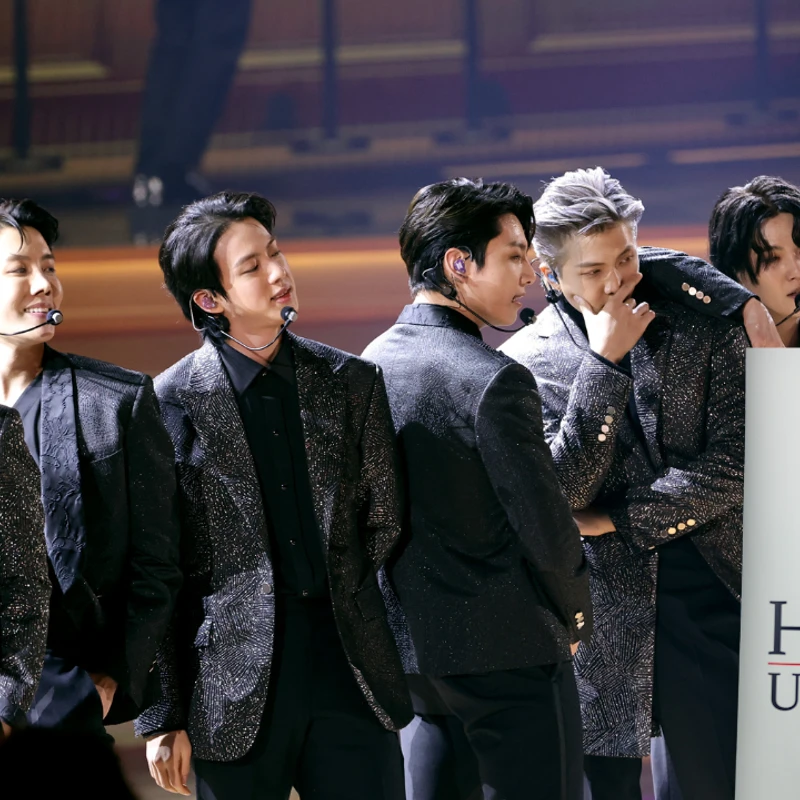
K-Pop sensation BTS has ignited a social media firestorm with a promotional video for their new album, ‘Arirang.’ While intended to honor a unique piece of history involving Korean students at Howard University, the video’s depiction of the Historically Black University (HBCU) has drawn sharp criticism for its historical inaccuracies and perceived whitewashing.
Howard University: A Historical Context
The video references a fascinating historical event from May 8, 1896, documented in The Washington Post, about seven young Korean students who enrolled at Howard University. Stranded and without funds in Vancouver, they sought assistance from the Korean Minister in Washington D.C., who helped them travel to the capital. Howard University, founded in 1867, was established as a crucial educational sanctuary for Black Americans during a time of intense segregation.
However, the historical context reveals that by 1896, Howard University, while primarily serving Black students, also became a refuge for other marginalized groups facing discrimination. The university’s commitment to diverse backgrounds has always been a cornerstone of its identity. The Korean students were reportedly welcomed and even provided free rooms.
The Controversy: A Whitewashed Depiction
The controversy arose when fans noticed that the crowd depicted in the promo video, set on what appears to be Howard’s campus, was predominantly white. This detail felt particularly jarring given that Howard is an HBCU, and in 1896, during segregation, its student body would have been overwhelmingly Black. Fans took to social media to point out this historical inaccuracy.
BTS’s agency, Big Hit Music, included a disclaimer acknowledging the video as a “modern reimagining” that might “deviate from actual historical events.” Despite this, the visual representation of a predominantly white crowd at an HBCU during that era felt like a significant oversight, particularly to those familiar with the university’s history and mission.
A Deeper Look at Cultural Inspiration
The incident also brings to light a broader discussion within the K-Pop community regarding cultural appropriation. Throughout the years, some Korean artists have been inspired by elements of Black culture, leading to debates about whether this constitutes genuine appreciation or appropriation. Fans like Devin L., a Howard University alum and K-pop fan, expressed that K-pop often seems to offer “arm’s-length appreciation” rather than a full embrace of Black culture, despite its clear influences.
The Korean students at Howard were noted for their singing abilities. Anthropologist Alice C. Fletcher even invited some to her home, where they reportedly made the first known audio recordings of Korean voices and music in the U.S., including the iconic Korean folk song “Arirang.” Howard University, known globally as “The Mecca,” has a legacy of welcoming diverse students and fostering cultural exchange, making the inaccurate depiction in the video particularly poignant.
What are your thoughts on the BTS ‘Arirang’ video controversy? How important is accurate representation when artists draw inspiration from different cultures and historical settings? Share your views in the comments below!
Leave a Reply