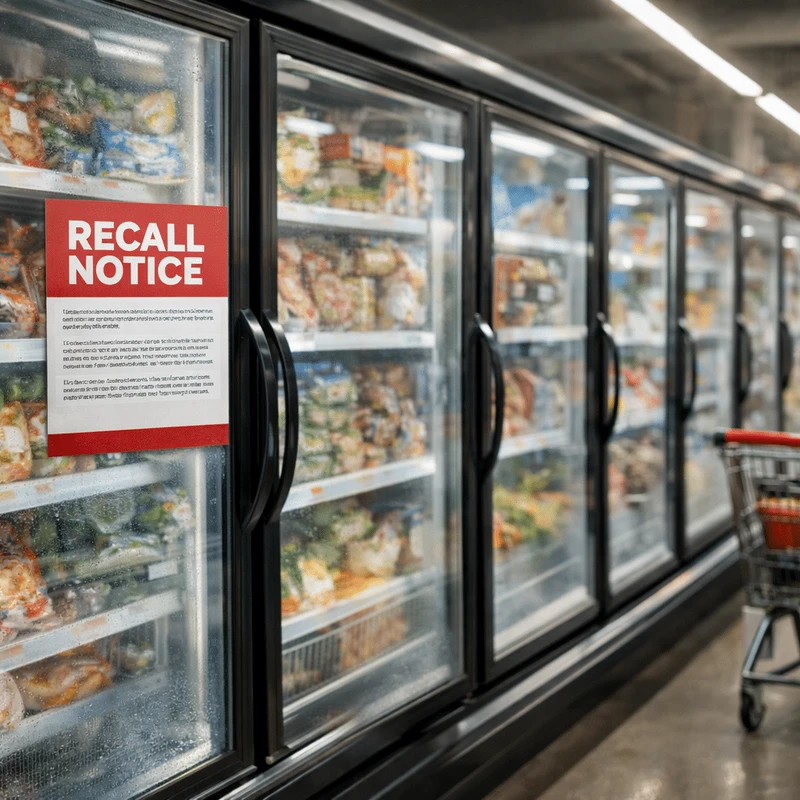
Attention shoppers! A major food safety alert has been issued, affecting nearly 37 million pounds of popular frozen meals sold at major retailers like Trader Joe’s and Kroger. The reason? Potential glass fragments have been discovered in these products, raising serious concerns for consumers across the United States.
What Triggered This Widespread Recall?
The recall was initiated by Ajinomoto Foods North America, a significant producer of frozen Asian-style meals. This action came after they received multiple customer complaints reporting glass pieces found in their products. Federal investigators traced the contamination back to carrots used as an ingredient, which may have introduced glass fragments during the processing stage.
Initially, the recall covered about 3.3 million pounds of frozen fried rice. However, a deeper investigation revealed the problem was more extensive, leading to an expansion in early March 2026. This expansion added an additional 33.6 million pounds of frozen foods, bringing the total recall volume to a staggering 37 million pounds.
Affected Products and Brands
The expanded recall now encompasses 16 different frozen food items. These include various types of frozen ramen meals, shu mai dumplings, chicken fried rice, and pork fried rice. These products are sold under several familiar brand names that you might find in your freezer:
- Ajinomoto
- Kroger
- Ling Ling
- Tai Pei
- Trader Joe’s
Many of these items have been distributed nationwide in the U.S., with some also reaching Canada and Mexico. For instance, Trader Joe’s frozen products like Chicken Fried Rice, Vegetable Fried Rice, Japanese Style Fried Rice, and Chicken Shu Mai are part of this recall. These affected products carry best-by dates ranging from February 2026 through August 2027, meaning some could still be in your freezer right now.
Understanding the Health Risks
Food safety officials are classifying this recall as serious due to the potential health risks associated with ingesting glass fragments. Swallowing glass can lead to severe internal injuries, choking hazards, or damage to the mouth and digestive tract. Thankfully, as of now, the U.S. Department of Agriculture’s Food Safety and Inspection Service (FSIS) has not confirmed any injuries related to this recall.
What to Do If You Suspect Ingestion
If you accidentally consume food containing a foreign object like glass, it’s crucial to know how to respond. Here’s a general medical guideline:
- **Stop Eating Immediately:** Spit out any remaining food and rinse your mouth. Check for any cuts on your gums or inside your mouth.
- **Assess Your Symptoms:** While small fragments might pass without issue, sharp objects like glass can cause injury. Watch for severe pain in your throat, chest, or stomach; difficulty swallowing; vomiting; blood in saliva or stool; severe abdominal pain or bloating; or fever/chills. These could signal internal injury.
- **Do Not Induce Vomiting:** Avoid trying to force the object out by vomiting or eating rough foods, as this can cause further damage to the esophagus.
- **Seek Professional Advice:** Contact Poison Control (1-800-222-1222 in the U.S.) or your doctor for guidance.
- **Go to the ER Immediately If:** You swallowed a large or sharp piece, or if you experience severe pain, bleeding, choking, or difficulty breathing.
Remember, while small fragments might pass naturally, the risk of internal cuts from sharp glass means seeking medical advice is highly recommended.
Consumer Action Steps
Officials are strongly advising consumers who have purchased the recalled products to take immediate action:
- **Do not consume** the affected products.
- Carefully check your freezer for the specific brands and best-by dates mentioned in the recall.
- Dispose of the product safely or return it to the store where you purchased it for a full refund.
- If you believe you have been injured or exposed to contaminated food, contact a healthcare provider immediately.
This large-scale recall serves as a stark reminder of the complexities within our modern food supply chains. A single contaminated ingredient can have far-reaching consequences. However, it also highlights the effectiveness of recall systems designed to identify and remove problematic products swiftly, ultimately protecting public health.
Have you purchased any of the recalled frozen foods? Share your experience or any concerns in the comments below.
Leave a Reply