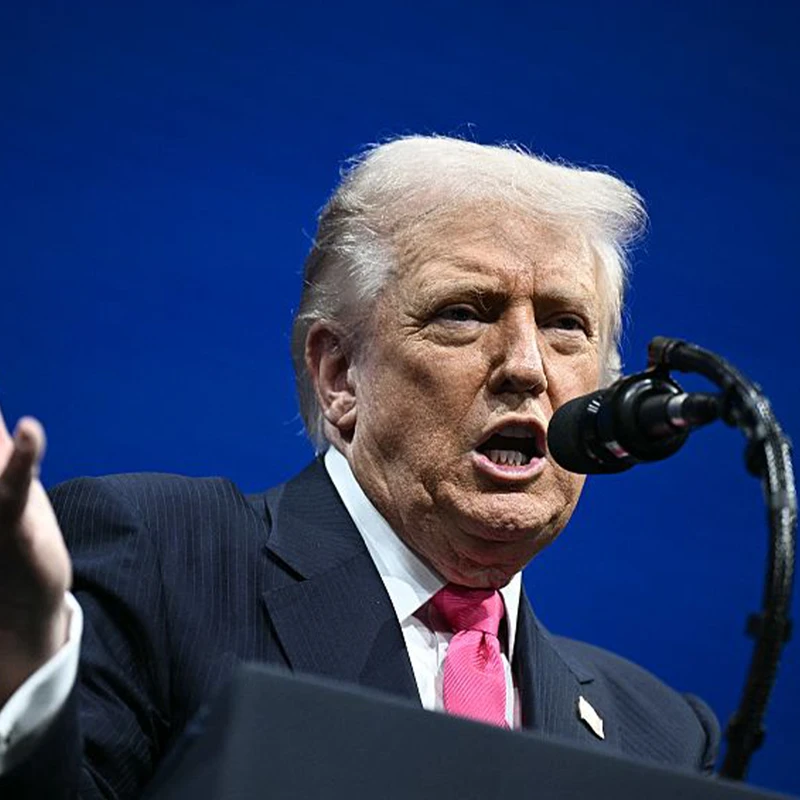
Could Americans be receiving $2,000 checks funded by national tariffs as early as mid-2026? President Donald Trump has indicated that his administration is preparing for such a distribution, which he refers to as ‘dividends’ tied to tariff revenue. However, the feasibility and timeline remain subjects of significant discussion and skepticism.
The Promise of Tariff Dividends
During a press briefing on November 17th, President Trump estimated that the government could begin issuing these ‘thousands of dollars’ to Americans, particularly targeting ‘moderate income, middle income’ households, around mid-2026. This aligns with previous statements made on Truth Social, where he mentioned $2,000 checks for ‘low and middle income USA Citizens.’
The concept involves using funds collected from national tariffs, similar to those implemented during his first term, to potentially reduce the national debt and provide a rebate to taxpayers. This idea was first publicly discussed in July, with Trump suggesting a portion of tariff revenue could support such a rebate.
Financial Hurdles and Congressional Approval
Despite the President’s optimism, significant questions linger about the financial viability of such a plan. Treasury Secretary Scott Bessent expressed cautious optimism on Fox News, stating, “we will see,” and emphasizing that Congress would need to pass legislation to authorize these payments. He referred to the potential recipients as ‘working families.’
Financial analysts outside the administration have raised concerns about the numbers. The Committee for a Responsible Federal Budget (CRFB) estimates that current tariff revenue, around $100 billion, is insufficient to fund nationwide $2,000 dividend checks, which they calculate would require closer to $600 billion. Scott Lincicome, an economist at the Cato Institute, estimates monthly tariff generation at roughly $30 billion, still far below the necessary threshold.
The Consumer Cost of Tariffs
Lincicome also points out a critical aspect: Americans ultimately bear the cost of tariffs through higher prices on imported goods. Therefore, any rebates would essentially be returning money consumers have already spent. Furthermore, congressional approval is a mandatory step before any such checks could be issued in 2026.
Looking at long-term projections, the Congressional Budget Office estimates tariffs could generate $3.3 trillion over the next decade, potentially aiding in national debt reduction. However, these projections do not guarantee the possibility or political viability of short-term rebates.
Skepticism from Prediction Markets
Prediction markets reflect a general skepticism about the likelihood of these tariff dividend checks materializing soon. Polymarket activity shows low confidence in checks being sent before March 2026, with current trading indicating only a 4% chance of tariffs generating over $250 billion in 2025. Traders on Kalshi appear similarly unconvinced, and there’s ongoing speculation about whether the Supreme Court will uphold the administration’s authority to maintain these tariffs, as justices showed skepticism during oral arguments.
What are your thoughts on President Trump’s proposed tariff dividend checks? Do you think they are financially feasible and likely to happen? Share your opinions in the comments below!
Leave a Reply