The U.S. Department of Agriculture (USDA) has recently canceled the remaining funds from a $300 million grant program designed to help farmers, particularly those from underserved communities, purchase land and access resources. This decision, part of the Trump administration’s broader anti-Diversity, Equity, and Inclusion (DEI) initiatives, is being met with strong criticism, with advocates arguing it will further disadvantage Black farmers.
A Program Aimed at Thriving, Now Canceled
The program, known as the Increasing Land, Capital, and Market Access Program, was funded by the American Rescue Plan Act signed by President Joe Biden in March 2021. Its goal was to provide technical support and financial assistance to “underserved” producers, helping them transition from merely surviving to truly thriving. The USDA had championed these funds as a crucial lifeline for farmers struggling to acquire and maintain farmland.
However, USDA officials have now sent cancellation letters to organizations that were approved for these grants. The Trump administration has labeled the program as providing “discriminatory preferences based on Diversity, Equity and Inclusion” and cited “wasteful spending.” This move effectively cuts off a vital resource for Black and Indigenous farmers who already face significant hurdles in accessing agricultural opportunities.
Critics Decry ‘White-Only America’ Agenda
John Boyd, president and founder of the National Black Farmers Association, expressed outrage over the decision. “They don’t want Black people to participate in these programs,” Boyd told TheGrio. “This is an administration that wants a white-only America.” He argues that these cuts are part of a deliberate effort to deprioritize Black and Brown farmers in favor of white farmers.
Boyd highlighted the disparity in access, noting that white farmer groups like the Farm Bureau and the National Farmers Union have an “open door policy” with the USDA and the White House. His association, representing 116,000 Black farmers, often finds itself shut out of crucial meetings and dialogues, a situation Boyd described as “deplorable.”
Historical Context and Ongoing Struggles
The fight for equitable access to farmland for Black farmers has a long and difficult history. Despite promises like “40 acres and a mule” after the Civil War, Black land ownership peaked at 16 million acres in 1910 but has significantly declined since. Decades of racial discrimination within the USDA, coupled with legal setbacks and shifting political administrations, have left Black farmers struggling for adequate funding, leading to foreclosures and land loss.
Boyd shared a personal anecdote about his grandfather paying three times the value for land, knowing he was being cheated but understanding that “land was everything.” For Black Americans, land ownership historically represented freedom, community standing, the ability to raise a family, and access to resources. Today, 190 pending farm foreclosures for Black-owned farmers underscore the ongoing financial precariousness many face due to inadequate support.
Land was freedom. Land was your name in the community, and it gave you a chance to raise a family and produce healthy food…clean drinking water, timber to build houses. [My grandfather] said, ‘You can do any and everything if you had a little piece of land of your own.’ — John Boyd, President, National Black Farmers Association
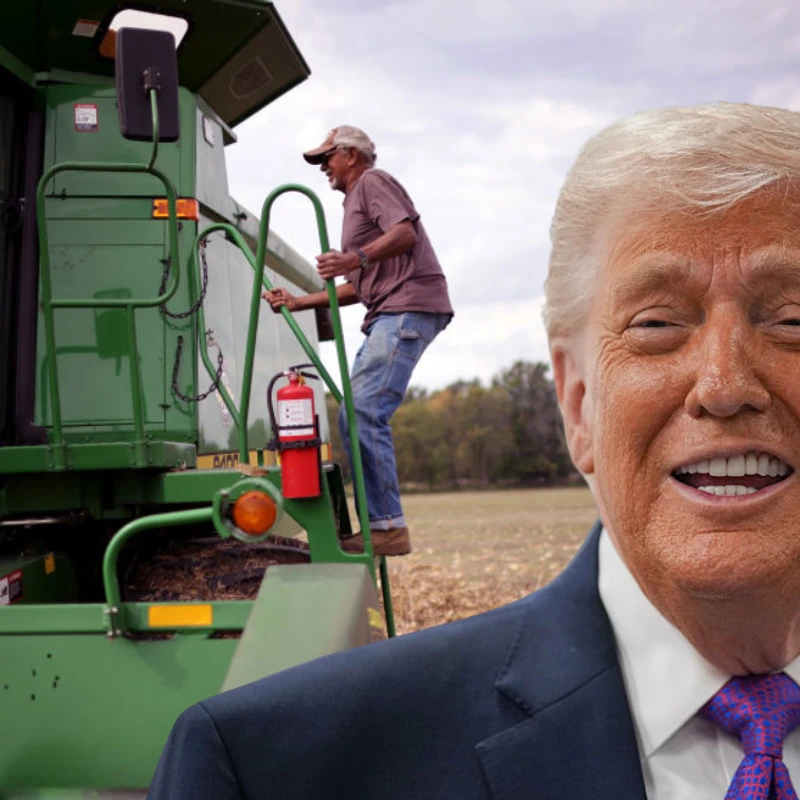
Boyd further criticized President Trump for meeting exclusively with white farmers in December 2025 when announcing a $12 billion bailout, stating, “There was not one Black farmer in the room. I mean [this is an] ‘open in your face, I’m a racist’ administration.”
What are your thoughts on the USDA’s decision to cancel these grants? How can we ensure Black farmers have equitable access to land and resources? Share your perspectives in the comments below!