Tag: Republican Party

  • Trump Pictured With GOP Leaders Amid Racist Text Scandal

    Despite efforts by the White House and Vice President JD Vance to downplay a recent investigative report, a photograph has surfaced showing President Donald Trump with two young Republican leaders who were reportedly involved in sending deeply offensive and racist text messages. This image is likely to intensify the controversy surrounding the leaked communications.

    Shocking Racist and Violent Messages Exposed

    An investigation by Politico revealed disturbing messages exchanged within a group chat of young Republican leaders from New York, Kansas, Arizona, and Vermont. The texts included racist slurs, comparisons of Black people to monkeys, jokes about slavery and rape, and references to harmful stereotypes about Black people consuming watermelon and fried chicken. Black leaders, including NAACP President Derrick Johnson and Congressional Black Caucus Chairwoman Rep. Yvette D. Clarke, have strongly condemned these messages.

    Vice President JD Vance attempted to dismiss the texts as “a bunch of kids” making offensive remarks, refusing to “join the pearl clutching.” He drew parallels to comments made by a Democratic nominee, suggesting a double standard. However, the severity and nature of the leaked messages have drawn widespread criticism.

    Trump’s Connection to Individuals Involved

    While President Trump himself has not directly commented on the scandal, the resurfaced photograph shows him with Peter Giunta and Anne Kaykaty, two individuals implicated in sending the racist and violent texts. Giunta, formerly the chair of the New York State Young Republicans, reportedly made comments comparing Black people to monkeys and referencing racist tropes. Kaykaty allegedly wrote about wanting “to watch people burn” in discussions about gas chambers.

    The photograph, taken backstage at a 2024 Trump campaign rally, directly contradicts the White House’s attempts to portray the individuals involved as “random” or inconsequential. A White House spokesperson noted that presidents take many photos, but the context of this picture, showing Trump with individuals who later sent such messages, raises questions about vetting and association.

    Calls for Condemnation and Accountability

    Civil rights leaders and Democrats are demanding that President Trump and other Republican leaders forcefully condemn the racist rhetoric. Marcus W. Robinson, a spokesperson for the Democratic National Committee (DNC), stated, “Unfortunately, this kind of racist, hateful rhetoric has become all too common under Donald Trump. … The truth is, the rot starts at the top.” He urged Republicans who have empowered such individuals to feel ashamed.

    The resurfaced photo and the ongoing fallout from the leaked texts highlight concerns about the normalization of hateful rhetoric within political circles and underscore the persistent issues of racism and prejudice in public discourse.

    What are your thoughts on the resurfaced photo and the racist texts? Should political figures be held more accountable for the associations they make? Share your views in the comments below!

  • GOP Divides on IVF: Rise of ‘Restorative Reproductive Medicine’

    The debate surrounding In Vitro Fertilization (IVF) has exposed a growing rift within the Republican Party. While many conservatives initially rallied to protect IVF access following a controversial Alabama Supreme Court ruling, President Donald Trump’s shifting stance and the rise of far-right voices are causing support to splinter. This division is leading some conservative groups to promote an obscure alternative to IVF known as ‘restorative reproductive medicine’ (RRM).

    IVF: A Divisive Issue for Republicans

    In states where abortion is banned, IVF has become a contentious issue for lawmakers aligned with the “pro-life” movement. Those who believe fertilized eggs are human beings often oppose IVF because it can involve the discarding of embryos, which they equate to abortion. This perspective creates a dilemma for politicians who rely on anti-abortion constituents but must now navigate the widespread popularity of IVF.

    While President Trump initially promised to make IVF free by requiring insurance coverage, his administration later eliminated a key team at the CDC responsible for tracking IVF outcomes and success rates. This has led to uncertainty about the administration’s commitment to protecting IVF access.

    The Rise of Restorative Reproductive Medicine (RRM)

    In response to the IVF debate, conservative groups like The Heritage Foundation have begun promoting RRM as an alternative. This approach focuses on treating the underlying causes of infertility through lifestyle changes, improving overall health, and utilizing fertility awareness-based methods. Advocates urge legislators to support RRM, which Arkansas recently enacted into law.

    Proponents argue that RRM offers a more holistic and less expensive way to address infertility compared to IVF, which can cost tens of thousands of dollars. However, mainstream medical circles, including the American College of Obstetricians and Gynecologists, view RRM as a “nonmedical approach” and an “unproven concept” that could delay pregnancy and lead to unnecessary procedures. Critics also worry that RRM is closely tied to the anti-abortion “personhood” movement, potentially impacting reproductive rights and access to contraception.

    Legislative Battles and Political Maneuvering

    The political landscape surrounding IVF is complex. While Tennessee’s initial IVF protection bill passed unanimously in the Senate, it faced significant opposition in the House, with some Republicans calling it a “Trojan horse” that could undermine abortion protections. Despite these challenges, the bill was ultimately signed into law.

    In Georgia, Republican lawmakers prioritized codifying IVF rights into law, with the bill passing with bipartisan support. However, even in states prioritizing IVF protection, conservative groups continue to advocate for RRM and “guardrails” on IVF that could restrict embryo disposal, reflecting the ongoing ideological tensions.

    The MAHA movement, promoted by Robert F. Kennedy Jr., has also shown support for RRM. Arkansas’s new law, sponsored by Republican state Rep. Alyssa Brown, requires insurance coverage for RRM treatments and mandates the use of fertility awareness-based methods within Title X programs, mirroring federal efforts to promote holistic infertility education.

    What are your thoughts on the growing debate around IVF and the promotion of RRM? Do you believe these alternatives adequately address infertility concerns? Share your views in the comments below!
  • Gloria Gaynor’s Political Donations Spark Fan Backlash

    Disco queen Gloria Gaynor, celebrated for her empowering anthem “I Will Survive,” is now facing a different kind of spotlight. Recent reports reveal that the iconic singer has reportedly donated nearly $22,000 to Republican candidates and committees since 2023, sparking significant backlash from fans who feel her political leanings contradict the message of her music.

    Donations Fueling Fan Controversy

    Federal records indicate that Gaynor’s contributions have supported prominent conservatives such as Ted Cruz and Mike Johnson, as well as Republican fundraising groups like the National Republican Senatorial Committee and New Journey PAC. This financial support for figures and causes often at odds with the communities that have embraced her music – Black, LGBTQ+, and women’s communities – has led many fans to feel a sense of betrayal.

    While Gaynor previously stated she wasn’t political, her donation history tells a different story, especially following a modest $35 contribution to Ben Carson’s 2016 campaign. The timing of these revelations is particularly sensitive, as Gaynor was recently named a Kennedy Center Honoree, an award often associated with the current administration.

    The Anthem’s Message vs. Political Support

    “I Will Survive” has resonated for decades as a powerful anthem of resilience and strength, a “family heirloom” as Gaynor herself has called it. The song’s message of overcoming adversity has been a source of inspiration for many, particularly within communities that have faced significant challenges and discrimination.

    For many fans, Gaynor’s financial backing of politicians whose policies and rhetoric are seen as detrimental to these same communities creates a stark contrast with the inclusive and empowering message of her music. The singer has not yet publicly addressed the unearthing of her political ties.

    What are your thoughts on Gloria Gaynor’s political donations? Does it change how you view her music? Share your perspective in the comments below!

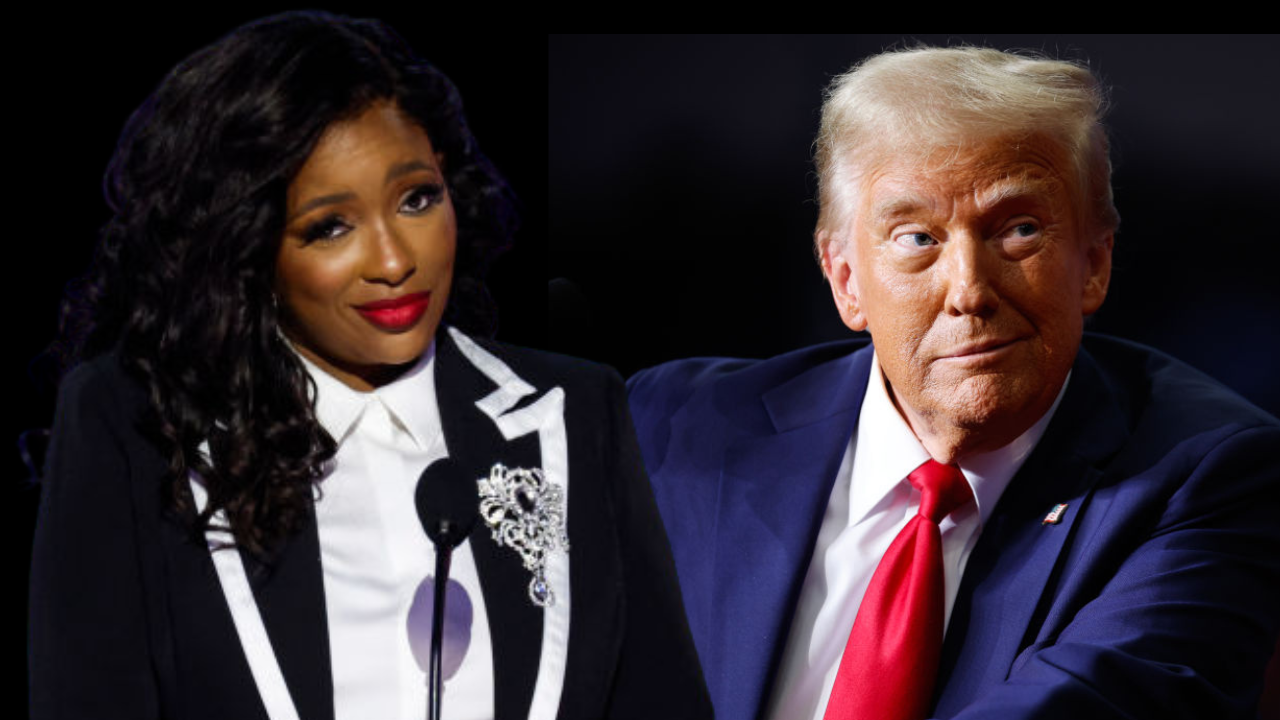
  • Trump Calls Crockett ‘Future’ of Dems; She Fires Back

    In the ongoing political sparring match between former President Donald Trump and U.S. Rep. Jasmine Crockett (D-Texas), Trump recently posted on Truth Social, calling Crockett “the future of the Democrat Party!” This statement, however, comes after a string of personal attacks from Trump directed at the congresswoman, leading many to believe his comment is more of a jab than genuine praise.

    Crockett’s Fiery Response to Trump

    Congresswoman Crockett wasted no time firing back at Trump’s social media post. She responded on X (formerly Twitter), referring to him as “Dementia Demented Don” and suggesting he’s fixated on her instead of focusing on his constituents. Crockett emphasized that Democrats are seeking leaders with a “moral compass” who will unite the country and fight for all Americans, implicitly contrasting this with Trump’s leadership style.

    This exchange is part of a larger pattern of public back-and-forth between Crockett and Trump. Just days prior, Trump had called Crockett a “Low IQ Individual” on Truth Social. Crockett, who was elected to the House of Representatives in 2022, often responds to Trump’s criticisms with equally sharp retorts, making their exchanges a regular feature of the current political landscape.

    Supporters View Trump’s Comments as Targeted Attacks

    Many of Crockett’s supporters believe Trump’s social media activity is a deliberate attempt to target her, given her prominent role as an outspoken critic of his policies and actions. This sentiment was echoed at a recent town hall in Texas where Crockett was speaking. Right-wing media personalities heckled her, with one individual, Sara Gonzales, reportedly calling her a “fake ghetto hoodrat” before being escorted out by security.

    The political battles extend beyond online jabs. Crockett has been actively campaigning against the Republican administration’s plan to redraw Texas congressional districts. This redistricting effort, supported by Texas Governor Greg Abbott and the White House, could potentially create five additional seats for Republicans in the House of Representatives. Crockett argues that these changes unfairly target districts represented by Black and Latino lawmakers, aiming to “dilute the voices of people of color.”

    Democrats in Texas initially attempted to stall the redistricting plan by leaving the state during a special session. However, reports suggest they may return, allowing Governor Abbott to “finish the job” of redrawing the districts. Crockett’s continued opposition highlights the deep political divisions and the high stakes involved in upcoming elections.

    What do you think about the ongoing feud between Donald Trump and Rep. Jasmine Crockett? Do you believe his comments are genuine or a political tactic? Share your thoughts in the comments below!