Tag: Representation

  • ABA Faces Pressure to Roll Back DEI Standards

    The American Bar Association (ABA) is finding itself in the crosshairs of a political debate, facing significant pressure from conservatives and allies of former President Trump to potentially roll back its diversity, equity, and inclusion (DEI) standards for accredited law schools. This push comes at a time when Black lawyers remain notably underrepresented in the legal profession.

    The Controversy Around Standard 206

    At the heart of the controversy is ABA Standard 206, a rule that requires accredited law schools to actively demonstrate their commitment to diversity and inclusion through concrete actions. This standard was notably suspended shortly after President Trump took office and is not slated to be reinstated until at least August 2027. However, the debate has intensified, with the ABA’s Accreditation Council recently voting to repeal the standard entirely.

    This proposal now moves to the ABA House of Delegates for consideration. Critics, including Florida Attorney General James Uthmeier, argue that the ABA has become politically biased, taking stances on issues like abortion rights and transgender protections that they view as left-wing activism. The pressure extends to federal levels, with reports of federal officials barring political appointees from renewing ABA memberships and the U.S. Education Department reviewing the ABA’s accreditation authority.

    Persistent Racial Disparities in Law

    The timing of this debate is particularly significant given the persistent racial disparities within the legal profession. According to the ABA’s own 2020 Profile of the Legal Profession, Black attorneys constitute a mere 5% of all lawyers in the U.S., a figure that has remained stagnant for a decade. This starkly contrasts with Black Americans making up 13.4% of the national population.

    The report also highlights broader underrepresentation for other minority groups, with non-Hispanic white attorneys making up 86% of the profession despite comprising roughly 60% of the U.S. population. Hispanic lawyers represent about 5% of the profession, while Hispanics account for 18.5% of the U.S. population. Supporters of DEI standards argue these numbers underscore the continued necessity of such efforts in legal education.

    The Broader National Battle Over DEI

    Conversely, opponents contend that accreditation should strictly focus on academic and professional standards, not institutional diversity goals. This conflict within the ABA mirrors the larger national struggle over DEI programs in universities, workplaces, and public institutions, as Republican-led states and conservative groups actively push for rollbacks across the country.

    What are your thoughts on the ABA’s diversity standards? Do you believe they are necessary given the current representation in the legal field? Share your perspective in the comments below!
  • “Toy Story 5” Introduces Blaze, a New Star

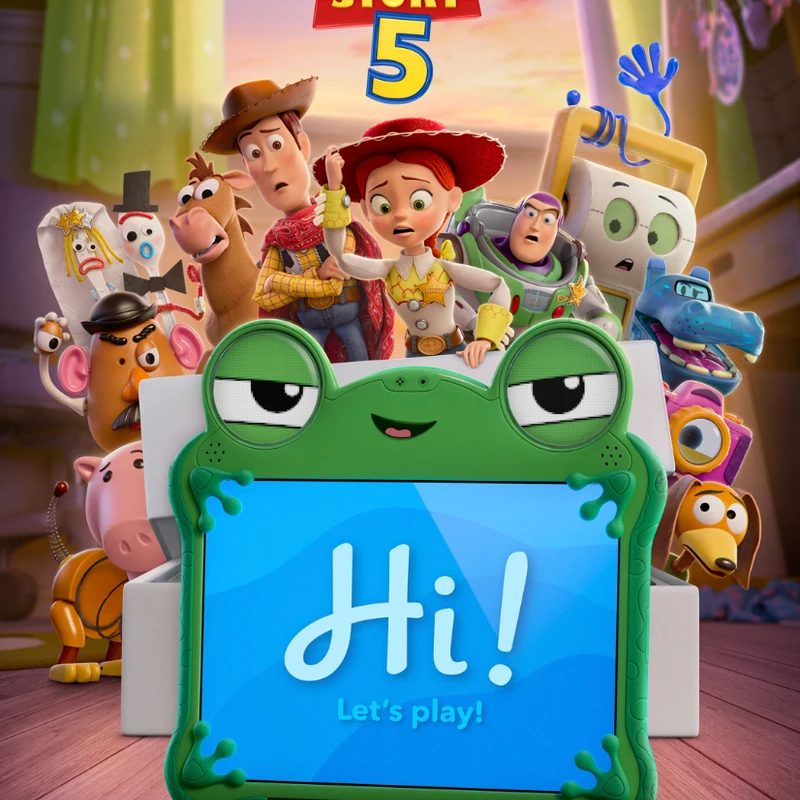
    For over three decades, the “Toy Story” franchise has captivated audiences by exploring the question of what happens when a child grows up. Now, Disney and Pixar are set to release “Toy Story 5,” which promises a modern twist on this theme, introducing a vibrant new character named Blaze and shifting the focus to Jessie and Bonnie in an era dominated by screens.

    Meet Blaze: A New Face in the “Toy Story” Universe

    During an exclusive preview event at Disneyland, filmmakers revealed the introduction of Blaze, a confident, horse-loving 9-year-old who lives on a ranch. Voiced by Mykal-Michelle Harris, Blaze is a mixed-race character with a Black mother, voiced by Krys Marshall. Her arrival is poised to reshape the future of playtime within the beloved franchise.

    Co-director Kenna Harris shared that Blaze was conceived as an aspirational character to help Bonnie navigate feelings of loneliness. “Bonnie is dealing with some loneliness and wants to connect with others in the film, so the first idea was just like, who is an aspirational character that we’ll just be like, ‘Yes, Bonnie, go be her friend,’” Harris explained. The character quickly became a favorite among the Pixar team, with character designer Matt Nolte creating her distinctive look: Black and half Armenian, with gorgeous curly hair.

    Technological Milestones and Cultural Representation

    Bringing Blaze’s tightly coiled hair texture to life presented a new challenge for Pixar’s animation technology. Visual effects supervisor Thomas Jordan noted that Blaze was the studio’s first character to feature this new hair technology, which will be accessible for all future Pixar films, aiming for broader representation. “It’s our hope that we can represent everyone now,” Jordan stated.

    A dedicated culture trust, composed of Black colleagues at Pixar, ensured Blaze’s authentic and accurate depiction. The team even developed a second hairstyle for scenes showing Blaze waking up, complete with a bonnet. This meticulous attention to detail resonated strongly with test audiences, with producer Lindsey Collins reporting that Blaze was a top favorite, with parents expressing a desire for their children to have friends like her.

    Exploring Childhood in the Digital Age

    Beyond introducing Blaze, “Toy Story 5” delves into the realities of modern childhood, particularly the impact of technology. The central conflict emerges with the arrival of Lily Pad, a frog-shaped smart tablet voiced by Greta Lee. Lily Pad believes she knows what’s best for Bonnie, who has previously been an inventive, hands-on player, as seen in her creation of Forky in the last film.

    The filmmakers aimed to present a nuanced exploration of technology’s role in children’s lives, rather than a simple anti-technology message. “We wanted it to feel real,” said co-director Kenna Harris. The story highlights how devices can affect children’s ability to connect with each other, especially as they reach an age where social branching becomes crucial for development.

    Elevating Jessie and Expanding Worlds

    The shift in focus to Bonnie and Jessie opens up new storytelling avenues. Co-director Harris noted, “With Bonnie and Jessie, you get to show how messy girls are, how imaginative, how limitless.” This perspective allows for a “breath of fresh air” in exploring childhood. Blaze’s ranch setting, described as a warm, nostalgic contrast to Bonnie’s tech-focused environment, further enriches the film’s visual landscape.

    The introduction of a Black and Armenian family like Blaze’s is a significant step in expanding the franchise’s representation. The filmmakers aimed for authenticity, creating a familiar yet nuanced family dynamic. Furthermore, Blaze’s love for horses arrives at a time when the history of Black cowboys is gaining renewed attention, allowing more children to see themselves reflected in the expansive world of “Toy Story.”

    “Toy Story 5” is set to hit theaters on June 19. Are you excited to meet Blaze and see Jessie take the lead? Share your thoughts in the comments below!

  • Snoop Dogg, Hip Hop & LGBTQIA+ Acceptance

    Hip Hop, a genre often celebrated for its raw honesty and boundary-pushing narratives, finds itself at a crossroads when it comes to LGBTQIA+ acceptance. Even a Hip Hop icon like Snoop Dogg, a figure who has navigated decades of fame and reinvented himself countless times, recently stumbled over a moment of queer visibility, revealing the culture’s persistent contradictions.

    Snoop Dogg’s ‘Scared to Go to the Movies’ Moment

    During a guest appearance on the ‘It’s Giving’ podcast, Snoop Dogg expressed discomfort with a gay couple sharing a kiss in Pixar’s ‘Lightyear.’ He recounted his grandson asking, ‘Papa Snoop? How she have a baby with a woman? She’s a woman!’ Snoop admitted he was caught off guard, stating, ‘I didn’t come in for this sh*t. I just came to watch the goddamn movie.’

    This reaction is particularly striking given Snoop’s long career. He once guest-starred on ‘The L Word,’ a show centered around lesbian and bisexual women, and confessed he had no words for that experience either. While he’s rapped about violence, sex, and crime without hesitation, a simple depiction of ordinary queer love seemed to leave him speechless. This unease mirrors Hip Hop’s historical tendency to keep LGBTQIA+ presence on the fringes.

    The Contradiction: Legacy vs. Evasion

    What unsettled many wasn’t just the comment itself, but the stark contradiction it exposed. Here’s an artist who built his empire on narrating the most extreme aspects of life – murder, gang wars, explicit sex – yet faltered when faced with a moment of gay love in a children’s film. This imbalance confirmed a long-held observation: that many Hip Hop elders are still uncomfortable when queerness isn’t confined to the margins.

    Following the backlash, an ‘apology’ surfaced online, stating, ‘I was just caught off guard and had no answer for my grandsons.’ However, Snoop’s representatives later claimed neither he nor his team wrote the post, though it remained up. This ambiguity only fueled the sense of evasion, raising questions about whether it was genuine humility or a calculated image control move.

    Hip Hop’s History: Violence is Okay, Love Isn’t?

    The argument that Snoop’s music is for adults while ‘Lightyear’ is for children often surfaces. This logic suggests that explicit rap lyrics are acceptable, but depicting a gay couple in a kids’ movie is ‘pushing an agenda.’ This perspective, rooted in homophobia, ignores the reality that children have always absorbed Hip Hop culture. From memorizing hooks to watching music videos, kids have been exposed to its content for decades.

    Consider Snoop’s own catalog: songs normalizing misogyny, videos featuring women as props for male desire, and violence as a backdrop. This was the moral landscape children were already navigating. The hypocrisy lies in framing violence and misogyny as acceptable for young audiences while deeming depictions of LGBTQIA+ love inappropriate.

    Queer Voices Shaping Hip Hop’s Future

    Despite these hesitations, Hip Hop’s relationship with queerness is evolving. Artists like Frank Ocean, Young M.A., Lil Nas X, Saucy Santana, and Big Freedia have carved out significant spaces, challenging old norms and celebrating their identities. Even within Snoop’s own creative circle, queer songwriters like Gizzle contribute to the music he profits from, proving that queer creativity is intrinsically woven into Hip Hop’s fabric.

    Snoop Dogg’s remark, while revealing a generational lag, doesn’t negate the progress made. It highlights that while Hip Hop can embrace and resist queerness simultaneously, the voices pushing for greater understanding and acceptance are growing louder. As Ts Madison wisely put it, parents have a responsibility to explain differences, not shy away from them. The fear isn’t about confusing children; it’s about adults confronting their own discomfort.

    What are your thoughts on Hip Hop’s evolving relationship with LGBTQIA+ artists and themes? Share your perspective in the comments below!

  • Diverse LGBTQ+ Shows Shine in September Streaming

    Get ready for a fantastic September of streaming, because the LGBTQ+ representation is stronger and more diverse than ever! Major platforms are rolling out an impressive lineup of content that truly reflects the breadth of queer experiences. From gripping mysteries and hilarious comedies to epic superhero sagas and historical dramas, there’s something for everyone seeking authentic and engaging queer storytelling.

    Queer Narratives Across Genres

    This month’s programming demonstrates a significant shift in the entertainment industry. LGBTQ+ themes are no longer confined to niche slots; they’re being integrated seamlessly into mainstream genres. This evolution reflects both audience demand for authentic representation and the industry’s growing understanding that inclusive content attracts broad viewership and sparks important cultural conversations.

    Major streaming platforms are prioritizing LGBTQ+ content, recognizing it as both a creative and commercial imperative. This strategic focus means higher production values and broader promotional support for queer-centered shows, ensuring they reach the widest possible audience.

    Mystery, Horror, and Comedy with a Queer Lens

    Netflix is offering a compelling mystery-horror series that blends small-town suspense with LGBTQ+ perspectives. This approach shows how genre entertainment can incorporate diverse voices without sacrificing traditional appeal. Horror, in particular, has long served as a powerful metaphor for exploring themes of ‘otherness,’ making it a natural fit for LGBTQ+ narratives about secrecy, revelation, and acceptance.

    On the comedy front, expect explorations of contemporary relationship challenges through LGBTQ+ perspectives. These shows use humor to tackle serious themes like family planning, relationship stress, and navigating identity, offering accessible entertainment that reflects real-world experiences. The integration of established comedy performers with LGBTQ+ creators ensures authentic storytelling with broad audience appeal.

    Expanding Representation in Animation and Superhero Genres

    Superhero franchises are continuing to evolve, incorporating LGBTQ+ characters and themes into their universes. These productions demonstrate how diverse representation can enhance, rather than limit, audience appeal. University campus settings within these narratives provide fertile ground for exploring identity development and community building, resonating strongly with LGBTQ+ audiences.

    Animation is also proving to be a particularly effective medium for LGBTQ+ storytelling. Its creative freedom allows for bold artistic choices and narrative experimentation. The rise of web-based animation finding its way to major streaming platforms signifies a growing demand for diverse content across all formats.

    Historical Context and Global Reach

    Period dramas are offering valuable insights into historical LGBTQ+ experiences, providing context for the community’s evolution and progress. Adaptations of beloved LGBTQ+ literary works are also bringing classic narratives to new audiences, utilizing modern production techniques. Even genres like vampire romance are being used to explore timeless themes of forbidden love and identity in historical settings.

    The global distribution of this content through streaming platforms means that audiences worldwide can access diverse stories, fostering international conversations about community experiences and social acceptance. This widespread availability reflects a significant industry shift towards more inclusive and comprehensive representation.

    What LGBTQ+ shows are you most excited to stream this September? Share your must-watch list in the comments below!

  • Ayo Edebiri’s Graceful Response to Interview Snub

    You know how sometimes you’re in a situation where you’re clearly meant to be part of the conversation, but then… you’re not? That’s exactly what happened to the incredibly talented Ayo Edebiri at the Venice Film Festival, and her reaction is earning her major praise.

    An Awkward Moment in the Spotlight

    Ayo, who’s been making waves for her role in ‘The Bear,’ was at the festival promoting her new film ‘After the Hunt’ alongside Hollywood heavyweights Julia Roberts and Andrew Garfield. During a press conference for the psychological thriller, a reporter posed questions about Hollywood’s engagement with social justice movements like #MeToo and Black Lives Matter.

    Here’s where it got a bit uncomfortable: the reporter specifically directed her questions to Roberts and Garfield, seemingly overlooking Edebiri, despite her prominent role in the film and her presence on the panel. The reporter even asked what Hollywood had ‘lost’ during the ‘politically correct era’ and what expectations existed post-#MeToo and BLM, before pointedly asking, ‘the two of you, Andrew and Julia.’

    Grace Under Pressure

    You could see Edebiri’s discomfort, but instead of making a scene, she responded with a simple acknowledgment. Thankfully, Julia Roberts stepped in, asking for clarification and noting she couldn’t tell who the reporter was addressing due to her sunglasses. This moment really highlighted how, even in discussions about diversity, underrepresented voices can still be unintentionally excluded.

    A Career Built on Advocacy

    This isn’t the first time Ayo Edebiri has championed representation. She’s been vocal about authentic casting throughout her career. Remember when she took over the voice role of Missy on Netflix’s ‘Big Mouth’? That was a significant move, replacing Jenny Slate as part of a larger industry conversation about ensuring characters from diverse backgrounds are voiced by actors who share those experiences. She even wrote for the show before stepping into the role!

    Edebiri has also reflected on how much the entertainment landscape has changed. She’s noticed how content that was once considered normal now seems problematic through a modern lens, pointing out outdated portrayals and insensitive depictions that were once overlooked. Her perspective really emphasizes how far we’ve come in recognizing and correcting harmful content.

    Continued Success and Fan Support

    Despite the interview hiccup, Edebiri continued her promotional duties for ‘After the Hunt,’ a film that adds another significant project to her rapidly growing career. It’s exciting to see her working in a different genre alongside such established stars.

    The internet, as it often does, rallied behind Edebiri. Fans and industry watchers praised her composure and pointed out the irony of discussing diversity while excluding a Black actress. This incident has sparked important conversations about how media covers social justice issues and the need for more inclusive interview practices. Ayo Edebiri’s graceful handling of the situation has only solidified her reputation as a talented actress and a thoughtful advocate for positive change in Hollywood.

    What are your thoughts on Ayo Edebiri’s response? Have you ever experienced a similar situation? Share your experiences and opinions in the comments below!

  • Angel Reese Invests in Women’s Media Company TOGETHXR

    Get ready to hear some exciting news! WNBA superstar Angel Reese is making power moves off the court, investing in a groundbreaking media and commerce company called TOGETHXR. This isn’t just any company; it’s all about championing representation and amplifying women’s voices, especially in the sports world where they often don’t get the spotlight they deserve.

    What is TOGETHXR and Why Does It Matter?

    Founded in 2019 and launched in 2021, TOGETHXR is headquartered in Los Angeles and driven by a powerful mission: to prioritize equality and representation. Think of it as a platform dedicated to telling the stories of women, particularly female athletes who receive significantly less media coverage compared to their male counterparts. It’s about changing the narrative and ensuring accomplishments are seen and celebrated.

    The brains behind TOGETHXR are a lineup of incredible female athletes: former soccer star Alex Morgan, Olympic snowboarder Chloe Kim, WNBA legend Sue Bird, and Olympic gold medalist swimmer Simone Manuel. These women aren’t just athletes; they’re innovators looking to reshape the media landscape.

    Simone Manuel’s Vision for Celebration

    Simone Manuel herself has spoken passionately about the need for platforms like TOGETHXR. She’s highlighted how women in sports haven’t always felt fully celebrated for their achievements. TOGETHXR aims to change that by providing access and recognition for the incredible feats women are accomplishing every single day.

    TOGETHXR is giving people access to the accomplishments women are achieving and celebrating all of it. — Simone Manuel

    Angel Reese Joins the Movement

    Now, Angel Reese is stepping in as an investor, joining the ownership group of TOGETHXR. She’s excited to align with a company led by athletes who have already broken so many barriers in sports, business, and culture. It’s a powerful synergy, with Reese looking to build on the foundation laid by these trailblazers.

    Sue Bird, a co-founder, emphasized Reese’s perfect fit for the company’s mission. She noted that Reese embodies the confidence and leadership TOGETHXR aims to promote, adding to the legacy of pushing women’s sports forward. It’s clear that Reese’s involvement is seen as a significant boost to their ongoing efforts.

    Reese’s Growing Investment Portfolio

    This isn’t Angel Reese’s first foray into the investment world. Back in May 2024, she made headlines by investing in the DC Power Football Club, a women’s soccer team. As a Maryland native, this move felt particularly meaningful, allowing her to directly support and grow women’s sports in her home region.

    Reese has been vocal about her desire to elevate female athletes across the board. Her investment in TOGETHXR is another testament to her commitment to this vision, showing she’s not just a star player but a strategic investor looking to make a lasting impact on women’s sports and media.

    What do you think about Angel Reese’s investment in TOGETHXR? Share your thoughts on athlete-led media companies in the comments below!

  • DEI Success: Beyond Representation

    In today’s evolving business landscape, the conversation around Diversity, Equity, and Inclusion (DEI) is more critical than ever. Yemi Akisanya, Vice President of Justice, Equity, Diversity, and Inclusion (JEDI) at Axon, believes that while representation is important, it’s not the ultimate measure of DEI success. He emphasizes that true progress lies in fostering genuine inclusion and driving performance.

    The Importance of Black Talent

    Akisanya, who works within people operations at the security technology company Axon, stresses the vital role of Black talent in business success. He firmly states that any organization overlooking the necessity of the Black and African-American population for success is setting itself up for failure within the next decade. This isn’t just a passionate statement, but a matter of simple mathematics, he argues.

    He highlights the immense power, acumen, intellectual capacity, creativity, and excellence that Black talent brings. Companies that fail to invest in these communities are missing out on significant opportunities, leaving the door open for competitors like Axon who recognize and actively pursue this value.

    Shifting the Focus: From Numbers to Experience

    The current DEI landscape has seen significant shifts, with many companies scaling back their commitments amidst politicization. Akisanya argues that the definition of DEI success needs to evolve. Simply increasing representation numbers, like a 5% rise in the Black population within a company, isn’t enough.

    He poses a crucial question: “You can bring a thousand people to the table… and we don’t have voices to influence decision-making, then how is that success?” For Akisanya, true success in DEI is measured by the experience of inclusion and the resulting performance. It’s about ensuring that diverse voices are not just present but are actively influencing decisions.

    DEI as Performance

    Akisanya advocates for a narrative shift, moving away from viewing DEI solely as a matter of representation or quotas. Instead, he sees it as intrinsically linked to performance. “DEI is performance for everyone,” he states, emphasizing that equity means recognizing that not everyone starts from the same place.

    • Representation alone is not the sole measure of DEI success.
    • True success is defined by the experience of inclusion and performance.
    • Black talent is essential for business success.
    • Companies not investing in Black communities risk failure.
    • DEI should be viewed as a driver of performance.

    By focusing on the tangible impact of inclusion on performance, organizations can create more meaningful and sustainable DEI initiatives. This approach ensures that diversity is not just a buzzword, but a strategic advantage that drives results for everyone.

    What are your thoughts on Yemi Akisanya’s perspective on DEI? Do you agree that performance and inclusion are more important than just representation numbers? Share your views in the comments below!

  • Taylor Townsend’s US Open Breakthrough Transcends Tennis

    The atmosphere at Arthur Ashe Stadium was electric Friday night as Taylor Townsend achieved a significant victory, defeating fifth-seeded Mirra Andreeva 7-5, 6-2. This win marks more than just an athletic achievement for the 29-year-old American; it’s a powerful cultural statement that resonates far beyond the traditional boundaries of tennis. Townsend’s journey to her first fourth-round appearance since 2019 has evolved into a compelling narrative of representation, authenticity, and the courage to confront challenges in professional sports.

    From Controversy to Catalyst

    Townsend entered the US Open as an unseeded singles player, a status that belied her remarkable success in doubles, where she holds the world No. 1 ranking and has won major titles at Wimbledon and the Australian Open. The recent spotlight on Townsend, initially ignited by a heated confrontation with Jelena Ostapenko, has transformed into a platform for addressing larger issues within the sport. After Ostapenko’s unsportsmanlike comments, Townsend responded with measured grace and confidence, drawing support from fellow players like Coco Gauff and Naomi Osaka.

    This solidarity among athletes who understand the pressures of representing underrepresented communities highlights the significance of Townsend’s moment. Her calm and collected response to the controversy has been praised, showcasing a leadership quality that extends beyond individual athletic achievements.

    Overcoming Adversity: A History of Perseverance

    Townsend’s current success is particularly meaningful given her past struggles with tennis authorities. In 2012, the U.S. Tennis Association’s decision to withhold funding due to fitness concerns created significant obstacles. This intervention, which required her to focus on physical conditioning instead of competing in junior tournaments, represents the kind of institutional barrier that has historically affected athletes from diverse backgrounds.

    Her ability to overcome these early setbacks and reach elite status is a testament to her remarkable perseverance. The confidence gained from her doubles success, including major championships with Katerina Siniakova, has clearly translated into the self-assurance needed to compete at the highest level in singles.

    A Platform for Change

    Townsend recognizes that her success carries responsibilities beyond personal achievement. Her ability to draw crowds and generate interest offers tennis a chance to reach new audiences and expand its demographic reach. Her authentic approach to navigating both victory and controversy provides a model for how athletes can address social dynamics while maintaining focus on their professional goals.

    As she prepares for her fourth-round match against two-time Grand Slam champion Barbora Krejcikova, Townsend remains focused on her competitive aspirations. This tournament represents a significant opportunity for her singles career, and her blend of athletic excellence and social awareness makes her a unique and inspiring figure in contemporary professional tennis.

    What do you admire most about Taylor Townsend’s journey and her impact on tennis? Share your thoughts in the comments below!

  • Viola Davis: Being Black on TV ‘Put Me on the Map’

    Viola Davis, an icon in Hollywood, is sharing how her commitment to being unapologetically Black was the key to her career breakthrough. The Oscar-winning actress recently reflected on her transformative role as Annalise Keating in the hit ABC drama “How to Get Away with Murder,” explaining how embracing her true self propelled her to stardom.

    Annalise Keating: A Bold Choice

    Speaking at The Television Academy Hall of Fame ceremony in Los Angeles on August 16, Davis revealed that while she had done plenty of television work, “How to Get Away with Murder” was the show that truly “put me on the map.” She credits this success to the bold choices she made for the character.

    Instead of conforming to traditional Hollywood expectations for a leading lady, Davis embraced her identity. “I did not follow the sort of script of what you’re supposed to do being a leading lady on television,” she explained. This meant rejecting the pressure to fit a certain mold.

    Embracing Authenticity: No Wigs, No Makeup, No Apologies

    Davis made conscious decisions to portray Annalise authentically. “I took my wig off. I took my makeup off. I stayed the size I am. I stayed as Black as I could be. And my age… Everything about me was unapologetic,” the 60-year-old star shared. This commitment to authenticity paid off immensely.

    Her gamble was a resounding success. In 2015, Viola Davis made history by becoming the first Black woman to win an Emmy for Outstanding Lead Actress in a Drama Series. During her acceptance speech, she powerfully highlighted the lack of opportunities for women of color in the industry, stating, “You cannot win an Emmy for roles that are simply not there.”

    Championing Roles for Black Women

    Davis has consistently used her platform to advocate for more nuanced roles for Black women, especially those over 50. She previously described the scarcity of such roles as a “vast desert.”

    Despite these challenges, Davis remains optimistic, pointing to a new wave of Black female talent who are redefining the industry. She noted, “Women are no longer begging for a seat at the table; they’re creating their own.” She proudly named actresses like Taraji P. Henson, Octavia Spencer, Kerry Washington, Issa Rae, Michaela Coel, Halle Berry, Keke Palmer, and Marsai Martin as examples of this empowering movement.

    What are your thoughts on Viola Davis’s impact on television and her message of authenticity? Share your views in the comments below!

  • Rashida Tlaib: Purpose Over Politics

    Rashida Tlaib has carved a significant path in American politics, becoming a trailblazer for representation and a powerful progressive voice. Born in Detroit to Palestinian immigrant parents, Tlaib’s journey is deeply rooted in her purpose to serve and uplift marginalized communities, challenging the status quo every step of the way.

    A Trailblazer in American Politics

    Tlaib made history in 2018 as one of the first two Muslim women elected to the U.S. Congress, and she holds the distinction of being the first Palestinian-American woman in Congress and the first Muslim woman elected to the Michigan state legislature. As a member of the Democratic Party, she is known for her unwavering advocacy on issues such as racial justice, environmental equity, housing access, and Palestinian human rights.

    Her willingness to confront corporate interests and champion the voices of the disenfranchised solidifies her historical significance. Tlaib’s fearless spirit has made her a potent symbol of 21st-century American leadership, demonstrating what is possible when purpose guides political action.

    From Community Service to Congress

    Tlaib’s early life in Detroit, as the eldest of 14 children to working-class Palestinian immigrants, instilled in her a deep sense of responsibility and empathy. After earning a B.A. in Political Science from Wayne State University and a law degree from Thomas M. Cooley Law School, her career began in community service and legal advocacy at organizations like the Arab Community Center for Economic and Social Services and the Sugar Law Center for Economic and Social Justice.

    These experiences fighting injustice and empowering the underserved laid the foundation for her political career. Tlaib served in the Michigan House of Representatives from 2009 to 2014, becoming the first Muslim woman in the state legislature and championing causes like foreclosure prevention and immigrant rights. Her subsequent election to Congress marked a significant milestone.

    Rashida Tlaib’s Net Worth and Values

    According to public financial disclosures, Tlaib’s estimated net worth ranges between $100,000 and $200,000, making her one of the less wealthy members of Congress. This modest net worth reflects her middle-class background and her commitment to prioritizing purpose and progress over personal financial gain. Her income primarily comes from her congressional salary ($174,000 annually) and previous nonprofit legal work.

    Tlaib has no significant real estate holdings or corporate investments, aligning with her image as a grassroots, people-powered representative. Her authenticity resonates with progressives who value leaders who remain grounded and relatable. The presence of three Muslim members in Congress, including Tlaib, Ilhan Omar, and Andre Carson, signifies a growing push for diversity and representation in U.S. government.

    Family and Education

    Born and raised in Detroit, Tlaib’s upbringing in a working-class immigrant neighborhood deeply shaped her empathy for marginalized communities and instilled values of hard work and social justice. She married Fayez Tlaib in 1998 and they have two sons, though they separated in 2015. Her education at Wayne State University and Thomas M. Cooley Law School played a crucial role in shaping her passion for justice and advocacy.

    What do you admire most about Rashida Tlaib’s political journey and her commitment to purpose? Share your thoughts in the comments below!