Tag: Public Safety

  • White House Blames Murder on ‘Liberal’ Judges

    A shocking murder on a Charlotte train has ignited a fiery response from the White House, which is placing blame squarely on what it calls “liberal” judges and policies promoting racial equity. The administration argues these factors allowed the suspect, who has a lengthy criminal history, to be free and commit the alleged crime. This stance has quickly become a focal point in the ongoing national conversation about crime and justice.

    The White House’s Accusations

    White House Press Secretary Karoline Leavitt didn’t hold back, directly criticizing North Carolina officials and the judicial system. She specifically pointed to Magistrate Judge Teresa Stokes, accusing her of being a strong supporter of former Vice President Kamala Harris. Leavitt asserted that the suspect, Decarlos Brown Jr., should have been incarcerated and never on that train.

    Brown, 34, faces federal charges for an act causing death on a mass transportation system and a state charge for first-degree murder. He is accused of fatally stabbing 23-year-old Iryna Zarutska on August 22nd. Brown’s history includes over a decade of offenses, including armed robbery, and he previously served five years for robbery with a deadly weapon.

    Focus on Bail and Equity Policies

    Leavitt highlighted Brown’s January arrest for “misuse of the 911 system,” where he claimed “man-made” materials were controlling him. According to reports, the judge released him without bail, requiring only a written promise to return to court. Leavitt called this approach “madness,” especially for someone with a significant criminal record.

    The White House also targeted North Carolina Democrats, including former Gov. Roy Cooper, for championing policies like cashless bail and diversion programs. Leavitt described these initiatives as a “woke soft-on-crime agenda” that leads to innocent people suffering. She also controversially linked the press’s coverage of other cases, like Daniel Penny in New York City, to a perceived lack of focus on actual murderers.

    Reactions and Counterarguments

    The White House’s strong statements drew immediate criticism. Jamarr Brown, executive director of Color of Change PAC, accused Donald Trump of using tragedies to “stoke fear,” particularly concerning Black men, while ignoring systemic issues. He argued that policies like bail reform and racial equity are about building fairness and safety, not undermining them.

    Donald Trump has a long record of seizing on isolated tragedies to stoke fear, especially when it involves Black men, while ignoring the systemic violence his own agenda creates. — Jamarr Brown, Color of Change PAC

    Da’Quan Love, executive director of the North Carolina State Conference of the NAACP, expressed grief for Zarutska and emphasized the need for a justice system that protects the vulnerable and addresses mental health crises. He called for urgent action from leaders at all levels to ensure public safety for everyone.

    Broader Political Context

    This incident occurs amidst a broader focus on crime by the White House, including the deployment of the National Guard in several cities. Leavitt reiterated President Trump’s belief that maintaining public safety requires incarcerating individuals deemed an ongoing risk. However, critics like Jamarr Brown argue that Trump’s approach focuses on incarceration without addressing root causes, potentially harming Black communities and rolling back civil rights.

    What are your thoughts on the White House’s response to this tragedy? Do you believe current justice policies are effective? Share your perspective in the comments below!

  • SC Man Pushes for Hate Crime Law After Attack

    Imagine starting your day with a routine, only for it to turn into a terrifying ordeal. That’s exactly what happened to Jarvis McKenzie, a Black man in South Carolina, who is now bravely speaking out and urging lawmakers to pass statewide hate crime legislation after he was targeted in what he believes was a racially motivated attack.

    A Harrowing Morning Commute

    It was a typical July morning, around 5:30 a.m., as McKenzie waited for his supervisor to pick him up for work. Suddenly, his routine was shattered when a white man in a car aimed an assault rifle out the window, fired over McKenzie’s head, and hurled a hateful racial slur. The attacker then shouted, “You better get running, boy!” This shocking incident highlights the urgent need for stronger protections.

    While the attacker was charged with assault and battery of a high and aggravated nature in Richland County – which carries a potential 20-year sentence – McKenzie’s fight isn’t over. He’s advocating for statewide legislation because South Carolina, along with Wyoming, is one of only two states without such laws. Some existing local ordinances are limited, carrying maximum sentences of just one month in jail.

    The Long Road to Legislation

    For the past decade, various groups, including business leaders, survivors of the tragic 2015 Charleston church massacre, and even some Republican lawmakers, have tried to get hate crime legislation passed in South Carolina. Despite these efforts, the proposal has repeatedly stalled in the Senate, often without even a vote.

    In 2021, the South Carolina House approved its version of the bill, but it met resistance in the Senate. Even during debates on history curriculum in May 2023, a Democratic lawmaker questioned Senate Majority Leader Shane Massey about the lack of a vote on hate crime legislation. Massey’s response suggested a belief that such bills could be divisive, stating, “It is bad policy not because people support hate but because it furthers division.”

    Living in Fear and Seeking Justice

    McKenzie’s attorney, Tyler Bailey, expressed the ongoing fear his client experiences. “The subliminal message that says if you’re racist and you want to commit a crime and target somebody for their race, gender, ethnicity, sexual orientation, or whatever it is, you can do it here,” Bailey stated, underscoring the impact of the state’s legislative inaction.

    The lack of comprehensive statewide hate crime laws sends a troubling message. It leaves individuals like Jarvis McKenzie feeling vulnerable and suggests that acts of targeted hatred may not be met with the full force of the law. His courageous stand is a powerful call to action for South Carolina’s senators.

    What are your thoughts on the need for hate crime legislation in South Carolina? Share your views in the comments below!

  • LAPD Security for Kamala Harris: A Closer Look

    Ever wonder what goes on behind the scenes to keep public figures safe? Recently, a decision by the Los Angeles Police Department (LAPD) to provide security for Vice President Kamala Harris raised quite a few eyebrows. This move came shortly after the Secret Service scaled back protection for the former Vice President, leading to a complex situation involving local law enforcement.

    The Security Shuffle: What Happened?

    Here’s the lowdown: The LAPD initially stepped in to provide a security detail for Kamala Harris. This wasn’t a permanent gig, but rather a temporary measure to ensure continuity of protection after the Secret Service’s role changed. The California Highway Patrol also played a part in filling the gaps, ensuring Harris remained protected.

    This temporary support involved specialized units from the LAPD’s Metropolitan Division. However, the deployment of these officers didn’t sit well with everyone. The decision to reassign officers from their usual crime suppression duties in certain neighborhoods quickly became a point of contention.

    Backlash and Reversals: Public Safety Concerns

    The move to pull officers from crime suppression units sparked significant backlash. Many within the LAPD and the public questioned the reallocation of resources. The Los Angeles Police Protective League, the union representing LAPD officers, voiced strong disapproval.

    Every now and then common-sense prevails and we are happy to report that the Metro officers assigned to protect the multi-millionaire failed presidential candidate are back on the street fighting crime. — LAPD Union Statement

    The union didn’t hold back, calling Harris a “multi-millionaire failed presidential candidate” and suggesting she could start a GoFundMe instead of relying on taxpayer money. This strong reaction highlighted the tension between providing security for high-profile individuals and maintaining essential local law enforcement services.

    Mayor’s Response and Extended Protection

    Facing the criticism, Mayor Karen Bass, who had initially approved the plan, confirmed that the officers would return to their original posts. She emphasized that the plan was always intended to be temporary and thanked the LAPD for their service in protecting Angelenos.

    It’s worth noting that former President Joe Biden had extended Harris’ Secret Service protection past its typical post-office duration. This extension was reportedly due to death threats Harris had faced, especially during her own presidential campaign. This situation also mirrors other instances where protections for political figures have been adjusted.

    What Does This Mean for You?

    This whole situation brings up important questions about resource allocation in law enforcement and the security protocols for former high-ranking officials. It highlights the delicate balance between ensuring the safety of public figures and meeting the day-to-day security needs of communities.

    What are your thoughts on the LAPD’s role in providing security for Vice President Kamala Harris? Share your opinions in the comments below!

  • Woman Uses Hand Signals to Escape Abuser at 7-Eleven

    In a situation that could have turned tragic, a woman in California managed to signal for help using a discreet method, leading to her safety and the arrest of her alleged abuser. This incident highlights the critical importance of recognizing non-verbal distress signals.

    A Silent Cry for Help

    The drama unfolded on August 19th when a woman inside a 7-Eleven store began using hand signals behind her back to indicate she was in danger. Thankfully, a sharp-eyed bystander noticed these gestures and immediately contacted the authorities. This quick action prompted police to respond to the scene to investigate what were described as ‘suspicious circumstances’.

    The Arrest and Domestic Violence Connection

    While the exact hand signals weren’t specified, body camera footage captured officers approaching a male suspect outside the store. When asked to comply with a pat-down, the man attempted to flee but was apprehended by the officers. He was identified as 38-year-old John Palombi. A search revealed he had an active warrant and was carrying a stun gun. Palombi was subsequently arrested and booked into the Alhambra Police Department Jail.

    Raising Awareness for Silent Distress Signals

    Investigators confirmed that domestic violence was a factor in this incident. The victim’s brave use of hand signals underscores the effectiveness of these nonverbal methods for individuals who cannot verbally ask for assistance in dangerous situations. These gestures, often shared on social media, can be a crucial lifeline.

    Experts and advocates emphasize that public awareness of these silent distress signals is vital. Recognizing these signs and responding promptly can make a significant difference in preventing violence and saving lives. This case serves as a powerful reminder of how important it is to be aware and ready to help when someone might be in danger.

    Have you ever witnessed or used a distress signal? Share your thoughts on the importance of recognizing these silent cries for help in the comments below.

  • Raychel Proudie: Championing Change in Missouri

    Raychel Proudie, a State Representative from North St. Louis County, Missouri, is emerging as a powerful voice for her community. Drawing from her background as a certified teacher and school counselor, Proudie is actively shaping policies and driving investments that directly benefit students, families, and marginalized communities across Missouri.

    Championing the CROWN Act and Social Justice

    One of Proudie’s most significant legislative accomplishments is championing the Missouri CROWN Act (HB 1900). This bipartisan bill, which she carried, prohibits discrimination based on hair texture and protective hairstyles associated with race. Proudie emphasized the bill’s importance, stating, “We must be much more interested in what we are putting in a student’s head than what’s going out of it,” highlighting its role in ensuring students can learn without facing prejudice or bullying.

    Her commitment to social and racial justice extends beyond legislative action; she actively shows solidarity with other lawmakers fighting for similar causes. Proudie expressed admiration for Texas State Rep. Nicole Collier, a Black lawmaker who stood firm in a legislative chamber, noting, “It is not lost on me that yet again a Black woman is putting her body and freedom on the line in defense of, or to save the masses.” She stressed the need for tangible support beyond mere “thoughts in solidarity.”

    Securing Investments for Community Growth

    Proudie’s influence is also felt in budget and public safety initiatives. As a member of the House Budget Committee, she has been instrumental in securing substantial investments for her constituents. This includes millions for Kinloch, Missouri’s first Black municipality, and Lambert International Airport. She also played a key role in obtaining $100 million in tornado relief for St. Louis, advocating for those affected by severe weather.

    In terms of public safety, Proudie has championed significant funding for her community. She secured $27 million for a state-of-the-art police facility in St. Louis County, which features a childcare center for officers and staff. Additionally, she obtained $1 million for the Kathy J. Weinman Shelter, the sole temporary residential domestic violence center in St. Louis County, providing a crucial safe haven for survivors. Proudie also initiated legislation to establish a Juvenile Justice Task Force focused on prevention and rehabilitation.

    A Deeply Personal Commitment to Service

    Proudie’s dedication is deeply personal, influenced by her late Army veteran father and her mother, a state employee focused on mental healthcare. As a parent herself, she is a proud guardian to her nephew, a student at M.S. Berkeley High School in Ferguson. Her hands-on approach to politics is evident in her community engagement, from delivering meals to seniors to mentoring students.

    Academically, Proudie holds a B.S. in Elementary Education and an M.A. in Mental Health Counseling, and is currently a doctoral candidate at Grambling State University. She is also a proud member of Delta Sigma Theta Sorority, Inc. Proudie’s consistent delivery on her promises has earned her a reputation as a compassionate and effective legislator who actively implements change, embodying the spirit of “Elevating Your Excellence.”

    What legislative issues are most important to you in your community? Share your thoughts in the comments below!

  • DC Mayor Bowser Praises Trump’s National Guard Deployment

    In a notable shift of tone, D.C. Mayor Muriel Bowser has praised the Trump administration’s deployment of the National Guard to the city. This comes just weeks after she initially characterized the federal takeover as “unsettling and unprecedented” and resisted federal control of the Metropolitan Police, even exploring ways to block it to preserve D.C.’s autonomy.

    Crime Reduction and Shifting Perspectives

    At a recent press conference, Mayor Bowser conceded that the increased presence of federal law enforcement and National Guard troops has yielded tangible results. She highlighted statistics showing a significant drop in crime, with carjackings down by 87% and violent crime decreasing by 45%. “We know that when carjackings go down, when use of guns goes down, when homicides or robberies go down, neighborhoods feel safer and are safer, so this surge has been important to us,” Bowser stated.

    While acknowledging the positive impact on public safety, Bowser also voiced concerns about other federal tactics and the broader implications of the situation. She expressed devastation for those living in fear and reiterated her stance on the need for comprehensive immigration reform and a pathway to citizenship.

    Criticism from Other Officials

    Mayor Bowser’s softened stance has drawn scrutiny, with other political figures questioning the reversal. Maryland Governor Wes Moore described the deployment as “completely performative,” suggesting that the administration was using the troops as pawns to distract from its policies. D.C. Attorney General Brian Schwalb echoed similar sentiments, calling the occupation “unnecessary and unlawful,” noting that violent crime in the district was already down by 26% this year.

    The situation raises questions about the sustainability of such federal interventions and the balance between local autonomy and federal support in addressing public safety concerns. As the debate continues, Mayor Bowser’s acknowledgment of the National Guard’s impact marks a significant development in the ongoing dialogue.

    What are your thoughts on Mayor Bowser’s changing perspective? Do you agree that the National Guard’s presence has been beneficial for D.C.? Share your views in the comments below!

  • Trump Targets Chicago Crime Despite Falling Rates

    President Donald Trump announced his administration’s potential plan to target Chicago next for a federal crime crackdown, despite city data indicating a significant decrease in crime over the past year. Trump told reporters that Chicago is a “mess” with an “incompetent mayor” and that his administration would “straighten that one out, probably next.”

    Contrasting Crime Data and Federal Plans

    While Trump has voiced his intention to address crime in Chicago, city police data cited by Time reveals a notable decline. Since 2023, crime in Chicago has reportedly dropped by 15%, with fatal and nonfatal shootings down nearly 38% this year compared to the same period in 2024. Homicides and robberies have fallen by approximately 32%, and carjackings have decreased by almost 49%. These figures follow years of fluctuating crime rates.

    Despite these positive trends, Trump has a long history of criticizing Chicago’s crime situation, dating back to 2013. During his first term, he deployed federal agents to the city under a Justice Department program aimed at curbing violence, an initiative that drew concern from local leaders and concluded after his presidency.

    Legal Authority and Local Pushback

    Trump’s remarks about Chicago follow his recent federalization of Washington, D.C.’s police department and deployment of National Guard troops, actions taken under the D.C. Home Rule Act of 1973, which grants the president emergency control. However, his authority to take similar actions in other cities is more limited, as state governments typically control their own police forces and National Guard units. Politico reported no official Pentagon orders for troop deployment to Chicago or New York, despite Trump naming them as potential targets.

    Chicago Mayor Brandon Johnson rejected Trump’s comments, highlighting the city’s “historic progress” in reducing violence. Johnson criticized Trump’s approach as “uncoordinated, uncalled for, and unsound,” adding that unlawfully deploying the National Guard could inflame tensions and undermine trust between residents and law enforcement, which he deems crucial for safer communities.

    Potential Federal Intervention and Community Response

    If Trump were to implement similar actions in Chicago as seen in Washington, D.C., residents might expect an increased federal and military presence, potentially including checkpoints and heightened surveillance. Community organizers and legal experts advise residents to “Know Your Rights,” carry documentation, stay informed through trusted local news, connect with neighborhood networks and mutual aid groups, and document any encounters with law enforcement.

    The contrast between the falling crime rates in Chicago and the President’s framing of the city as a symbol of urban violence sets the stage for a potential conflict between federal promises of force and local arguments for community-led progress.

    What are your thoughts on President Trump’s focus on Chicago’s crime rates despite the recent declines? Do you believe federal intervention is necessary or counterproductive? Share your views in the comments below!

  • Trump Rejects Moore’s Baltimore Invite, Calls it “Nasty”

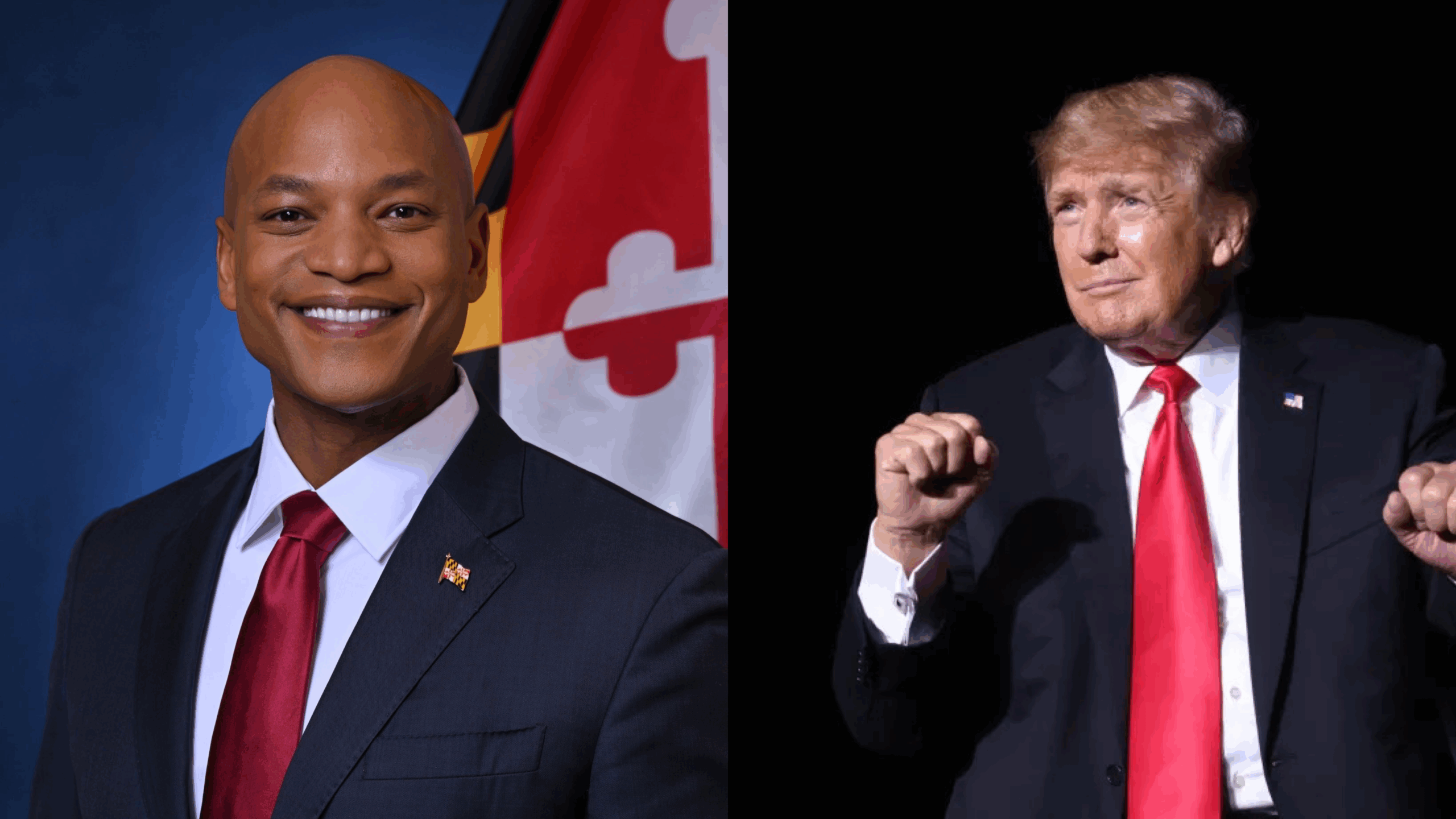
    Maryland Governor Wes Moore extended a public invitation to Donald Trump to join him, Baltimore Mayor Brandon Scott, and other city leaders for a walk focused on public safety. However, Trump’s response was far from welcoming, rejecting the invitation and labeling it “nasty and provocative.”

    An Invitation Met with Rejection

    Moore had sent the invitation both formally and via social media, aiming to highlight Baltimore’s progress in combating crime and showcase successful data-driven strategies. He pointed to a 20 percent drop in homicides across Maryland since his inauguration and significant reductions in violent crime within Baltimore during the first half of 2025.

    Trump, however, took to Truth Social to criticize the governor’s outreach. He described the invitation as “nasty and provocative,” accused Moore of misrepresenting crime statistics, and declared Baltimore a “crime disaster.” Trump asserted that Moore’s crime record was “very bad” and insisted the governor should fix the city before extending such invitations.

    A Public Exchange of Barbs

    Governor Moore quickly responded to Trump’s comments on Twitter. He suggested that Trump was actively avoiding walking the streets of Baltimore and, referencing Trump’s history with military service, mockingly called him “President Bone Spurs.” Moore even joked that if walking proved too difficult for Trump, a golf cart could be provided.

    Trump escalated his criticism further, warning that he could deploy federal troops to address Baltimore’s crime issues and even threatening to reconsider federal funding for the Francis Scott Key Bridge reconstruction. This exchange highlights the starkly different approaches the two political figures take towards public safety and urban challenges.

    Contrasting Views on Public Safety

    The public spat underscores a fundamental disagreement: Moore emphasizes progress made through community-focused initiatives and partnerships, while Trump portrays Baltimore as a city in crisis, advocating for strong federal intervention. What began as an invitation for collaboration has rapidly devolved into a very public political confrontation.

    What are your thoughts on the exchange between Governor Moore and Donald Trump? Do you agree with Trump’s assessment of Baltimore, or do you believe Moore’s approach is more effective? Share your opinions in the comments below!

  • Trump Calls D.C. ‘Hellhole’ Amid Crackdown

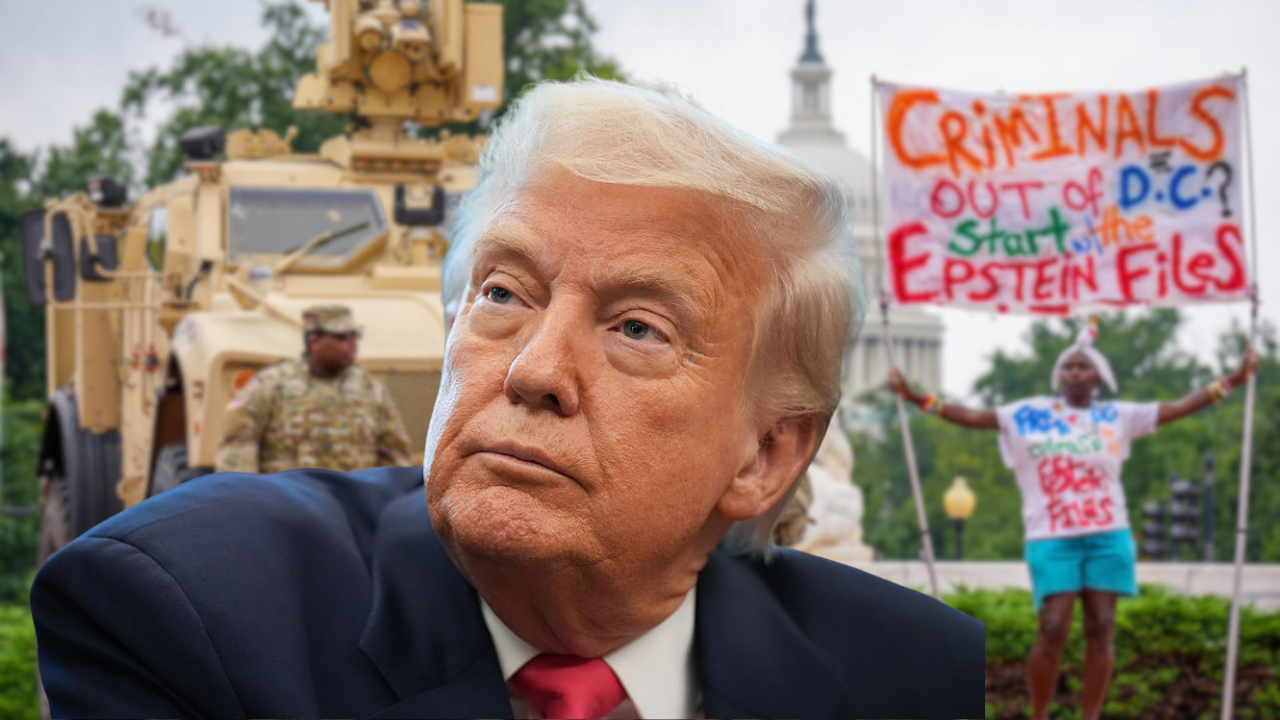
    President Donald Trump’s recent comments describing Washington D.C. neighborhoods as “slums” and a “hellhole” have drawn sharp criticism from residents and leaders, who argue the language reveals a bias against the city’s majority Black population. These remarks come amidst a controversial 30-day federal crime crackdown, which has seen hundreds of federal agents and National Guard soldiers deployed throughout the capital.

    Rhetoric Sparks Outrage and Concern

    Despite local police data indicating a 30-year low in crime rates prior to Trump’s intervention, the President declared a “situation of complete and total lawlessness” and vowed to “get rid of the slums.” When pressed for clarification, White House Press Secretary Karoline Leavitt stated Trump was referring to “the most dangerous communities… where, unfortunately, violence has ravaged these communities.” Trump himself told reporters that D.C. was a “hellhole” before his crackdown, asserting that “now it’s safe” and visitors “are not going to go home in a body bag.”

    Public safety advocate Gregory Jackson, a resident of Ward 8, called Trump’s descriptions “offensive, dangerous, and discriminatory,” emphasizing that D.C. neighborhoods are diverse communities, not “slums.” He highlighted the presence of young families, military personnel, and community-centric individuals in his neighborhood, finding the broad generalizations disrespectful. Courtney Snowden, a former D.C. deputy mayor and sixth-generation Washingtonian, echoed these sentiments, calling the President’s comments “appalling” and stressing that residents are committed citizens contributing to the city’s success.

    Questioning the Motives Behind the Crackdown

    Critics question the administration’s stated concerns about crime and the safety of D.C. residents, suggesting the crackdown is a pretext for a broader power grab. Jamal Holtz, president of the D.C. Young Democrats, pointed out that D.C. isn’t even among the top 10 most dangerous cities nationally. Markus Batchelor, political director at People For the American Way and a D.C. native, warned that using false pretenses to take over local matters and law enforcement in D.C. could be a precursor to similar actions in other cities across the nation.

    Critics argue that instead of collaborating with D.C. Mayor Muriel Bowser and local officials to build on existing progress in reducing crime, the Trump administration has opted for a heavy-handed, tough-on-crime approach. This strategy, they contend, has proven ineffective without complementary community intervention programs and investments, which the Trump administration has reportedly cut, including a $20 million security grant for D.C. and funding for community violence intervention strategies previously supported by the Biden administration.

    The militarization of D.C. streets, with armed National Guard troops and federal officers, is also raising concerns about the psychological impact on residents, particularly Black youth. Jackson noted that this presence reinforces negative stereotypes, making Black individuals feel like suspects rather than citizens. “Now you could just be walking home from school and be interrogated. Some folks are sitting on their porch and have officers running up on them,” he told theGrio, emphasizing how this treatment reinforces the perception that Black people are viewed as threats.

    What are your thoughts on the federal crackdown in D.C. and President Trump’s comments? Share your views in the comments below!

  • Trump Admin Cuts Weather Satellites Amid Staffing Issues

    Concerns are mounting over public safety as the Trump administration moves forward with new cuts to crucial NOAA climate satellites. These advanced tools are vital for tracking storms, pollution, and changes in our oceans, and their reduction is drawing sharp criticism.

    Impact of Previous Budget Rollbacks

    This latest decision follows earlier budget rollbacks that significantly impacted NOAA and the National Weather Service. These cuts led to the elimination of key research labs, the shelving of flash-flood modeling tools, and the slashing of hundreds of staff positions nationwide.

    The consequences were starkly evident during the catastrophic flooding in Texas earlier this summer. Local weather offices, already short-staffed, struggled to issue timely warnings to communities. Forecasts failed to capture the historic rainfall, and with fewer personnel to coordinate alerts, official warnings lagged behind the unfolding disaster, contributing to over 100 lives lost.

    New Satellite Cuts Compound Existing Weaknesses

    While political pressure did prompt NOAA to restore nearly 450 jobs, rehiring meteorologists, hydrologists, and radar technicians, this new round of satellite cuts threatens to undermine those efforts. The elimination of instruments designed to measure air quality, including wildfire smoke and industrial pollution, and those capturing detailed ocean conditions, will leave forecasting capabilities weaker.

    Critics argue that these decisions compromise disaster preparedness and leave communities more vulnerable to extreme weather events. The administration’s focus on cutting these essential services raises serious questions about its commitment to protecting citizens from environmental threats.

    What do you think about these cuts to weather forecasting resources? Share your thoughts in the comments below!