
Tag: NASA

  • Victor Glover Thanks Family After Artemis II Mission

    After an incredible 10-day journey that took him over 250,000 miles from Earth, astronaut Victor Glover has safely returned from the historic Artemis II mission. But beyond the groundbreaking lunar fly-by, Glover made sure to publicly acknowledge the unwavering support system that made it all possible: his family.

    Gratitude Beyond Words

    In his first public remarks since touching down, Glover expressed profound gratitude, not just for the mission itself but for the families of his fellow astronauts. However, his most heartfelt message was reserved for his own loved ones. “I love you, but not just those five beautiful cocoa-skinned ladies right there… All of you,” he declared, his voice filled with emotion.

    This powerful statement was a direct tribute to his wife, Dionna Glover, and their four daughters – Genesis, Maya, Joia, and Corinne. Glover emphasized that the magnitude of the experience and the gratitude he feels are too immense to be contained by one person alone, underscoring the vital role his family played.

    A Family’s Enduring Support

    The Glover family has a long history of supporting Victor’s ambitious career. Married for over two decades, Dionna has been instrumental in navigating the family’s life around Victor’s demanding roles, first as a fighter pilot in the U.S. Navy and now as a NASA astronaut. Whether it was relocating to Washington D.C. or Houston, Dionna and the girls have consistently packed up to be there for him.

    Dionna’s background in early childhood development proved invaluable as she managed their family of five, ensuring the girls were cared for while Victor pursued his dreams. This dedication was even highlighted during the mission when NASA surprised Victor with a livestream showing his wife and one of his daughters watching him – a moment he described as a “romantic gesture” that lit up Mission Control.

    Hero’s Welcome and Shared Success

    Upon returning to Texas, Victor was met with a hero’s welcome from his neighborhood. But one of his first acts after touching down was to share a photo on X (formerly Twitter) with Dionna and their daughters, captioned: “Home, again! Mission complete.” He expressed hope that the mission had glorified God, humanity, their families, and the dedicated teams at NASA and the CSA.

    Victor Glover’s journey with Artemis II is a testament to human exploration, but his heartfelt thanks to his “cocoa-skinned” wife and daughters reminds us that even the most extraordinary achievements are often built on a foundation of incredible family love and support.

    What does family support mean to you in achieving your goals? Share your thoughts in the comments below!

  • Victor Glover: Black Dreams Reach Orbit

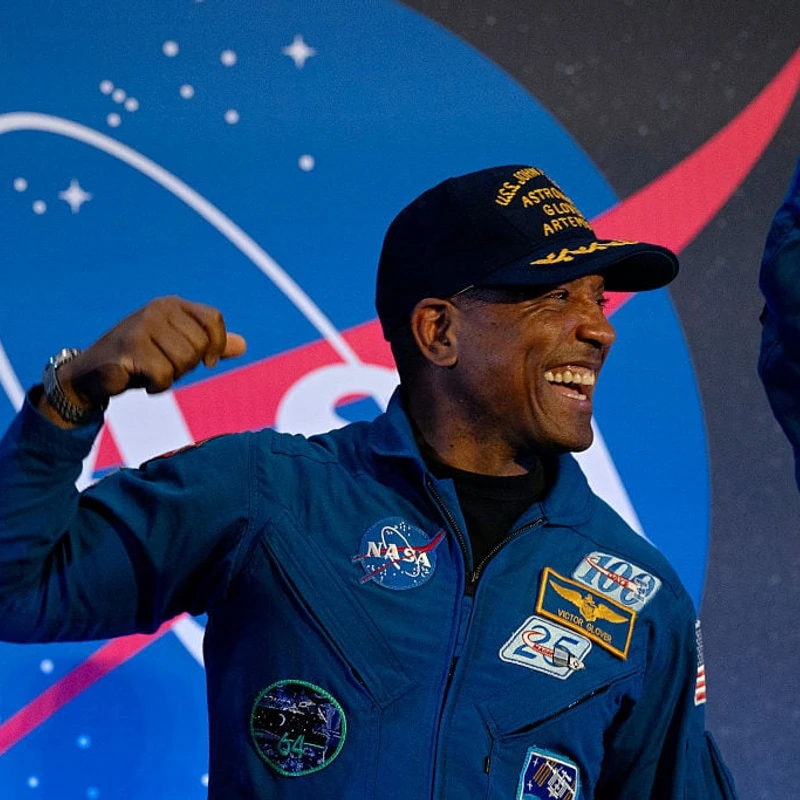
    When the Artemis II astronauts returned to Earth, it wasn’t just the end of a nine-day lunar mission; for many, it was the culmination of a promise generations in the making. At the heart of this historic moment is Victor Glover, NASA’s first Black astronaut to pilot a spacecraft around the moon. His journey is more than just a scientific achievement; it’s a powerful symbol of possibility and inspiration.

    A Historic Journey and Its Impact

    Glover’s presence on the Artemis II mission has shifted perspectives, proving that the final frontier is accessible to everyone. Standing before a crowd in Houston, fresh from a journey that took him over 250,000 miles from Earth, Glover’s message was one of profound gratitude. He spoke of the awe-inspiring views and the deep sense of connection he felt, not just to his family, but to all of humanity.

    His words served as a powerful reminder that while Glover physically made the trip, the impact of his journey resonates with a much larger community. The seeds of his success were planted long before launch, nurtured in churches, classrooms, and community spaces across the country.

    Paving the Way for Future Generations

    For aspiring aerospace engineers like Naia Butler-Craig, seeing Black astronauts like Mae Jemison and now Victor Glover has been transformative. She shared how seeing Jemison as a child inspired her career path, and meeting Glover later, she felt validated by his historic lunar mission. “To see him live all of those facets of identity at the same time… is incredibly validating,” she told Reuters, feeling that Glover has “paved the exact road for someone like me.”

    This road, however, was built over decades by pioneers like the Tuskegee Airmen, who broke barriers in the sky long before space travel was a reality for Black Americans. Even today, Black astronauts represent a small fraction of NASA’s selections, making Glover’s visibility all the more significant.

    More Than Just a Mission

    The Artemis II crew—Glover, Reid Wiseman, Christina Koch, and Jeremy Hansen—accomplished incredible feats, including witnessing a solar eclipse from behind the moon and seeing Earth as a “lifeboat” in the vastness of space. They traveled farther than any crew in history, surpassing even Apollo 13. Yet, beyond the technical achievements, the emotional and symbolic weight of this mission is immense.

    Glover’s journey, intertwined with his faith and the grounding reunion with his family upon return, highlights the deeply human aspect of space exploration. In a time of ongoing conversations about diversity, equity, and access, Glover’s mission carries profound significance. It serves as tangible proof of possibility, a powerful reminder that Black excellence thrives in every space, including those once thought inaccessible.

    As NASA looks toward future lunar landings and Mars exploration, the return of Artemis II offers a beacon of hope. For young Black dreamers, they’ve now seen someone who looks like them push beyond limits and return to share their story, bringing the promise of space exploration closer to orbit than ever before.

    What does Victor Glover’s historic mission mean to you? Share your thoughts in the comments below!

  • Artemis II Astronauts See Moon’s Far Side for First Time

    Get ready for a cosmic journey! NASA’s Artemis II mission is giving its astronauts a truly out-of-this-world experience – a firsthand look at parts of the Moon’s far side that no human has ever directly seen before. This isn’t just about pretty pictures; it’s about unlocking secrets of the Moon’s formation.

    A Unique Lunar Perspective

    The four-person crew, consisting of Reid Wiseman, Victor Glover, Christina Koch, and Jeremy Hansen, is embarking on a 10-day trip around the Moon in the Orion spacecraft. Their flight path is designed to take them incredibly close, within about 4,000 miles of the lunar surface.

    While past missions like Apollo orbited the Moon, the specific trajectories and lighting conditions often limited what astronauts could truly observe. Artemis II’s unique trajectory provides a much broader and more complete view, revealing areas typically hidden from Earth’s perspective.

    Spotlighting the Orientale Basin

    One of the mission’s highlights is the chance to directly observe the massive Orientale Basin. This colossal impact crater, spanning 600 miles, sits right on the border between the Moon’s near and far sides. Though robotic missions have captured images of it, this marks the first time humans will witness it up close during a flyby.

    NASA emphasizes that this mission is as much about human observation as it is about automated data. Astronauts can perceive subtle differences in color and texture that might be missed by cameras, offering invaluable insights into the Moon’s geological history. Scientists are keen to understand why the near side shows evidence of ancient volcanic activity while the far side appears more rugged and less geologically active.

    More Than Just a Flyby

    The crew will dedicate several hours to documenting their observations, using advanced cameras and providing real-time descriptions to mission control. The changing angles of sunlight during the flyby are expected to reveal even more surface details.

    It’s important to note that Artemis II isn’t a landing mission. Instead, it serves as a crucial stepping stone for NASA’s larger goal of returning humans to the lunar surface in future endeavors. Even this brief flyby holds the potential to unlock significant clues about the Moon’s origins, and by extension, the early history of our own planet, Earth.

    What aspect of space exploration fascinates you the most? Share your thoughts in the comments below!

  • Astronaut Victor Glover’s Easter Message from Space

    This Easter, the message of unity and shared humanity reached new heights – literally. NASA astronaut Victor Glover, piloting the historic Artemis II mission, delivered a profound and unscripted Easter reflection from space, reminding us all that we’re connected, even across vast distances.

    A Perspective from Orbit

    Speaking from his vantage point far beyond Earth, Glover responded to a question about Easter by shifting the focus from religious observance to a broader contemplation of our existence. He highlighted the unique perspective gained from space, referring to Earth as our shared spaceship.

    “But you’re on a spaceship called Earth… created to give us a place to live in the universe,” Glover stated. His words emphasized the fragility and preciousness of our planet, describing it as a solitary “oasis” in the immense emptiness of the cosmos. This perspective underscores the importance of recognizing our shared environment and collective responsibility.

    Unity Beyond Beliefs

    Glover encouraged everyone, regardless of their religious background, to use the Easter holiday as an opportunity to reflect on connection and coexistence. “This is an opportunity for us to remember where we are, who we are… and that we’ve got to get through this together,” he urged.

    His message has drawn powerful comparisons to the iconic 1968 Apollo 8 Christmas broadcast, where astronauts read from the Book of Genesis while orbiting the moon. Both moments share a profound ability to connect humanity through shared experience and awe-inspiring communication from space.

    A Legacy of Inspiration

    As the pilot of Artemis II, Glover is part of a mission that marks a significant step in NASA’s return to lunar exploration. For Glover, a former Navy pilot and the first Black astronaut to complete a long-duration mission on the International Space Station, this moment also adds to his legacy of inspiring future generations. His ability to blend scientific endeavor with profound humanistic reflection continues to resonate globally.

    What did you think of Victor Glover’s Easter message from space? How does seeing Earth from orbit change your perspective? Share your thoughts in the comments below!
  • Black Astronauts: From Pioneers to the Moon Mission

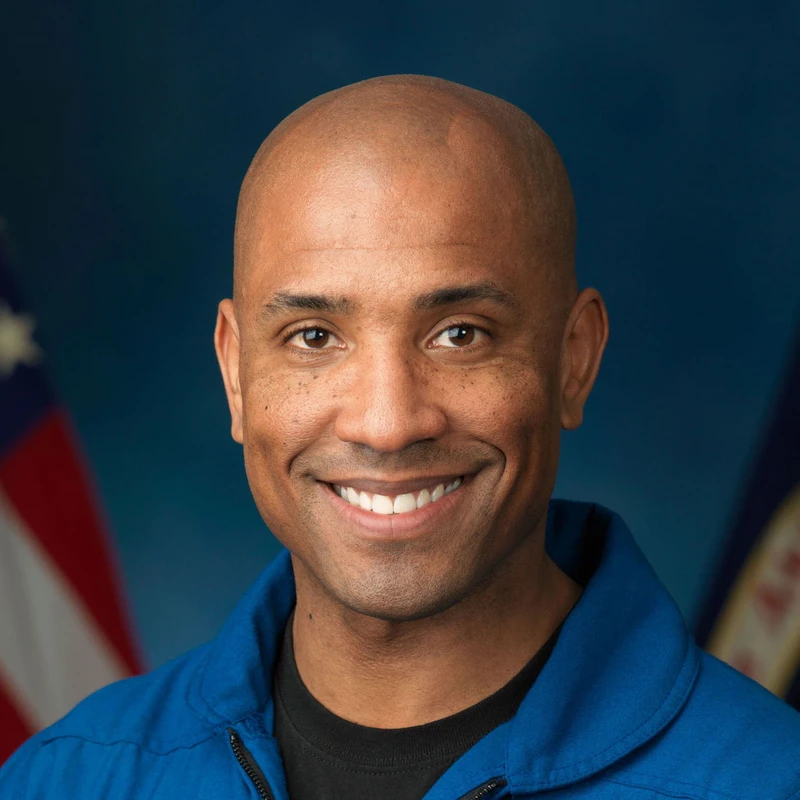
    History is being made in space! As Victor Glover embarks on the Artemis II mission, he’s not just flying around the moon – he’s breaking barriers. With this incredible journey, Glover becomes the first Black astronaut to travel this close to the lunar surface. It’s a monumental achievement, and it’s inspiring to see him follow in the footsteps of so many Black pioneers who dreamed of the stars.

    Victor Glover: A New Era of Space Exploration

    Selected as a NASA astronaut in 2013, Victor Glover has already experienced life aboard the International Space Station. But the Artemis II mission marks a significant personal and historical milestone. While Glover himself emphasizes that this is a moment for “human history,” he also acknowledges the profound impact it has on young Black individuals.

    He shared his thoughts on seeing himself reflected in the eyes of aspiring astronauts, stating, “And that young black boys and girls can look at me and go: ‘Hey, he looks like me, and he’s doing what?’ And that’s great, I love that.” Yet, his ultimate hope is for a future where such achievements are simply seen as human accomplishments, not defined by race or gender.

    The Trailblazers Who Came Before

    Glover’s journey didn’t happen in a vacuum. He stands on the shoulders of giants, Black astronauts who paved the way through sheer determination and talent. Think of Guion Bluford, the first Black astronaut in space, or Frederick D. Gregory, who blazed trails as the first Black man to pilot and command a Space Shuttle mission.

    The Astronaut Class of 1978

    Nearly fifty years ago, NASA’s Astronaut Class of 1978 was a groundbreaking group. Among the thirty-five selected were Guion Bluford, Ronald McNair, and Frederick Gregory. This trio participated in nine space missions between 1983 and 1992. Tragically, Ronald McNair was aboard the Space Shuttle Challenger when it met disaster in 1986, a stark reminder of the risks involved in space exploration.

    Ed Dwight: The Ultimate Pioneer

    But the story of Black astronauts begins even earlier with Ed Dwight. Chosen in 1961 by President John F. Kennedy as the first Black astronaut candidate, Dwight completed rigorous training. However, due to racial politics, he wasn’t selected for the Astronaut Corps and left the Air Force. His dream of space was deferred for decades.

    “I have a personal attachment and affiliation with Victor, because I met him when he was 15 years old… And never in a thousand years did I ever think that Victor would take it to heart and take it to the Moon, which is what he’s done.” — Ed Dwight

    Remarkably, Ed Dwight finally reached space in 2024, becoming the oldest person to fly aboard Blue Origin’s New Shepard. And guess who was on that flight? Victor Glover! Dwight, now 92, feels a deep connection to Glover’s success, seeing it as a fulfillment of his own lifelong aspirations. He proudly stated, “I’m really living my old 92 years through Victor — I’m really proud.”

    Inspiring Future Generations

    The Artemis II mission, with Victor Glover at the helm, is more than just a scientific endeavor. It’s a powerful symbol of progress and possibility. It shows young Black men and women that the sky is not the limit – it’s just the beginning. The legacy of astronauts like Bluford, Gregory, McNair, Dwight, and now Glover, continues to inspire dreams of reaching for the stars.

    Who are your favorite Black astronauts, past or present? Share their stories and why they inspire you in the comments below!

  • Victor Glover: First Black Person to Moon

    Get ready for a monumental moment in space exploration! NASA’s Artemis II mission, launching on April 1, 2026, will carry U.S. Navy Captain Victor Glover, making him the first Black person ever to travel to the Moon. This 10-day mission marks a significant return of humans to deep space for the first time since the Apollo program concluded in 1972.

    A Career Defined by Firsts

    Glover’s journey to this historic milestone is marked by a career of exceptional achievement. Hailing from Pomona, California, he holds multiple advanced degrees and boasts over 3,000 flight hours in more than 40 aircraft, including 24 combat missions as a Navy pilot. His dedication and expertise led him to the astronaut corps in 2013.

    This isn’t Glover’s first time making history. In 2020, he piloted SpaceX Crew-1, becoming the first Black astronaut to complete an extended mission aboard the International Space Station. During his 168 days in orbit, he conducted four spacewalks, further cementing his legacy in space exploration.

    The Artemis II Mission: Paving the Way Forward

    As the pilot of the Orion spacecraft for Artemis II, Glover will be instrumental in testing the critical navigation and control systems essential for future lunar landings and potential missions to Mars. The mission is set to launch from Florida’s Launch Complex 39B.

    Glover is joined by a diverse and accomplished crew: Commander Reid Wiseman, Mission Specialist Christina Koch (the first woman to travel to the Moon), and Mission Specialist Jeremy Hansen (the first Canadian to journey to the Moon). While this mission won’t land on the lunar surface, the crew will perform a high-speed flyby, reaching approximately 252,000 miles from Earth—further than any human has traveled before.

    A Test Flight for Future Exploration

    Artemis II is designed as a crucial “proving flight” to ensure the reliability of NASA’s powerful Space Launch System (SLS) rocket and the Orion capsule. The mission will test their ability to safely support human life in the challenging deep space radiation environment. This historic journey is a vital step towards humanity’s return to the Moon and beyond.

    What does Victor Glover’s historic journey to the Moon mean to you? Share your thoughts on this incredible achievement in the comments below!

  • Travis Scott Launches STEM Program for Houston Students

    Rapper Travis Scott is reaching for the stars – and bringing Houston students along for the ride! Through his Cactus Jack Foundation, in collaboration with Space Center Houston, he’s launched an exciting new STEM program aimed at inspiring young minds in engineering, design, and space exploration.

    Inspiring Future Innovators

    This initiative is all about providing enriching opportunities and sparking inspiration for students to pursue careers in fields where they can make a real difference. “Opportunities like this are being offered to help enrich our students’ lives and inspire them to pursue careers in fields where they can not only thrive but also bring back solutions to their communities,” Scott shared in a statement.

    The program, which kicked off on October 11th, utilizes a blend of virtual and in-person workshops. Students are spending three Saturdays at Cact.Us Design Center-TXRX Labs, a Houston-based nonprofit makerspace, getting hands-on technical skills. They’ll have the unique chance to learn directly from NASA engineers about the entire engineering process, from brainstorming and prototyping to testing and refining their ideas.

    A Dream Partnership for the Cactus Jack Foundation

    For Travis Scott and the Cactus Jack Foundation, this partnership with Space Center Houston is a dream come true. Jordan Webster, the foundation’s director of education partnerships, expressed the deep inspiration drawn from NASA. “Through the Cactus Jack Foundation, our mission is to open new educational pathways for youth so they can accelerate in STEM and see themselves as the innovators and explorers of tomorrow,” Webster said.

    The program goes beyond just learning concepts; students will dive into design sketching, CAD modeling, systems thinking, and fabrication. They’ll be using advanced digital design software, 3-D printing, and cutting-edge equipment to develop prototypes. This comprehensive approach aims to equip them with the skills needed to become the next generation of innovators.

    Showcasing Future Talent

    The culmination of this exciting program will be a final showcase on December 19th at Space Center Houston. Here, the students will present their designs to industry professionals, including Travis Scott himself. It’s a fantastic opportunity for them to gain exposure and recognition for their hard work and creativity.

    What do you think about Travis Scott’s commitment to STEM education? Share your thoughts in the comments below!