
Tag: Lung Cancer (Advanced)

  • SCLC: Separating Lung Cancer Myths from Facts

    When you hear the term “small cell lung cancer” (SCLC), it often brings a wave of fear and confusion. This aggressive form of lung cancer has a reputation that’s often clouded by outdated beliefs and misinformation. But the medical world is constantly evolving, and so is our understanding of SCLC. To clear the air, we’re breaking down the common myths and presenting the facts, with insights from Dr. Khalil Choucair, a Medical Oncologist at the Barbara Ann Karmanos Cancer Institute.

    Myth #1: ‘Only Smokers Get Lung Cancer.’

    While smoking is undeniably the primary culprit, it’s not the sole cause of lung cancer. “Smoking is the main risk factor, but not the only one,” Dr. Choucair clarifies. It’s true that about 90 percent of SCLC cases are linked to smoking, and it accounts for roughly 15 percent of all lung cancers. However, other factors like secondhand smoke, radon gas, asbestos exposure, and genetics can also play a role.

    Think of smoking as significantly increasing your risk, but it’s not the only factor at play. Dr. Choucair strongly advises smokers to seek help to quit. “While smoking cessation is hard, always attempt and talk to your provider about strategies to stop smoking,” he urges. For those who have smoked, he emphasizes the importance of lung cancer screening. “Patients who smoke or have smoked should talk to their primary care physician about lung cancer screening. Detecting SCLC at early stages means the cancer is potentially curable, but not at later stages.”

    Myth #2: ‘Small Cell Lung Cancer Is Always Untreatable.’

    The aggressive nature of SCLC used to make it seem unbeatable, but that’s no longer the case. Dr. Choucair explains that SCLC differs significantly from non-small cell lung cancer (NSCLC) due to its biology. “SCLC is ‘poorly differentiated,’ meaning it is the most different from what is normal. As a result, compared to NSCLC, the cancerous cells divide rapidly and spread quickly to other organs outside the lungs.” This rapid growth once made treatment seem futile.

    Today, SCLC is typically categorized into two stages: Limited-stage (confined to one side of the chest, often treated with chemotherapy and radiation) and Extensive-stage (spread beyond one lung, but still responsive to modern therapies). The advent of immunotherapy has been a game-changer, helping the immune system target cancer cells and significantly improving life expectancy and quality of life when combined with chemotherapy.

    Myth #3: ‘All Lung Cancers Are the Same.’

    Lung cancer isn’t a single disease; it’s a group of distinct conditions with different behaviors and treatment responses. Dr. Choucair notes that in cancerous cells, the normal balance between cell division and death is lost, leading to rapid, uncontrolled growth. This imbalance is more pronounced in SCLC than in NSCLC.

    An analogy helps: SCLC is like a race car – fast and powerful, but burns fuel quickly. NSCLC is more like a reliable sedan – slower, with different needs. This difference is why treatment plans vary so much. While SCLC initially responds strongly to chemotherapy and radiation, NSCLC might be treated with surgery or targeted therapies. Personalized care is essential.

    Myth #4: ‘There’s No Hope After Diagnosis.’

    A diagnosis of SCLC doesn’t mean the end of the road. “There is always reason for hope, and more treatment options than ever before,” Dr. Choucair assures. One of the biggest challenges remains late diagnosis, as symptoms like chronic cough are often dismissed. By the time more severe symptoms appear, the cancer may have spread.

    However, significant progress has been made. Combinations of chemotherapy and immunotherapy are extending lives, radiation therapy is used to target remaining disease or prevent spread to the brain, and clinical trials are exploring new drugs. “Do not dismiss symptoms and seek care whenever they occur,” Dr. Choucair emphasizes.

    Empowering Facts for Living with SCLC

    Knowledge is power when facing SCLC. Here are key truths to remember:

    • Early detection is critical: If you have a history of smoking, discuss lung cancer screening with your doctor.
    • Stay vigilant: Don’t ignore persistent symptoms like cough, fatigue, or chest pain.
    • Explore all options: Discuss clinical trials and supportive therapies with your medical team.
    • Build a support system: Lean on family, friends, and organizations like the GO2 Foundation for Lung Cancer or the American Lung Association.
    • Prioritize emotional health: Connection and support foster hope and strength.

    Medical progress is advancing rapidly, offering a brighter outlook for those affected by SCLC. By replacing fear with facts, patients can navigate their journey with greater understanding, partnership, and trust.

    What are your thoughts on these myths and facts about SCLC? Do you have personal experiences or questions you’d like to share? Let us know in the comments below!

  • Stage 4 Lung Cancer: My Clinical Trial Journey

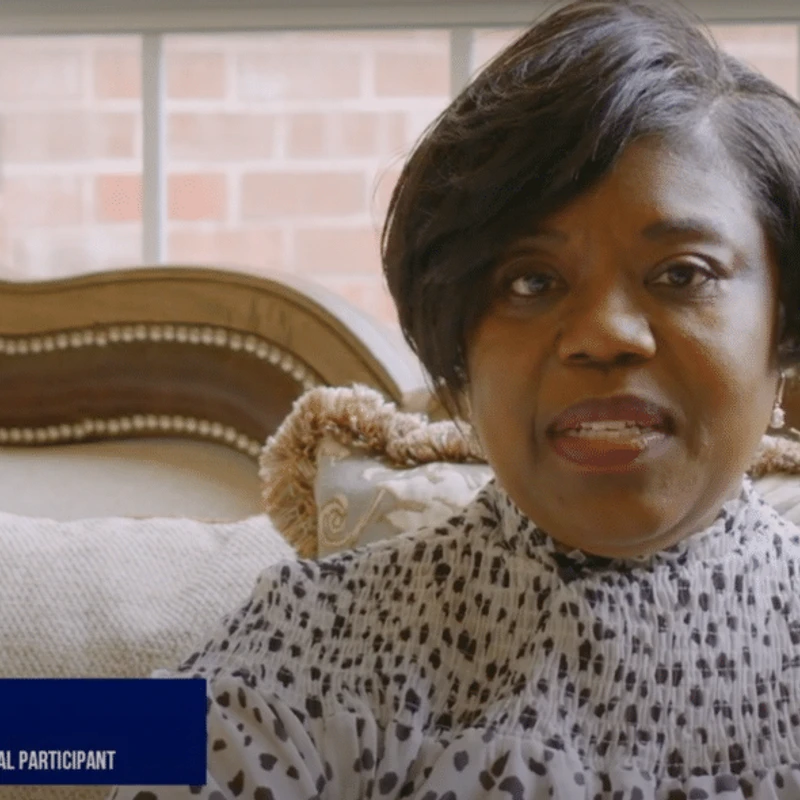
    Imagine receiving a stage 4 lung cancer diagnosis in March 2020. For Sheena P., this was a shocking reality that turned her world upside down. Faced with a serious diagnosis, she made a courageous decision that could impact not only her life but also the lives of countless others: she said ‘yes’ to participating in a clinical trial.

    The Importance of Representation in Research

    Sheena’s oncologist recommended she join a clinical trial after a PET scan identified the location of her stage 4 lung cancer. This decision was deeply rooted in a desire to address a critical gap in medical research: the underrepresentation of Black Americans in clinical trials. Sheena understands that limited data on how Black Americans respond to cancer treatments hinders progress and can affect outcomes.

    By participating, Sheena is contributing valuable insights that could lead to better treatments and improved survival rates for her community. She believes that increased engagement from Black Americans, especially women, in healthcare decisions and research is vital for overcoming existing disparities.

    Navigating Healthcare with Trust and Faith

    Sheena acknowledges the historical trust issues within the Black community regarding healthcare. However, she emphasizes the importance of finding the right healthcare providers who can offer proper treatment and care. Drawing from the biblical concept that the body is a temple, she stresses that taking care of one’s health is a critical responsibility.

    She reminds us that we are all dealt a hand in life, and sometimes that hand might be a difficult one, like a stage 4 cancer diagnosis. The key, she explains, is how we choose to play that hand. For Sheena, it meant taking proactive steps and embracing the opportunity to contribute to science.

    Practical Steps for the Black Community

    Sheena offers practical advice for the Black community facing health challenges: stay informed, be proactive, and communicate openly with your doctors. She urges people not to dismiss clinical trials out of fear or hopelessness. By sharing her story, she aims to inspire others to keep fighting with faith, willpower, and trust in science and their healthcare teams.

    Her journey is a powerful testament to strength, wisdom, and the profound impact of representation in medical research. By sharing her experience, Sheena hopes to encourage more African Americans to engage with their health and contribute to a future where everyone has access to effective treatments and better survival rates.

    What are your thoughts on the importance of clinical trial participation for minority communities? Share your perspective in the comments below!

  • Stage 4 Cancer Free: Lalisha’s Tarlatamab Journey

    Imagine hearing the words “stage 4 small cell lung cancer.” For many, it’s a grim prognosis, a battle with overwhelming odds. But Lalisha’s story is a beacon of hope, proving that even in the face of aggressive disease, a fight for better answers can lead to a life-changing breakthrough. After a diagnosis that offered little optimism, Lalisha is now cancer-free, thanks to a revolutionary treatment called tarlatamab.

    The Grim Reality of Stage 4 SCLC

    In October 2023, Lalisha received the devastating news: stage IV small cell lung cancer (SCLC). This form of cancer is known for its rapid progression, and Lalisha’s diagnosis quickly moved from limited to extensive stage. The immediate question wasn’t just about treatment, but about survival itself. The physical toll was immense, marked by bone pain, debilitating fatigue, and weakness that made daily tasks a struggle.

    Beyond the physical pain, the emotional weight was crushing. Lalisha navigated depression, grief, and the profound challenge of confronting their own mortality. Yet, even amidst this darkness, the will to fight never wavered. The initial treatment at their care facility proved ineffective, leaving Lalisha feeling lost and unheard.

    A Bold Decision for a Second Chance

    Driven by a deep-seated mistrust of inadequate healthcare – a pain amplified by their mother’s passing at age 39 due to insufficient medical attention – Lalisha took a pivotal step. They drove themselves to the Mayo Clinic, seeking a second opinion and better answers. This proactive decision was crucial, as they learned their initial physician had delayed treatment for three months based on a mistaken belief that a nodule was pre-cancerous.

    A subsequent biopsy and lobectomy at the Mayo Clinic confirmed the nodules were indeed cancerous, leading to a diagnosis of limited-stage SCLC. Lalisha chose to continue their treatment journey at Northwestern Memorial Hospital in Chicago, ready for whatever came next.

    Tarlatamab: A Treatment That Changed Everything

    With cancer having spread throughout their body, the medical team acted swiftly. Even before the next scan, arrangements were made for tarlatamab, a promising new treatment developed by Amgen, which had recently been highlighted at the 2025 ASCO Annual Meeting. The initial doses, administered during hospitalization, came with side effects like cytokine release syndrome (CRS).

    But by the third dose, a remarkable shift occurred. Lalisha began to feel better. Just two months later, a PET scan delivered the most incredible news: no evidence of active cancer. “It was the best news I’ve ever received,” Lalisha shared. “My mental health improved. My physical health improved. I could walk without fear of falling. I could play basketball again. I had my life back.”

    From Survivor to Advocate

    Lalisha’s fight didn’t end with their own recovery. As a retired social worker with 30 years of experience, they found a powerful new purpose: advocating for others facing similar battles. They now facilitate a support group for SCLC survivors, speak at conferences, and offer guidance to individuals exploring their treatment options.

    I look at myself as an example of what happens when researchers, medical providers, and scientists focus on truly helping patients live. — Lalisha

    Their experience has fueled a passion for systemic change, particularly in how healthcare providers communicate with patients. Lalisha urges medical professionals to adopt a more hopeful approach, stating, “Some doctors become pessimistic and say things like, ‘This is going to take you out.’ That kind of language kills hope. We need providers who treat us like survivors, not statistics.”

    Key Takeaways for Patients

    • Always seek a second opinion if something feels off.
    • Be your own strongest advocate; speak up about your care.
    • Maintain hope, as medical advancements are constantly emerging.
    • Build a strong support network of caregivers, family, and fellow patients.
    • Prioritize mental health and seek professional support.
    • Push for equitable access to care, especially for marginalized communities.
    • Celebrate every small victory along the way.

    Lalisha’s journey is a powerful reminder of the importance of patient advocacy, the impact of innovative treatments like tarlatamab, and the critical need for equitable access to healthcare. They continue to champion a future where no one with small cell lung cancer feels overlooked, emphasizing that reclaiming life is possible.

    What are your thoughts on Lalisha’s inspiring journey and the importance of tarlatamab? Share your experiences or questions in the comments below!

  • Lung Cancer Clinical Trials for Black Americans

    Lung cancer is a formidable disease, claiming more lives than breast, prostate, and colon cancers combined. For Black Americans, navigating treatment options can be particularly complex due to historical disparities in healthcare access and research representation. Clinical trials offer a vital pathway to cutting-edge treatments and contribute to a better understanding of how these therapies work across diverse populations.

    Understanding Lung Cancer and Its Types

    Lung cancer, or bronchogenic carcinoma, originates in the lungs, typically in the airways or air sacs. Dr. Eric Singhi, an Assistant Professor at MD Anderson Cancer Center, highlights its aggressive nature, noting that it can metastasize early and widely, often leading to late diagnoses. Lung cancers are broadly classified into non-small cell lung cancer (NSCLC), accounting for about 85% of cases, and small cell lung cancer (SCLC). While NSCLC tends to spread slower, both types can be aggressive, with SCLC often being particularly fast-growing.

    Despite advancements in targeted therapies and immunotherapy, many lung cancers eventually develop resistance to existing treatments. This underscores the critical need for ongoing research and the development of new solutions, making clinical trials indispensable.

    What Are Clinical Trials?

    Clinical trials are research studies designed to rigorously evaluate the safety and effectiveness of new medical interventions, including drugs, procedures, and therapies. These studies typically progress through distinct phases:

    1. **Phase I:** Tests a new treatment on a small group (15-50 people) to assess safety, determine optimal dosage and administration, and identify side effects.
    2. **Phase II:** Evaluates the treatment’s effectiveness against the specific cancer in a larger group (over 100 people) while continuing to monitor safety.
    3. **Phase III:** Compares the new treatment against standard treatments in large groups to confirm efficacy, monitor side effects, and gather comprehensive data for FDA approval.
    4. **Phase IV:** Conducted after FDA approval, these trials gather long-term data on the treatment’s effects across diverse populations and monitor for any long-term side effects.

    These trials are fundamental to advancing medical knowledge, enabling regulatory approval for new therapies, and providing patients with access to potentially life-saving experimental treatments.

    Benefits and Risks of Participating

    Enrolling in a lung cancer clinical trial can offer significant benefits. Dr. Singhi notes these include access to potentially more effective or safer treatments, active participation in one’s healthcare decisions, and the opportunity to contribute to advancing medical understanding. However, potential risks exist, such as unknown side effects, the possibility of the treatment being ineffective, and time or financial burdens.

    Barriers to Enrollment for Black Americans

    Unfortunately, several barriers hinder Black Americans from participating in clinical trials. Dr. Singhi points to a lack of awareness among both patients and clinicians, restrictive eligibility criteria, time and travel commitments, financial burdens, language and cultural challenges, and a historical distrust of researchers and the medical system.

    Types of Lung Cancer Clinical Trials

    Lung cancer clinical trials often explore innovative approaches. Targeted therapy trials focus on drugs that disrupt specific molecules driving tumor growth. Immunotherapy trials aim to boost the body’s immune system to fight cancer cells, investigating treatments like checkpoint inhibitors and cancer vaccines. Trials also explore new combinations of chemotherapy drugs.

    Finding a Lung Cancer Clinical Trial

    Finding a suitable trial can be challenging, but resources are available. Start by discussing options with your doctor, who can help assess eligibility and recommend trials. Key resources include:

    • **ClinicalTrials.gov:** The most comprehensive database for searching trials by cancer type and location.
    • **National Cancer Institute (NCI):** Offers resources and support for finding clinical trials.
    • **Major Cancer Centers:** Institutions like MD Anderson, Memorial Sloan Kettering, Mayo Clinic, and Stanford Medicine maintain their own trial databases.
    • **BlackDoctor.org:** Features a vetted list of clinical trials specifically aimed at Black Americans.

    Before searching, gather your medical information to quickly check eligibility. It’s crucial to discuss potential risks, eligibility criteria, and the impact on daily life with your healthcare team and family to make an informed decision.

    Are you or a loved one facing a lung cancer diagnosis? Discuss clinical trial options with your healthcare provider. Share your experiences or questions about clinical trials in the comments below.