
Tag: Global

  • Lawyer Relocates Business to Mexico City, Finds Success

    In 2020, the COVID-19 pandemic brought many professional lives to a standstill. For Derrick Morgan Jr., a 34-year-old attorney, this slowdown sparked a significant pivot that led him to relocate his business and life to Mexico City. What began as a freelance gig has blossomed into a thriving remote trademark law practice, proving that international relocation can unlock new opportunities for entrepreneurs.

    From Law Firm to Global Entrepreneur

    Morgan was working at a law firm handling contingency cases when court activity dwindled during the pandemic. A request from a cousin to help with a trademark registration led him to Fiverr, where he began offering trademark services. The demand quickly surged, prompting him to leave his firm job by 2021. His company, Morgan Business Solutions, LLC, now provides trademark searches, filings, and brand protection services to clients worldwide.

    Since trademark law is federal, Morgan can operate from anywhere as long as he maintains his U.S. law license. He now splits his time between Dallas and Mexico City, where he spends the majority of his year. This international setup allows him to manage his business effectively while enjoying a different pace of life and lower cost of living.

    Embracing a New Environment

    Morgan’s decision to move to Mexico City was influenced by several factors. He first visited in January 2020 and was captivated by the city’s culture and energy. The political climate in the U.S. following the murder of George Floyd also played a role, as he sought a change of environment that felt “alive, creative, and culturally rich.” Mexico City provided this, along with proximity to his family in Dallas, with flights being only about 2.5 hours.

    The transition wasn’t without its challenges. Initially, Morgan struggled with finding community and adapting to life without fluency in Spanish. However, by intentionally learning the language through online courses and local university studies, he overcame these hurdles. He also found a growing community of African Americans living in Mexico City, a presence that was minimal when he first arrived.

    Investing and Expanding Horizons

    Morgan has found Mexico City’s lower cost of living allows for greater disposable income, enabling him to invest more heavily in real estate and entrepreneurial ventures. His projects include Casa Papalotl, a boutique hotel in Puerto Escondido, investments in the mezcal company Ofrenda Spirits, and the marketing platform Aver Network. He also co-owns Imbiss, a Mexico City restaurant he helped revitalize by focusing on events and operational improvements.

    Morgan dispels common misconceptions about moving abroad, emphasizing that one doesn’t need to be extremely wealthy. “You need a plan, just like you would with any major move,” he advises. He also notes that safety concerns can be relative, with some aspects of life being less worrisome abroad than in certain U.S. cities.

    What are your thoughts on Derrick Morgan Jr.’s journey? Would you consider relocating your business abroad? Share your experiences and opinions in the comments below!


  • Christine Job: From Atlanta to Spain, Building ‘Flourish in the Foreign’

    Imagine leaving everything familiar behind – your career, your home, your country – to chase a different way of life. That’s exactly what Christine Job did when she left Atlanta for Spain. But instead of just finding personal fulfillment, she built ‘Flourish in the Foreign,’ an award-winning podcast and multimedia platform that has become a vital archive for Black women living abroad.

    More Than Just a Travel Podcast

    Launched in 2020, ‘Flourish in the Foreign’ isn’t about curated Instagram feeds or superficial travel tips. Christine’s vision was to create a space for deeply personal stories, capturing the real experiences of Black women navigating life in countries like Portugal, Ghana, Japan, Mexico, and the Netherlands. With over 150 interviews to date, the platform has become an invaluable resource, even earning the Best International Podcast award at the 2021 Black Podcasting Awards.

    Christine’s own journey abroad started long before the podcast. Growing up between Texas and California, with a stint in Germany due to her father’s military service, she developed an early comfort with international travel. This foundation led her to study abroad in Valencia, Spain, during her time at the University of Georgia. After earning her law degree, she chose the entrepreneurial path over a traditional corporate law career, but found herself facing burnout early on.

    The Camino de Santiago: A Turning Point

    A pivotal moment arrived in 2014 when Christine walked nearly 500 miles across northern Spain on the Camino de Santiago pilgrimage route. This intense, solitary journey forced a profound self-reflection. ‘Somewhere along that road, I got honest,’ she shared with BLACK ENTERPRISE. This experience was the catalyst for her permanent move to Spain in 2017, a decision that was initially planned for just two years but has now stretched into nearly a decade.

    Now based in Valencia, Christine has established a consulting practice and continues to expand her research archive, focusing on the often-untold challenges of migration. She emphasizes that while moving abroad can offer a ‘genuine, physiological sense of release’ from chronic stress and systemic issues faced in the U.S., ‘relief is not liberation.’ True liberation, she notes, requires structural and internal changes that can’t simply be outsourced to a new geography.

    Navigating Migration: Realities vs. Romanticism

    Christine observes that many highly educated Black women she interviews feel a sense of dissatisfaction or exhaustion despite achieving conventional success markers like degrees and homeownership in the U.S. This fuels a growing curiosity about alternative ways of living. However, she is careful not to romanticize migration, stressing that it is ‘disruptive,’ ‘hard,’ and ‘full of sacrifice.’

    Financially, she points out that U.S. salaries are typically higher, but the lower cost of living in places like Spain allows a professional income to support a higher quality of life. This includes access to healthcare without constant financial calculation and more valuable time – a form of capital often undervalued in American culture. She advises thorough research, including visa options and financial strategies that decouple income from location, turning it into an intellectual exercise.

    Cultural Adjustment and Belonging

    Culturally, Christine found it more beneficial to study Spain as its own system rather than trying to replicate her American life. She also cautions against the misconception that shared melanin guarantees belonging. ‘The African diaspora is not monolithic,’ she stresses, explaining that moving to a place with an established Black community doesn’t automatically grant entry due to differing histories, class dynamics, and cultural nuances.

    Looking ahead, Christine is expanding her work. She’s undertaking a doctoral program in Migration Studies, focusing on the voluntary migration of Black American women. She’s also developing a book that aims to correct the narrative surrounding Black women leaving America and what their stories reveal about power, belonging, and liberation. Her current projects, including the Substack publication ‘Love Letters from Elsewhere,’ are building a significant body of work – an archive, scholarship, and literature.

    What are your thoughts on Christine Job’s journey and the ‘Flourish in the Foreign’ platform? Have you ever considered moving abroad? Share your experiences and opinions in the comments below!
  • Jamaican Lawmaker Blocked From Using Patois in Parliament

    An attempt to bring Jamaica’s vibrant Patois language into the formal halls of Parliament has ignited a fiery debate, highlighting the complex relationship between language, identity, and class on the island.

    An Interrupted Speech

    During her maiden Sectoral Debate presentation in Jamaica’s House of Representatives on May 13th, Opposition Spokesperson Nekeisha Burchell began her remarks in Jamaican Patois. “Madam Speaker, mi git up dis afta noon fi mek mi fuss sectoral speech…” she started, intending to connect with the majority of Jamaicans who speak the Creole language.

    However, House Speaker Juliet Holness quickly intervened, warning Burchell that continuing in Patois would result in a loss of speaking time. Faced with this restriction, Burchell paused, made a statement about the cultural significance of the dialect, and then resumed her speech in English.

    A Debate on Language and Identity

    Burchell expressed her disappointment, noting that there might be “no more fitting way” to start a presentation on culture than by using the language most Jamaicans understand, even if it “still struggles for full acceptance” in official settings. This incident has sparked significant backlash and broader discussions about colonialism, classism, and linguistic accessibility.

    Critics argue that barring Patois from Parliament perpetuates class divisions and marginalizes a vital part of Jamaican identity. Conversely, supporters of the rule emphasize that standard English is the official language and is necessary for parliamentary proceedings. The debate also brings to mind a similar incident last year where the use of Spanish in the chamber was challenged.

    The Significance of Patois

    Jamaican Patois, or Jamaican Creole, is more than just a dialect; it’s a deeply ingrained part of the nation’s fabric, heavily influencing its music, literature, and everyday conversations. The struggle for its full acceptance in formal spaces like Parliament reflects ongoing tensions surrounding cultural heritage and linguistic equality.

    What are your thoughts on the use of Patois in formal settings? Should official languages reflect the everyday speech of the people? Share your opinions in the comments below!

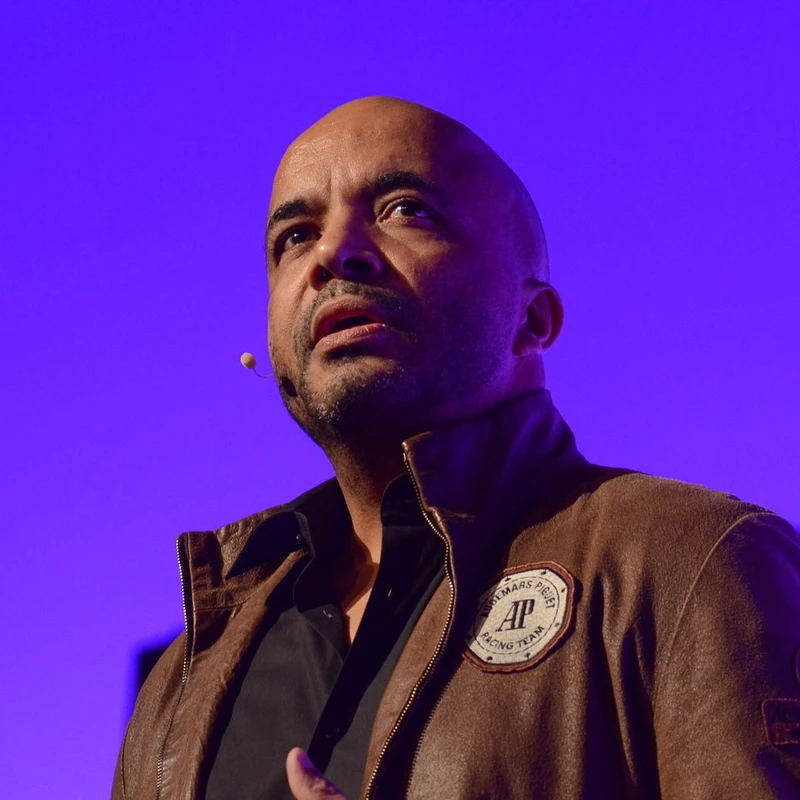
  • Olivier Audemars: Reshaping Luxury Watchmaking

    In the exclusive world of luxury watches, where prestige and heritage reign supreme, a significant executive is quietly making his mark. Olivier Audemars, a fourth-generation descendant of the Audemars Piguet founding family, is drawing attention not just for his executive role but for his potential to reshape perceptions within the industry.

    As the vice chairman of the board for the iconic Swiss watchmaker, Audemars is at the forefront of a brand renowned for its high-end timepieces, like the legendary Royal Oak. His presence highlights the growing conversations around Black leadership in industries historically perceived as exclusive.

    A Legacy in Haute Horlogerie

    Founded in 1875, Audemars Piguet remains one of the most respected names in haute horlogerie, and it’s still privately owned by the descendants of its founders. Olivier Audemars is the great-grandson of Edward Auguste Piguet, one of the original co-founders. This deep family connection underscores his integral role in the brand’s legacy.

    However, his path to the family business wasn’t direct. Audemars initially pursued a career in materials science, even launching his own laboratory, before joining Audemars Piguet in 1997. He ascended to his current position as vice chairman of the board in 2014, bringing a unique blend of scientific expertise and familial heritage to the company.

    Collaboration and Shifting Perceptions

    Audemars’ increasing visibility coincides with Audemars Piguet’s highly anticipated collaboration with Swatch, reportedly tied to the “Royal Pop” collection released on May 16. This partnership represents a significant cultural shift for a brand traditionally associated with scarcity and exclusivity.

    For watch enthusiasts and collectors, Olivier Audemars’ story is more than just about luxury; it’s a powerful symbol of Black leadership breaking barriers in industries that have historically been less accessible to people of color. His journey demonstrates that influence and innovation in the world of high-end watches are evolving.

    What do you think about Olivier Audemars’ role in the luxury watch industry? Are you excited about the Audemars Piguet x Swatch collaboration? Share your thoughts in the comments below!

  • Golden Krust Launches E-Commerce for Jamaican Baked Goods

    Get ready to bring the authentic taste of Jamaica right to your doorstep! For the first time in its 36-year history, Golden Krust, the beloved Caribbean restaurant chain, has officially launched a nationwide e-commerce platform. This exciting expansion means that customers across the United States can now order their favorite Jamaican staples online.

    This move marks a significant milestone for the New York-based company, allowing them to serve a broader audience beyond their physical restaurant locations. Now, iconic items like their signature hard-dough bread, whole-wheat bread, spice buns, and the popular Easter Bun are just a click away.

    A Legacy of Baking Goes Digital

    While many know Golden Krust for its famous Jamaican patties, the company’s heart truly lies in baking. Its origins trace back to Hawthorne & Sons Bakery, founded in St. Mary, Jamaica, in 1949 by Mavis and Ephraim Hawthorne. This rich baking legacy inspired their son, the late Lowell Hawthorne, to build what is now one of the largest Caribbean restaurant franchises in the nation.

    The e-commerce launch is a natural evolution for Golden Krust, reflecting a broader trend of legacy food brands adapting to meet consumer demand for authentic cultural cuisine, especially outside major urban centers. It’s a way to preserve the traditional flavors that built the brand while reaching new customers.

    Authentic Bundles and Charitable Giving

    Golden Krust’s new online store isn’t just offering individual items; they’ve curated special bakery bundles. For $25, you can get the Bun Bundle with two large and one small spice bun. Other bundles include the Mixed Bread Bundle for $19, and dedicated Whole Wheat and Hard Dough Bread bundles, also at $19 each. These are perfect for bringing a taste of Jamaica home.

    Beyond baked goods, customers can also shop for merchandise that celebrates Jamaican pride, like bucket hats, hoodies, and sandals. What’s more, Golden Krust is tying purchases of their “Golden Krust For Jamaica” hoodies or t-shirts to a good cause. $1 from each purchase will be donated to the American Friends of Jamaica to support Hurricane Melissa relief efforts.

    • Nationwide e-commerce launch for Golden Krust baked goods.
    • Includes signature items like Hard Dough Bread and Easter Bun.
    • Roots trace back to Hawthorne & Sons Bakery in Jamaica (1949).
    • Offers curated bakery bundles and merchandise.
    • Donates $1 per “Golden Krust For Jamaica” item to Hurricane Melissa relief.

    Are you excited to order your favorite Golden Krust treats online? What Jamaican baked good are you most looking forward to trying? Share your thoughts in the comments below!

  • Ghana Rejects $109M US Health Deal Over Data Privacy

    Ghana has officially turned down a proposed $109 million health funding agreement with the United States. The decision, announced on May 1st, stems from serious concerns over data privacy and national sovereignty, making Ghana the latest African nation to push back against a bilateral health deal under the Trump administration’s “America First Global Health Strategy.”

    Concerns Over Data Access

    According to Arnold Kavaarpuo, executive director of Ghana’s Data Protection Commission, the proposed deal contained provisions that would have granted U.S. entities extensive and potentially unrestricted access to Ghana’s sensitive national health data. Ghanaian officials argued that the U.S. requested access that “went far beyond what would typically be required” for standard public health monitoring.

    The proposal reportedly allowed up to 10 U.S. entities access to Ghana’s health data models, dashboards, and metadata without requiring prior approval from the Ghanaian government for specific data uses. This lack of oversight and control over their own health data architecture was a major sticking point for Ghanaian officials.

    A Growing Trend of Pushback

    Ghana’s decision aligns with a growing trend of African nations scrutinizing new U.S. health aid frameworks, which are replacing older programs. Earlier in 2026, Zimbabwe and Zambia rejected similar deals due to concerns about fairness and data sovereignty. In Kenya, a court recently suspended a comparable U.S. aid deal following privacy objections from local activists.

    Even in Nigeria, where an agreement was signed, critics have raised issues with restrictive clauses, such as the U.S. commitment to primarily support Christian faith-based healthcare providers. The Africa Centers for Disease Control and Prevention’s director general, Jean Kaseya, has also voiced significant concerns about the transparency and data-sharing requirements in these new bilateral agreements.

    Maintaining Bilateral Relations

    Despite rejecting the $109 million package, Ghana remains committed to a strong relationship with the United States. Following a cabinet decision, the government is now exploring alternative avenues for collaboration in areas of mutual interest, ensuring that national sovereignty and data privacy are protected. The U.S. State Department acknowledged the ongoing efforts to strengthen the bilateral partnership between the two nations.

    What are your thoughts on Ghana’s decision to reject the U.S. health deal? Do you believe data privacy and national sovereignty should be prioritized in international aid agreements? Share your views in the comments below!

  • Rick Fox in Altercation During Bahamas Campaign

    The campaign trail can get intense, and for former NBA champion Rick Fox, it recently turned physical. While running for office in the Bahamas’ upcoming general election, Fox found himself in a heated verbal and physical altercation with an individual on the streets.

    A Tense Encounter on the Campaign Trail

    Video footage of the incident surfaced, showing the former NBA star in a tense standoff. Fox, who is reportedly a Free National Movement candidate for the Garden Hills constituency, addressed the situation with local reporters. He asserted his right to self-defense and to protect those around him.

    “And if you’re going to swear and threaten people’s lives and say you’re going to your car to get something, then I’m going to react,” Fox stated. “I’m going to defend my team, I’m going to defend myself, and I’m going to defend anybody that is in the area, quite frankly, because that was a dangerous situation.”

    A New Era of Political Candidates

    This incident highlights the unique nature of the Bahamas’ 2026 election cycle, which features an unprecedented number of high-net-worth individuals running for office. Fox, with a net worth of $469 million, is among over 50 millionaires competing, including figures from hospitality, finance, and tech. They argue their financial independence makes them less vulnerable to corruption.

    Fox, a three-time NBA champion, has built a diverse career in esports and sustainable building technology. He’s running on a platform focused on economic revitalization and climate resilience. “I’ve spent my life competing at the highest levels,” Fox remarked at a recent event. “Now, I’m bringing that same intensity to ensure that every Bahamian has the opportunity to thrive in a sustainable, modern economy.”

    What are your thoughts on Rick Fox’s transition into politics and this campaign incident? Share your views in the comments below!

  • UK Police Strip-Search Black Youth 8x More Than White Peers

    A deeply concerning report from the Children’s Commissioner in the UK has brought to light a stark racial disparity in how police conduct strip searches on young people. The findings indicate that Black children are eight times more likely to be subjected to these invasive procedures compared to their white peers.

    This new data is prompting urgent calls for policy reform from state leadership, aiming to address what appears to be systemic bias within law enforcement practices. While the overall number of strip searches on children has decreased, the disproportionate targeting of Black youth remains a critical issue.

    Staggering Statistics on Disproportionate Searches

    The report, spearheaded by Dame Rachel de Souza, revealed that despite Black children making up only 6% of the UK’s 10-17 year old population (based on the 2021 census), they accounted for a staggering 35% of all children subjected to strip searches. This means over a third of these searches involved Black children.

    Furthermore, the report highlighted that Black children were also five times more likely to experience the use of force during these encounters. In some disturbing instances, children as young as 11 were subjected to these searches, often conducted in public settings without an adult present, a practice condemned by the Commissioner.

    Perceptions and Use of Force

    Dame Rachel de Souza pointed out a troubling difference in the justifications provided for using force. While white children were more likely to be described as having a mental health need, the reason cited for using force on Black children was often simply their size or build. “We cannot accept that black children are subjected to the use of force because of the way they are perceived,” she stated emphatically.

    This suggests that racial bias may be influencing officers’ perceptions and actions during stop-and-search encounters, leading to more aggressive treatment of Black youth. The findings underscore a deep-seated issue that requires immediate attention and systemic change.

    Police Response and Ongoing Concerns

    In response to the report and ongoing public pressure, the National Police Chiefs’ Council (NPCC) has announced updates to its stop-and-search procedures, promising a more “child-centered approach.” These changes follow a previous report on child strip searches from 2022.

    Deputy Chief Constable Andy Mariner assured that new policies are being implemented to combat the disproportionate use of stop and search, acknowledging that such practices can erode trust between the police and communities. However, high-profile incidents, like the forceful search of a Black teenage girl in 2022, continue to fuel public outcry and demands for greater police accountability.

    What are your thoughts on these findings? How can the UK effectively address racial disparities in policing? Share your views in the comments below.

  • UK Bans Smoking for Future Generations

    In a historic move for public health, the United Kingdom has passed the Tobacco and Vapes Bill, enacting a groundbreaking ban on cigarette sales for future generations. This legislation aims to create the nation’s first truly “smoke-free generation.”

    A Rolling Age Limit for Tobacco

    The new law, which received final approval in Parliament this week, introduces a unique, rolling age limit. Essentially, the legal age for purchasing tobacco will increase by one year, every year. This means that anyone born on or after January 1, 2009, will never legally be able to buy cigarettes in their lifetime.

    Health Secretary Wes Streeting hailed the bill’s passage as a “transformative moment for public health,” emphasizing that “prevention is better than cure.” The government anticipates this reform will save thousands of lives annually and significantly reduce the long-term financial burden on the National Health Service (NHS), which currently spends billions treating smoking-related illnesses.

    Stricter Regulations on Vaping

    Beyond the generational tobacco ban, the bill also introduces the most stringent regulations on vaping in British history. Ministers now have extensive powers to control the flavors, packaging, and marketing of e-cigarettes, ensuring they are not appealing to young people. The law also prohibits vaping in sensitive public areas like playgrounds, outside schools, and near hospitals, and makes it illegal to vape in cars carrying children.

    The legal responsibility for enforcing the ban falls on retailers. Businesses found selling tobacco products to individuals under the restricted age groups will face substantial fines and could risk losing their licenses. The government plans to collaborate with retailers to ensure a smooth implementation, with the new system set to fully take effect on January 1, 2027.

    Support and Criticism

    While the bill garnered broad support across political parties, it did face criticism. Some tobacco industry advocates and civil liberties groups argued that the policy creates a “permanent class of second-class citizens” by denying certain rights to younger generations. However, public health experts, including those from the charity Action on Smoking and Health (ASH), celebrated the move as a major victory in the long-standing campaign to combat preventable deaths in the UK.

    The bill is expected to receive royal assent from King Charles III soon, officially making it law. The UK now joins a select group of nations implementing similar generational bans, signaling a significant step forward in the global fight against nicotine addiction.

    What are your thoughts on the UK’s new ‘smoke-free generation’ law? Do you think similar measures should be considered in other countries? Share your opinions in the comments below!

  • Ethiopian Creator Kalu Putik Goes Viral for Upcycled Fashion

    Get ready to be inspired! There’s a fashion creator from Ethiopia who’s absolutely taking the internet by storm, and it’s all thanks to his incredible resourcefulness. Kalu Putik, known online as @kalu.putic, is proving that high fashion doesn’t always require expensive materials. He’s transforming found objects and disposable items into jaw-dropping statement pieces!

    Innovation Meets High Fashion

    Kalu Putik has amassed a massive following, with over 562,000 fans on Instagram and 703,000 on TikTok. His unique approach to fashion is all about innovation and making something out of nothing. Imagine seeing a wall lined with makeshift shoe stands, all crafted from materials found around his home in Addis Ababa, Ethiopia. That’s the kind of creativity Putik brings to the table.

    Fashion enthusiasts are raving about his skill in turning what most would consider trash into distinct, high-fashion outfits. It’s a testament to his visionary talent and his ability to see potential where others see waste. This is truly redefining what it means to be a fashion designer in the modern age.

    Celebrity Admiration and Industry Buzz

    Putik’s unique designs haven’t gone unnoticed by the stars. Even A-listers like SZA have marveled at his creations, which often feature refurbished fabrics and everyday objects. The buzz online is palpable, with commenters jokingly suggesting that major fashion houses like Balenciaga are taking notes. Many recognize his genius, noting that with the right tools and environment, he has all the makings of a world-class designer.

    As noted on LinkedIn by Jolyon Varley, Putik’s designs are “all using locally sourced materials and everyday objects.” The key takeaway? “No expensive tools. Just an insane eye for creativity and whatever he can find around him.” This approach is exactly what the fashion industry is starting to look for – creators who are driven by passion and innovation, not just big budgets.

    The Future of Fashion is Resourceful

    Kalu Putik is leading the charge for a new era of fashion design, one that prioritizes creativity and sustainability. As the fashion industry continues to evolve, more eyes are on creators like him who are pushing boundaries and curating bold, new looks from unexpected sources. His work is a powerful reminder that true style comes from vision and ingenuity.

    What do you think of Kalu Putik’s upcycled fashion creations? Have you ever tried making something fashionable from recycled materials? Share your thoughts and experiences in the comments below!