Tag: First Amendment

  • Marco Rubio Passport Power: New Bill Sparks Rights Fears

    Imagine this: you’re an American citizen, and suddenly, your ability to travel abroad is on the chopping block. That’s the chilling possibility raised by a new bill making its way through Congress, and it has civil liberties advocates sounding the alarm about potential impacts on fundamental rights.

    What’s This New Bill All About?

    The proposal, officially known as the Department of State Policy Provisions Act (H.R. 5300), was introduced by Rep. Brian Mast. At its core, the bill aims to grant the Secretary of State – currently Florida Senator Marco Rubio – the authority to deny or revoke U.S. passports. The condition? If a citizen is accused of providing ‘material support’ to organizations designated as foreign terrorist groups.

    On the surface, this might seem like a necessary security measure in today’s complex world. However, the devil, as they say, is in the details – or in this case, the vague language.

    Concerns Over Vague Language and Free Speech

    Civil liberties groups are deeply concerned that the bill’s broad and undefined terms could inadvertently ensnare ordinary Americans. Think about it: what exactly constitutes ‘material support’? This ambiguity could potentially put everyday citizens at risk if their political activism, advocacy efforts, or even their public statements are misinterpreted or deemed unfavorable by the government.

    The worry is amplified when considering the geopolitical landscape, particularly concerning Israel. Many fear that the bill could be weaponized against U.S. citizens who voice criticism of Israeli government policies, especially given the frequent designation of Palestinian groups as terrorist organizations. This raises serious questions about the protection of First Amendment rights.

    Unchecked Power and Constitutional Worries

    Experts are warning that this legislation could grant an unprecedented amount of unchecked power to a single government official. The idea of losing your passport – a fundamental document for international travel – over what could be construed as political speech is a significant departure from established rights.

    The possibility of losing your passport over political speech means the first amendment is done. — Baller Alert Article Analysis

    While the bill is currently just a proposal, its implications are far-reaching. It highlights a critical tension between national security and individual liberties, prompting a vital conversation about how far government power should extend in regulating citizens’ rights.

    What are your thoughts on this new bill and its potential impact on passport rights and free speech? Share your perspective in the comments below!

  • Confederate School Name Change: A Constitutional Win

    Imagine walking into school every day and feeling like you’re being forced to honor a history that doesn’t align with your values. That’s the reality for some students in Virginia, and a recent court ruling is shining a spotlight on this complex issue. A federal judge has declared that restoring a school’s name tied to Confederate history was, in fact, a violation of the Constitution.

    The Ruling: A Win for Students’ Rights

    On September 9th, U.S. District Judge Michael F. Urbanski made a significant decision regarding Stonewall Jackson High School. The school had changed its name in 2020, but the Shenandoah County School Board later voted to bring back the Confederate general’s name. This move sparked a lawsuit from the Virginia NAACP, along with parents and students who felt the name forced them to represent a legacy they didn’t support, impacting their educational experience.

    The judge agreed, stating that when students are associated with the ‘Generals’ mascot or the school’s name, they are essentially being compelled to honor that name and its associated message. This taps into the core of First Amendment protections against compelled speech – the idea that you can’t be forced to endorse a message you disagree with.

    Why This Matters: Beyond Just a Name

    This ruling is more than just a legal victory; it’s a step towards ensuring that public symbols reflect constitutional values. For many families and civil rights advocates, it means public spaces should align with protections for all, not just uphold tradition. The court recognized that forcing students to embody a Confederate legacy infringes upon their rights.

    While the judge ruled that restoring the name violated the Constitution, the actual name change hasn’t been ordered yet. The court is deferring final judgment and relief until other claims, like violations of Title VI and equal protection, are fully explored. A trial is scheduled to begin on December 8th, which will further examine these critical issues.

    Key Takeaways from the Ruling

    • A federal judge found the restoration of Stonewall Jackson High School’s name to be a constitutional violation.
    • The ruling cited the First Amendment’s protection against compelled speech.
    • Students argued the name forced them to represent a Confederate legacy they did not support.
    • Final enforcement of relief is pending further examination of related claims.

    This case highlights the ongoing conversation about how historical symbols are represented in public institutions and the impact these choices have on students. It’s a powerful reminder that our schools should be inclusive environments where all students feel respected and valued.

    What are your thoughts on school names and their historical context? Share your perspective in the comments below!

  • Judge Advises A$AP Relli to Drop Lawsuit

    It seems A$AP Relli might be facing another legal setback. The judge overseeing his defamation lawsuit against fellow rapper A$AP Rocky has strongly advised Relli to reconsider continuing the legal battle. Judge Randolph M. Hammock suggested it might be time to “cut your losses.”

    Judge Urges Relli to Seek a Deal

    “I would urge you to contact the other side and see if a deal can be made,” Judge Hammock advised Relli, who is now representing himself in court. The judge proposed that perhaps dismissing the lawsuit could lead to A$AP Rocky’s team dropping their claim for legal fees. This suggestion comes after Relli found himself without legal representation, having reportedly invested over $500,000 with his former firm, Sheppard Mullin, before they allegedly left him at the last minute.

    Relli expressed his frustration to the court, stating, “I’m just fighting for my rights here.” However, the judge was direct about the complexities of the case, particularly concerning the First Amendment and matters of public interest, which he believes the opposing side will likely prove.

    Legal Hurdles and Past Verdicts

    The judge pointed out that the case has garnered significant press attention and noted A$AP Rocky’s recent acquittal in a related criminal case. “Maybe you can reflect upon this case and what you want to do,” the judge urged Relli, whose real name is Rakim Mayers.

    Relli initially filed the lawsuit against A$AP Rocky (Rakim Mayers) in August 2022, alleging assault and battery. The civil case was put on hold to allow the criminal proceedings to conclude. After losing the criminal case, Relli decided to pursue his civil claims.

    Relli’s Public Statements

    Shortly after the criminal verdict, Relli shared his thoughts on Instagram Stories, posting, “Gossiping is a form of entertainment for people who have no meaningful goals or purpose in life.” He added, “Hate me, bring shame to my name, say bad things about me, I don’t care. Your existence doesn’t add any value to my life.”

    With the judge’s strong recommendation to reconsider, Relli faces a significant decision regarding the future of this high-profile legal battle. Will he heed the judge’s advice or continue to fight for his perceived rights?

    What do you think about the judge’s advice to A$AP Relli? Should he drop the lawsuit? Share your thoughts in the comments below!

  • Harvard Wins Lawsuit Against Trump Over Funding Cuts

    In a major legal showdown, Harvard University has emerged victorious against the Trump administration. A federal judge has ruled that the administration’s decision to freeze over $2 billion in research funding to the prestigious university was illegal and unconstitutional.

    A Blow to the Trump Administration’s Actions

    The funding cuts were implemented after Harvard resisted pressure from the Trump administration to change its governance and policies. Harvard argued that the move was politically motivated retaliation, and the court has now agreed. Judge Allison D. Burroughs found the funding freeze to be a violation of the Constitution, characterizing it as an attempt to use power to punish the university.

    The ruling not only restores billions of dollars to Harvard’s vital research programs but also sends a clear message: even the highest offices cannot arbitrarily cut off funding to universities as a form of retribution. The court noted that the administration’s concerns about antisemitism were used as a pretext to justify the resource stripping.

    A Pattern of Legal Clashes

    This isn’t the first time the Trump administration and Harvard have clashed in court. A previous attempt to restrict international student enrollment was also successfully blocked by legal challenges. This latest ruling marks another significant courtroom loss for the former president.

    For Harvard, the nation’s oldest university, this is a decisive win that protects its academic freedom and financial stability. It underscores the importance of due process and the limits of executive power when dealing with educational institutions.

    What are your thoughts on this legal victory for Harvard? Do you believe government pressure on universities is a growing concern? Let us know in the comments!

  • UTC Greek Life Pause: First Amendment Concerns Raised

    The University of Tennessee at Chattanooga (UTC) has paused all fraternity and sorority activities as it investigates hazing accusations. However, a free speech advocacy group is raising concerns that this broad suspension might infringe upon students’ First Amendment rights. The Foundation for Individual Rights and Expression (FIRE) has urged UTC’s Chancellor Lori Mann Bruce to reconsider the decision, arguing it unfairly impacts hundreds of students.

    First Amendment Concerns Over Hazing Probe

    Attorneys from FIRE penned a letter to Chancellor Bruce, requesting the university lift the ban by August 29th. They argue that the suspension limits students’ ability to organize political protests, wear Greek letters, host educational or philanthropic events, and engage in other activities protected by the First Amendment. “The university punished 25 different groups affecting hundreds of students based on the reports of misconduct of only two of the groups,” stated attorney Zachary Greenberg. “And this guilt by association approach is antithetical to the First Amendment, by which the university is bound.”

    This suspension comes at a critical time for students, as many were eager for recruitment opportunities, including those within Black Greek organizations like Delta Sigma Theta Sorority, Inc., and Phi Beta Sigma Fraternity, Inc. Greenberg warned that if the university doesn’t meet their demand, FIRE is prepared to explore all advocacy options, including public pressure and potential litigation.

    UTC’s Response and Ongoing Investigation

    In response to FIRE’s letter, UTC referred back to its initial announcement regarding the pause. University officials stated that the action is intended to allow for a reevaluation of policies, activities, and strategies to strengthen Greek Life, fostering a “culture of care, accountability, leadership and respect.” The ban is currently set to lift on September 5th, just one week after FIRE’s requested deadline.

    The timing of the pause, occurring just before the scheduled lift date and a mandatory community meeting for all fraternity and sorority members on September 2nd, has drawn attention. While the university maintains the action isn’t targeting a single event, serious hazing accusations have been leveled against the Alpha-Iota Chapter of Kappa Sigma. Investigative files from September 2024 detail a ritual called the “Weather Pledge,” which allegedly resulted in two pledges being hospitalized with second-degree burns after participating in activities like pouring lemon juice in their eyes, jumping from rooftops, and setting their chests on fire.

    Broader Context of Hazing Concerns

    UTC’s situation reflects a larger trend across the nation, including at historically Black colleges and universities (HBCUs), where institutions are increasingly addressing hazing allegations. Earlier in 2025, members of Omega Psi Phi Fraternity, Inc. from Southern University faced criminal hazing and manslaughter charges following the tragic death of pledge Caleb Wilson, bringing renewed national attention to the practices within Greek letter organizations.

    What are your thoughts on universities pausing Greek life activities during hazing investigations? Share your perspective in the comments below!

  • Trump Signs Order: Flag Burning Could Mean Jail Time

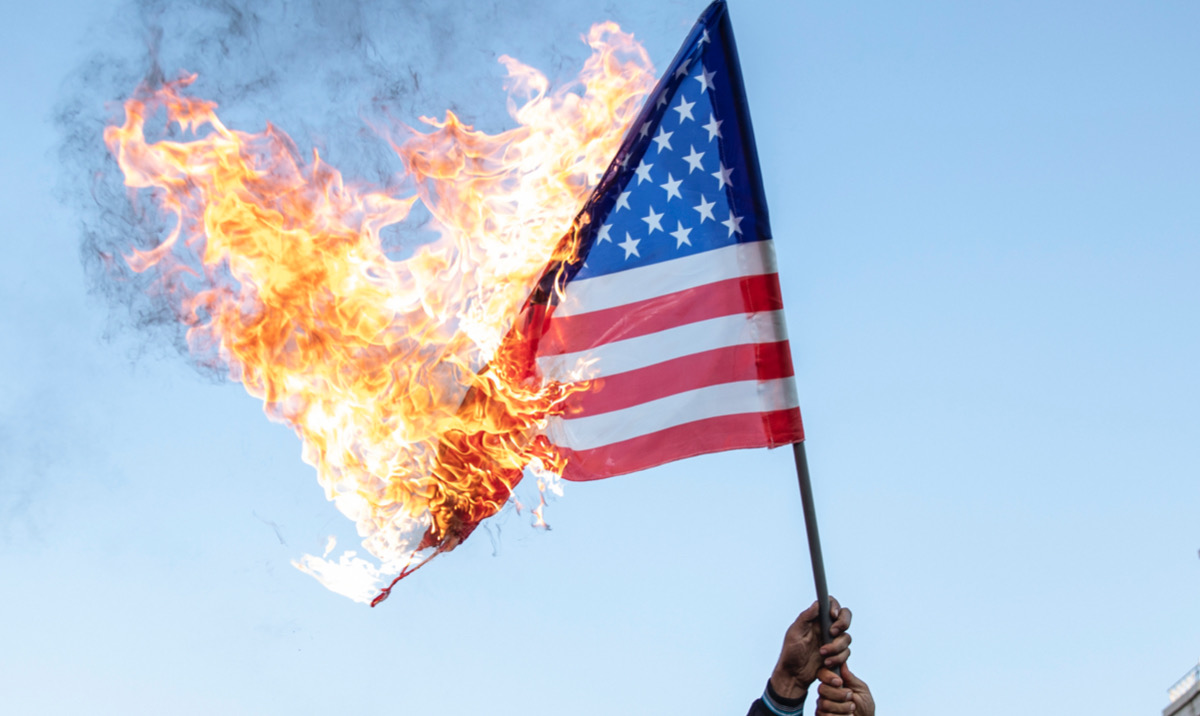
    President Donald Trump has signed a new executive order that could land individuals in jail for a year if they are caught burning the American flag. This move signals a strong stance on patriotism and respect for national symbols, but it’s already igniting significant debate about free speech protections.

    A Year in Jail for Flag Burning?

    Trump stated, “If you burn a flag, you get one year in jail.” This executive order directly challenges long-standing legal precedents. The Supreme Court, in a 1989 decision (Texas v. Johnson), ruled that flag burning is a protected form of political expression under the First Amendment.

    Despite these legal protections, Trump believes his order will effectively stop the act. He has spoken about this issue previously, advocating for jail time for flag burners, particularly in response to protests seen during political conventions. “They say, ‘Sir, that’s unconstitutional,’” Trump remarked. “We’ll make it constitutional.”

    Clash with Constitutional Protections

    This executive order is already sparking heated discussions. For many, burning the flag is seen as deeply disrespectful to the nation and its values. However, for others, it represents a powerful form of protest, a way to voice dissent and call attention to injustices within the country.

    Legal experts are highlighting the potential conflict with the Supreme Court’s ruling, suggesting this order could face significant legal challenges in federal courts. Trump and his supporters, however, argue that protecting the flag is synonymous with protecting America itself, asserting that criminalizing flag burning sends a clear message about patriotism and respect.

    What are your thoughts on President Trump’s new executive order regarding flag burning? Do you believe it aligns with constitutional rights or goes against them? Share your opinions in the comments below!

  • Trump Targets Cashless Bail and Flag Burning with Executive Orders

    President Donald Trump has turned his focus to issues resonating with his conservative base, signing executive orders aimed at cashless bail policies and flag burning. These actions signal a significant federal intervention into local criminal justice practices and First Amendment protections, reflecting the administration’s commitment to public safety and national symbols.

    Challenging Cashless Bail Policies

    The first executive order targets jurisdictions with cashless bail systems, which allow defendants to be released before trial without posting monetary bond. Trump has directed Attorney General Pam Bondi to identify federal funding that could be withheld from areas maintaining these policies. The administration argues that cashless bail poses public safety risks by potentially allowing dangerous individuals to remain free, while advocates contend it prevents wealth-based discrimination in the justice system.

    The order places a particular emphasis on Washington D.C., instructing law enforcement to pursue pretrial detention whenever possible and threatening to withhold funds and services if the city continues its cashless bail practices. This move represents a direct challenge to local governance and could exert significant financial pressure on the district’s budget, reflecting Trump’s broader concerns about perceived lenient criminal justice policies in the capital.

    Flag Burning Order Challenges First Amendment Precedent

    The second executive order addresses flag burning, directing federal prosecutors to pursue charges against individuals who desecrate American flags. It also instructs immigration authorities to detain and remove non-citizens accused of flag desecration. This directive directly confronts the 1989 Supreme Court decision in Texas v. Johnson, which protected flag burning as symbolic speech under the First Amendment.

    Trump’s order asks Attorney General Bondi to identify cases that could potentially challenge this established Supreme Court precedent. Given the current conservative composition of the court, there’s a possibility of revisiting the constitutional questions surrounding flag burning. White House officials cited recent protests, particularly in Los Angeles where flags were burned during demonstrations against ICE operations, as justification for the order, linking immigration enforcement with patriotic symbolism.

    Anticipated Legal and Constitutional Challenges

    Legal experts anticipate immediate court challenges to both executive orders. The flag burning directive, in particular, is expected to face significant opposition based on First Amendment protections. While the cashless bail order might face fewer direct constitutional challenges, it could encounter resistance from state and local governments viewing federal funding threats as coercive overreach. Many jurisdictions have adopted cashless bail based on research suggesting its effectiveness in reducing pretrial incarceration without increasing crime rates.

    These executive orders underscore Trump’s ongoing efforts to leverage federal authority to influence local policies on issues he deems critical to national security and American values. The ultimate impact of these directives will likely be determined through extensive litigation and judicial interpretation of constitutional rights and executive power.

    What are your thoughts on President Trump’s executive orders regarding cashless bail and flag burning? Share your opinions in the comments below!

  • Judge Blocks Parts of Mississippi’s DEI Ban

    In a significant ruling, a federal judge has blocked portions of Mississippi’s recently enacted ban on diversity, equity, and inclusion (DEI) practices in public schools. U.S. District Judge Henry Wingate issued a preliminary injunction, finding that the law, as written, conflicts with the First Amendment and the state’s public interest.

    Key Provisions Blocked by the Court

    The blocked provisions specifically target discussions of “divisive concepts” related to race, sex, gender identity, sexual orientation, and national origin. The law also aimed to prevent public schools from maintaining DEI programs, courses, or offices, and banned diversity training requirements. Judge Wingate’s ruling means these specific prohibitions cannot be enforced while the lawsuit challenging the law proceeds.

    However, other parts of the law remain in effect. These include provisions that prohibit schools from giving preferential treatment based on race, sex, color, or national origin, and those that penalize students or staff for refusing to embrace DEI concepts. The law, which took effect in April, was intended to prevent discriminatory practices by banning DEI initiatives, with violations potentially leading to a loss of state funding.

    First Amendment and Academic Freedom Concerns

    The lawsuit was filed by a group of teachers, parents, and students who argue that the law infringes upon their First and Fourteenth Amendment rights. Judge Wingate’s ruling echoed these concerns, stating the law is “unconstitutionally vague,” fails to be viewpoint-neutral, and poses “serious risks of terrible consequences with respect to the chilling of expression and academic freedom.”

    The injunction applies statewide, as Judge Wingate also granted the plaintiffs’ request to add class-action claims. This means the ruling impacts teachers, professors, and students across Mississippi. Jarvis Dortch, executive director of the ACLU of Mississippi, praised the ruling, stating, “The Court sees the law for what it plainly is — an attempt to stop the proper exchange of ideas within the classroom.”

    The plaintiffs’ lawyers had argued that the law’s vagueness left educators and students uncertain about what speech was permissible, potentially leading to self-censorship. Professor Cliff Johnson of the University of Mississippi Law School testified that he feared being unable to teach crucial topics related to civil rights and historical events due to the law’s ambiguity, leaving him feeling “paralyzed.”

    What are your thoughts on the ruling regarding Mississippi’s DEI ban? Share your perspective in the comments below!