Tag: Africa

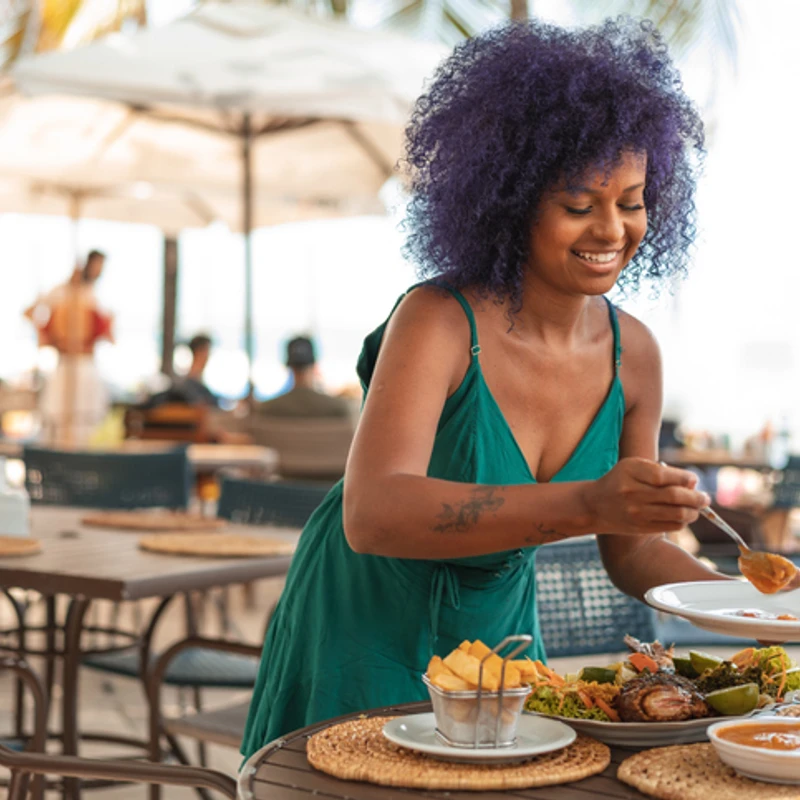
  • Lisbon’s Food Scene: A Taste of the Diaspora

    Food is so much more than just sustenance, right? It’s a delicious way to connect with history, celebrate the present, and even inspire the future. Think about how soul food in America tells a story of resilience and adaptation. In a similar vein, Lisbon, Portugal, offers a unique culinary journey that beautifully showcases the influence of the African and Brazilian diaspora.

    A Historical Melting Pot on a Plate

    Lisbon’s history as a major seaport during the Age of Discovery has made it a vibrant hub where cultures have mingled for centuries. This rich past is evident in its food, blending Portuguese traditions with flavors from its former colonies in Africa and Brazil. If you’re exploring Lisbon, you might find that some of the tastes, while perhaps new, feel surprisingly familiar.

    The city’s love for seafood and its penchant for sweet and spicy dishes are direct echoes of these historical connections. It’s a culinary love affair that puts the diaspora right on the plate, earning Lisbon its nickname, the ‘Queen of the Sea.’

    Flavors from Africa and Brazil

    During the 15th century, Portuguese exploration led to the establishment of colonies like Angola, Cape Verde, and Mozambique. This historical link introduced iconic dishes to Lisbon. You’ll find hearty stews like Cachupa, a staple from Cape Verde made with corn, beans, and whatever vegetables are available – a true symbol of resilience born from necessity.

    From Angola comes Calulu, a savory fish or meat stew that connects people to their heritage and showcases lingering colonial influences. Mozambique contributes dishes like Mathapa (pumpkin leaf) and the popular Caril de Galinha (chicken curry with coconut milk), not to mention the ubiquitous Piri-Piri spicy chili sauce found throughout the city.

    Seafood and Afro-Brazilian Staples

    Lisbon’s maritime history also means incredible seafood. Dishes like Moqueca, a rich seafood stew from Brazil featuring dendê oil and coconut milk, are a hallmark of Afro-Brazilian culture and a beloved part of Lisbon’s culinary scene. You’ll also find influences in dishes like Cataplana, a flavorful stew cooked in a unique clam-shaped vessel.

    Another fascinating import is Acarajé, a fritter made from black-eyed peas (beans originating from West Africa) that’s a famous street food in Brazil’s Bahia state. It’s a delicious testament to the enduring culinary exchange.

    Where to Taste the Diaspora in Lisbon

    Reading about these flavors is one thing, but tasting them is another! Lisbon offers fantastic spots where you can experience these diverse culinary traditions firsthand. Seek out places like Rodo Viva in the Alfama district for Mozambican flavors, or The Fam Kitchen, a Cape Verdean-owned eatery. For a taste of the Caribbean, Dede’s Cafe offers Jamaican cuisine, providing a comforting connection for those craving a piece of home.

    Have you experienced the Afro-Brazilian influences in Lisbon’s food scene? What are your favorite dishes or restaurants? Share your culinary adventures in the comments below!

  • Tiffany Haddish Takes Friends to Africa Amidst Drama

    Tiffany Haddish is taking her adventures to the Motherland, but it seems some familiar drama decided to tag along! In her brand-new Peacock docuseries, “Tiffany Haddish Goes Off,” the comedian and actress journeys to Africa with her three childhood best friends. However, even amidst the breathtaking landscapes of South Africa, Tanzania, and Zimbabwe, Haddish finds herself dealing with the lingering chaos of her personal life, particularly drama surrounding an ex.

    Reflecting on the experience, Haddish told TheGrio, “It was great to be with my girls going through that.” She explained how isolating it can be to face personal turmoil alone, often with only her pets for company. “But to be in Africa with my girls, and still, this mess comes up—still, people try it,” she added. Having her friends by her side provided comfort, laughter, and a sense of shared experience, even when dealing with difficult news.

    Sisterhood and Self-Care on a Global Scale

    The series, which premieres on Thursday, Nov. 13, follows Haddish and her friends—Selena Martin, Shermona Long, and Sparkle Clark—on a month-long expedition. Viewers can expect a mix of humor, heartfelt moments, and genuine reflections on sisterhood and self-care. The friends faced unexpected challenges, like jumping into cold water and embarking on strenuous hikes, with Haddish often surprising them with daily adventures.

    One particularly unique experience included Haddish marrying herself in a traditional ceremony. The trip clearly strengthened their bond, creating exclusive memories and inside jokes that only they share. “It made us closer, tighter, stronger,” Haddish explained about the transformative power of the journey.

    A Deeper Connection to Heritage

    For Haddish, this trip was deeply personal. She discovered later in life that her father was from Eritrea, a revelation that significantly impacted her sense of identity. This journey to the continent, which she had dreamed of since childhood, allowed her to connect with her roots on a profound level. She even became a dual citizen after her first visit in 2018.

    Haddish hopes “Tiffany Haddish Goes Off” will inspire other Black travelers to explore Africa. She wants viewers to see beyond the limited portrayals often seen on television and realize the continent’s richness and diversity. “I want other people that look like us to go see [Africa],” she urged. “Experience it, and to realize that all the little infomercials and little things they show you on TV is not necessarily what it is.”

    The Power of Community

    Ultimately, Haddish wants viewers to take away the invaluable lesson of cherishing community, especially when life throws curveballs. “To love more on your sisters and your friends,” she advised. “You know, get out of the country and see something… If it’s somewhere you always thought about going, get your friends together and go.”

    What do you think about Tiffany Haddish’s new docuseries? Have you ever taken a trip with friends that helped you through a tough time? Share your stories in the comments below!

  • Wole Soyinka’s U.S. Visa Revoked After Trump Criticism

    Imagine being a globally respected literary giant, a Nobel Prize winner, and then finding out your access to a country you’ve taught in and previously had residency in is suddenly cut off. That’s the situation Nigerian author Wole Soyinka finds himself in, as he believes his U.S. visa has been revoked due to his outspoken criticism of former President Donald Trump.

    A Controversial Comparison

    Soyinka, the first African to receive the Nobel Prize in Literature back in 1986, revealed that he received a letter from the U.S. Department of State. The letter stated his visa was revoked because ‘additional information became available after the visa was issued.’ However, the specifics of this information were not provided.

    The 91-year-old literary icon strongly suspects this action is a direct response to his recent public remarks. He famously described former President Trump as a ‘white version of Idi Amin,’ drawing a parallel between the controversial former Ugandan dictator and the former U.S. president.

    A History with the U.S.

    This isn’t the first time Soyinka has had a complex relationship with U.S. immigration policies. He previously held a U.S. green card, but in 2017, he dramatically cut it up to protest Trump’s initial term in office, humorously noting it had an ‘accident’ with scissors.

    Soyinka shared with reporters that he’s now effectively banned from the United States. While he was advised to reapply for a visa if he wished to visit, he expressed little enthusiasm for the prospect, stating, ‘If you want to see me, you know where to find me.’

    Visa Policies and Principles

    Soyinka emphasized his belief that all human beings deserve respectful treatment, regardless of their location. He also commented that immigration policies should ideally be guided by principles rather than political considerations.

    When reached for comment, a spokesperson for the State Department offered a general statement, explaining that ‘visas are a privilege, not a right,’ and can be revoked at the government’s discretion. They declined to comment on specific individual cases.

    What are your thoughts on Wole Soyinka’s visa situation and the State Department’s response? Share your perspective in the comments below!

  • Kelis Moves to Kenya with Her Kids

    Talk about a bold life change! GRAMMY-nominated artist Kelis has recently opened up about her significant move to Kenya, where she’s now living on a farm with her three children. The “Milkshake” singer shared an intimate look into her transition, detailing both the incredible highs and the unexpected challenges of embracing life in East Africa.

    Embracing Life in Kenya

    Kelis has been sharing her experiences through a series of Instagram videos, highlighting what she loves about her new home. She’s particularly impressed by Kenya’s stunning natural beauty, its abundant wildlife, and its rapidly developing infrastructure. She noted the presence of modern conveniences like Amazon, Uber, and Uber Eats, which make daily life quite manageable.

    Even while navigating the process of securing health insurance, Kelis praised Kenya’s medical system and, most importantly, its people. She described the locals as “really friendly” and “good people,” emphasizing the warmth and hospitality her family has received since arriving. This welcoming atmosphere has clearly made a significant impact on her family’s adjustment.

    Navigating the Challenges

    However, Kelis hasn’t shied away from discussing the realities of rural living in Kenya. She candidly admitted to facing hurdles such as rough terrain, occasional flooding due to poor drainage, and limited waste management systems. She offered a word of caution to others considering a similar move: “If you want to live here like an American, it’s definitely going to cost you triple the price.” Maintaining a Western lifestyle abroad, she explained, comes with significantly higher costs.

    Despite these inconveniences, Kelis remains deeply enchanted with her new surroundings, calling Kenya “one of the best countries on the continent.” Her family, including her 16-year-old son Knight (with rapper Nas), and her younger children Shepherd (9) and Galilee (5) (with her late husband Mike Mora), are building a fulfilling new life focused on simplicity, sustainability, and personal growth.

    A New Chapter Rooted in Simplicity

    Kelis’s journey to Kenya represents a significant shift, moving away from the fast-paced music industry to embrace a more grounded lifestyle. Her willingness to share both the positive aspects and the difficulties provides a realistic and inspiring glimpse into the expat experience. It’s a testament to her adventurous spirit and her commitment to creating a nurturing environment for her children.

    What do you think about Kelis’s move to Kenya? Would you consider a similar international relocation for your family? Share your thoughts in the comments below!

  • Aliko Dangote’s Net Worth Tops $30 Billion

    Get ready to celebrate a major win for African entrepreneurship! Aliko Dangote, widely recognized as the richest Black man in the world, has officially crossed the $30 billion mark in net worth. This incredible achievement solidifies his status as a global business powerhouse and marks a historic moment for the continent.

    A Significant Financial Leap

    According to Bloomberg’s Billionaires Index and insights from Business Insider, Dangote’s fortune saw a substantial increase of $2.16 billion since the beginning of the year. Just recently, his wealth grew by another $430 million, pushing him past the coveted $30 billion threshold. This surge follows a period where his fortune stood at $29.6 billion, with him being just $200 million shy of this impressive milestone.

    This isn’t the first time Dangote’s wealth has seen dramatic fluctuations. After a dip to $13 billion in mid-2024, he demonstrated remarkable resilience, bouncing back to $27.8 billion by October of that year. His wealth has steadily climbed since early 2025, stabilizing around $28 billion before this latest surge, driven by strong performance in his cement and refining businesses.

    The Foundation of His Empire

    Dangote’s journey began with the Dangote Group, initially a modest trading firm dealing in essential goods like sugar and salt. By 1981, he was already expanding, founding companies that specialized in importing rice, steel, and aluminum. Today, his flagship company, Dangote Cement, is a titan, generating an astounding $3.7 billion in annual revenue.

    His Dangote Sugar Refinery also stands as one of the largest sugar producers not just in Nigeria, but across the entire African continent. These foundational businesses have paved the way for his diversified empire.

    Expansion and Future Ambitions

    This latest financial leap coincides with the inauguration of a massive $160 million cement facility in Attingué, Côte d’Ivoire. This plant, one of Dangote Cement’s largest outside Nigeria, significantly boosts the group’s production capacity across Africa to approximately 55 million tonnes annually, spread across 11 countries.

    But Dangote isn’t stopping there. Ambitious plans are underway to expand his oil refining operations, aiming to double capacity to an incredible 1.4 million barrels per day. If successful, the Dangote Refinery could become the world’s largest, surpassing the current record holder in India. The refinery, which began operations in October 2023, is already producing diesel and jet fuel.

    • Dangote Cement: Generates $3.7 billion annually.
    • Dangote Sugar Refinery: A leading producer in Africa.
    • New Cement Facility in Côte d’Ivoire: Expands African capacity to 55 million tonnes/year.
    • Dangote Refinery: Plans to double capacity, potentially becoming the world’s largest.

    A Symbol of African Economic Growth

    Aliko Dangote’s journey from a small trading firm to a global industrial giant is an inspiring testament to vision, perseverance, and strategic investment. His continued success not only highlights his personal business acumen but also shines a spotlight on the growing economic potential of Africa. Reaching the $30 billion net worth milestone is more than just a personal achievement; it’s a powerful symbol of what’s possible.

    What do you think about Aliko Dangote’s incredible business success? Share your thoughts in the comments below!

  • Walmart Launches First Stores in Africa

    Get ready, Africa! Retail giant Walmart is making a significant move by opening its very first branded stores on the continent, with South Africa being the initial launchpad. This expansion marks a major milestone for the U.S. company as it aims to bring its well-known shopping experience to a new market.

    Walmart’s African Debut

    While Walmart has had a presence in South Africa through its subsidiary Massmart (which it fully acquired in 2022), this new venture involves launching stores under the iconic Walmart name. This strategic move is designed to establish Walmart’s distinct brand identity and compete directly with established local players like Shoprite, Woolworths, and Pick n Pay.

    The company plans to open several locations by the end of this year, with initial openings expected as early as October. This expansion isn’t just about selling products; it’s about integrating into the local business landscape and culture.

    Focus on Local Integration and Affordability

    A key part of Walmart’s strategy is to work closely with African-based suppliers. This means stocking shelves with locally sourced products, celebrating the country’s rich culture, and offering goods that resonate with the South African customer base. President and CEO Kath McLay emphasized this commitment, stating that they aim to deliver “signature every day low prices and global standards while celebrating the country’s rich culture.”

    The product mix will feature a blend of grocery items, technology, and household essentials, all aligned with Walmart’s core mission of providing affordable merchandise. This approach aims to make high-quality goods accessible to a broader range of consumers.

    Competing in the Digital Space and Community Impact

    The launch also positions Walmart to better compete in South Africa’s growing e-commerce sector, where players like Amazon and Takealot.com currently hold significant market share. By establishing a physical presence, Walmart can enhance its omnichannel strategy.

    Beyond commerce, Walmart is highlighting its commitment to uplifting South African communities. Plans include supporting food security, disaster relief efforts, and local entrepreneurs. They also aim to create new workforce opportunities and implement sustainability initiatives to contribute positively to the South African economy.

    What are your thoughts on Walmart’s expansion into Africa? Are you excited to see what they bring to South Africa? Share your opinions in the comments below!

  • Ethiopia Inaugurates Africa’s Largest Dam

    Ethiopia has officially launched the Grand Ethiopian Renaissance Dam (GERD), marking a monumental achievement as Africa’s largest hydroelectric power project. This ambitious undertaking is set to significantly boost the nation’s economy, address its energy needs, and even support the growth of electric vehicle adoption.

    A New Era of Power Generation

    The inauguration ceremony saw reservoir waters flowing into the turbines of the GERD, a project costing nearly $5 billion. Officials state the dam will generate over 5,000 megawatts, effectively doubling Ethiopia’s current electricity generation capacity. This surge in power is crucial for ending frequent blackouts and fueling the country’s development goals.

    Prime Minister Abiy Ahmed hailed the dam as a “big achievement” that showcases African capability on the global stage. Celebrations erupted across the capital, Addis Ababa, with citizens watching the ceremony on large screens and expressing pride through traditional music and dance. For many, like bus driver Belay Tigabu, the dam represents a tangible step towards a more sustainable future, enabling the use of electric vehicles.

    Regional Interest and Power Imports

    The inauguration wasn’t just an Ethiopian affair; dozens of African heads of state and government were in attendance, many expressing keen interest in importing power from the new facility. South Sudan’s President Salva Kiir announced plans to sign an agreement for electricity to benefit hospitals and schools.

    Kenyan President William Ruto also indicated his nation’s desire for a power purchasing agreement, viewing the dam as a “pan-African statement.” Kenya, already an importer of Ethiopian electricity, seeks to mitigate its current energy deficit. Ruto highlighted the project as an example of “African-led infrastructure” aligning with the African Union’s vision for continental energy connectivity.

    Controversy and Downstream Concerns

    However, the GERD has not been without controversy. Neighboring Egypt has voiced significant concerns over potential reductions in water flow downstream. As Egypt relies almost entirely on the Nile for its water supply for agriculture and its population of over 100 million, the dam is viewed by some as an “existential threat.”

    Tamim Khallaf, a spokesperson for Egypt’s Ministry of Foreign Affairs, stated that the dam’s construction lacked proper notification, consultation, and consensus with downstream countries, which he described as a “grave violation of international law.” This highlights the delicate balance required for transboundary water resource management.

    I assure you that Ethiopia will never take away your rightful share. Today, I make this promise before my people. The hunger of our brothers in Egypt, in Sudan, or anywhere else is also our hunger. We must share and grow together, for we have no intention of harming anyone. — Prime Minister Abiy Ahmed

    In response to these concerns, Prime Minister Abiy Ahmed reassured neighboring countries that Ethiopia has no intention of causing harm and emphasized shared prosperity. He pledged that Ethiopia would not diminish their rightful share of the Nile waters, promoting a message of cooperation and mutual growth.

    A Symbol of National Pride

    Beyond the geopolitical implications, the completion of the GERD is a profound source of national pride for Ethiopians. University student Yabsira Misganw expressed optimism that the dam’s stable electricity supply will also enhance online services, reflecting the project’s broad impact on daily life and future development.

    What are your thoughts on Ethiopia’s new dam and its impact on the region? Share your views in the comments below!

  • US Deportation Twist: Man Sent to Eswatini, a Nation Unknown

    Imagine being told you’re being sent to a country you’ve never even heard of, let alone lived in. That’s the bizarre reality facing Kilmar Abrego Garcia, whose deportation case has just taken a truly astonishing turn. Instead of heading back to a place he knows, he’s now slated for removal to Eswatini, a small nation in southern Africa.

    A Dramatic Shift in Deportation Plans

    For years, Kilmar Abrego Garcia has been navigating the complex U.S. immigration system. Initially, his deportation order was set for Uganda. However, Garcia successfully argued that returning to Uganda would place him in danger, a claim that was ultimately accepted.

    But here’s where things get really unusual. Following the rejection of the Uganda deportation, U.S. Immigration and Customs Enforcement (ICE) informed Garcia’s legal team of a new destination: Eswatini. This is a country with which Garcia reportedly has absolutely no ties, family, or history.

    Immigration Advocates Raise Concerns

    This unprecedented move has sent ripples of confusion and concern through the immigration advocacy community. Many are questioning the ethics and legality of deporting an individual to a nation where they have no connections. It’s being described as both cruel and a departure from typical procedures.

    On the flip side, immigration officials maintain that the U.S. government possesses the legal authority to deport individuals to countries that are willing to accept them. The specific reasons behind choosing Eswatini, a nation with a population of just over a million, remain unclear.

    A Future in the Unknown

    For Kilmar Abrego Garcia and his loved ones, this decision feels like being thrust into a completely unfamiliar world. Without any roots or established life in Eswatini, his supporters are actively campaigning against what they deem an unfair and inhumane deportation plan.

    What are your thoughts on this unusual deportation case? Does the U.S. have the right to send individuals to countries they have no ties to? Share your opinions in the comments below!

  • Burkina Faso Enacts Anti-LGBTQ+ Law

    Burkina Faso is now among a growing number of African nations to enact legislation that bans homosexual acts. The country’s parliament passed a new law on September 1, amending the family code to criminalize LGBTQ+ activities, with offenders facing significant prison time and fines. This move comes more than a year after the military government, led by Capt. Ibrahim Traoré, initially approved the legislation.

    Penalties and Justification for the Law

    Justice Minister Edasso Rodrigue Bayala stated during a television broadcast that homosexual acts are considered ‘bizarre behavior.’ Under the new law, individuals in same-sex relationships can face prison sentences ranging from two to five years and substantial fines. Bayala framed the legislation as a way for Burkina Faso to recognize and uphold its ‘marriage and family values.’

    The law also includes provisions for deportation for non-Burkinabe nationals who engage in homosexual practices, particularly in cases of repeat offenses. This legislation adds to concerns raised by human rights advocates regarding restrictions on LGBTQ+ individuals and legal recourse in nationality cases, especially following the 2022 coup that brought the military to power.

    A Trend Across Africa

    Burkina Faso’s decision reflects a broader trend across the African continent. It’s estimated that more than half of Africa’s 54 countries have laws that ban homosexuality, with penalties varying from lengthy prison sentences to, in some cases, the death penalty. For instance, Uganda approved a bill in 2023 that includes death and life imprisonment for certain acts, categorizing offenses like same-sex intercourse with minors or individuals who identify as LGBTQ+ as ‘aggravated homosexuality.’

    Ghana also passed similar legislation, the ‘Human Sexual Rights and Family Values’ bill, which criminalizes being openly gay and imposes jail time for engaging in LGBTQ+ sexual acts. Activist groups have actively pushed back against such bills, urging leaders like Ghana’s President Nana Akufo-Addo to reject them, though he has stated that gay marriage will not be permitted during his tenure.

    Neighboring Mali, an ally of Burkina Faso, also faced widespread criticism in 2024 for adopting legislation that criminalizes homosexuality. These legislative actions continue to draw criticism from international human rights organizations and activists who advocate for the rights and safety of LGBTQ+ individuals.

    What are your thoughts on Burkina Faso’s new anti-LGBTQ+ law? How do these laws impact the human rights of individuals in these nations? Share your perspective in the comments below.