
Category: Honoring Black Legacy and Achievement

  • Kirsten West Savali Honored by Urban Magazine

    A huge congratulations is in order for Kirsten West Savali, the esteemed VP of Content at iONE Digital! Urban Magazine has recognized her incredible work in its latest “Women’s Issue,” celebrating her dedication to championing and preserving the stories of Black people with power and purpose.

    Championing Black Narratives

    On March 16, Urban Magazine honored West Savali for her significant contributions to media and journalism. For over a decade, she has been a driving force in elevating and honoring the stories, communities, and legacies of Black individuals. Her work is characterized by intention and care, empowering these narratives while paving the way for future generations of storytellers.

    Described as a cultural leader and truth-teller, West Savali’s career at iONE Digital began as a Contributing Editor in 2011. She returned in 2021 as Senior Director and was quickly promoted to VP of Content in 2022, where she has made a lasting impact. She’s spearheaded innovative growth strategies that have led to record-breaking increases in traffic and revenue across iONE Digital’s brands.

    Fostering Growth and Amplifying Voices

    Beyond her strategic leadership, West Savali has cultivated strong collaborations across departments, helping the company thrive. Crucially, she remains deeply committed to amplifying diverse voices and ensuring that Black stories are told with truth and integrity. A powerful example of this commitment was her 2025 conversation with Dr. Cornel West, discussing the urgency of resisting fascism.

    In 2025, she also played a key role in launching the Bison ONE Newsroom, a partnership between NewsOne and student journalists at Howard University. This initiative is dedicated to nurturing the next generation of Black journalists and highlighting the vital role HBCUs play in cultural and political transformation.

    A Powerful Perspective

    Reflecting on the Urban Magazine honor, West Savali shared her profound connection to her identity: “In every lifetime, I want to be a Black woman.” She expressed her honor at being recognized alongside other phenomenal women who are “creating, curating, and protecting our cultures.” She added, “There is beauty and power in that truth,” even when the work isn’t always recognized.

    A native of Natchez, Mississippi, West Savali’s impressive career also includes roles as executive producer and senior editor at ESSENCE Magazine. Her insightful commentary on justice, politics, and Black life has been featured on networks like MSNBC and C-SPAN, and she has spoken at prestigious institutions such as Harvard and Yale. Her work has garnered accolades from the National Association of Black Journalists and a spot on EBONY Magazine’s Power 100 list.

    What do you admire most about Kirsten West Savali’s work? Share your thoughts in the comments below!
  • Tuskegee Chapel Exhibit Honors Black Architects

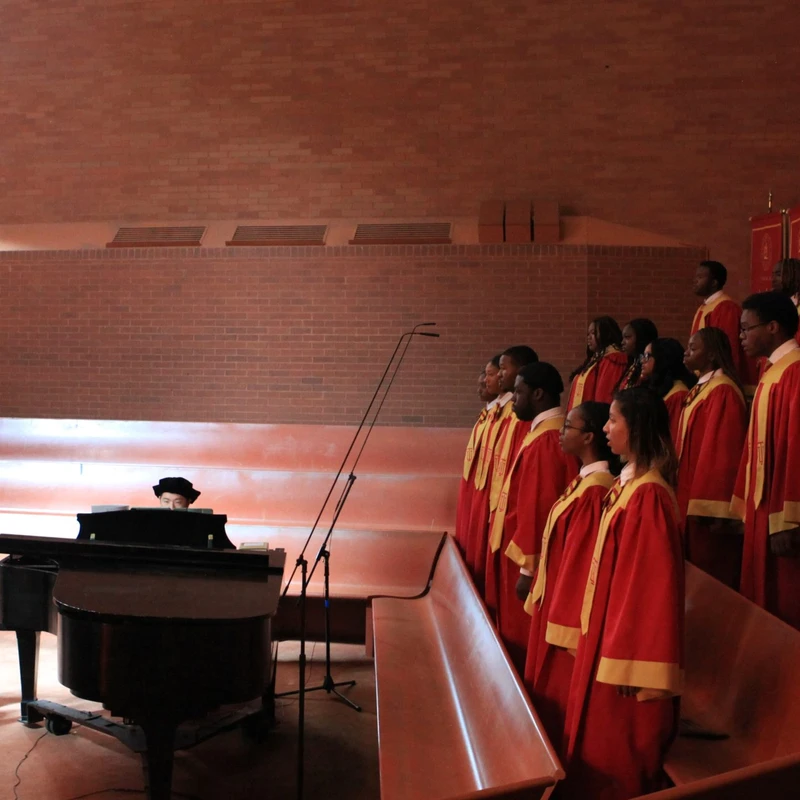
    Step into the rich history of Black architecture at the National Building Museum in Washington, D.C., where a captivating new exhibit shines a light on Tuskegee University’s enduring legacy. “The Tuskegee Chapel: Paul Rudolph x Fry & Welch” exhibition delves into the university’s architectural journey, starting with its foundational figure, Robert R. Taylor, the nation’s first accredited Black architect.

    A Legacy Built on Collaboration

    The exhibit, running since late February, highlights the significant collaboration between renowned architect Paul Rudolph and former Tuskegee faculty members Louis Fry Sr. and John Welch. Their work in the late 1960s led to the redesign and construction of the university’s chapel building, replacing the original 1898 structure designed by Robert R. Taylor, which was tragically lost to fire.

    Dr. Kwesi Daniels, head of Tuskegee’s architecture department, emphasizes that the development of the second chapel was deeply rooted in the institution’s architectural heritage, beginning with Taylor’s vision. Taylor’s influence was so profound that by 1930, he had designed nearly every building on the campus, including those that housed Dr. Booker T. Washington and scientist George Washington Carver.

    More Than Just Buildings

    As Dr. Catherine Armwood, dean of the Robert R. Taylor School of Architecture and Construction Sciences, aptly puts it, “At Tuskegee, buildings are never just objects; they are classrooms and sanctuaries.” The chapel, in particular, is recognized not only as a spiritual center but also as a “living laboratory” where students learn to design and build with purpose, honoring the strength of their past.

    This exhibition follows its successful run at the Yale Architecture Gallery in 2025 and coincides with a retrospective of Paul Rudolph’s work at the Metropolitan Museum of Art. Curator Helen Brown Bechtel discovered a deep, long-standing relationship between Rudolph and Tuskegee’s fourth president, Dr. Luther Hilton Foster Jr., which served as a gateway to uncovering the rich story of American architectural education at the university.

    The Foundation of Architectural Education

    Robert R. Taylor, the first Black graduate of MIT in 1892, was recruited by Booker T. Washington to establish Tuskegee’s architecture program. He brought invaluable expertise, teaching students not just the physical labor of building but also the design concepts that would shape the campus and train future architects. This educational model produced influential figures like Vertner Woodson Tandy, New York state’s first registered African American architect.

    The exhibit highlights the collaborative spirit, mirroring the partnership between Rudolph, Fry, and Welch. It explores the significance of brick in Tuskegee’s architecture, the chapel’s connection to its surroundings, and the crucial contributions of Fry and Welch. As MIT’s Head of Architecture Nicholas de Monchaux notes, Taylor is the “root of our long standing collaboration with Tuskegee now.”

    A full-scale replica sculpture of the chapel’s original brickwork, created by Tuskegee and MIT alumnus Myles Sampson, further illustrates the connection between tradition and innovation. This piece demonstrates how the story of Tuskegee’s architectural legacy continues to evolve with new generations of designers.

    The exhibition, which runs until January 2027, offers a vital opportunity to honor the pioneers who not only built Tuskegee’s campus but also extended their knowledge and skills to build Black communities across the nation. It’s a powerful testament to the enduring impact of Tuskegee’s architectural program.

    Have you visited the Tuskegee Chapel exhibit? What aspect of Tuskegee’s architectural history fascinates you the most? Share your thoughts in the comments below!