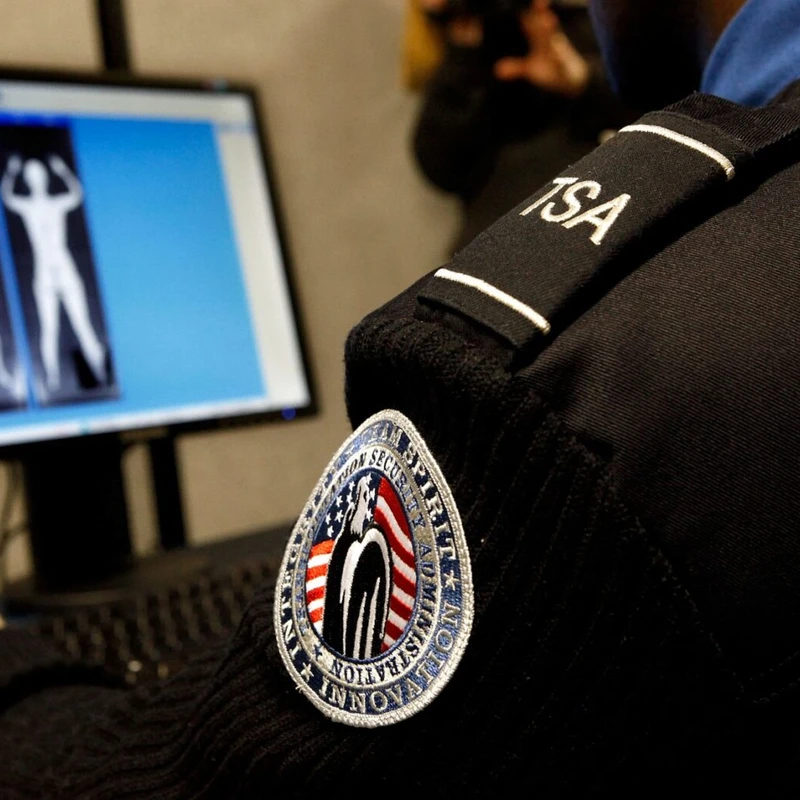
Airport security scanners have become a standard part of air travel, but many travelers remain unsure about the technology they use. Common misconceptions include the idea that scanners read body heat or create detailed images of the body. However, the Transportation Security Administration (TSA) uses Advanced Imaging Technology (AIT), primarily employing millimeter-wave technology, which operates quite differently.
Millimeter Wave Technology Explained
TSA scanners are not heat sensors. Instead, they utilize low-power, non-ionizing radio waves to detect concealed items, both metallic and non-metallic, hidden beneath clothing. The primary purpose of these machines is security screening, not health monitoring. They are designed to identify anomalies that might require further inspection before a traveler can proceed.
Unlike thermal cameras that detect infrared radiation and show temperature differences, millimeter wave scanners focus on locating objects or irregularities on the body’s surface. They can flag items like wallets, jewelry, medical devices, or even dense fabric and items left in pockets. This technology also differs from older X-ray backscatter scanners, which had raised privacy and radiation concerns.
What TSA Scanners Actually Reveal
Modern TSA scanners are programmed not to display detailed images of a traveler’s body. The agency emphasizes that their automated target recognition software generates a generic outline of a person. If a potential issue is detected, the screen highlights the specific area needing further screening. If no anomalies are found, the passenger can typically proceed without additional checks.
The scanner’s function is strictly to identify potential security threats, not to reveal personal details like body type, medical history, or other private information. However, the system can flag unexpected items, including folds in clothing, dense materials, bandages, prosthetics, piercings, medical devices, or items in pockets. When an alarm sounds, TSA officers must resolve it, which may involve a targeted pat-down of the flagged area.
Addressing Privacy Concerns
Privacy concerns surrounding airport body scanners have been a long-standing issue. Earlier scanner models faced criticism for producing more revealing images than the current generic outlines. In 2013, TSA removed certain backscatter machines after the vendor failed to implement privacy software that would replace detailed images with generic displays. Today, TSA asserts that privacy protections are integrated into the current process, with automated target recognition software anonymizing images.
Despite these assurances, some travelers remain uncomfortable with the process, especially if a scan leads to a public delay, a pat-down, or a sensitive interaction at the checkpoint. Individuals with medical devices, prosthetics, religious garments, mobility aids, binders, or other personal items may have heightened concerns. The TSA notes that travelers with disabilities or medical conditions can request a private screening and may bring a companion into the screening area.
Your Right to Opt-Out
Most passengers have the option to opt out of Advanced Imaging Technology screening and request a pat-down instead. If you prefer not to go through the scanner, you can inform the officer. According to TSA’s FAQ, opting out of AIT or a walk-through metal detector will result in a pat-down, conducted by an officer of the same gender. Travelers also have the right to request a private screening during a pat-down.
Understanding TSA procedures can make your airport experience smoother. Have you ever opted out of a body scan? What was your experience like? Share your tips and thoughts in the comments below!
Leave a Reply