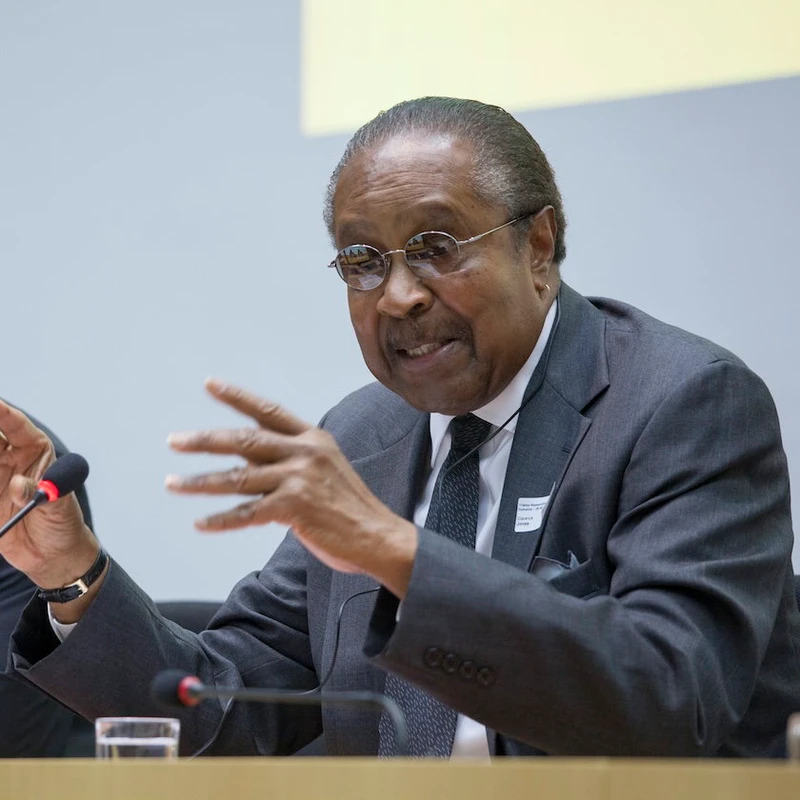
The world of civil rights and social justice has lost a giant. Clarence B. Jones, a brilliant attorney, strategist, and a close confidant of Dr. Martin Luther King Jr., passed away on May 22 at the age of 95. His passing marks the end of an era, as Jones was one of the last surviving architects who helped shape the monumental Civil Rights Movement.
A Life Dedicated to Justice and Advocacy
Born in Philadelphia in 1931, Jones’s journey was one of profound impact. After graduating from Columbia University and earning his law degree from Boston University, he initially explored entertainment law. However, a pivotal meeting with Dr. King in 1960 redirected his path, drawing him into the heart of the fight for equality.
Jones became an integral part of Dr. King’s inner circle, serving as his personal attorney, political advisor, and a crucial draft speechwriter. His contributions were instrumental in shaping the powerful rhetoric that fueled the movement. The Jones family shared in a statement, “Our father lived a life of conscience. He believed, until his final days, that an idea is more powerful than the march of any army.”
Crafting Iconic Speeches and Legal Precedents
Jones is widely credited with helping to draft Dr. King’s legendary ‘I Have a Dream’ speech, delivered during the 1963 March on Washington. His role extended to preserving King’s profound ‘Letter from Birmingham Jail,’ even assisting in smuggling handwritten notes out of jail. These acts highlight his deep commitment and strategic involvement in the movement’s most critical moments.
Beyond his work with Dr. King, Jones was a key player in significant legal battles. He was involved in the landmark Supreme Court case *New York Times Co. v. Sullivan*, which significantly bolstered First Amendment protections for the press. His legal acumen provided a crucial foundation for advancing civil rights.
A Continued Legacy of Service
Following Dr. King’s tragic assassination, Jones continued his tireless advocacy. He broke barriers as the first Black allied member of the New York Stock Exchange, served as a negotiator during the tense 1971 Attica prison uprising, and shared his knowledge as a teacher at Stanford University and the University of San Francisco. His dedication to justice and democracy for Black Americans was recognized in 2024 with the Presidential Medal of Freedom, the nation’s highest civilian honor.
Clarence B. Jones’s life was a testament to the power of conviction and action. What aspects of his remarkable life and work inspire you the most? Share your thoughts in the comments below.
Leave a Reply