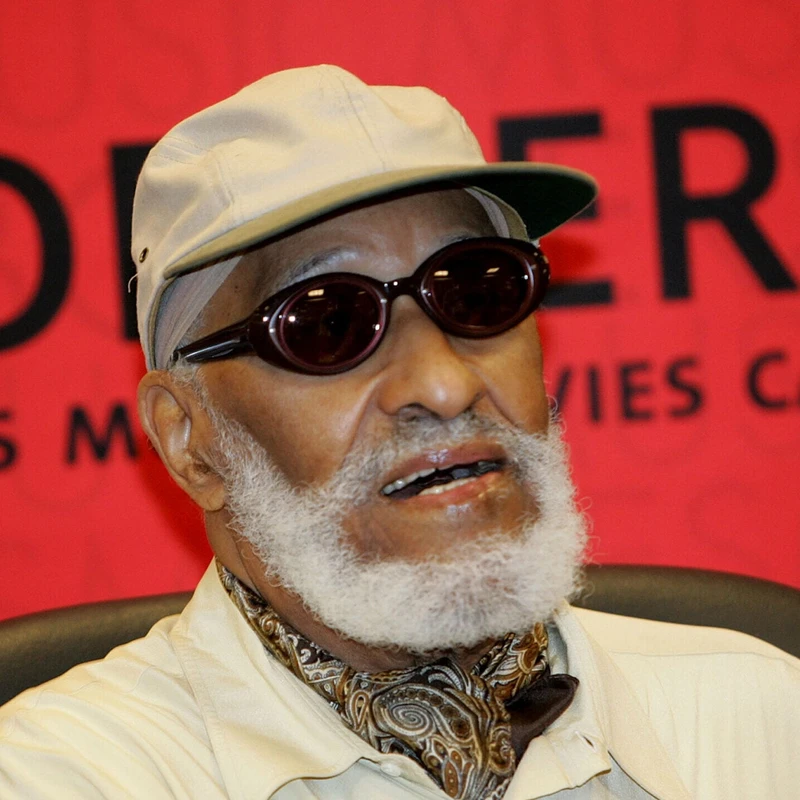
The jazz world is mourning the loss of a true titan. Sonny Rollins, the legendary tenor saxophonist celebrated as the ‘Saxophone Colossus,’ has died at the age of 95. His passing marks the end of an era, leaving a profound void in the music community and beyond.
A Defining Voice of Bebop
Born in Harlem, New York, on September 7, 1930, Rollins grew up surrounded by jazz royalty. He was drawn to the burgeoning bebop movement and by his late teens, was already collaborating with giants like Thelonious Monk. His career trajectory saw him record with jazz luminaries such as Miles Davis, Charlie Parker, and Max Roach.
In 1956, Rollins released ‘Saxophone Colossus,’ the album that cemented his nickname and became a landmark recording. That same year, his legendary ‘Tenor Madness’ session with John Coltrane showcased a breathtaking, side-by-side mastery of the instrument. His original compositions, including “St. Thomas,” “Oleo,” and “Doxy,” have become enduring jazz standards.
A Restless Innovator
Rollins was known for his relentless pursuit of musical innovation. In the late 1950s, feeling he had reached a creative plateau, he famously took a sabbatical, practicing for hours on the Williamsburg Bridge in New York. This period of introspection led to a renewed and evolved musical approach upon his return.
He continued to tour and record prolifically into his 80s, maintaining a rigorous practice schedule. His final concert was in 2012, and he ceased playing altogether in 2014 due to pulmonary fibrosis. Even rock fans recognized his soulful sound when he was featured on the Rolling Stones’ 1981 hit “Waiting on a Friend.”
A Legacy of Influence
Rollins’s impact extended beyond his instrumental prowess. His 1958 work, “Freedom Suite,” was a powerful 19-minute composition explicitly dedicated to the Black American experience, with liner notes that powerfully stated, “America is deeply rooted in Negro culture: its colloquialisms, its humor, its music.”
His passing leaves a significant gap, as he was one of the last living connections to the foundational generation of bebop. Rollins received numerous accolades throughout his career, including the Kennedy Center Honor, the National Medal of Arts, and designation as an NEA Jazz Master, alongside multiple Grammy Awards. He is survived by his nephew, Clifton Anderson, and nieces Vallyn Anderson and Gabrielle DeGroat.
How has Sonny Rollins’s music impacted you? Share your favorite memories or songs in the comments below!
Leave a Reply