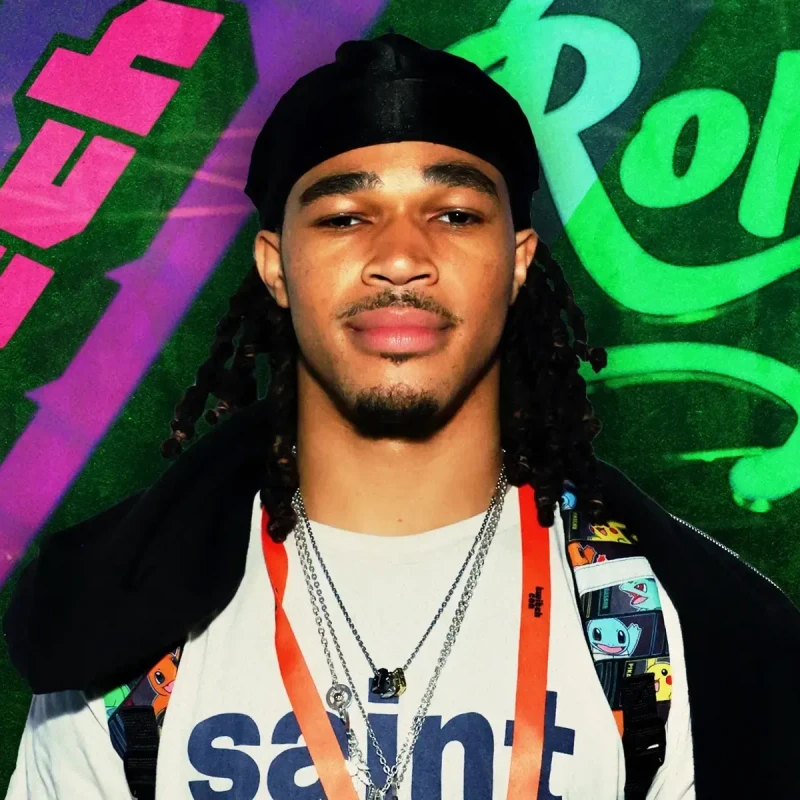
Have you ever felt like you’re constantly being watched, or that every moment is a potential photo op? In today’s world, it seems like everything, even our most personal experiences, is destined to become content. This shift is profoundly impacting hip-hop culture, and nowhere is it more evident than at festivals like Rolling Loud.
From Experience to Content Farm
Gone are the days when a concert was just about enjoying the music. Now, there’s a constant pressure to document and broadcast. We used to celebrate a ‘big break,’ but now, it often feels more like chasing infamy. This transformation means that concerts and festivals are increasingly curated not just for the music, but for their potential to generate viral clips, livestreams, and those coveted algorithmic moments.
The rise of influencers, content creators, and especially streamers has fundamentally changed hip-hop’s promotional landscape. These figures aren’t just on the fringes anymore; they’re deeply embedded, influencing narratives, fan perception, and even festival attention. Rolling Loud perfectly captures this intersection of internet virality and rap culture.
The Algorithm Over the Artist?
Look at Rolling Loud’s lineups: you’ll see legacy headliners alongside artists who built their fame entirely online. Backstage, personalities like Brittany Renner can generate headlines with mere seconds of interaction, turning a brief chat with J. Cole into a viral moment. This is a stark contrast to traditional media, where journalists aim to contextualize and critique.
Streamers and internet personalities offer immediate access and reach, which is incredibly valuable for labels and artists. A ‘goofy promo appearance’ often generates more buzz than a deep dive into an artist’s catalog. Labels are willing to pay big money for these interactions because even awkward moments can become compelling content. Think of Adin Ross reportedly paying Playboi Carti a hefty sum for a brief, underwhelming stream that became entertaining precisely because of its awkwardness.
Streamers Embedded in Hip-Hop
This dynamic has blurred the lines, with streamers becoming integral to hip-hop culture. Figures like Kai Cenat represent a more polished version, whose reactions and artist interactions garner attention once reserved for critics and radio DJs. While not a knock on Kai himself, it highlights how streamer opinions now carry significant weight, often prioritizing access and personality over deep scrutiny.
Festivals have adopted this logic. Rolling Loud often feels less curated and more algorithmic, prioritizing immediacy, virality, and chaos – the same drivers of streamer culture. Audiences attend not just for the music, but with the expectation of participating in content creation. It can feel less like a music festival and more like a physical manifestation of an Instagram feed.
The Disconnect Between Online and Offline
However, online popularity doesn’t always translate to real-world acceptance. Streamers like Rakai have faced boos at Rolling Loud, and even Plaqueboymax, who has production credits, struggled during a set. This reveals a crucial point: online influence grants proximity to hip-hop, but not automatic acceptance.
The overlap between streaming and live events feels strange because physical presence seems valuable only if it’s being converted into content. Award shows and festivals are increasingly designed for documentation. Even attending the Grammys, as Kai Cenat did, makes sense from a business perspective for attracting younger viewers, but the act of livestreaming reactions from within the event highlights the absurdity of modern entertainment – presence isn’t enough unless it’s immediately repackaged.
Visibility Over Substance?
This constant drive for content comes at a cost. While celebrities need visibility, streamers often collapse the boundary between public access and surveillance. Concerns about artist privacy and VIP guest security at events like Coachella, due to free broadcasting by streamers, underscore a larger cultural shift: every space is treated as potential content inventory.
The culture itself often feels secondary. Hip-hop is youth culture, but not all youth culture is hip-hop. The industry increasingly mistakes virality for cultural contribution. Festivals once served as places for discovery, interviews provided context, and celebrity access held meaning because it was scarce. Now, access itself is the product.
The real shift isn’t just that streamers entered hip-hop, but that hip-hop institutions are reorganizing around internet incentives: visibility over substance, immediacy over engagement, and virality over curation. Eventually, the algorithm doesn’t just reflect culture; it starts to shape it.
What are your thoughts on how content creation is changing music festivals like Rolling Loud? Share your perspective in the comments!
Leave a Reply