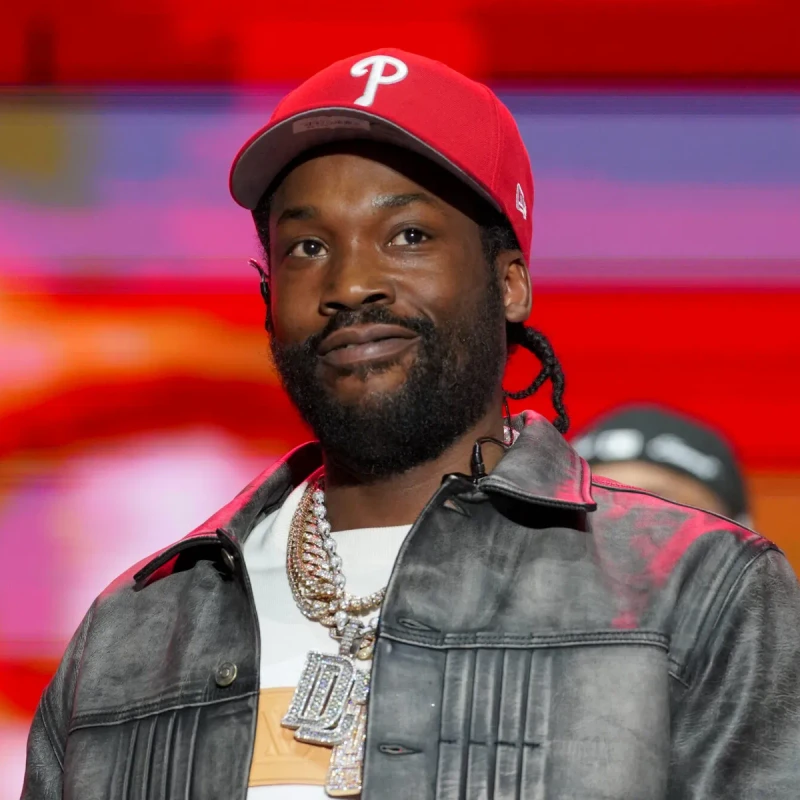
Meek Mill often speaks about campaigns to tarnish his reputation, yet his own digital footprint seems to be his most persistent adversary. The Philadelphia rapper’s unfiltered honesty, a trait that makes him a compelling MC, frequently backfires on social media, shaping a public image that he struggles to outrun. This pattern of behavior, evident over the past decade, raises questions about his online strategy and its impact on his career aspirations.
The Double-Edged Sword of Honesty
A prime example of this issue is Meek Mill’s reaction to the news of D4vd’s alleged involvement in a promotional campaign following a death. His immediate tweet, asking who to contact for album promotion, was widely criticized for its insensitivity and lack of awareness. This kind of reaction, unfortunately, thrives in the less savory corners of the internet and reinforces a perception that Meek struggles with context and consequence online.
This habit of tweeting before thinking leaves even his most loyal supporters cringing. It’s a persona he seems to have leaned into, making criticisms from figures like Charlamagne Tha God—who suggested Meek never recovered from his past beef with Drake due to persistent “Twitter fingers”—seem more valid. While fans have shown forgiveness for past issues, including substance abuse struggles, Meek’s consistent online missteps suggest social media remains his biggest challenge.
Navigating Power Dynamics and Online Persona
Meek’s online behavior also raises questions about his associations. While he has championed causes like the REFORM Alliance alongside figures like Jay-Z, his proximity to powerful individuals like Jared Kushner and Donald Trump, as well as his presence at events hosted by Robert Kraft and Michael Rubin, creates a stark contrast with his online persona. How can one be a regular at a high-profile White Party while tweeting like an unsigned artist seeking a record deal?
This disconnect between his aspirations and his online expression is significant. He aims to be a voice for the streets and the impoverished while aligning himself with the country’s elite. This detachment from reality, while sometimes a hallmark of successful artists like Jay-Z and Kanye West, comes across differently for Meek. He seeks power but often expresses insecurity, acting as if he’s powerless despite his close connections to influential figures.
When Denial Backfires
The situation surrounding Diddy further illustrates this point. Following Lil Rod’s lawsuit, which suggested a physical relationship between Diddy and “a Philadelphia rapper who dated Nicki Minaj,” Meek’s attempts to dispel rumors backfired spectacularly. His subsequent tweet, which included explicit language and homophobic remarks while trying to assert his heterosexuality, quickly became fodder for comedy, including a bit by Andrew Schulz that Meek himself found amusing. However, these ineffective attempts to address rumors only amplified the scrutiny.
By September 2025, Meek was even offering a six-figure sum for an investigation into the matter. While he may believe a higher power is trying to destroy his influence, his online responses consistently reinforce negativity and rumors. His denials often turn into content, fueling a cycle of jokes, memes, allegations, and perceived reality. The internet doesn’t forget, and Meek’s relationship with it appears fraught with tension.
The Struggle for Clarity and Control
While Meek Mill remains an undeniable force as an MC, his music showcasing his raw talent, his online presence often lacks the clarity and purpose found in his lyrics. His recent suggestion of a larger power trying to kill his reputation, partly based on an audit of his streaming numbers, lacks substantial proof. He claims companies are running campaigns against him while he’s focused on uplifting people through REFORM Alliance, but his online outbursts often contradict this image of focused dedication.
Ultimately, Meek Mill’s online presence often feels chaotic. He’s placed himself in an awkward position, aspiring to emulate the business acumen of figures like Jay-Z and Rick Ross, or even Michael Rubin, who exhibit remarkable self-control online. Unlike those who navigate scandal or failure with a degree of strategic silence, Meek seems to define his public persona in real-time and publish it for the world to remember, often to his own detriment.
Do you think Meek Mill can overcome his online challenges? How important is a controlled digital footprint for artists today? Share your thoughts in the comments below!
Leave a Reply