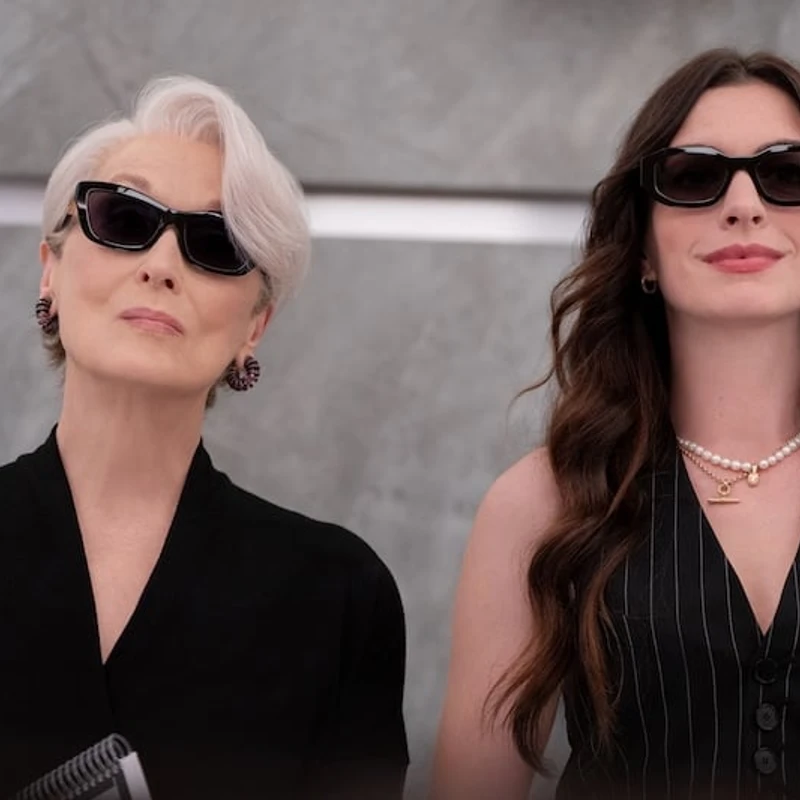
It’s been nearly two decades since “The Devil Wears Prada” first captured our imaginations, defining a generation with its tales of ambitious assistants, formidable bosses, and unforgettable one-liners. Now, the highly anticipated sequel is here, but it’s tackling a more sobering theme: change. “The Devil Wears Prada 2” dives deep into the power of the pivot, exploring how to survive and thrive in an industry that’s constantly reinventing itself.
Navigating a Shifting Media Landscape
Set against a backdrop of a dramatically transformed media landscape since the original film’s 2006 debut, the sequel reunites us with iconic characters like Miranda Priestly (Meryl Streep), Andy Sachs (Anne Hathaway), Emily Charlton (Emily Blunt), and Nigel Kipling (Stanley Tucci). They’re all grappling with a world where print media has declined, digital platforms reign supreme, and even legendary institutions like ‘Runway’ magazine are feeling the immense pressure to evolve.
For stars Meryl Streep and Anne Hathaway, this theme of evolution is the very heart of the film. When asked about navigating today’s uncertain professional world, Hathaway emphasized the importance of adaptability. “The idea that you get yourself through the door… yes, that’s very important,” she explained. “But once you’re there, it’s still a minefield… so what you’re saying about the power of the pivot becomes your ability to be resilient… to hold your line, hold your integrity, but be flexible at the same time.”
The Art of the Pivot: Resilience and Flexibility
Streep echoed this sentiment, adding that having an inflexible goal might not be the best strategy. “It’s also not to have a goal that’s inflexible,” she noted. “Because you know what? There’s something over here that might be more interesting, and you’ve just got to be willing to roll with it.” She reflected on the generational shift, contrasting her father’s 40-year career with one company to today’s fluid work environment: “Nobody does that. That’s not the world.”
When it comes to knowing when to make a move, Streep relies on her intuition. “I have an inner tuning fork,” she shared. “I have an inner voice that says…when.” While she admits she used to fight that voice more when she was younger, age has brought a greater ease in letting go and listening to that inner guidance.
Loyalty, Adaptation, and Balance
Hathaway offered a perspective deeply familiar to many: loyalty. “Part of my identity is loyalty,” she said. “If I’ve made a commitment… I will see it through.” Rather than simply walking away from challenges, she reframes the experience by adapting her conditions. “What I do then is I adapt my conditions for my yes,” Hathaway explained. “So the next time I’m in this position… now I know myself better.”
A refreshing shift in the sequel is its portrayal of work-life balance. Unlike the original, Andy and Miranda aren’t forced to sacrifice their personal lives for professional success. Streep’s Miranda now has a partner, played by Kenneth Branagh, whose presence signifies balance rather than competition. Hathaway praised Branagh’s casting, noting it’s rare in Hollywood for a male star of his caliber to play a supportive role in a female-led narrative.
The Power of the Volley
Fan favorite Tracie Thoms returns as Andy’s best friend Lily, providing a grounding presence. The story also introduces new romantic dynamics, including Andy’s connection with Peter (Patrick Brammall). Hathaway described their on-screen chemistry as developing quickly, even finding a metaphor for their dynamic—and the film itself—during an impromptu ping pong match: “We both wanted to play well, but neither one of us was particularly interested in the kill shot. We loved the volley.”
Streep instantly connected this idea to the film’s narrative, noting, “You focused on the volley in the movie.” This focus on the back-and-forth, the collaboration, and the journey rather than just the final outcome, seems to be a core theme of “The Devil Wears Prada 2.” Audiences are undoubtedly eager to see what Andy Sachs and Miranda Priestly have become in this modern media landscape.
What are your thoughts on the themes of reinvention and the ‘pivot’ in today’s professional world? How do you think Andy and Miranda have adapted? Share your predictions and reactions in the comments below!
Leave a Reply