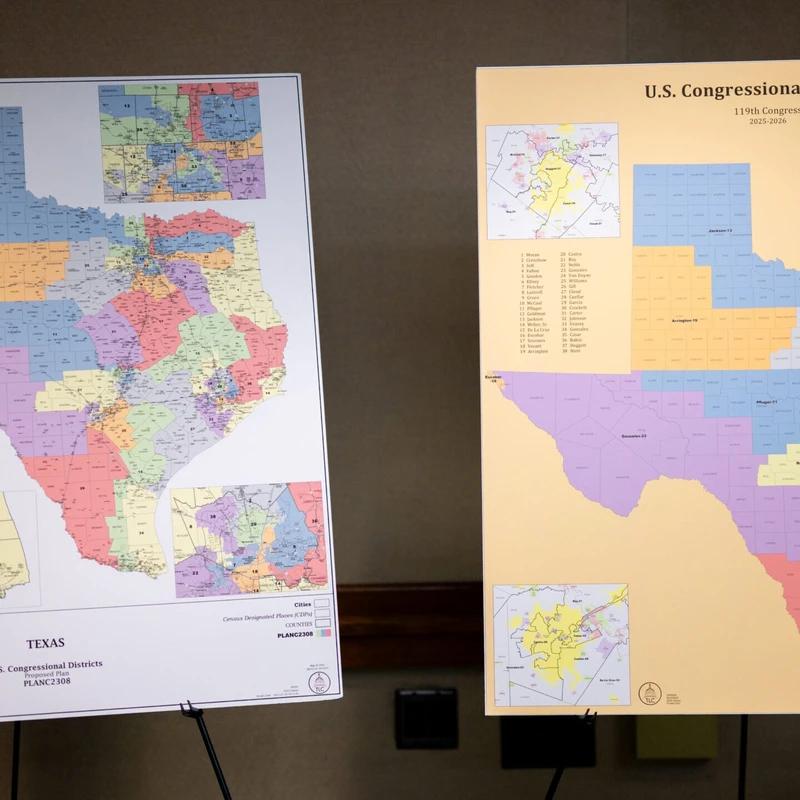
Big news from the Supreme Court that could significantly shift the political landscape! The nation’s highest court has officially reinstated a controversial Texas congressional voting map, a move that heavily favors Republicans. This decision comes just in time for the 2026 midterm elections and could play a crucial role in determining control of the U.S. House of Representatives.
A Map Favoring Republicans
Issued on April 27, the Supreme Court’s ruling upholds a redistricting plan that was approved by Texas Republicans in 2025, with support from Donald Trump. This map redraws the boundaries for U.S. House districts across the state. The consensus is that it’s designed to benefit Republican candidates, potentially flipping as many as five seats currently held by Democrats.
This decision finalizes an earlier interim ruling from December, when the court initially allowed Texas to use the map on a temporary basis. However, the ruling isn’t without its dissent; the court’s three liberal justices disagreed, highlighting the ongoing debate about the plan’s fairness and legality. A lower federal court had previously blocked the map, citing concerns that it was racially discriminatory and violated constitutional protections.
Concerns Over Minority Voting Power
Critics argue that the newly reinstated map dilutes the voting power of minority communities in Texas. They contend that the redrawing of district lines unfairly disadvantages these groups. On the other hand, supporters maintain that the map is a product of lawful political decision-making by the state legislature.
The push for this map followed broader calls from Donald Trump, urging Republican-led states to redraw district lines in ways that could bolster the party’s congressional standing. Governor Greg Abbott signed the map into law after it successfully passed through the Republican-controlled state legislature. This move occurred even as Texas Democratic lawmakers attempted to protest by fleeing the state to deny quorum for votes on the redistricting plan.
The Broader Impact of Redistricting
This ruling arrives at a time when redistricting is a major focus nationwide. While typically done after a census, recent efforts in various states have seen legislatures, both Republican and Democratic, actively pursuing maps that offer partisan advantages. For instance, the Supreme Court also allowed California to implement a new map earlier this year, which is expected to benefit Democrats.
With Republicans currently holding a slim majority in Congress, the impact of the Texas map could be substantial. A shift in even a few seats could directly influence legislative agendas and oversight capabilities in Washington. This case powerfully illustrates the ongoing legal and political tensions surrounding voting rights, fair representation, and the extent of partisan influence in shaping our electoral boundaries.
What are your thoughts on the Supreme Court’s decision regarding the Texas voting map? Do you believe it fairly represents all communities? Share your perspective in the comments below!
Leave a Reply