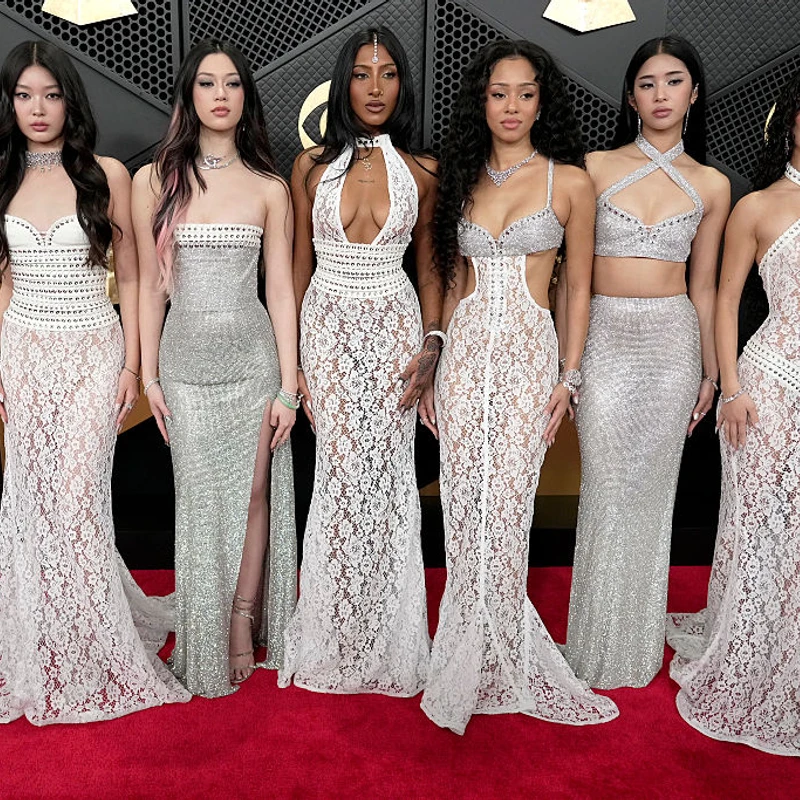
The global girl group Katseye seemed poised for superstardom. Fresh off a historic Grammy appearance in 2026, they had chart-topping singles, major brand deals, and a growing international following. But instead of celebrating their success, the group is now at the center of a controversy that feels all too familiar, particularly for Black women in the music industry.
A Hiatus Sparks a Familiar Narrative
On February 20, 2026, Hybe x Geffen announced that Manon Bannerman, one of Katseye’s most visible members, would be taking a temporary hiatus for mental health reasons. While fans were initially supportive, Manon’s own brief statement shifted the narrative. She stated she was “healthy” and that “things unfold in ways that we don’t fully understand,” hinting at a more complex situation.
This turn of events quickly ignited a broader conversation about race, visibility, and the treatment of Black women within global girl groups. For many fans, this situation wasn’t an isolated incident but rather a pattern they’d seen before. They began pointing to moments in music videos where Manon seemed less centered or partially obscured, and promotional campaigns where she was sometimes absent.
Echoes of Past Struggles
The documentary ‘Popstar Academy: Katseye’ also came under fire, with fans recalling instances where Manon was unfairly portrayed as “lazy,” “selfish,” or the “weakest link.” This narrative, many argue, is racially coded and deeply resonant with the experiences of other Black women in similar positions. Artists like Normani (formerly of Fifth Harmony) and Leigh-Anne Pinnock (Little Mix), who have openly discussed being the sole Black members of their groups, have offered support.
The outpouring of support also includes artists like SZA, Kehlani, and Chlöe Bailey, highlighting a collective recognition of this recurring issue. The core of the problem, as many see it, is that the Black girl in the group is often simultaneously hyper-visible and invisible. She faces harsher scrutiny, receives less consistent praise, and is frequently positioned as expendable when conflicts arise.
Industry Challenges and Lack of Protection
This dynamic places an immense burden on Black women, who are expected to carry the weight of representation while navigating an industry that still struggles to market, protect, and fully embrace Black femininity on a global scale. Adding fuel to the fire were comments from Daniella Avanzini’s father, suggesting the group could manage with five members and needed girls who could “grind.” Though he later apologized, the damage to the narrative was significant.
With Hybe x Geffen remaining largely silent and no public statements from the other Katseye members, fans are left to interpret the situation. Manon’s simple message of love for her fans offers little clarity but underscores the uncertainty. The upcoming Coachella performance in April adds another layer of anticipation and concern.
- Why does the only Black member often become the most contested?
- Why are narratives of “attitude” or “laziness” so easily attached?
- Why do fans have to piece together patterns before the industry acknowledges them?
Katseye was envisioned as a symbol of global unity, but this moment is exposing underlying fractures. It’s no longer just about one group; it’s about an industry that has yet to fully embrace Black women as central figures, not optional ones, in the narrative.
What are your thoughts on the situation with Katseye and Manon? Do you agree that Black women often face unique challenges in girl groups? Share your perspective in the comments below!
Leave a Reply